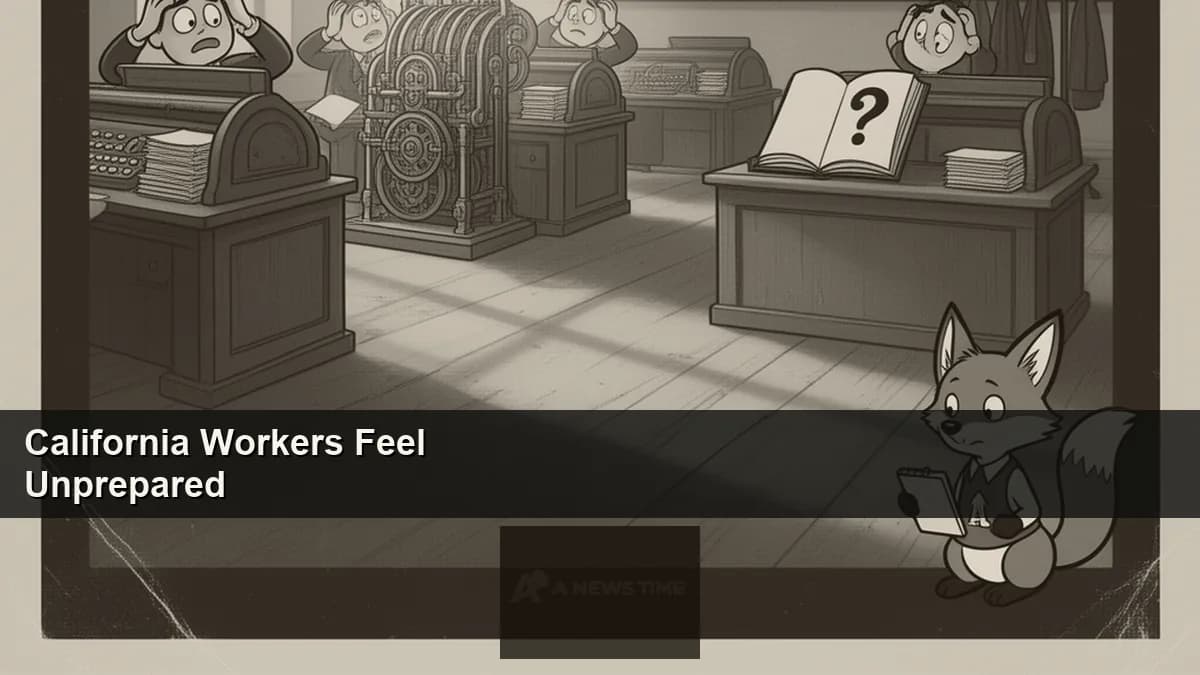
The New York Times Opinion section published a discussion on with 12 white-collar job-seekers in their teens and twenties that captured what has been the single most durable data point in the U.S. labor market through the past 18 months: Gen Z's collective assessment of their job prospects has moved from cautious to bleak, and the data is starting to validate their concern. The specific mechanism surfaced in the Opinion discussion is worth pulling out of the essay format and examining directly.
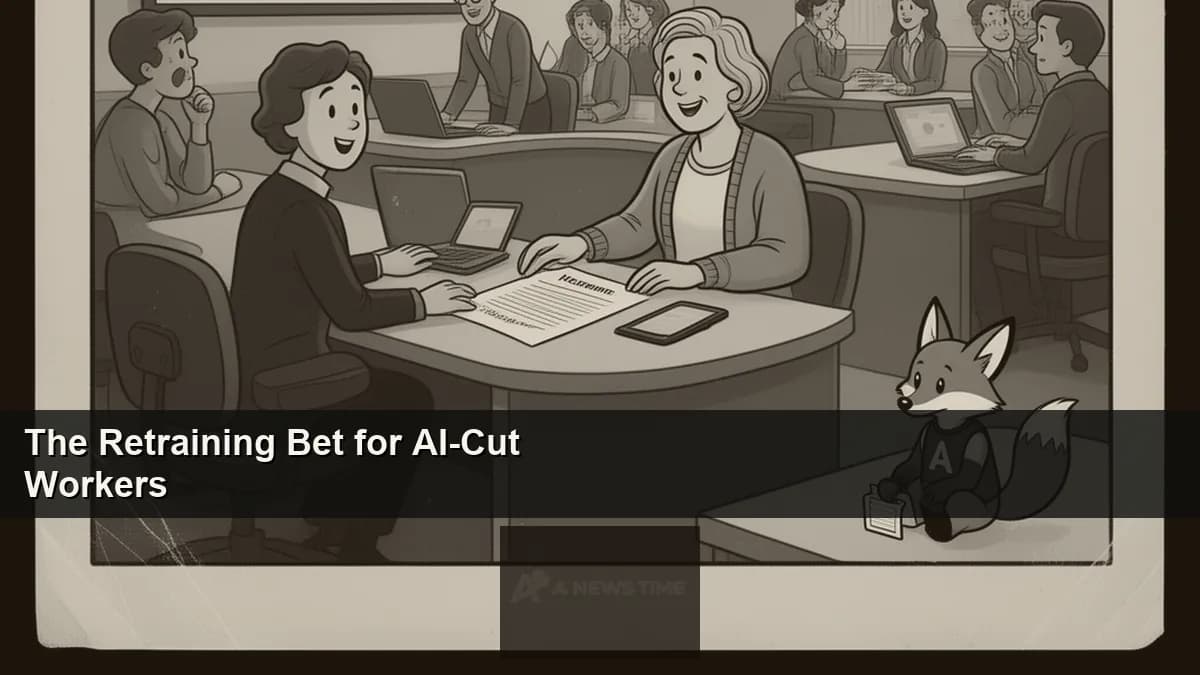
The first rung of the white-collar career ladder, the junior analyst and associate roles that recent graduates have historically entered, is shrinking. The work those roles were built around, summarizing documents, pulling data from spreadsheets, drafting first versions of reports and memos, is increasingly being done by AI tools operated by more senior staff. The result is a labor market where the top of the ladder is unchanged, the middle is pressured, and the bottom rung has simply been pulled off.
What the New Data Actually Shows
The New York Times Opinion discussion is qualitative, but the quantitative data it sits alongside has been telling the same story for about 18 months. Bureau of Labor Statistics reports through the first quarter of 2026 have shown entry-level white-collar hiring at its weakest pace outside of a recession since the 1990s. The overall unemployment rate, which has held below 5 percent, masks the generational breakdown. Unemployment for workers aged 20 to 24 is running more than two percentage points higher than for workers aged 35 to 54, a gap that has widened meaningfully since 2023.
"In March, Times Opinion published a discussion with 12 white-collar job-seekers in their teens and 20s. Their view of their prospects was incredibly bleak."
New York Times Opinion section, April 22 discussion summary
The data points that support the AI-substitution hypothesis are circumstantial but numerous. Consulting firms have publicly reported slower associate hiring while increasing their investment in internal AI tooling. Large law firms have pulled back on the number of first-year associate hires across 2025 and 2026 classes. Financial services firms have restructured their junior analyst programs with smaller cohorts doing AI-augmented work. In each case, the public rationalization is that AI makes individual associates more productive, which means fewer associates are needed to produce the same volume of deliverable output.
The Ladder Pull-Up
What the Opinion discussion captures well is the experience of the labor-market transition from the inside. Recent graduates are applying for entry-level roles that either do not exist at the volume they used to, or that have been rewritten to require several years of prior experience that the graduates by definition cannot have. Internships and co-op programs remain a bright spot, but conversion rates from internship to full-time offer have tightened across most white-collar sectors.
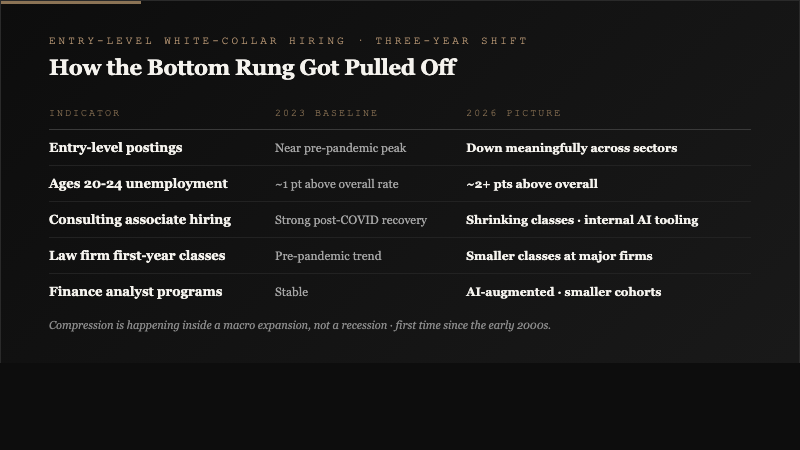
| Indicator | 2023 baseline | 2026 picture |
|---|---|---|
| Entry-level postings (white collar) | Near pre-pandemic peak | Down meaningfully in most sectors |
| Ages 20-24 unemployment | Roughly 1 point above overall rate | Approximately 2+ points above overall |
| Consulting associate hiring | Strong post-COVID recovery | Shrinking classes, internal AI tooling |
| Law firm first-year classes | Pre-pandemic trend | Smaller classes, some firm-level restructuring |
| Finance analyst programs | Stable | AI-augmented, smaller cohorts |
The ladder-pull dynamic is not new in American labor market history. A similar compression of entry-level white-collar hiring occurred during the early 2000s dot-com bust and again during the 2008 through 2010 financial crisis recovery. What is novel about 2026 is that the compression is happening inside a macroeconomic expansion rather than a recession. Companies are growing revenue and, in many cases, growing headcount at senior and mid-levels while cutting hiring at the entry level.
Where Hiring Demand Is Actually Landing
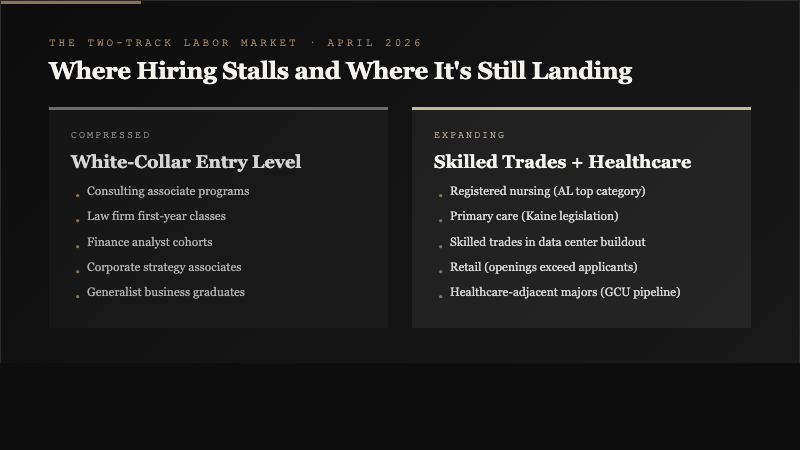
The same 48-hour window produced two specific stories that point toward where labor demand is concentrated. The first is Senator Tim Kaine's new legislation targeting primary care workforce shortages. The bill aims to expand education and clinical training opportunities for the next generation of primary care providers, a category where the BLS projects sustained shortages through the 2030 decade. Healthcare, particularly nursing, primary care, and mental health, is the counter-example to the stalled white-collar market: demand is strong, wages are climbing, and the entry-level pipeline remains open.
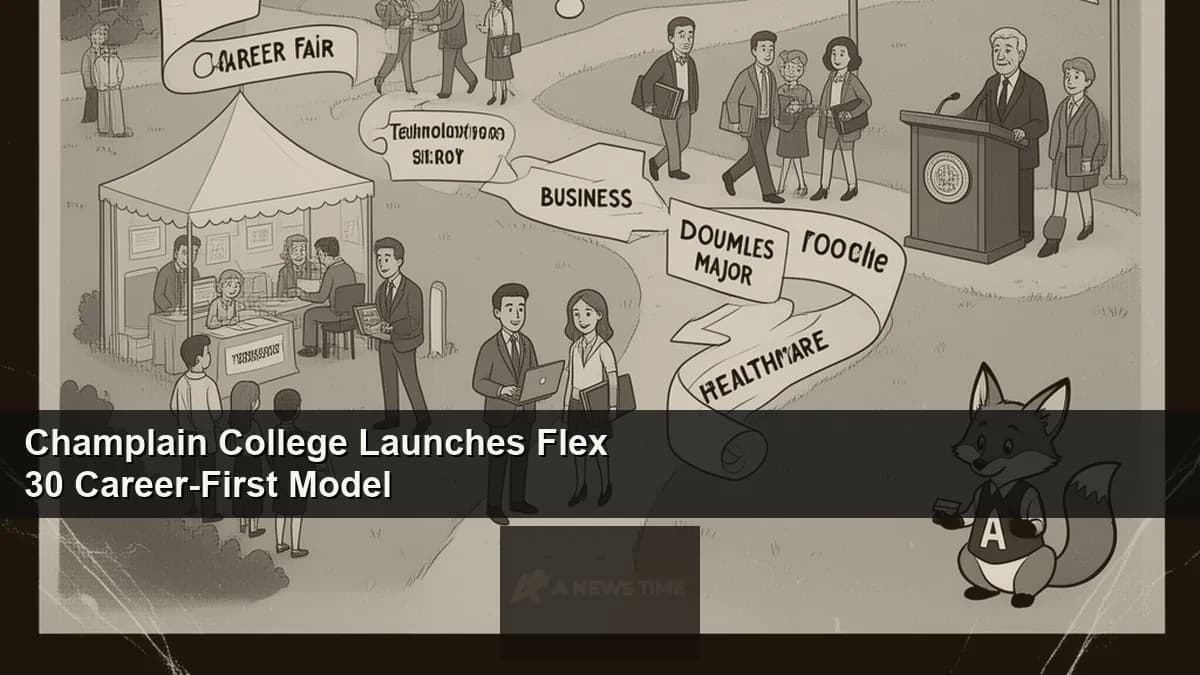
The second story is the Vermilion County Career Expo scheduled for . Nearly 90 employers, food trucks, and career opportunities were slated to participate, organized by Vermilion Advantage, Danville Area Community College, and Vermilion County Workforce Education. These regional career expos have become a standard feature of the 2026 labor market, and their scale, often 50 to 100 local employers in one venue, is a direct response to persistent labor shortages in skilled trades, healthcare, retail, and hospitality.
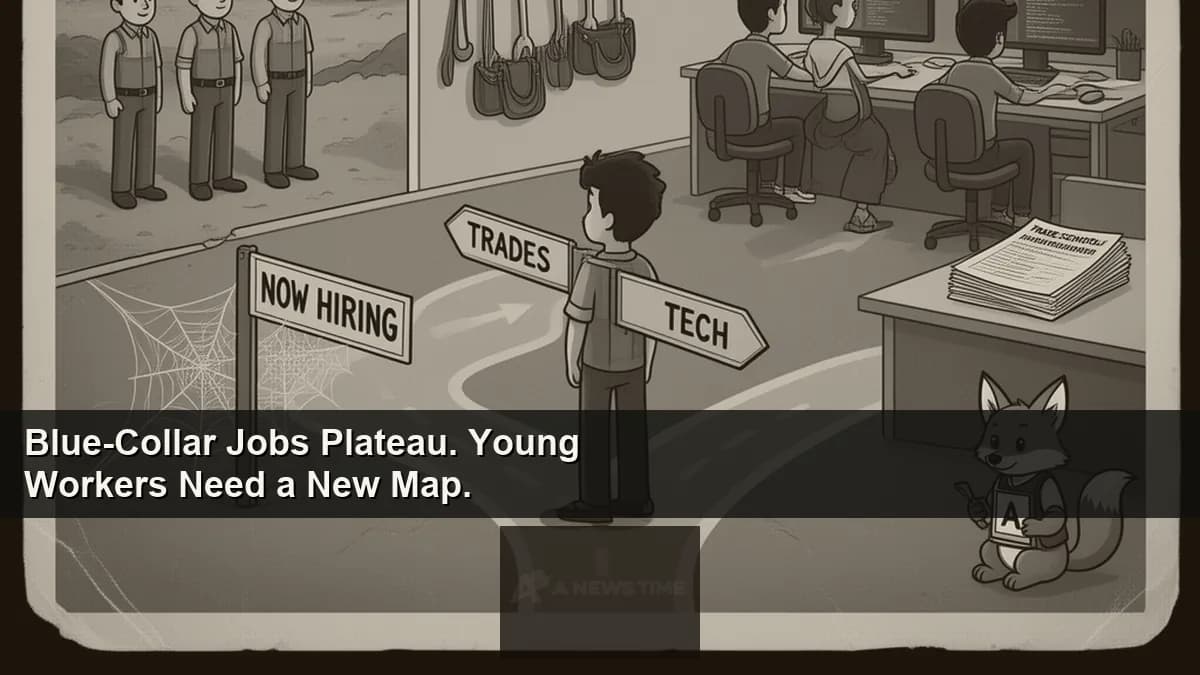
The Alabama Department of Workforce's February 2026 labor market report, released this week, identified registered nursing and retail as the state's top job categories by openings. The combination points toward a two-track labor market: white-collar entry-level hiring is compressed while skilled trades, healthcare, and retail have more openings than workers to fill them.
The Grand Canyon University Signal
Grand Canyon University's record 33,251-graduate class, announced on , is a data point worth looking at on the supply side. GCU's graduating class for the 2025-to-2026 academic year set a university record, and the institution framed the announcement around its pipeline into "high-need professions" nationwide. The university's own graduate employment data, which tracks placement by degree category, consistently shows nursing, education, and healthcare-adjacent majors outperforming general business and liberal arts graduates in first-year employment rates.
The GCU story tells you something about how higher education is adjusting to the two-track labor market. Institutions with strong nursing and healthcare programs are growing enrollment and graduating record classes. Institutions with legacy strength in liberal arts and general business are seeing tighter employment outcomes for their graduates. The policy conversation about the value of college degrees, which has been running hot in 2025 and 2026, is partly a conversation about which degree at which institution is holding its value, not whether college degrees as a class are worth pursuing.
"Grand Canyon University will celebrate another record-breaking graduating class of 33,251 students in the 2025-26 academic year."
Grand Canyon University press release, April 22, 2026
What Gen Z Job-Seekers Are Actually Doing
The Opinion discussion surfaces a few recurring strategies among the job-seekers it profiles. Several have extended their education with additional degrees, professional certifications, or specialized master's programs in hopes of bypassing the compressed entry-level market. Others have taken positions in healthcare, trades, or skilled services that their original major did not point toward. A meaningful share have moved to lower-cost regions of the country where living expenses are more manageable on entry-level wages that have not kept pace with inflation.
The pattern that does not show up as prominently as might be expected is the gig economy. The 2015 through 2020 narrative about Gen Z and millennials opting into freelance, gig, and creator-economy work has given way to a more traditional set of job-search strategies. Customers who can afford to, hold out for conventional full-time roles. Those who cannot take roles in healthcare, trades, or retail where openings are available. The pivot to freelance or creator work, which was supposed to be the generation's signature adaptation, has been more modest in practice than the earlier discourse projected.
The data on remote and hybrid work adoption is stable. Remote-first and hybrid job postings remain available at meaningful share, particularly in technology and professional services, but the compression of entry-level postings means remote options have also shrunk for new graduates even where they remain available for mid-career and senior roles.
What Employers Are Missing
The under-reported story in this dynamic is what employers may be losing by pulling up the ladder. Junior staff in consulting, law, finance, and corporate strategy roles have historically served two functions. The visible function is producing the research, analysis, and document preparation that senior staff need. The less visible function is providing the development pipeline that produces the next generation of senior staff in those same firms.
If AI tools can substitute for the visible function, firms save money in the short term. But the firms still need senior staff five and ten years from now, and those senior staff have historically been developed from the same associate and analyst programs that are now being compressed. The industries that have been most aggressive in pulling back entry-level hiring may find themselves, later in the decade, with a development pipeline that does not produce the mid-career talent they need.
Some firms have started internal conversations about this. The response, in several cases, has been to restructure junior roles around work that genuinely requires human judgment, client interaction, and complex synthesis that AI tools still do poorly. Whether this restructuring takes hold at scale or whether the near-term cost savings dominate firm decision-making will shape the labor market these firms inherit in 2030 and beyond.
What to Watch
Three specific signals will indicate whether the current trajectory holds or reverses. The first is the 2026 and 2027 BLS data on entry-level unemployment and wages for workers aged 20 to 24. A meaningful improvement would suggest the ladder pull-up is reversing as firms figure out how to integrate AI tools without sacrificing their development pipeline. Continued compression would suggest the trajectory is durable.
The second is federal policy. Senator Kaine's primary care workforce legislation is part of a broader menu of workforce development measures being debated in the current Congress, and the package that does or does not pass will shape how aggressively the healthcare workforce pipeline expands relative to the compressed white-collar pipeline.
The third is AI tool performance itself. The substitution of junior analyst work by AI tools has been credible for document summarization, first-pass research, and structured data extraction. It has been less credible for work that requires original judgment, client-specific context, or integration across multiple domains. If the tools continue to improve at the rate they have been improving since 2023, the compression of entry-level hiring could deepen. If the tools hit a plateau on the judgment-heavy work, firms may find that the restructured junior roles remain necessary and reopen the hiring pipeline.
For related coverage, see our reporting on the skills-based hiring shift reshaping the entry-level market, on the AI skills gap that has grown faster than training programs can close, and on the skilled trades boom in data center construction that has produced six-figure salary opportunities.
Sources
- Opinion: There's Another Reason Gen Z Can't Find Work - The New York Times
- Nearly 90 Employers at Vermilion County Career Expo - Vermilion County First
- New legislation targets primary care workforce shortages across U.S. - WSLS
- Grand Canyon University sends record 33,251 graduates into the marketplace - GCU News