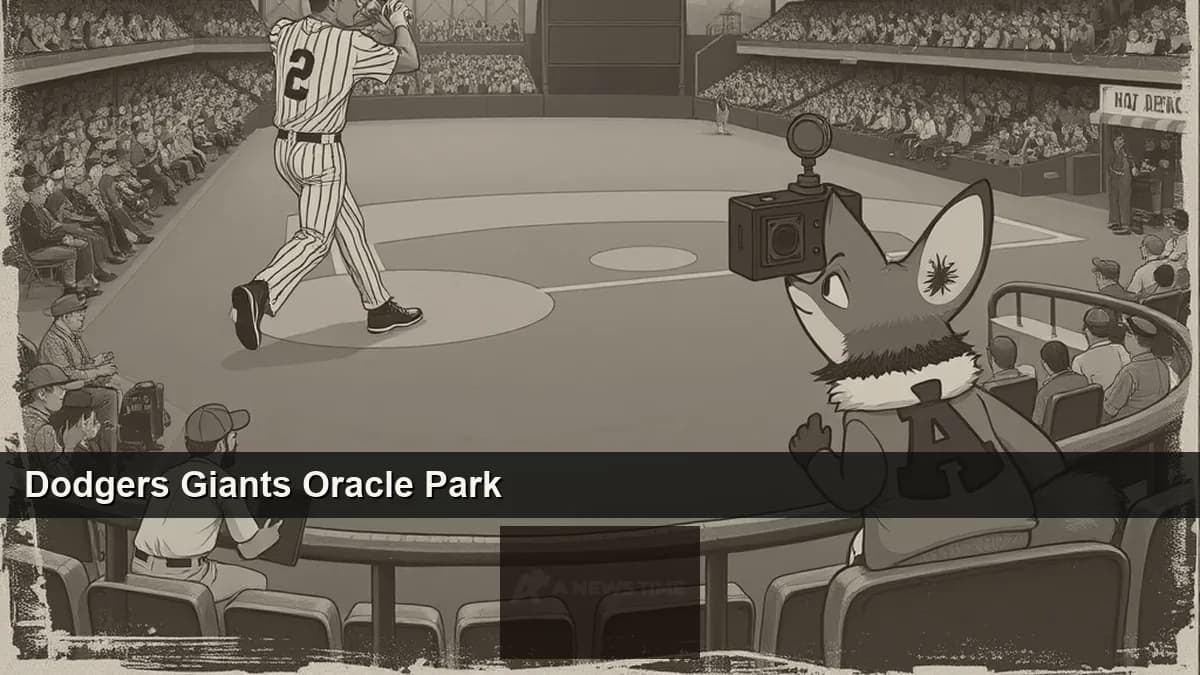
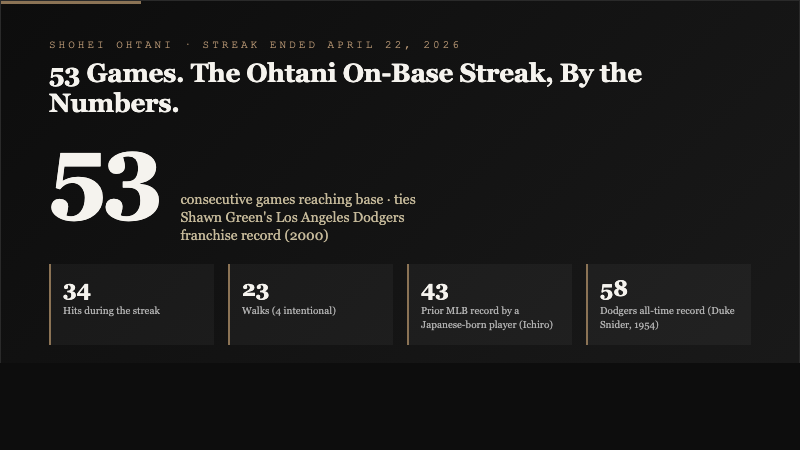
Shohei Ohtani went 0-for-4 at Oracle Park on Wednesday night, , ending a 53-game on-base streak that tied him with Shawn Green for the longest in Los Angeles Dodgers history. The Dodgers lost 3-0 to the San Francisco Giants after Patrick Bailey broke a scoreless game with a three-run home run in the sixth inning, struck off reliever Anthony Banda moments after Ohtani left the mound having thrown six scoreless innings of his own.
The streak dated back to . Over those 53 games Ohtani collected 34 hits, drew 23 walks, and saw four intentional walks. It was the longest streak of his career, eclipsing a 36-game run he posted from September 2022 through April 2023 while still with the Los Angeles Angels.
How the Streak Ended
The shutout itself was the twist. Ohtani pitched through six scoreless innings, striking out batters on the Giants' side of the ledger while producing nothing at the plate against San Francisco's starter. His fourth at-bat came in the top of the ninth with two outs and a runner on base. A ground ball ended it.
By the time Ohtani was due up for that final plate appearance, the Dodgers had already surrendered the three-run Bailey homer. San Francisco led 3-0 entering the ninth, and the Dodgers' hopes of extending the streak came down to one more at-bat in a tied-late game that had turned against them. The scoreless line over Ohtani's six innings on the mound underscored the frustration: he gave Los Angeles a quality start and still took a loss, a statistical outcome that has been increasingly common for pitchers in a Dodgers rotation that has scored unevenly during the opening month of 2026.
| Metric | Value |
|---|---|
| Games | 53 (tied for longest in LA Dodgers history) |
| Start date | August 24, 2025 |
| End date | April 22, 2026 |
| Hits during streak | 34 |
| Walks (including intentional) | 23 (4 intentional) |
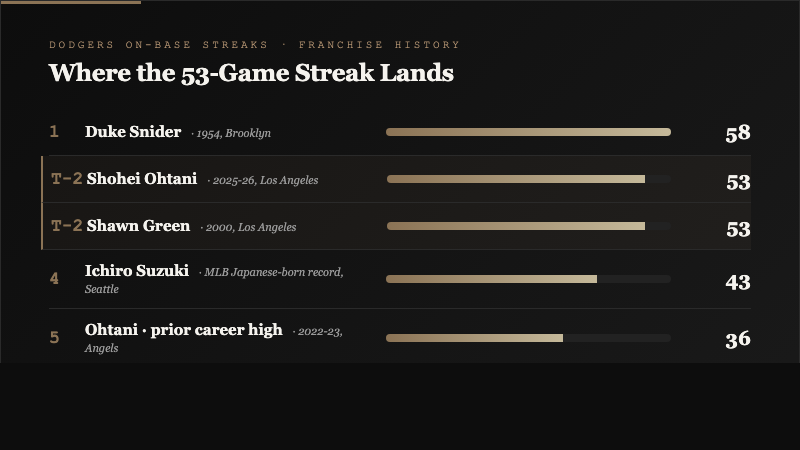
| Previous career high | 36 games (Sep 2022 - Apr 2023, LA Angels) |
| Japanese-born MLB record | Yes (previous: Ichiro Suzuki, 43 games) |
| LA Dodgers franchise record | Shawn Green, 53 (April 25-June 23, 2000) |
| Dodgers franchise record (includes Brooklyn) | Duke Snider, 58 (1954) |
What Dave Roberts Said About the Run
Dodgers manager Dave Roberts had addressed the streak before it ended, and his framing of the achievement was more interesting than the usual manager-speak. Roberts said he was already mulling whether to rest Ohtani more often on days he pitches. The two-way workload that has defined Ohtani's career since the Angels first unlocked it in 2018 is entering a new kind of stress test now that he is chasing both pitching innings and everyday at-bat totals for a first-place team.
"It speaks to his talent. You can see him hustling down the line there to keep that inning going, to get that infield hit. Shawn had a great streak. For him to tie that streak, or eclipse it, says a lot about Shohei. He's really not hit his stride yet. He's really not comfortable with his swing. It just shows that he's still an impact player. He's getting on base. The streak speaks to that."
Dave Roberts, Los Angeles Dodgers manager
The line about Ohtani not being comfortable at the plate is worth taking seriously. His swing data through the first three weeks of the 2026 season has been fractionally below his 2025 norms on barrel rate and average exit velocity, but his plate discipline metrics have actually improved. The 23 walks inside the streak, four of them intentional, explain how a stretch with middling power output still kept him on base for 53 consecutive games.
Why This Streak Is Different From the Hitting Streaks Fans Notice
On-base streaks are harder to track publicly than hitting streaks, but they are in many ways a better measure of a hitter's quality over a stretch. A player can reach base via walk, hit-by-pitch, or hit, which means a disciplined hitter who grinds at-bats can extend an on-base streak through slumps in contact quality. The Ichiro Suzuki comparison matters here: Ichiro's 43-game Japanese-born record from his Seattle Mariners years was primarily built on his elite contact ability, not his walk rate.
Ohtani's streak represents a different kind of sustained performance. Drawing walks at a rate that averages out to roughly one every 2.3 games across 53 consecutive starts, while still pitching in his regular rotation spot, puts him in rare company as a two-way player. The four intentional walks are the most telling: opposing managers were willing to put him on base rather than risk the kind of damage he did against right-handed pitching in 2025.
The Workload Question the Dodgers Will Have to Answer
Roberts's hint at more rest days for Ohtani on pitching afternoons is the kind of quiet management decision that shapes a 162-game season more than any single trade deadline move. Ohtani has pitched six scoreless innings Wednesday. The standard expectation for a starter who throws six shutout innings on normal rest is to slot back into the rotation in five days and produce a similar workload. Overlaying that expectation with four plate appearances per game over the next five starts adds up to roughly 20 at-bats inside a window where, historically, pitchers do not bat at all.
The 2018 Angels were the first team to treat this as an ongoing scheduling problem rather than a novelty. Los Angeles's solution inside that first Ohtani season was to give him rest the day after each pitching appearance, which meant he gave up one plate appearance every five-game rotation cycle but preserved his arm and body for both jobs. The modern Dodgers iteration has been more aggressive, letting Ohtani hit on his pitching day when his spot comes up, which is part of why the 53-game streak was even possible. Pulling back from that aggressive posture, as Roberts suggested, could remove roughly 15 to 25 plate appearances across a season.
For a player who is going to exceed 600 plate appearances across a full season regardless, the marginal cost is small. For the streak-adjacent statistical records, the marginal cost is larger. Ohtani's pursuit of another on-base streak of any significant length runs directly against a more conservative workload plan, and the Dodgers' front office will likely land on preserving body over preserving streak when the trade-off comes into focus again in the middle of the season.
The Duke Snider Benchmark
The Dodgers franchise record Ohtani did not catch belongs to Duke Snider, who reached base in 58 consecutive games during the 1954 Brooklyn Dodgers season. That mark also stands as the National League record among modern-era players, though it has been eclipsed several times by American League hitters during offensive eras with higher walk rates.
Ohtani finishing five games short of Snider is a narrative that will frame the rest of his 2026. He has already broken one Shawn Green record with his 50th home run in 2025, and his run at Snider was close enough that a hotter swing in April could have put him in range. The reality is that an on-base streak of that length is one of the more fragile achievements in baseball: a single 0-for-4 night with no walks ends it, and the variance introduced by pitching every five to seven days raises that risk.
"Ohtani's streak is the best demonstration in the modern era of what sustained plate-discipline production looks like from a pitcher-hitter. The walks matter as much as the hits. That's what made the Shawn Green comparison hold."
Roberto Rojas, Dodger Blue beat analyst
The Nagasaki Survivor Moment
There is a human context to this streak worth recording alongside the stats. On , three days before Wednesday's 0-for-4 at Oracle Park, Ohtani met Momoyo Nakamoto Kelley at Coors Field in Denver. Kelley is 100 years old. She survived the 1945 Nagasaki bombing when she was 19, emigrated to the United States in the early 1950s, and became a lifelong baseball fan. She watched her favorite player go 1-for-4 that day in a 4-3 Dodgers loss to the Colorado Rockies, and Ohtani's ninth-inning single extended the streak to 50 games.
Dodgers broadcaster Stephen Nelson told Ohtani Kelley's story after a throwing session. Manager Dave Roberts, pitcher Roki Sasaki, and Rockies pitcher Tomoyuki Sugano, all Japanese-born, joined Ohtani for photos with Kelley. The sequence that ended at 53 games effectively started and ended with the kind of stories that make baseball's longer streaks land differently than NBA scoring runs or NFL touchdown streaks.
What Comes Next
Roberts's suggestion that the Dodgers might rest Ohtani more often on pitching days is the most actionable consequence of the streak ending. The two-way workload has been sustainable for Ohtani to date, but 2026 is a year in which the Dodgers intend to contend for another title and Ohtani's at-bats and innings both carry unusually high marginal value in close games. The team's depth at DH and across the infield gives Roberts the option to manage workload more aggressively than the Angels ever did during Ohtani's earlier career there.
For the rest of the Dodgers, the immediate task is responding to a Giants sweep of the opening game of a three-game series. San Francisco has been the more consistent of the two California-based National League West contenders through the opening three weeks, and Bailey's three-run home run off Anthony Banda was the kind of late-inning damage that has separated the 2026 Giants from a year ago.
For Ohtani, the more important question is whether the on-base streak pointed to a compressed hot stretch that has yet to fully arrive. Roberts's own description of a player "not comfortable with his swing" producing 34 hits and 23 walks across 53 games suggests that the next stretch, when the contact quality catches up, could be one of the louder runs of his career. For related coverage, see our reporting on Ohtani's 50-home-run season, on the 2026 MLB opening-day storylines around the Dodgers, and on broader sports business trends shaping the 2026 season.
Sources
- Shohei Ohtani On-Base Streak Ends At 53 Games - Dodger Blue
- Shohei Ohtani's MLB Asian record on-base streak comes to an end at 53 games - Olympics.com
- Shohei Ohtani's on-base streak ends in Dodgers' loss to Giants - USA Today
- Shohei Ohtani's on-base streak ends at 53 games in Dodgers' loss to Giants - Sportsnet