The 2026 labor market arrived with a word that economists keep reaching for: uneven. The broad headline numbers suggest stability. JP Morgan's labor market forecast published in March 2026 projected unemployment peaking at approximately 4.5 percent before stabilizing, a figure consistent with what most labor economists classify as near-full employment. But inside that aggregate stability is a distribution of outcomes that looks nothing like the headline would suggest. Some sectors are hiring aggressively and cannot find qualified candidates. Others are contracting, cutting, and standing hiring freezes that have lasted months. The candidates who are navigating this market are increasingly discovering that the factors that determine which side of that divide you land on have shifted substantially from what they were even three years ago.
Jordan Clark, an analyst at Merit America whose March 2026 report on the 2026 labor market is among the more granular assessments published this year, described the current environment as a market that rewards preparation and punishes assumption. Candidates who arrive with current, demonstrable, job-relevant skills are finding opportunities. Candidates who arrive with credentials from a prior era of hiring expectations, or with a general degree and little else, are finding that the market has become considerably less forgiving of the assumptions those credentials used to justify.
The Skills-Based Hiring Shift Is Not a Trend Anymore
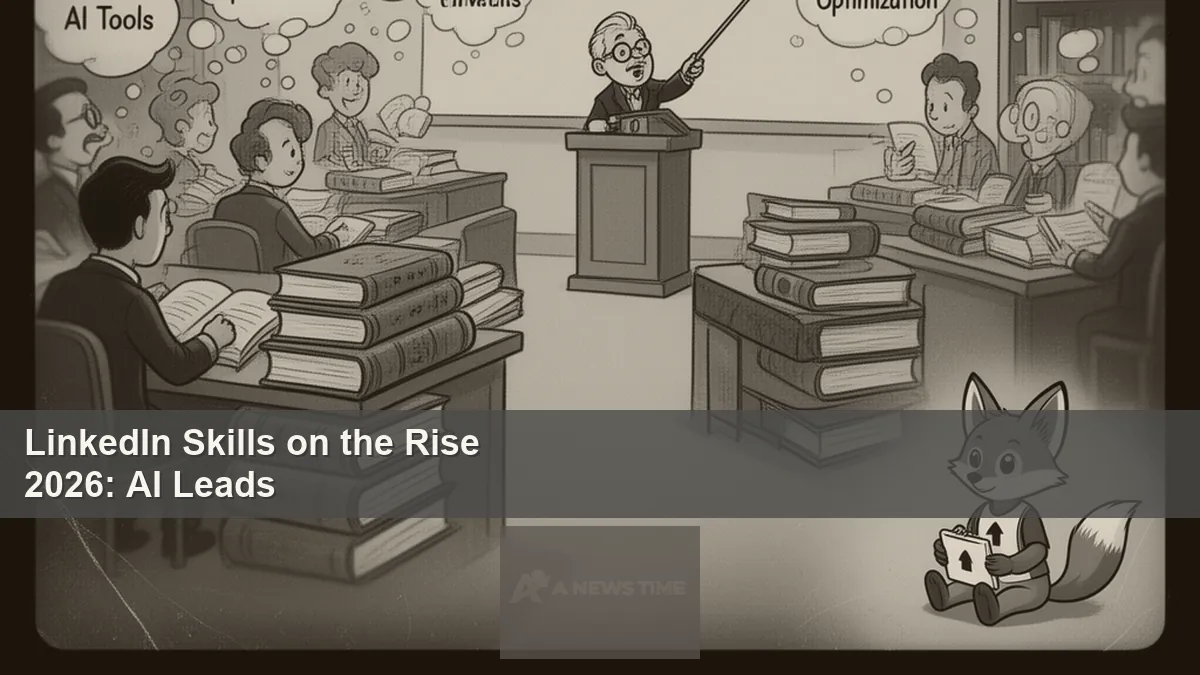
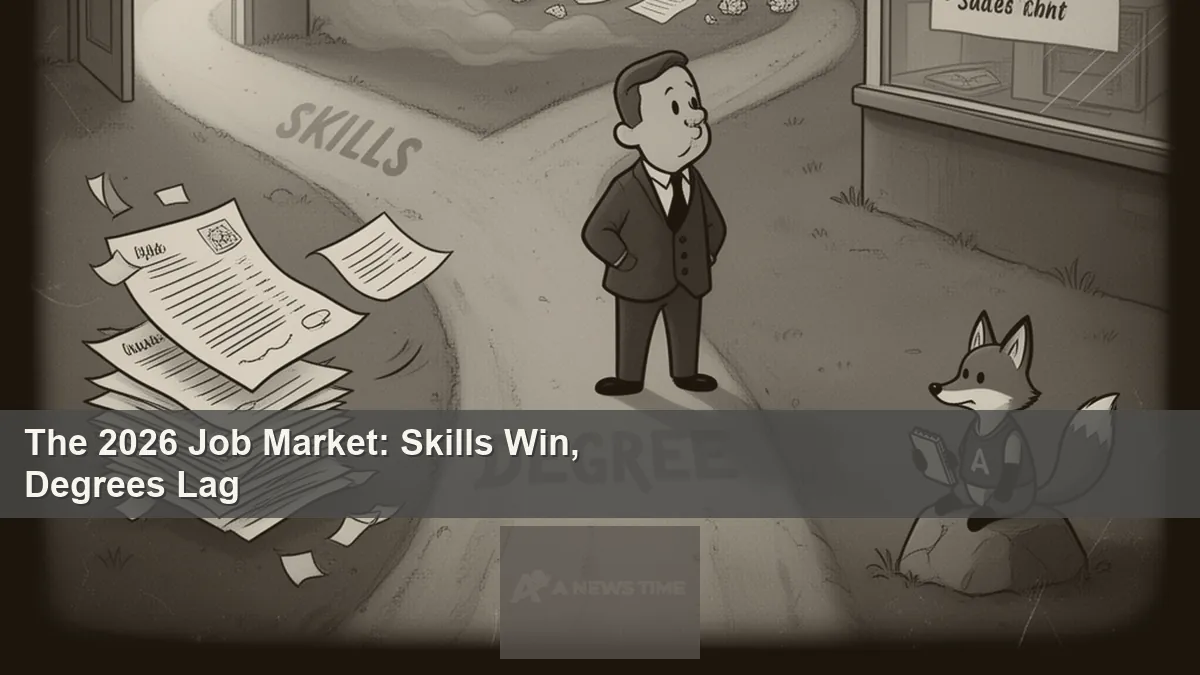
Skills-based hiring has been described as an emerging trend for so long that the phrase has lost some of its meaning. It is more accurate in 2026 to describe it as the default hiring methodology among a significant majority of employers. Merit America's research found that 85 percent of employers now use skills-based hiring practices as at least part of their candidate evaluation process, up from figures in the 60 to 70 percent range three years ago.
The operational meaning of skills-based hiring varies across employers, but the core practice is consistent: evaluation is structured around what candidates can do rather than where they went to school. This takes several forms. Skills-based job descriptions that list required competencies rather than required credentials. Technical assessments or work samples that test relevant abilities before or instead of relying on educational background as a proxy. Performance-based interviews that ask candidates to solve actual problems rather than describe their academic history. And, most significantly for the candidate experience, the removal of degree requirements from job postings that previously listed them reflexively rather than because a degree was actually necessary to perform the work.
The scale of that last change is striking. When degree requirements are removed from job postings, the pool of applicants who meet the remaining qualifications expands dramatically. Research cited in Merit America's report found that removing a degree filter from a typical professional job posting expands the qualified candidate pool by approximately 19 times. That figure is not about lowering standards. It is about revealing how much qualified talent degree requirements were excluding without any corresponding benefit to job performance, since the degree requirement in those cases was never actually predictive of the relevant capabilities.
"The shift to skills-based hiring is accelerating because employers who made the change are finding that their quality of hire has not declined. In many cases it has improved. When you hire for what someone can actually do, rather than where they did or didn't go to school, you tend to get better matches between role requirements and candidate capabilities. That outcome, repeated across hiring cohorts, is what drives adoption."
Jordan Clark, Labor Market Analyst, Merit America, March 2026
The Digital Skills Premium Is Pulling Away from the Average
Inside the 2026 labor market, the single most consistent predictor of strong outcomes is digital skills, specifically the kind of applied, tool-specific digital proficiency that employers can test and verify rather than the kind that appears on a resume and requires inference. Gallup and AWS research published in late 2025, cited extensively in the Merit America analysis, found that workers with demonstrable advanced digital skills earned wages 40 to 65 percent higher than workers in comparable roles without those skills.
The premium is not distributed uniformly across digital skills categories. Basic digital literacy, the ability to use common software applications and navigate digital environments, produces only a modest wage premium because it has become effectively universal among active labor market participants. The substantial premium attaches to a narrower category of skills: the ability to build and prompt AI systems, analyze and interpret structured data, design and automate workflows, and use domain-specific platforms that require genuine training to operate effectively.
Among those higher-value digital skill categories, AI-adjacent skills are currently generating the most acute hiring demand relative to available supply. Employers who need candidates who can work effectively with AI tools, whether that means building AI-integrated workflows, evaluating AI outputs, managing AI-augmented teams, or understanding the limitations of AI well enough to deploy it safely, report that the gap between demand and available talent is wide and growing. That gap is what drives the premium, and it shows no sign of closing quickly because the skills themselves are evolving faster than training pipelines are expanding.
The geographic distribution of the digital skills premium adds another layer of complexity. Workers in major metropolitan labor markets have more access to employers competing for scarce digital talent, and the bidding dynamic that creates produces the highest premiums. Workers in smaller markets may find that premium is available remotely, but navigating a competitive remote hiring market requires its own form of preparation, particularly around how to signal relevant skills to employers who cannot evaluate them through local professional networks.
The Applicant Tracking System Bottleneck
Skills-based hiring as a philosophy and skills-based hiring as a candidate experience are not the same thing, and the gap between them is concentrated at a specific point in the hiring process: the ATS. Merit America's research found that more than 80 percent of companies with more than 50 employees use an automated applicant tracking system as the first filter in their hiring process. That system screens for keywords, credentials, and format markers before a human reviewer ever sees the application. Only 1 in 4 resumes submitted through online portals reaches a human reviewer.
The ATS creates a specific problem for skills-based hiring. An employer who has genuinely shifted to evaluating candidates on demonstrated skills cannot evaluate those skills if the candidate's application is filtered out by an automated system before it reaches a human reviewer. Candidates who understand how ATS systems work can optimize for them. Candidates who do not understand the filtering mechanism may be more qualified than candidates who pass the filter, and never know they were eliminated.
The optimization is not complex, but it is specific. ATS systems primarily screen for keyword matches between the job description and the resume. Candidates who include the exact language from the job description for the skills they actually possess pass the filter. Candidates who describe the same skills in different language, even more sophisticated or accurate language, often do not. This creates a document design challenge that is orthogonal to actual qualification: the resume must be written for the machine before it can be read by the human.
The practical implication is that the shift to skills-based hiring has not eliminated the credential signaling game in hiring; it has changed the language of that game. Where the old game required a degree from a recognized institution, the new game requires a skills-optimized resume document that passes automated screening for the right keywords, followed by a demonstrated performance in technical assessments and interviews. For candidates who understand both layers, the 2026 labor market is navigable. For candidates who understand only one or neither, it is not.
The Education-to-Employment Gap Is Widening, Not Closing
The skills-based hiring shift is accelerating at a pace that traditional education systems are not matching. The lag between the skills employers need, the skills education systems produce, and the skills workers actually hold is the central tension in the 2026 labor market. It is not new, but it is widening rather than closing.
The specific areas of mismatch vary by sector, but the pattern is consistent. Employers hiring for roles that require AI tool proficiency find that candidates with degrees in directly relevant fields often have theoretical knowledge of AI and limited practical experience with the specific tools the role requires. Employers hiring for roles in data analysis find similar gaps between academic training and the messy, ambiguous, domain-specific data problems that characterize actual work environments. Employers hiring for roles that require strong communication and client management skills, the category that consistently tops employer priority surveys, find that candidates often underestimate how central those skills are to advancement and underinvest in developing them during their educational years.
The response from the market side has been an expansion of the alternative credential space: bootcamps, micro-credentials, employer-sponsored training programs, and skills-verification certifications from technology companies and professional associations. Those alternatives are genuinely filling gaps for some candidates. They are also creating new navigation challenges, particularly for candidates without the resources or information infrastructure to distinguish programs that produce employer-recognized outcomes from programs that produce certificates with no market value. That navigation challenge is the subject of growing research attention, including findings about the credential quality problem that will change how both employers and candidates approach the alternative credential market.
The fundamental misalignment between education timelines and labor market dynamics will not be resolved by any single policy or program change. The labor market of 2028 or 2030 will have a different skills priority distribution than 2026, and the education systems currently being redesigned for 2026 will produce graduates in 2029 or 2030. That lag is structural. The candidates who navigate it best are those who treat skill development as a continuous practice rather than a phase that ends when formal education does, maintaining an active view of where the market is moving and building toward it rather than relying on a fixed credential to carry them through a career that will change around them.
Sectors Where the Hiring Market Is Actually Strong
The 2026 labor market's unevenness has a positive dimension that aggregate anxieties about AI disruption can obscure. Several sectors are not just stable but experiencing genuine talent shortages that are producing strong hiring conditions for qualified candidates.
Healthcare continues to expand across virtually every role category, from clinical positions requiring advanced degrees to support roles accessible to candidates without four-year credentials. The demographic drivers of healthcare demand are structural and long-term, making healthcare one of the most reliable hiring environments in the current market. The specific skills in shortage include clinical technology proficiency, particularly the ability to work effectively with EHR systems, AI diagnostic tools, and remote care platforms, all areas where the healthcare system's adoption curve is running ahead of its workforce preparation.
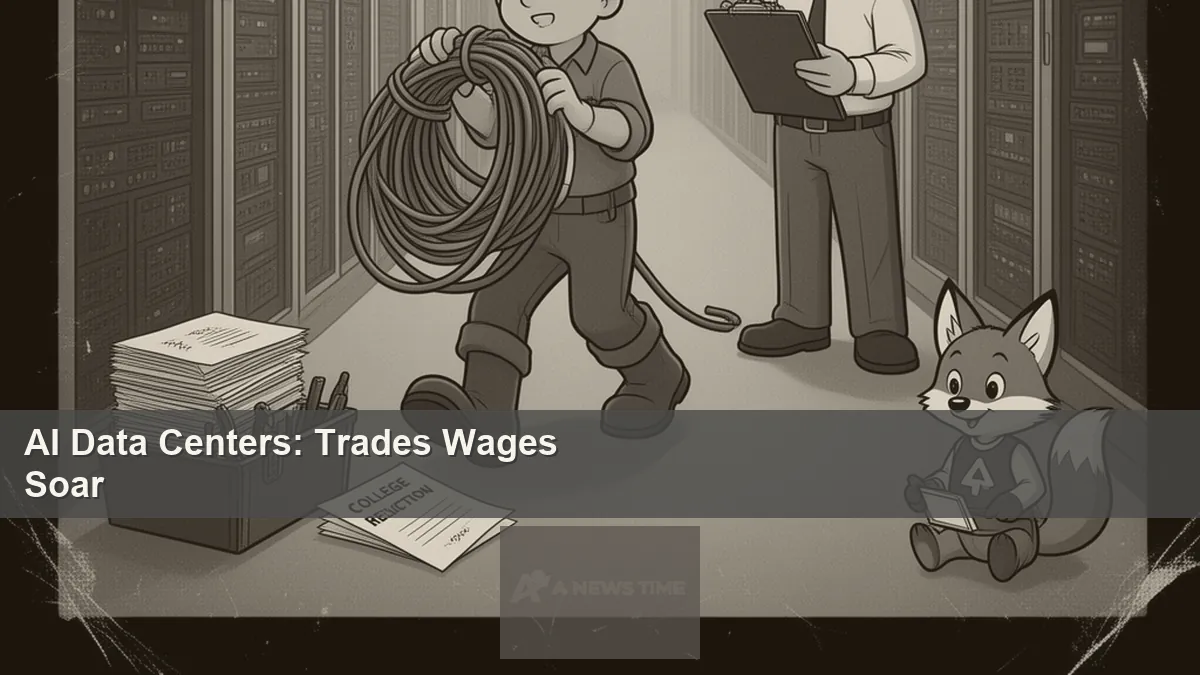
Infrastructure and skilled trades are experiencing hiring demand that has outpaced the pipeline of qualified candidates for several years. The combination of aging workforce demographics, decades of underinvestment in vocational training pipelines, and the infrastructure spending surge of the early 2020s has created a structural gap that is expected to persist through the end of the decade. Wages in skilled trades have risen substantially in response, and the wage premium for advanced trade skills, particularly in electrical, HVAC, and industrial automation, now substantially exceeds what comparable years of education investment would produce in many office-based career paths.
Cybersecurity and data infrastructure roles remain acutely undersupplied relative to demand, with the gap between open positions and qualified candidates consistently estimated in the hundreds of thousands across the major hiring geographies. The entry points into cybersecurity have diversified over the past five years, with employer-recognized certifications from CompTIA, ISC2, and similar bodies providing viable on-ramps that do not require four-year degrees. Candidates who have built demonstrable skills in these areas and hold relevant certifications are finding that the 2026 market is highly competitive in their favor.