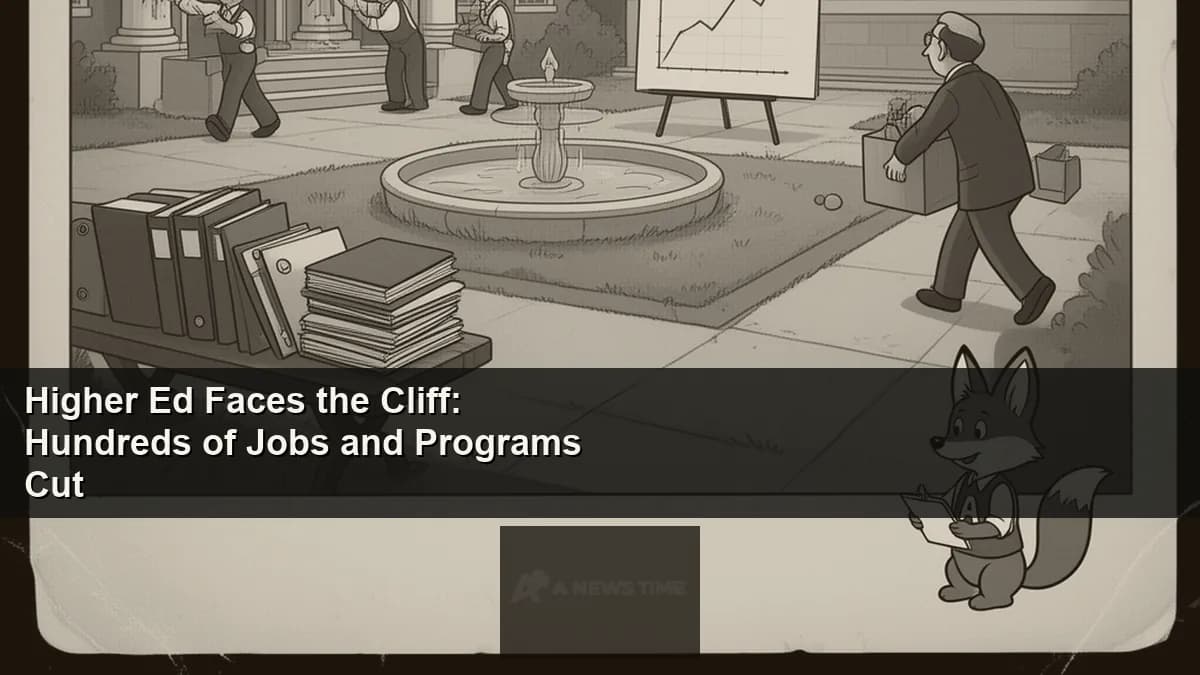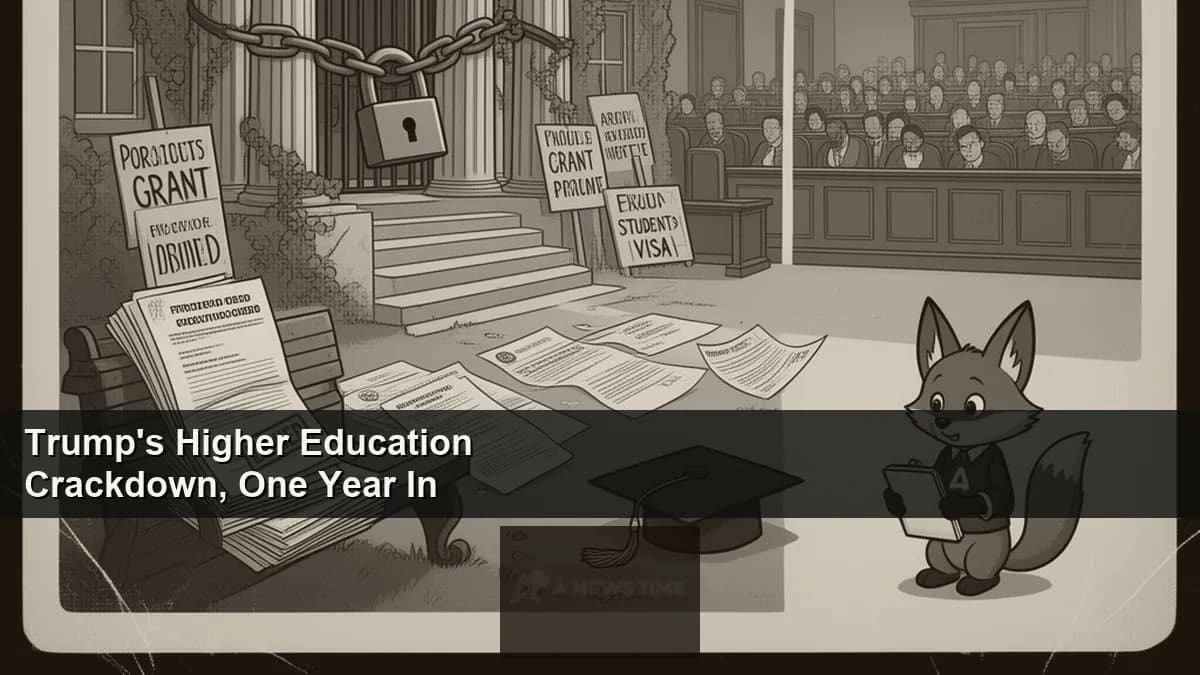
One year into its second term, the Trump administration has pursued an agenda toward American higher education that is broader in scope, faster in execution, and more legally contested than almost any previous federal intervention in university affairs. The targets are numerous: federal research grants at elite universities, DEI programs at all institutions receiving federal funds, student visa status for hundreds of foreign nationals, the financial independence of institutions that have resisted administration demands, and the Department of Education itself. The scale is without modern precedent, and the outcomes remain genuinely uncertain as courts, universities, and the administration continue to contest what federal authority over higher education actually permits.
This piece attempts to organize that complexity into something coherent: what has happened, what has been blocked, what has stuck, and what it means for students, faculty, and institutions navigating a rapidly shifting environment.
The Grant Freezes: Harvard, Columbia, and the Leverage Strategy
The most financially consequential actions of the first year have been the targeted freezes and cuts to federal research grants at specific universities. The pattern established early: the administration identifies a university as non-compliant with its policy demands (related to campus antisemitism enforcement, DEI programs, admissions practices, or cooperation with immigration authorities), announces a freeze or cut to federal funding, and sets conditions for restoration. The legal basis for this approach has been contested at every step.
Harvard University represents the most dramatic case. In , the administration froze $2.2 billion in federal grants and contracts to Harvard, citing the university's handling of pro-Palestinian protests and its refusal to provide detailed information about student disciplinary records to federal investigators. Harvard's administration publicly rejected the demands, characterizing them as violations of academic freedom and university autonomy. In , a federal judge ruled that the administration had violated federal law in the manner it executed the freeze, providing Harvard with a partial legal vindication. The grants were not restored immediately, and litigation continued through the end of 2025.
Columbia University's experience differed in outcome if not in approach. Following the administration's announcement of a $400 million funding cut in March 2025, Columbia entered negotiations with federal officials and, unlike Harvard, chose settlement over litigation. The resulting agreement committed Columbia to approximately $200 million in payments and program changes over three years, effectively accepting a portion of the administration's demands in exchange for restoration of the remainder of the funding. The settlement was criticized by faculty governance bodies and civil liberties organizations as a capitulation that would embolden further pressure on other institutions.
"When institutions settle under these kinds of pressures, they are not just resolving their own situation. They are setting a precedent that tells the administration its tactics work, and that precedent affects every university in the country."
Cecilia Orphan, professor of higher education policy, University of Denver
Beyond Harvard and Columbia, the administration issued formal warnings to more than 60 universities in March 2025 citing potential violations of Title VI of the Civil Rights Act of 1964, which prohibits discrimination on the basis of race, color, and national origin in programs receiving federal financial assistance. The warnings covered institutions including Cornell, Northwestern, the University of Pennsylvania, and Princeton, with each facing threats to grant funding if the administration determined the university's response to campus antisemitism was inadequate. In several cases, the administration went beyond warnings to actual funding actions: Cornell and Northwestern both saw portions of their federal funding frozen or placed under review during 2025.
The Visa Revocations: 300-Plus Students and the Chilling Effect
Parallel to the funding actions, the administration moved aggressively on student visa status. Beginning in , Immigration and Customs Enforcement began revoking the visas and SEVIS records of more than 300 foreign students at American universities, with the revocations concentrated among students who had participated in pro-Palestinian protests or encampments in 2024. The legal basis was a provision allowing revocation of student status for individuals deemed detrimental to national interests, a provision that immigration law scholars widely characterized as being applied in an unprecedented and legally dubious manner.
Federal courts intervened quickly in many individual cases, issuing temporary restraining orders that blocked deportation pending fuller legal review. But the revocations achieved a chilling effect that legal victories could not undo. International student enrollment, a significant revenue source for many research universities, declined at several institutions as prospective students and their families recalculated the risk of studying in the United States under current policy conditions. The University of Michigan, UC Berkeley, and Harvard all reported early indicators of declining international applications for the 2026-27 academic year.
The administration also launched investigations into foreign funding disclosures at several universities, including Harvard, Penn, UC Berkeley, and the University of Michigan, examining whether those institutions had properly reported gifts and contracts from foreign governments under Section 117 of the Higher Education Act. The investigations added another layer of federal scrutiny to university finances and governance.
The DEI Executive Order and Its Downstream Effects
On , the administration issued an executive order requiring all federal agencies to terminate programs, contracts, and grants supporting what it defined as DEI activities. For universities receiving federal funds, the order's implications were significant: institutions were directed to eliminate DEI offices, end DEI-focused hiring practices, and certify compliance as a condition of continued federal funding eligibility.
The institutional responses varied considerably across the higher education landscape:
- Compliance and capitulation: Several institutions moved quickly to rename, restructure, or eliminate their DEI offices. Brown University adopted the administration's definitions of prohibited activity in its equal opportunity policies and, more controversially, removed explicit consideration of race from its admissions process before any court order required it to do so.
- Resistance with litigation: A coalition of university faculty associations and civil liberties organizations filed suit challenging the executive order's application to private universities, arguing that the First and Fourteenth Amendments limited federal authority to dictate institutional policy in this manner. Multiple federal district courts issued stays of enforcement while those cases proceeded.
- Quiet restructuring: Many institutions took a middle path, reorganizing DEI-related programming under different names (offices of "belonging," "community," or "institutional culture") while maintaining substantially similar functions. The administration's response to this approach remained inconsistent through the end of 2025.
- Public resistance: A smaller number of institutions, concentrated among well-endowed private universities, publicly maintained their DEI commitments while monitoring legal developments. Harvard's public rejection of administration demands included explicit defense of its diversity initiatives.
The NSF cancellations added a concrete dimension to the DEI order's impact on research. The foundation canceled hundreds of grants that the administration characterized as supporting DEI activities or environmental justice research, including grants for programs designed to broaden participation in STEM fields by underrepresented groups. Researchers who lost funding mid-project faced laboratory shutdowns, graduate student support gaps, and disruptions to multi-year research programs that are not easily paused and resumed.
Dismantling the Department of Education
In , the administration issued an executive order directing the Department of Education to reduce its workforce by approximately 1,200 employees, roughly half the department's total staffing. Secretary Linda McMahon, a former WWE executive appointed to lead the department, oversaw the implementation of what amounted to a partial dismantling of the agency she was nominally leading. The administration's stated rationale was returning educational authority to states and local districts, but the practical effect was a significant reduction in the federal government's capacity to enforce civil rights laws, distribute student financial aid, and monitor institutional compliance with federal regulations.
| Action | Date | Status (April 2026) |
|---|---|---|
| Harvard $2.2B grant freeze | April 2025 | Partially blocked by court; ongoing litigation |
| Columbia $400M cut | March 2025 | Settled at $200M over 3 years |
| 60+ university Title VI warnings | March 2025 | Ongoing compliance reviews |
| 300+ visa revocations | March 2025 | Courts blocked many; appeals continuing |
| DEI executive order | January 2025 | Partially stayed by courts; mixed compliance |
| Dept. of Education staffing cuts | March 2025 | Implemented; multiple legal challenges |
| Accreditation reform order | April 2025 | Implementation pending regulatory process |
| Student loan collection resumed | May 2025 | Active; PSLF restrictions challenged in court |
The department's civil rights enforcement capacity, already stretched before the staffing cuts, declined substantially as experienced investigators and attorneys departed. Advocacy organizations documented a drop in civil rights investigations opened and completed through 2025, raising questions about the administration's selective enforcement: vigorous pursuit of antisemitism complaints at universities while simultaneously reducing capacity to investigate other civil rights claims.
Student Loans: Collections Resumed, Forgiveness Narrowed
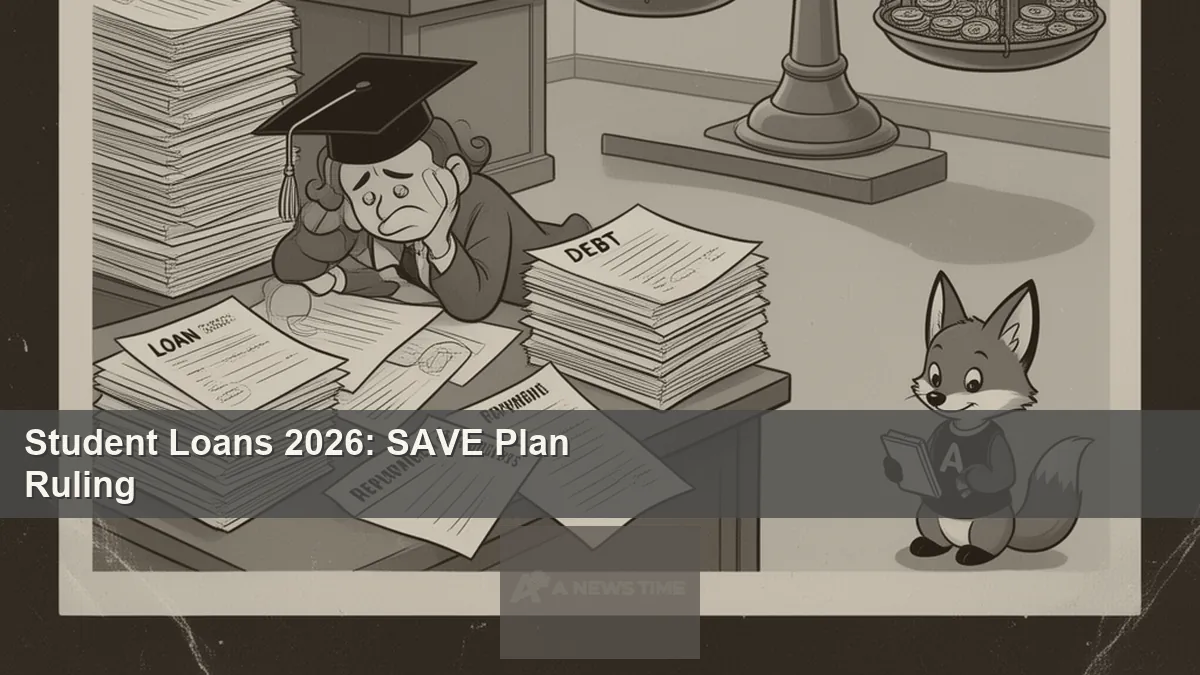
For the roughly 43 million Americans carrying federal student loan debt, the administration's actions have been consequential in ways that affect household budgets directly. The Biden administration's SAVE income-driven repayment plan, which had temporarily paused collections for millions of borrowers while litigation over the plan's legality proceeded, was wound down by the Trump administration in , resuming collections for borrowers who had not been making payments.
The administration also moved to restrict PSLF, the program that cancels remaining federal loan balances for borrowers who work for qualifying public service employers for 10 years while making income-based payments. Proposed regulatory changes narrowed the definition of qualifying employment and applied more restrictive interpretations of prior payment history, affecting tens of thousands of borrowers who had been counting on eventual forgiveness. Multiple legal challenges to the PSLF restrictions were pending in federal courts as of .
A proposed $257,500 lifetime cap on graduate and professional student federal borrowing, introduced as part of broader student loan reform legislation, drew particular concern from law, medical, and doctoral students whose programs routinely carry costs well above that threshold. The proposal had not been enacted into law as of April 2026, but its circulation as a policy proposal affected prospective students' enrollment decisions and financial planning for graduate programs.
"What we're seeing is a simultaneous narrowing of the pathway into higher education through visa restrictions, a destabilization of the institutions themselves through grant freezes, and a shrinking of the financial tools that make college accessible for working-class students. All at the same time."
Sara Goldrick-Rab, professor of higher education policy and sociology, Temple University
The Legal Landscape: Courts as the Limiting Factor
Perhaps the most consistent feature of the administration's higher education agenda in its first year has been the degree to which federal courts have functioned as a check on executive action. Multiple district court judges, appointed by presidents of both parties, have issued stays and temporary restraining orders blocking various elements of the administration's approach.
The September 2025 ruling in the Harvard case, in which a federal judge found that the administration had violated federal law in executing the grant freeze, was among the most significant. The ruling drew on procedural requirements under the Administrative Procedure Act, which requires federal agencies to follow specific processes before taking actions that affect the rights of regulated entities. The administration's grant freeze actions, in the court's assessment, had bypassed those requirements in ways that rendered them legally defective regardless of whether the underlying policy goals were within federal authority.
Courts also intervened in multiple visa revocation cases, in challenges to the DEI executive order's application to private institutions, and in cases challenging the administration's attempts to condition accreditation processes on compliance with its policy preferences. The April 2025 executive order directing changes to the accreditation system, under which regional accrediting agencies determine which institutions are eligible to receive federal student financial aid, was placed under legal review before its implementation could proceed.
Legal scholars tracking the cases noted that while courts had blocked specific actions, they had generally not ruled on the broader constitutional questions about federal authority over university affairs. Those questions, which involve the intersection of the First Amendment, the Spending Clause, and federal civil rights law, were likely to require appellate or Supreme Court resolution. The outcome of those higher-level rulings, anticipated over the next one to three years, will determine what of the administration's agenda survives legal challenge. For students navigating this environment, the enrollment and career implications connect directly to the broader shifts tracked in our coverage of rising college enrollment despite anti-higher-ed sentiment.
Institutional Governance Under Pressure
The pressures on university administrators have produced a wave of leadership turnover and governance strain that has no recent parallel. The resignation of the University of Virginia president in came amid disputes over the administration's demands and the institution's response. Similar leadership transitions at several other institutions were attributed, at least in part, to the difficulty of navigating between federal demands, faculty governance expectations, donor preferences, and legal obligations.
Faculty senates at multiple institutions passed resolutions criticizing their administrations' responses to federal pressure, with particular criticism directed at institutions that settled with the administration or made preemptive compliance moves before court rulings required them to do so. The tension between administrative pragmatism (preserving funding and avoiding legal exposure) and faculty principles (defending academic freedom and institutional autonomy) reflects a genuine structural conflict that the current moment has brought to the surface but did not create.
The accreditation executive order added another dimension to institutional governance pressure. Accreditation by a recognized regional accreditor is the gateway to federal student financial aid eligibility, which for most institutions is the financial lifeline that makes their educational model viable. An administration with the ability to restructure accreditation requirements could, in principle, use accreditation as another lever to compel institutional compliance with policy preferences. Whether that lever can legally be applied to private institutions in ways that override their own governance autonomy is among the unresolved legal questions pending in federal courts.
Who Bears the Costs
The distributional consequences of the administration's actions fall unevenly across the higher education system, and not always in ways that align with the political narrative about elite institutions being the primary targets.
Research universities with large federal grant portfolios face the most direct financial exposure from grant freezes. But the researchers most affected within those universities are often not the tenured faculty whose positions are protected by institutional tenure policies. They are the postdoctoral researchers, graduate students, and laboratory staff whose positions are funded by the grants themselves and who face immediate job loss when grants are canceled or frozen. The effect on graduate education is particularly significant: grants that fund doctoral student stipends cannot be easily replaced by institutional funds in the short term, meaning disrupted doctoral programs and delayed degree completion for students who made long-term educational commitments based on funding that was subsequently withdrawn.
For undergraduate students at non-elite institutions, the most consequential actions are the student loan changes: resumed collections, PSLF restrictions, and proposed borrowing caps that affect graduate enrollment decisions. These students are disproportionately from lower-income backgrounds, first-generation college students, and students of color who have the most to gain from public service loan forgiveness programs designed specifically to make careers in public service, teaching, and social work financially viable despite lower salaries. The interaction between these loan policy changes and the broader labor market is explored in our coverage of labor market shifts in early 2026 and the evolving workforce skills gap.
International students face a distinctive category of risk. The visa revocations directly targeted students who were already enrolled, disrupting their education mid-program and, in cases where legal challenges failed, removing them from the country. Prospective international students making enrollment decisions for 2026-27 are weighing a visibly riskier environment than existed in previous years, and early application data from several institutions suggests declining interest from students in countries with strong alternative graduate education options.
Frequently Asked Questions
Can the federal government legally freeze grants to universities?
Federal agencies have authority to enforce conditions attached to federal grants, and institutions that receive federal funds agree to comply with various federal requirements. However, the manner in which funding actions are taken must follow procedural requirements under the Administrative Procedure Act, and the conditions themselves must be authorized by statute or regulation. Courts have found that several of the administration's grant freeze actions failed to follow required procedures, which is distinct from ruling on whether the underlying policy goals are permissible.
Which universities have been most affected?
Harvard has faced the largest single funding action, a $2.2 billion grant freeze. Columbia settled a $400 million cut. Cornell, Northwestern, Penn, and Princeton faced funding reviews or partial freezes. More than 60 universities received formal warnings. In terms of policy impact, institutions with large international student populations and significant federal research grant portfolios face the most concentrated exposure.
What happened to the students whose visas were revoked?
More than 300 students had visas or SEVIS records revoked in March 2025. Many obtained temporary restraining orders from federal courts blocking deportation while their cases were reviewed. The legal outcomes varied: some students had their status restored, others faced continued immigration proceedings, and some left the country voluntarily. The episode caused significant disruption to affected students' academic progress regardless of the legal outcome.
Has Congress done anything to check the administration's actions?
Congressional action has been limited. The administration's party controls both chambers, and while individual members from both parties have expressed concern about specific actions (particularly the research grant freezes and their effects on scientific enterprise), no significant legislation constraining the executive actions has advanced. The primary check on the administration's higher education agenda as of April 2026 has been the federal judiciary, not Congress.
What does this mean for students considering college now?
For most domestic undergraduate students, the immediate practical impacts are concentrated in student loan policy: resumed collections, potential PSLF restrictions, and proposed borrowing caps for graduate school. For international students, the risk calculus around studying in the United States has increased. For doctoral and research students, the stability of grant-funded positions depends on the legal outcomes of ongoing litigation. The situation is in flux, and decisions made now should account for continuing uncertainty rather than assuming the current state represents a settled equilibrium.
Sources
- US News and World Report: Trump's Higher Education Crackdown (comprehensive overview, 2026)
- Reuters: Coverage of Trump administration higher education actions (2025-2026)
- U.S. Department of Education: Official statements and policy announcements
- The Chronicle of Higher Education: Tracking the policy landscape (2025-2026)