Start with a moment that is probably recognizable: it is a Tuesday evening and you are on your fourth situationship in three years, which means you are technically not in a relationship with anyone, which means you are technically fine. The person you have been seeing for two months still has not met your friends. That is okay. It is keeping things light. It is not the same as being afraid.
Zoom out, and that moment is not just personal. It is statistical. More than half of Americans between 18 and 29 are currently single, according to Pew Research Center survey data released this year, and the American Perspectives Survey identifies Gen Z as the generation least likely among those alive today to be in or pursuing a romantic relationship. On , a Rolling Out analysis drew on years of academic research to examine what is actually driving this shift. The picture that emerges is more complicated, and more interesting, than any single explanation can capture.
What the Pew Data Actually Says About Gen Z and Romance
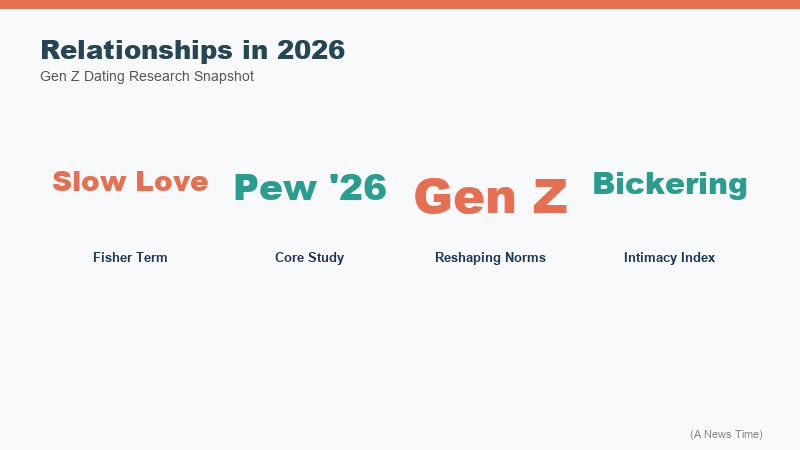
The Pew number, more than 50 percent of 18-to-29-year-olds currently single, is striking because it is not just a snapshot. It represents a directional trend that has been building since at least 2018. Comparable surveys from previous generations at the same age show markedly lower single rates. Millennials at 25, for instance, were far more likely to be partnered, even if informal cohabitation rather than marriage had become the dominant structure.
Dr. Jean Twenge, a psychologist whose research on generational behavior spans decades, has argued that smartphones and social media are central to the retreat from in-person intimacy. Her framework is specific: digital communication offers control that face-to-face interaction does not. You can craft what you say, take time before responding, and disengage without explanation. Traditional romance arrives without those options, and for a generation that grew up with the option of managed distance, the vulnerability of in-person connection can register as asymmetric risk rather than possibility.
"Smartphones and social media have given young people a mode of relating that is fundamentally different from what previous generations had. The control, the ability to edit yourself, the option to disengage without confrontation. Those are not just conveniences. They reshape what feels normal in social interaction, and then real-world intimacy feels abnormal by comparison."
Dr. Jean Twenge, psychologist and author of iGen, quoted in Rolling Out, April 2026
Dr. Helen Fisher, an anthropologist who has studied human pair-bonding across cultures for decades, adds a structural economic layer to Twenge's technological argument. Fisher describes what she calls the "slow love" trend: faced with student debt, competitive job markets, and the rising cost of housing in most major cities, Gen Z is more likely to pursue financial stability before emotional partnership. The instinct is not irrational. A partnership entered into under financial stress has different dynamics than one begun from a position of relative security, and the research on relationship satisfaction broadly supports the intuition that economic stability is a genuine contributing factor to partnership success.
Self-Discovery as Strategy, Not Consolation
Dr. Alexandra Solomon, a psychologist at Northwestern University and one of the more frequently cited researchers in contemporary relationship science, offers a framing that complicates the narrative of Gen Z's singlehood as either a failure or a crisis. Her argument is that this generation grew up with a more developed vocabulary around mental health, consent, and personal identity than any previous generation. That awareness does not make relationships easier. It raises the bar for what a relationship should look and feel like, and crucially, it raises the bar for how ready a person should feel before entering one.
"Gen Z has grown up with a mental health literacy that previous generations simply didn't have. They know what a secure attachment looks like, even if they haven't always experienced it. That knowledge changes the calculation. It's not that they don't want relationships. It's that they want good ones, and they're willing to wait."
Dr. Alexandra Solomon, psychologist, Northwestern University
The result is a generation more likely to invest in friendships, therapy, and personal development before turning attention toward romantic partnership. This is observable in both self-report data and in the commercial success of businesses oriented around personal growth: therapy apps, journaling subscriptions, solo travel companies, and the enormous category of what the wellness industry calls "self-relationship" content.
Our earlier coverage of how Gen Z is redefining romance around personal growth documented this dynamic in detail, tracking how the cultural narrative around singlehood has shifted from something to escape into something to inhabit with intention. The shift is real, though researchers including Solomon note that it comes with its own risks: the perfectionist standard applied to self-development can become another form of avoidance, a way of perpetually not being ready.
Situationships, those undefined arrangements that offer compatibility testing without formal commitment, have proliferated in this context. They are not always satisfying, and research on their psychological effects is mixed. But they offer something many in this generation value acutely: time. Time to see how someone behaves before investing at a level that would make leaving costly.
The Neuroscience of Arguing Well
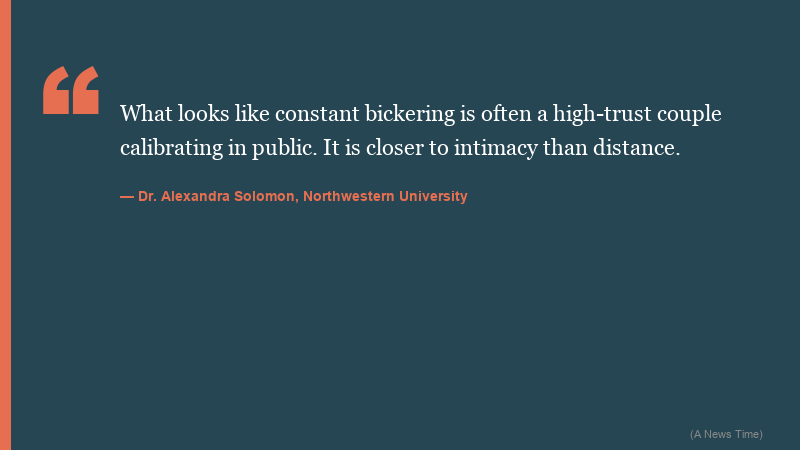
Meanwhile, for the half of the population that is in relationships, a study published in Acta Psychologica this week is offering one of the more counterintuitive findings in recent relationship research: bickering, done constructively and followed by resolution, appears to make partnerships stronger rather than weaker.
The research, conducted at Anhui University in China, monitored couples during conversations designed to provoke conflict, measuring in real time how closely their brain activity patterns aligned during disagreements and immediately afterward. The key finding was not about the content of arguments but about the emotional regulation that accompanies them. When one partner stayed calm while the other expressed frustration, the frustrated partner's anxiety dropped measurably and almost immediately, a phenomenon the researchers describe as intersynchrony.
"Synchronised partners better understand each other's emotional states and respond appropriately, enhancing connection while reducing misunderstandings and conflict. This process allows them to resolve conflict more effectively, maintaining harmony and stability."
Research team, Anhui University, Acta Psychologica, April 2026
The implication is significant. Couples who avoid conflict altogether may be missing out on the emotional attunement that comes from working through disagreement. The key variable is not whether arguments happen but whether one or both partners can maintain emotional regulation during them, and whether the argument reaches resolution rather than trailing off into silence or resentment.
This finding sits in productive tension with a common piece of relationship advice: that the goal should be to minimize conflict. The Anhui study suggests that conflict-avoidant couples may actually be depriving themselves of one of the mechanisms through which emotional intimacy is built. The issue is not the argument itself but whether both people feel safe enough to express frustration and regulated enough to receive it.
Attachment Research and What It Actually Predicts
Attachment theory has become a kind of shared vocabulary in contemporary relationships, widely discussed in therapy, on social media, and in popular books. The concepts are useful: secure, anxious, avoidant, and disorganized attachment styles describe real patterns in how people approach intimacy based on early relational experiences. But the popular version often overstates how fixed these patterns are.
Current attachment researchers, including work being published in 2026 through clinical psychology journals, are increasingly emphasizing what is called "earned security," the documented phenomenon whereby people with insecure attachment histories can develop more secure attachment patterns through sustained positive relational experiences, including therapy and healthy relationships. Attachment styles, in other words, are not life sentences.
Eli Finkel, a psychologist at Northwestern University whose work on modern relationships is among the most cited in the field, has written about how rising expectations for romantic partnerships have changed both the potential rewards and the potential costs of long-term commitment. His research describes a shift toward what he calls the "self-expressive marriage," where partners are expected to function not just as practical collaborators but as vehicles for personal growth, identity affirmation, and psychological fulfillment. That is a lot to ask of one relationship, and Finkel's data suggest that marriages meeting this higher bar are, on average, more satisfying than those of previous generations. The ones that do not meet the bar, however, are experienced as more disappointing.
The pattern connects directly to what we see in Gen Z's delayed relationship timeline. If the bar for a relationship is higher, the period of assessment before committing will be longer. That is not dysfunction. It is a rational response to a more demanding definition of what a relationship should do.
Related reading from our ongoing coverage: our analysis of what a prolonged singlehood study reveals about young adult wellbeing offers detailed breakdown of the psychological literature on how extended single periods affect mental health outcomes, including some findings that complicate the assumption that singlehood is inherently a problem to solve.
Research Snapshot: Key Findings on Relationships in Spring 2026
| Study / Source | Key Finding | Implication for Partners |
|---|---|---|
| Pew Research Center, Gen Z Relationships Survey | More than 50% of 18-29 year-olds currently single | Relationship timelines are shifting later across the generation |
| American Perspectives Survey | Gen Z least likely generation to be in or seeking a relationship | Not a blip; a pattern with demographic implications |
| Anhui University, Acta Psychologica | Couples who argue and resolve grow closer; brain synchrony increases | Conflict avoidance may reduce intimacy over time |
| Northwestern University (Finkel, Solomon) | Self-expressive marriage standard raises both satisfaction ceiling and disappointment floor | Higher expectations mean both greater reward and greater risk |
| Helen Fisher, "Slow Love" Research | Economic instability is a primary driver of relationship delay in Gen Z | Financial foundation precedes emotional investment for many young adults |
What Comes After the Delay
The question researchers are beginning to take seriously is what happens to a generation that has applied rigorous self-knowledge and deliberate pacing to its romantic choices. Will the relationships Gen Z eventually commits to be more durable because of that preparation? Or will the extended period of self-focus create habits of independence that make the compromises of long-term partnership harder to sustain?
The data are still early, and most Gen Z adults are in their mid-to-late twenties, not yet in the life phase where the long-term effects of delayed commitment become visible. Finkel and Solomon both suggest cautious optimism: a generation that understands its own attachment patterns, has experience with therapy, and enters relationships with high and explicit expectations may indeed be better positioned for sustainable partnership than generations that moved more quickly because social scripts demanded it.
Finkel's concern, expressed in his research and public commentary, is different: whether the institutional and community supports for relationship formation, the social contexts where people meet and build shared lives, are eroding at a pace that makes even motivated and psychologically prepared individuals less likely to find partnership. Dating apps reduce friction but also reduce depth of first contact. Remote work reduces the serendipitous proximity that has historically done a lot of relationship-formation work. The ecology of how relationships begin is changing, and the effects of that change are not yet fully understood.
What the week's research offers is not a verdict but a more detailed map. A generation slowing down. A science of conflict that turns out to be a science of intimacy. The distance between those two data points is where most of us are actually living, working out what connection looks like when the old scripts no longer apply.
Frequently Asked Questions
Why are so many Gen Z adults choosing to stay single?
Research points to several overlapping factors: digital communication habits that make in-person vulnerability feel riskier by comparison; economic pressures including student debt and housing costs that make financial stability a prerequisite for partnership; a higher psychological bar for relationship readiness informed by mental health literacy; and a cultural shift that treats self-development as a legitimate alternative to early coupling rather than a detour from it.
What does the Anhui University bickering study actually find?
Researchers at Anhui University tracked brain activity in couples during conflict and found that when one partner stayed emotionally regulated while the other expressed frustration, the frustrated partner's anxiety dropped almost immediately. Couples who argued and then resolved their disagreements showed increased neural synchrony over time. The study concludes that constructive conflict, not conflict avoidance, builds intimacy and relationship satisfaction.
Are attachment styles fixed or can they change?
Attachment styles are not fixed. The concept of "earned security" is well-documented in attachment research: people with insecure attachment histories can develop more secure patterns through sustained positive relational experiences, including healthy relationships and therapy. The popular notion that attachment styles are permanent personality traits overstates what the research actually shows.
What is a "situationship" and how does it differ from a casual relationship?
A situationship is an undefined relational arrangement that involves emotional connection and often physical intimacy but without formal commitment or explicit relationship status. Unlike a casual relationship, which typically has acknowledged boundaries, a situationship exists in deliberate ambiguity. Research on their effects is mixed: they offer lower-stakes compatibility assessment but often generate the anxiety that comes with unresolved expectations.
Does delaying relationships lead to better marriages?
The research is suggestive but not conclusive. Studies including work by Eli Finkel at Northwestern University indicate that relationships entered with higher explicit expectations tend to have higher satisfaction when those expectations are met, but greater disappointment when they are not. The demographic trend toward later partnership has not yet produced long-term data on whether delayed commitment produces more durable marriages. The current cohort of deliberately slow-moving Gen Z daters has not yet reached the life stage where that data becomes visible.