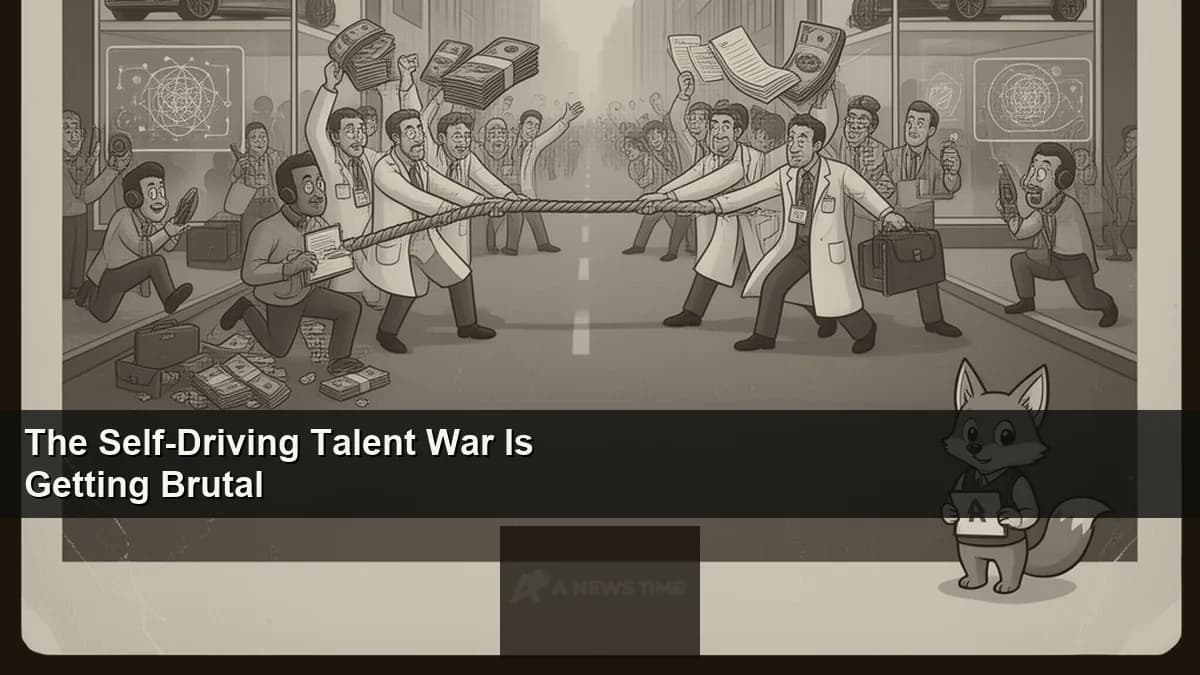
The self-driving vehicle industry has a problem that no amount of compute investment can immediately solve: there are not enough people who know how to build it. TechCrunch Mobility's April 2026 report on AV talent poaching documents a competition for engineers that has become one of the most aggressive in the technology sector, rivaling the peak of the machine learning talent wars from 2015-2020. The difference is that AV engineering requires a specific combination of skills, including embedded systems, sensor fusion, simulation, real-world deployment operations, and machine learning expertise, that takes years to develop and cannot be quickly retrained from adjacent disciplines.
The companies competing most aggressively are the ones with the most to gain from deploying AV technology at scale in the next 24-36 months. Waymo is expanding its robotaxi footprint from four U.S. cities toward a dozen and is actively hiring for geographic expansion teams. Tesla's FSD program is under engineering pressure as the company pursues European regulatory approvals following the Netherlands clearance. Zoox, Amazon's AV subsidiary, is accelerating its development timeline after years of slower-than-projected progress. And scattered across the landscape are former Apple Project Titan engineers who spent years on one of the best-funded and most secretive autonomous vehicle programs ever assembled, now available to the highest bidder.
The AI Overlap: Why AV Engineers Are Worth More Than Ever
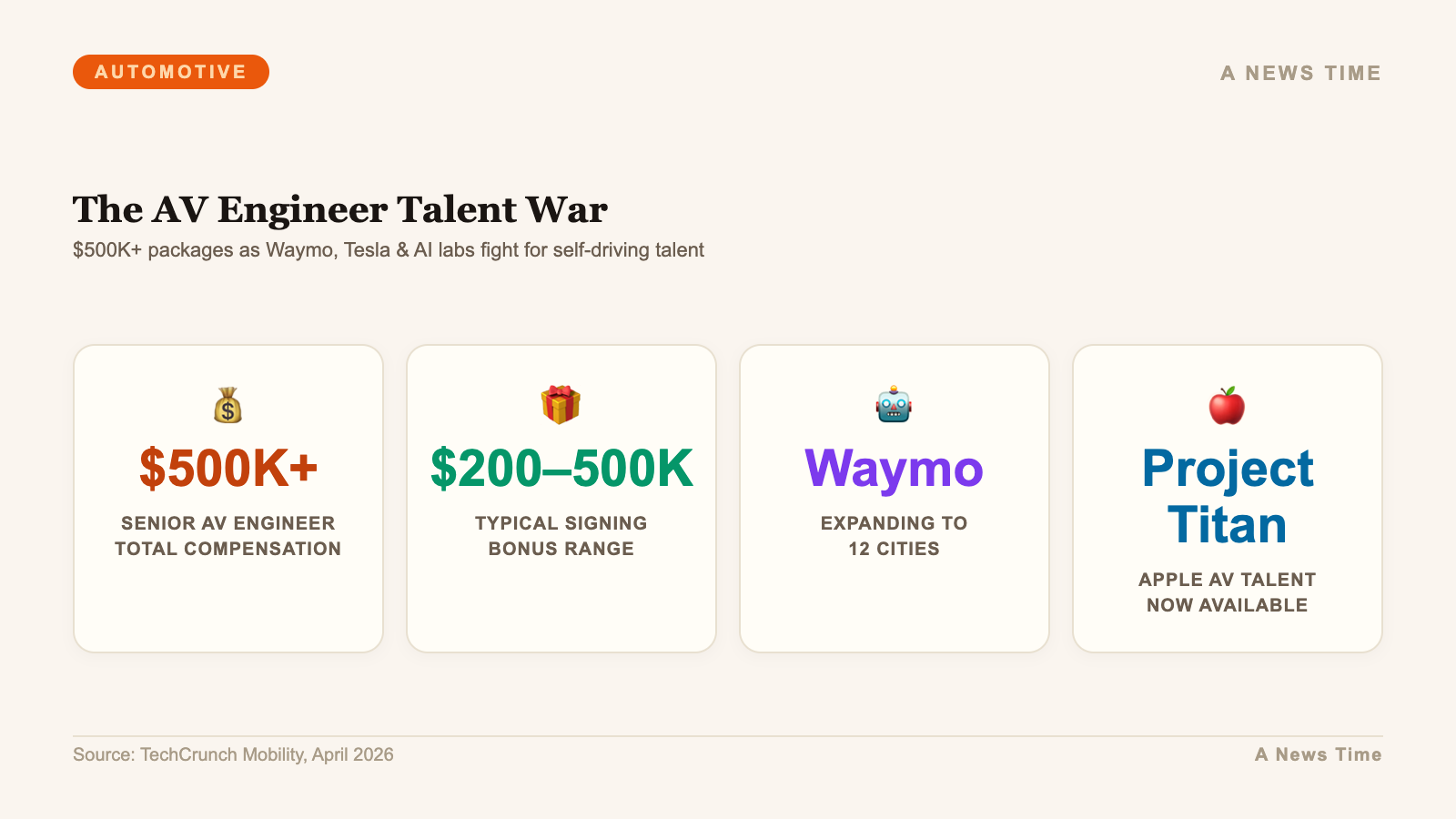
The skills that make a top AV engineer valuable in 2026 are not the same skills that defined the role in 2016. The first generation of AV development leaned heavily on hand-crafted perception algorithms, rule-based decision trees, and high-definition map dependency. Those engineers are still employed and still relevant, but they are not the ones being poached at $500,000 compensation packages.
The modern AV engineer who commands the highest premiums is working at the intersection of large-scale neural networks, real-world sensor data pipelines, and closed-loop simulation systems. These are skills that transfer directly to foundation model development, robotics, and AI infrastructure, making AV specialists attractive to every major technology company simultaneously.
OpenAI, Anthropic, Google DeepMind, and Meta's FAIR lab have all hired AV engineers in the past 18 months, not to build cars but to apply their spatial reasoning, simulation, and multi-modal perception expertise to robotics and embodied AI problems. The competition for the same engineers is therefore not just between Waymo and Tesla; it is between every company that has concluded that physical-world AI is the next frontier.
Tesla's specific situation is instructive. The company's transition from a rules-based FSD architecture to its end-to-end neural network approach, which processes raw camera input rather than relying on HD maps, required a significant engineering talent rebuild. Tesla hired heavily from the computer vision and machine learning research community from 2021-2023, then went through a documented headcount reduction in 2023-2024 that shed some of that talent. Re-recruiting for FSD's European expansion and Cybercab's commercial deployment has made Tesla an active buyer in the same candidate pool it partially sold off two years ago.
Compensation Benchmarks: What AV Engineers Actually Earn
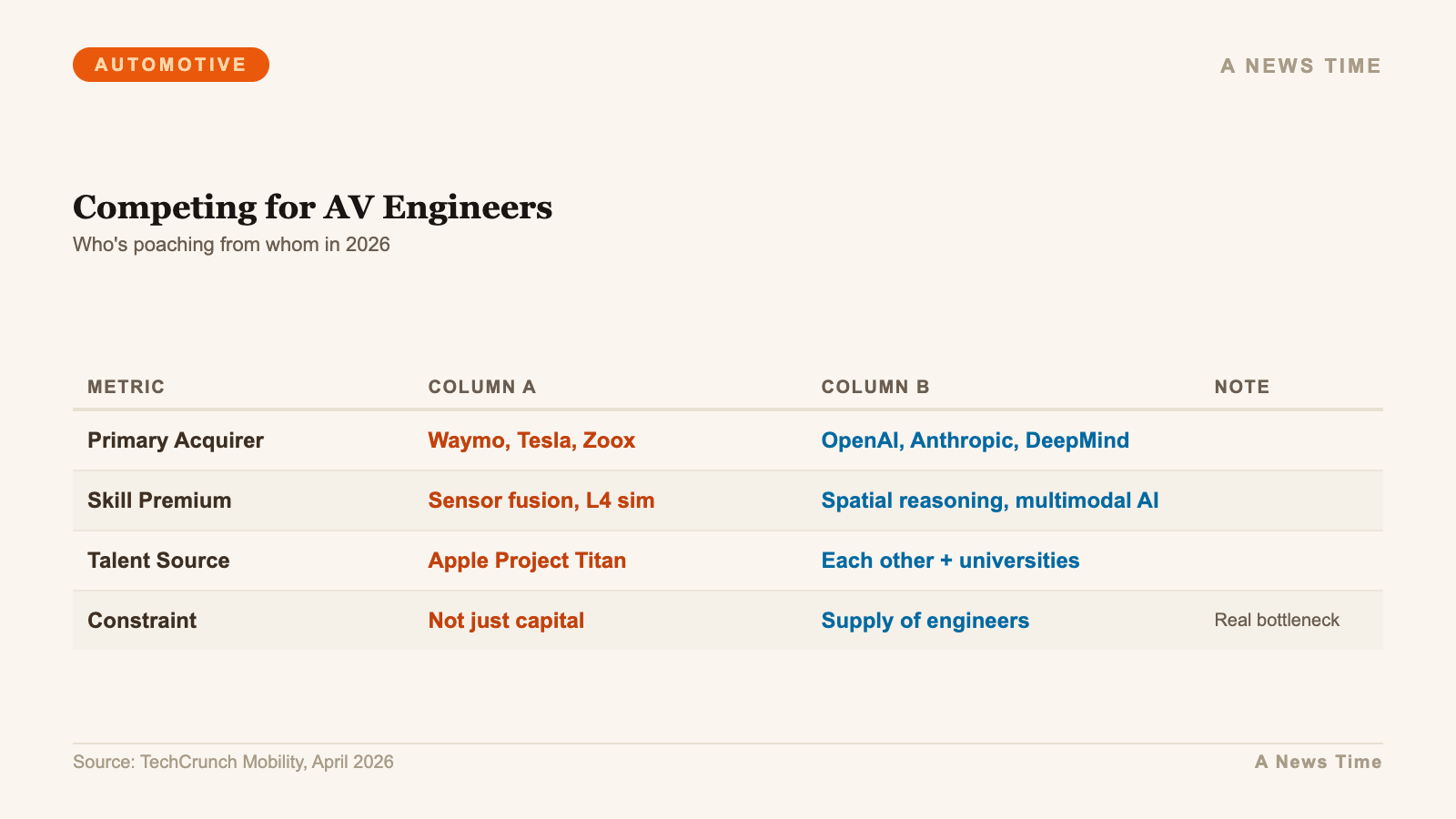
Compensation data for AV engineers is not uniformly disclosed, but a combination of Levels.fyi data, LinkedIn salary reports, and the TechCrunch Mobility survey provides a working picture of what top talent costs in 2026.
| Role | Base Salary (est.) | Total Comp (est.) | Typical Signing Bonus |
|---|---|---|---|
| Senior ML Engineer (Perception) | $220,000-$280,000 | $380,000-$600,000 | $100,000-$250,000 |
| Staff/Principal Research Scientist | $280,000-$350,000 | $500,000-$900,000 | $200,000-$500,000 |
| Senior Simulation Engineer | $200,000-$260,000 | $320,000-$520,000 | $75,000-$150,000 |
| Safety Case / Validation Engineer | $190,000-$240,000 | $290,000-$450,000 | $75,000-$200,000 |
| AV Operations Lead (City Launch) | $180,000-$230,000 | $260,000-$400,000 | $50,000-$150,000 |
The numbers above reflect top-quartile compensation at the highest-paying companies. Zoox, which is Amazon-backed, has historically been among the highest payers in the sector, a strategy reflecting both Amazon's ability to fund competitive compensation and Zoox's need to attract talent away from Waymo and Tesla, who have brand and mission appeal that Zoox lacks.
The equity component is what drives the total compensation figures to the levels above. Waymo, as an Alphabet subsidiary, can offer Google parent company equity. Tesla's stock, despite recent volatility, remains a meaningful compensation component. Zoox offers Amazon equity. For engineers who joined Waymo in 2018-2020 and vested through a period of significant Alphabet stock appreciation, the realized comp over that period has been extraordinary, which makes their re-recruiting cost equally extraordinary.
Apple Project Titan's Legacy: Where Did the Engineers Go?
Apple shut down Project Titan in late 2024, ending what had been a decade-long, multi-billion-dollar effort to develop autonomous vehicle technology. The program reportedly employed over 2,000 engineers at its peak. The post-shutdown dispersion of that talent is the most significant single talent event in AV history.
Mapping where Titan engineers landed is inexact, but the public record through LinkedIn profile changes and industry reporting suggests the following broad distribution: approximately 30-35 percent went to other AV-focused companies (Waymo, Zoox, Aurora, Mobileye); approximately 25-30 percent moved to robotics companies (Figure AI, Physical Intelligence, Boston Dynamics, Agility Robotics); approximately 20 percent went to Big Tech AI labs (Apple's own AI team absorbed some, but significant numbers went to OpenAI, Google DeepMind, and Meta FAIR); and the remaining 15-20 percent went to automotive OEMs, startups, or took other positions.
The quality of Apple Titan's engineering output, visible in the patents Apple filed related to sensor fusion, occupancy grid mapping, and behavior prediction, was exceptionally high. Engineers who spent years in that environment on unrestricted compute budgets and with the freedom to pursue long-horizon research problems came out with deeply specialized skills. The AV industry absorbed much of this talent and became immediately more competitive for it.
| Destination Category | Estimated % of ~2,000 Engineers | Notable Employers |
|---|---|---|
| AV-focused companies | ~32% | Waymo, Zoox, Aurora, Mobileye |
| Robotics companies | ~28% | Physical Intelligence, Figure AI, Agility |
| Big Tech AI labs | ~22% | OpenAI, Google DeepMind, Meta FAIR |
| Automotive OEMs | ~10% | GM Tech, Ford Latitude AI, BMW |
| Startups / other | ~8% | Various early-stage AV/robotics cos. |
The Waymo Effect: What It Means to Be the Market Leader
Waymo's position in the AV talent market is complex. On one hand, it is the most credible fully autonomous deployment in the world, which makes it a talent magnet for engineers who want to work on the most technically challenging and consequential version of the problem. On the other hand, Waymo's scale and success make it a target for poaching by every company trying to close the capability gap.
Waymo's compensation structure has had to adapt. The company's early years offered modest base salaries with significant Alphabet equity upside and the compensation of working on a genuinely world-class engineering problem. As Alphabet's stock grew and Waymo's own internal valuation increased through multiple funding rounds (Waymo raised over $5 billion in external capital between 2020 and 2024), Waymo equity itself became more valuable and more useful as a retention tool.
The challenge Waymo faces is that retention of its own engineers while simultaneously recruiting for geographic expansion is structurally difficult when every competitor is specifically targeting Waymo alumni. Zoox's recruiting pitch is explicit about wanting people who have operated at Waymo's level of rigor. Tesla's recruiting pitch emphasizes the scale and reach of its installed fleet versus Waymo's more constrained geographic operation. Aurora's pitch, following its public listing, is equity upside from a lower base value than Alphabet.
For context on Waymo's operational expansion: Who's Driving Waymo's Cars? Sometimes the Police.
Geographic Competition: Where the Talent Lives
The AV talent pool is geographically concentrated in ways that constrain the recruiting competition. The Bay Area remains the dominant cluster, with the San Francisco peninsula corridor from Menlo Park through Mountain View housing Waymo, Zoox, Nuro, and dozens of smaller companies. Pittsburgh maintains a meaningful robotics and AV research presence anchored by Carnegie Mellon's Robotics Institute. Austin has attracted Tesla's engineering operations. Seattle has a smaller cluster around Zoox's secondary offices and Amazon's AI research presence.
Chinese AV companies, Baidu Apollo, Pony.ai, WeRide, and Didi Autonomous, have been aggressively recruiting Chinese-American engineers who trained in the US AV ecosystem, offering a combination of US-level compensation and the career opportunity of working on the world's most active AV deployment environment. China's cities provide more complex, higher-density driving environments and less regulatory resistance to testing, which is attractive to engineers who have been constrained by US regulatory caution.
The US government's export controls on advanced semiconductor technology to China, combined with increasing scrutiny of employment transfers from US AV companies to Chinese ones, have introduced new friction into this channel. Several US-based AV companies have added employment agreement clauses restricting immediate post-employment work for Chinese AV companies. The legal enforceability of those clauses varies by state, but they signal how seriously US AV companies are treating the talent outflow to China.
What the Talent War Means for AV Development Timelines
The talent shortage has concrete implications for how quickly the AV industry can scale, independent of technology readiness and regulatory approvals. The binding constraint on Waymo's geographic expansion is not its robotaxi software stack, which has been proven across millions of fully autonomous miles. It is the operational and engineering workforce required to stand up a new city, including map builders, fleet operations managers, safety case engineers, and local regulation specialists.
Waymo's reported goal of operating in 10+ US cities by 2027 requires hiring at a pace that competes with every other AV company's hiring needs simultaneously. The Bay Area talent pool does not expand at the rate required; it recirculates. Waymo's ability to hire in new cities depends partly on developing engineering centers outside the Bay Area and recruiting from local talent pools that do not have AV industry backgrounds.
Tesla's FSD European expansion creates a similar dynamic. EU regulatory approval processes require substantial safety case documentation and validation, work that requires specific expertise in European regulatory frameworks that is even scarcer than general AV engineering talent. Tesla hired from the European automotive safety engineering community in 2025-2026, but the supply of engineers with both ADAS regulatory experience and deep machine learning knowledge is genuinely limited across the continent.
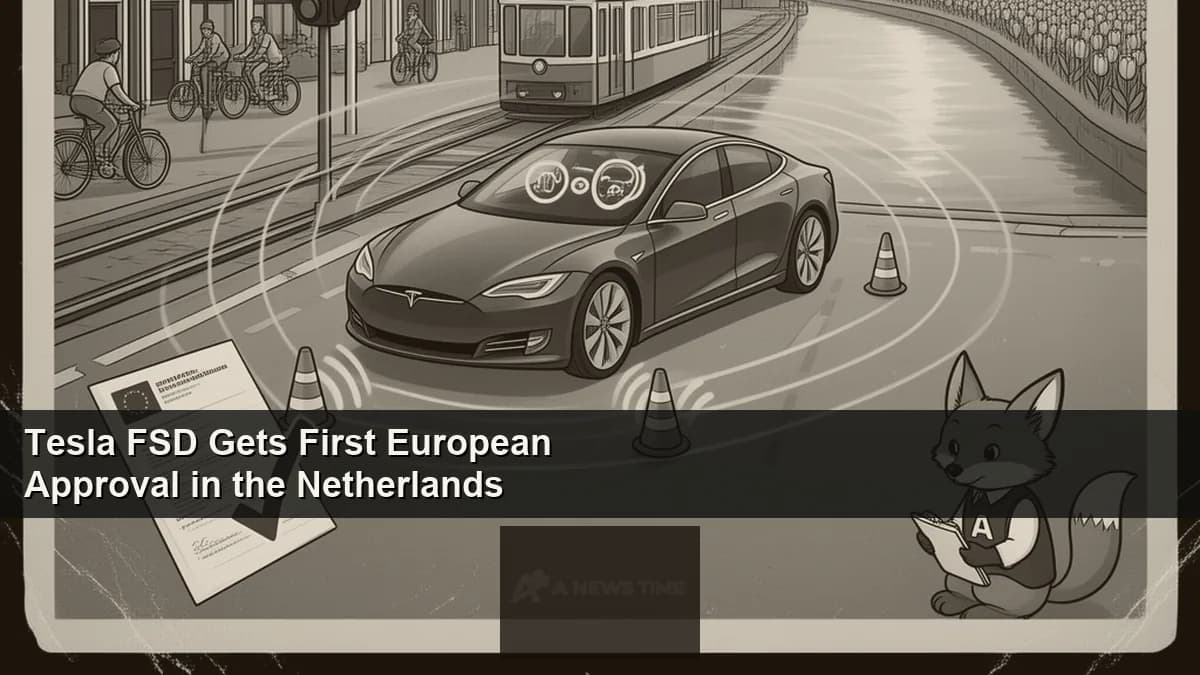
See our analysis of Tesla's European regulatory progress: Tesla FSD Gets Its First European Approval in the Netherlands.
University Pipeline: The Long-Term Supply Answer
Every major AV company has university partnership programs, but the pipeline from undergraduate computer science enrollment to deployable senior AV engineer is roughly eight to twelve years when doctoral training and several years of industry experience are included. The engineers who started PhD programs in 2020, inspired by the early Waymo and Tesla AV coverage, are entering senior roles now. The pipeline that was expanded based on current AV industry growth will produce more engineers by 2028-2030.
Carnegie Mellon, MIT, Stanford, UC Berkeley, and University of Michigan are the primary graduate-level feeder programs for AV engineering roles. These institutions have expanded their autonomous systems and robotics curriculum in response to industry demand, but curriculum expansion does not immediately translate to engineer availability. The lag is structural.
Several AV companies have responded by creating structured apprenticeship programs that take engineers with adjacent skills, including game development, simulation, and computer graphics backgrounds, and train them into AV roles over 12-18 months. Waymo's technical residency program and Zoox's engineering fellowship are examples. These programs address the pipeline gap but require the companies to fund extended non-productive training periods, which most startups cannot afford.
The Bottom Line: Talent Is a Real Constraint
The AV talent war is not primarily a story about compensation inflation, though the compensation numbers are genuinely remarkable. It is a story about a constraint that cannot be resolved by writing larger checks. The specialized skills required to build, validate, operate, and scale autonomous vehicle systems took a decade to develop in the industry's first generation of engineers. Training a second generation will take another decade, even with expanded university programs and structured industry training.
Companies that retain their senior talent, build strong internal development programs that grow engineers from junior to senior over time, and resist the urge to over-hire during funding peaks (only to lay off during downturns, as both Tesla and several AV startups did in 2023-2024) will have structural advantages in 2026-2030 that cannot be bought with a signing bonus.
Waymo is the clearest example of a company that has maintained engineering continuity through market cycles. Its founding team, several of whom trace back to Stanford's 2005 DARPA Grand Challenge entry, remains in technical leadership positions. That institutional knowledge is worth more than any individual hire at any price. The companies currently outbidding Waymo for talent are acquiring skills without that knowledge. Whether skills plus capital can outperform skills plus institutional knowledge is the central bet the AV talent war is testing.
For more on how autonomous driving technology is being adopted across the broader automotive supply chain: BYD, Nissan Adopt NVIDIA DRIVE Hyperion for Level 4.