
We are in a moment of collective fitness fatigue. High-intensity interval training, 75 Hard protocols, and the general culture of optimization-as-identity have produced their own backlash, a growing appetite for movement that does not feel like punishment. Into that space has walked, quite literally, the Japanese walking trend, and its appeal tells you something real about where wellness culture is heading in 2026.
On the surface, it is walking. Humans have been doing it for roughly six million years. But look at the method closely and something more intentional emerges, a practice that blends postural precision, breath synchronization, and rhythmic arm movement in a way that turns the most ordinary human locomotion into something that acts more like a full-body functional training session than a casual commute. The trend picked up significant social media traction in April 2026, covered by Firstpost among others, and its staying power will likely outlast the viral moment that introduced it to Western audiences.
Where it comes from: Namba and Shinrin-yoku
Japanese walking as it is now circulating is a synthesis of two distinct traditions. The first is Namba, a traditional Japanese movement style historically associated with kabuki theater, martial arts, and certain folk practices, which emphasizes moving the same-side arm and leg together rather than the cross-pattern stride most Westerners use. The Namba approach minimizes excessive torso twisting, encouraging a fluid, energy-efficient stride through what practitioners describe as a mid-foot strike rather than a heel-first impact.
The second is Shinrin-yoku, or forest bathing, the Japanese concept of spending time immersed in a natural environment with heightened sensory attention. Shinrin-yoku is not primarily about exercise. It is about a quality of presence, using the natural environment as a reset for the nervous system. When it intersects with the Namba walking technique, the result is a practice that is simultaneously more biomechanically precise than typical Western walking and more psychologically attuned to the environment being moved through.
The synthesis is not ancient. It has been assembled and popularized over the past decade by Japanese wellness practitioners and physical educators who recognized that the longevity data associated with Japan, the country consistently ranks among the highest in the world for life expectancy and active aging, correlates with movement patterns that Western fitness culture has largely ignored. Bringing those patterns into an accessible, instruction-free format that can be practiced anywhere is what the viral moment has actually accomplished.
The mechanics: what changes when you walk this way
Three things change when you apply the Japanese walking method. The first is spinal alignment. The technique calls for a long spine with a slight posterior pelvic tilt, a gently engaged core, and the crown of the head lifted rather than the chin jutting forward. The goal is to reduce the compressive load on lumbar vertebrae and posterior knee structures that conventional walking with a forward-leaning posture creates over time. Walkers who practice the method consistently report that their lower back fatigue, common after brisk walks of an hour or more, diminishes noticeably.
The second is arm movement. Rather than the loose pendulum swing most people use, the Japanese walking method asks for arms bent at roughly 90 degrees, swinging with deliberate purpose from the shoulder rather than the elbow. The effect is significant. Active arm swing engages the posterior deltoid, rhomboids, and trapezius in a way that passive swing does not. Combined with the core engagement required to maintain spinal alignment, this transforms the upper body from a passive counterweight into an active participant in locomotion. Calorie expenditure per mile increases. So does the demand on back and shoulder muscles that tend to weaken from desk work.
The third is breathing synchronization. Breath is coordinated with stride rhythm rather than left to operate independently. The specific pattern varies by practitioner, but the general principle is inhaling over a fixed number of steps and exhaling over a fixed number of steps, creating a meditative rhythm that is both physically regulating and mentally grounding. Slower, regulated breathing patterns are associated with reduced cortisol output and lower baseline heart rate over time.
The metabolic case: interval walking without the intensity
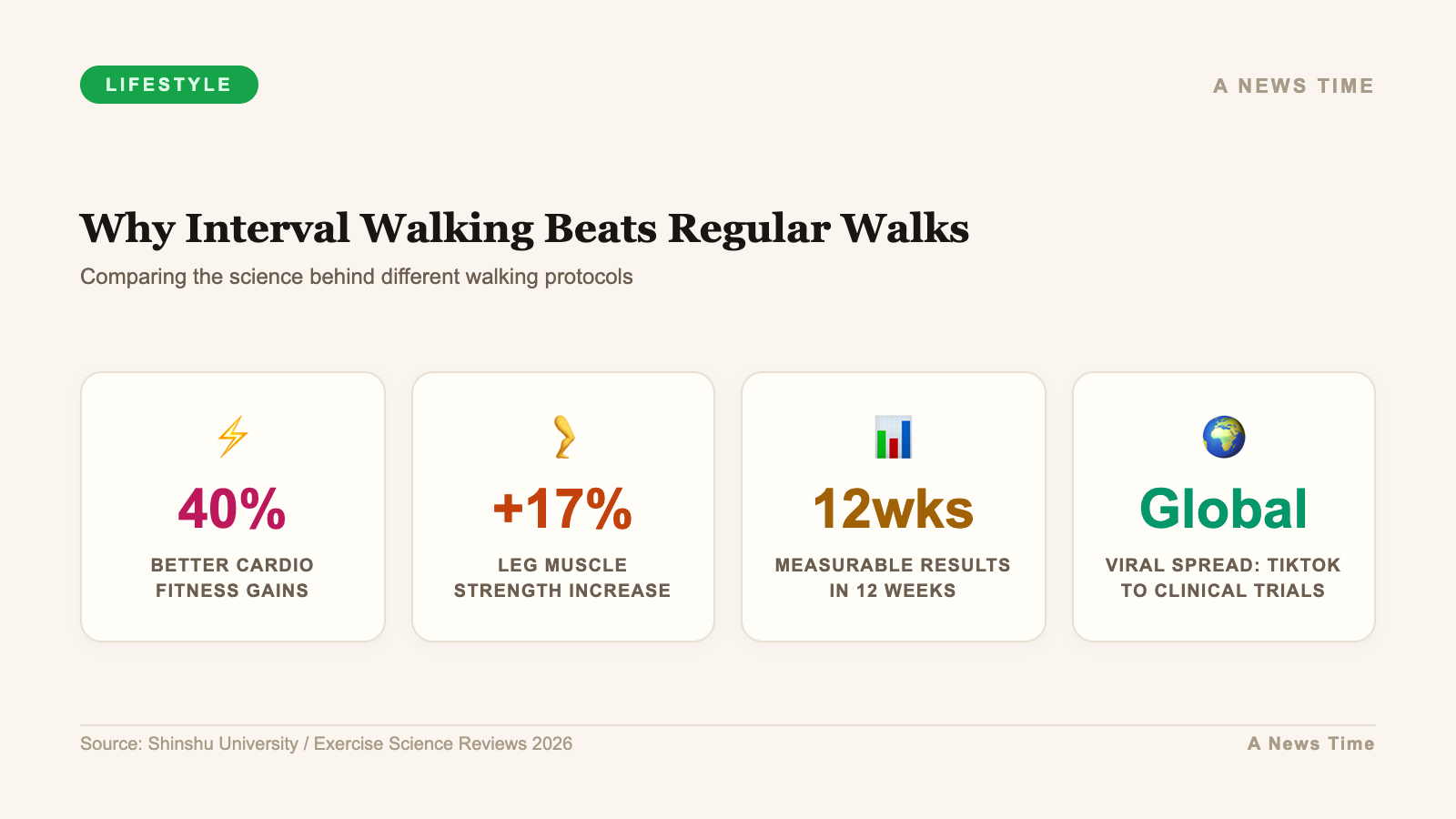
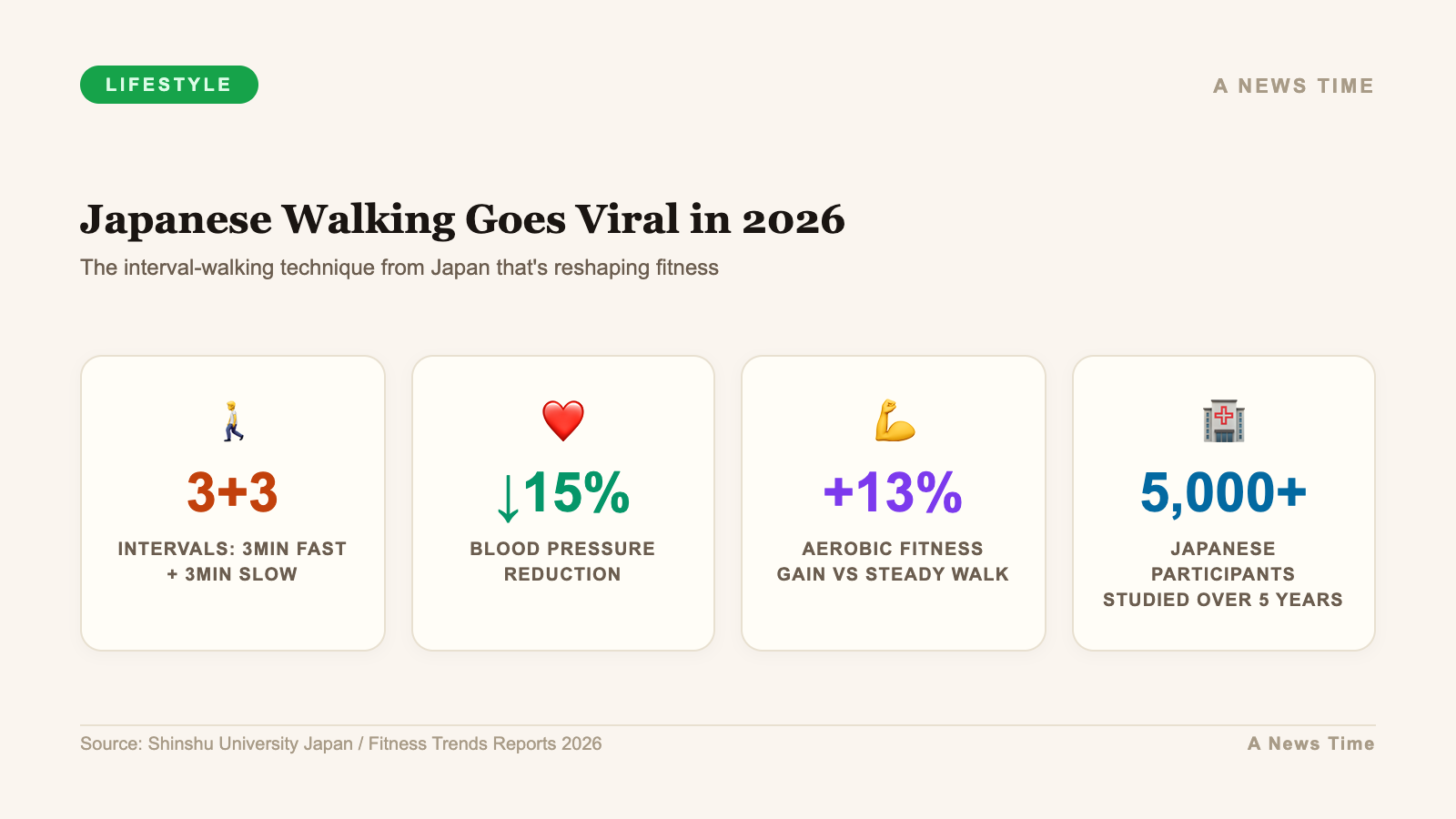
One of the more practically interesting elements of Japanese walking as it has been popularized is its integration of informal interval training without demanding the kind of performance-oriented mindset that makes traditional interval work feel punishing. The method incorporates alternation between brisk and moderate walking paces, with the brisk intervals defined not by a target heart rate but by the natural escalation of the rhythmic pattern.
This matters metabolically. Walking at a single steady pace, once it becomes habitual, stops challenging cardiovascular and metabolic systems in the same way it did initially. The body adapts. Heart rate response to the same effort decreases. Calorie expenditure per unit of time decreases. Interval variation prevents that adaptation from flattening the benefit curve. The cardiovascular stimulus from alternating between brisk and moderate paces, sustained over 30 to 45 minutes, is comparable to light jogging in its impact on VO2max and cardiovascular function, with substantially less impact stress on the knees, hips, and ankles.
Japan's longevity data is invoked frequently in coverage of this trend, and it is worth being precise about what the correlation does and does not show. Japan's exceptional life expectancy and low chronic disease burden are not attributable to walking style alone. Diet, social structure, healthcare access, and cultural attitudes toward aging all contribute. What the walking practice reflects is a broader philosophy: prioritizing consistency of low-intensity movement over intensity of high-effort exercise, keeping joints mobile and muscles engaged over decades rather than months, and treating movement as something woven into daily life rather than scheduled as a discrete fitness event. The viral walking technique is a vehicle for that philosophy more than a medically proven intervention in its own right.
The mental health dimension
The connection to Shinrin-yoku gives Japanese walking a mental health dimension that distinguishes it from most fitness trends, which tend to be instrumentally focused on physical outcomes. The practice is designed to generate a particular quality of attention: externally directed, sensory, present-tense. In the language of contemporary psychology, it is an active mindfulness practice, one that engages the mind in environmental awareness rather than rumination or planning.
Research on walking and mental health is well-established. Regular walking reduces symptoms of depression and anxiety, improves sleep quality, and generates acute stress relief through cortisol reduction and endorphin release. What Shinrin-yoku adds to that foundation is a quality of the mental state during the walk, not just its physiological aftermath. The breathing synchronization reinforces this. Creating a rhythmic pattern of inhalation and exhalation that is linked to physical movement is a recognized anxiolytic technique, related to the breathing practices used in yoga and meditation, but embedded in ordinary locomotion rather than requiring a specific setting or equipment.
The social dimension is also worth noting. Japanese walking has spawned group walking communities in several countries, meeting weekly or monthly to walk together using the technique. This echoes the run club phenomenon our earlier coverage examined in run clubs redefining social fitness in 2026, but with a lower barrier to entry. Running requires a baseline of cardiovascular fitness and footwear investment. Walking requires neither, which makes the social access point broader.
The accessibility argument
The reason fitness trends tend to die is that they require something that limits access over time: equipment, membership fees, injury recovery, or performance demands that exceed what casual practitioners can maintain. Japanese walking has none of these barriers. No equipment beyond supportive shoes. No membership. No performance metric to optimize against. No skill threshold that feels impossible to reach.
This is not a minor advantage. Fitness culture in the US and much of Europe has become so thoroughly entangled with performance optimization, wearable data, and aesthetic goals that an enormous share of the population has effectively been excluded from exercise culture on the grounds that they are not doing it right enough. Japanese walking offers a literal, direct exit from that dynamic. There is no wrong way to walk mindfully and breathe with intention. There is only walking, done with more presence than before.
The post-meal walk recommendation embedded in the Japanese walking tradition has additional metabolic grounding. Walking for 10 to 30 minutes after a meal reduces the postprandial blood glucose spike by activating skeletal muscle glucose uptake, which is essentially doing part of the work that insulin would otherwise do alone. For people managing blood sugar, whether due to type 2 diabetes, prediabetes, or general metabolic health concerns, this is one of the most effective and accessible interventions available. That it is also a pleasant habit rather than a medical chore makes it significantly more likely to be sustained.
What to take seriously and what to calibrate
Not every viral wellness trend deserves serious treatment, and Japanese walking does not need to be oversold to be genuinely useful. The mechanism here is real: postural alignment under load reduces strain, active arm swing increases muscular demand, breath synchronization reduces stress markers, and interval variation improves cardiovascular stimulus. These are not exotic claims. They are the application of well-established principles of movement mechanics to an activity most people are already doing anyway.
What the viral framing sometimes overstates is the degree to which this represents a specifically Japanese technique versus a set of biomechanical best practices that happen to have been synthesized from Japanese sources. Mid-foot striking, spinal elongation, and active arm drive have been taught by physical therapists, biomechanists, and running coaches for years under different names. The cultural framing, Namba, Shinrin-yoku, Japanese longevity, is pedagogically effective because it gives practitioners a coherent identity to attach to the practice. Whether you need that framing or not, the technique itself stands on its own merits.
The most honest version of the case for Japanese walking is the simplest one. It makes a thing most people are already doing more beneficial, more sustainable, and more pleasant, without requiring them to spend money, acquire equipment, or accept a demanding performance standard. In a wellness landscape where almost every trend asks more of you than the one before it, that is genuinely unusual.
What to watch
Two things are worth following as the trend matures. The first is whether any peer-reviewed research specifically on the Namba-based walking technique emerges from Japanese sports science institutions over the next 12 to 18 months. The current evidence base draws from adjacent research on postural mechanics, breathing physiology, and forest bathing separately. A study that evaluates the integrated practice would give practitioners more specific guidance and give health professionals a clearer basis for recommendation. The second is how fitness wearable companies respond. The wearable-dominated fitness trend landscape of 2026 will almost certainly generate Japanese walking tracking features from Garmin, Apple, and Oura within the year. Whether that gamification helps or undermines the intentionality of the practice is an open question worth watching.
Sources
- This viral Japanese walking trend promises fitness with zero strain -- Firstpost
- Effects of interval walking training on physical and cognitive function in elderly adults -- NCBI / PubMed
- Physiological and psychological effects of forest therapy on middle-aged males with high-normal blood pressure -- NCBI / PubMed