There is a particular kind of mid-morning silence in Venice's Dorsoduro neighborhood, around the corner from Campo Santa Margherita, before the tourist tide rolls in from the cruise terminal. The light is extraordinary: flat and diffused off the water, the stone the color of old parchment. Locals carry groceries. A pharmacist sweeps the step of her shop. The city, for about forty-five minutes, belongs to the people who live there.
By eleven the balance has shifted. The narrow fondamente that connect the neighborhood to the Accademia Bridge fill with streams of visitors moving in formation, selfie sticks raised like antennae, waterproof sneakers squeaking on damp stone. The pharmacist has locked the door from the inside and put up a sign in four languages indicating she'll reopen at three. The groceries are bought in a hurry now because navigating the return journey will take twice as long as it used to.
This is 2026 European tourism. Not just crowded. Transformatively, structurally, permanently crowded in ways that are reshaping the social fabric of cities that for decades positioned themselves as the world's living museums. And the locals, quietly at first and now with considerably more volume, are pushing back.
The Numbers That Make the Problem Concrete
Overtourism has become a fashionable grievance, which means it risks being dismissed as the anxiety of places that were too successful. The data argues against that dismissal.
Dubrovnik, population roughly 42,000 permanent residents, recorded more than 1.5 million tourist arrivals in 2025. That is approximately 36 tourists for every single resident, a visitor-to-resident ratio that would strain any city's public services even if those visitors were perfectly distributed across the calendar year. They are not. They cluster in summer. In July and August, the Old Town's narrow streets hit pedestrian flow rates that fire safety experts have characterized as hazardous in the event of any emergency requiring rapid evacuation.
Venice's situation is more acute in some respects because the city faces both tourism overcrowding and structural demographic collapse simultaneously. The historic island's permanent population has fallen below 50,000, roughly half what it was in the 1950s, as housing costs driven by short-term rental platforms have forced residents to relocate to the mainland. The city now hosts approximately 30 million day-trippers annually, a number that means the tourist population exceeds the resident population by a ratio that approaches 600 to one on peak days.
Barcelona's visitor intensity is concentrated in its most famous neighborhoods. The Gothic Quarter, La Barceloneta beach, and the area around the Sagrada Familia collectively receive visitor volumes comparable to the busiest theme parks in Europe, but without the managed crowd control of a purpose-built attraction. Apartment rental platforms converted roughly 10,000 residential units in the city center from primary housing to short-term tourist accommodation in the decade before the current regulatory crackdown. The resulting housing pressure helped produce rent increases that priced working families and young residents out of central neighborhoods they had lived in for generations.
"Tourism has become the monoculture of our neighborhood. Every local grocery closed. Every bar became a craft beer tourist trap. We're now invisible in our own city."
Barcelona resident, Barceloneta district, 2026
The Protest Movements That Changed the Political Conversation
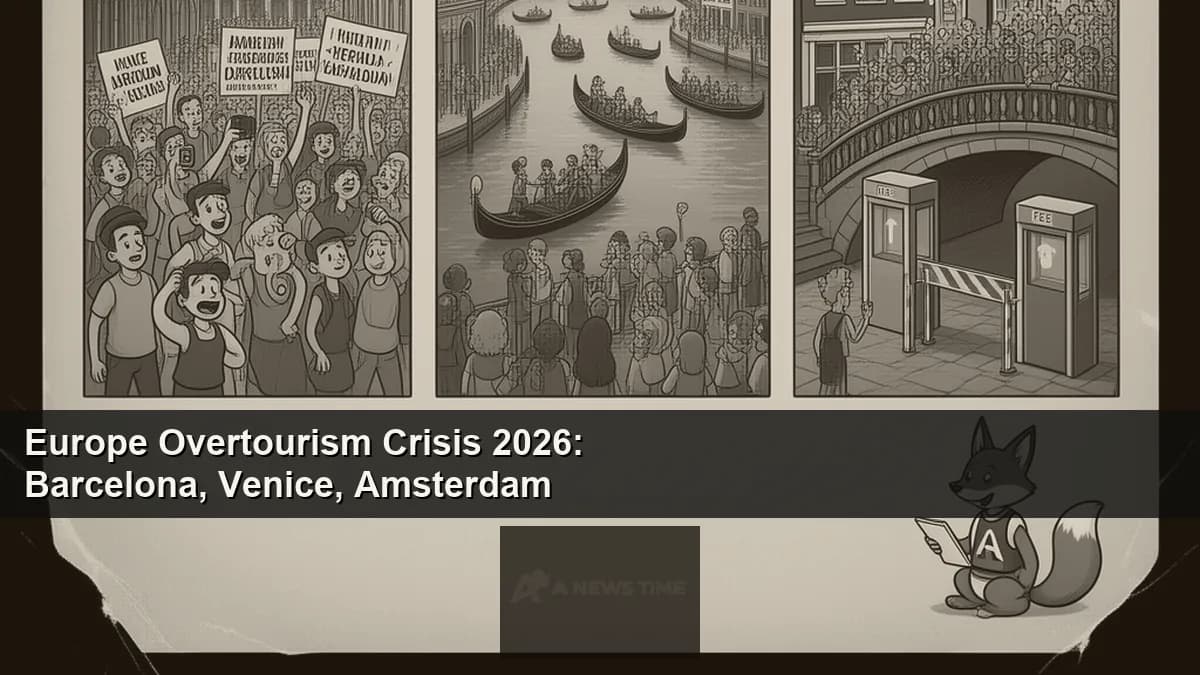
The shift from neighborhood complaint to organized political movement happened at different speeds in different cities, but Barcelona's arc is the most instructive. In 2024, residents of La Barceloneta staged a water pistol protest against tourists on the beach. What began as a theatrical gesture became a viral moment that crystallized something broader: local resentment of tourism's social costs had reached a threshold where direct confrontation felt justified to people who would previously have considered such behavior mortifying.
The protest was not primarily about water pistols. It was about housing. About the inability of families who had lived in the neighborhood for three generations to find affordable rental accommodation as their building's other units disappeared into Airbnb inventories. About a city whose political leadership had, they felt, consistently prioritized tourism revenue over resident welfare for the better part of two decades.
Amsterdam's protest movements took a different form. The city's red-light district and adjacent historic center became the site of organized demonstrations in 2024 and 2025, with resident groups demanding that the municipality use its zoning powers more aggressively to reduce tourism density in residential neighborhoods. The Amsterdam municipal government responded with a series of measures that included closing the last hotel projects approved for the historic center and banning new tour group activity in certain residential streets after 10 p.m.
In Venice, the protest energy has been more muted but the policy response more dramatic. The introduction of a day-trip entry fee for non-resident visitors during peak periods, piloted in 2024 and expanded in 2025, represents the most explicit attempt by any European city to use price as a crowd management tool. The fee system is still calibrated more to generate revenue than to meaningfully reduce visitor numbers, but it establishes a principle that will almost certainly intensify over the next several years.
What Cities Are Actually Doing About It
The policy toolkit for managing overtourism is more developed in 2026 than it was five years ago, though no European city has solved the problem. The approaches in active deployment break into roughly five categories.
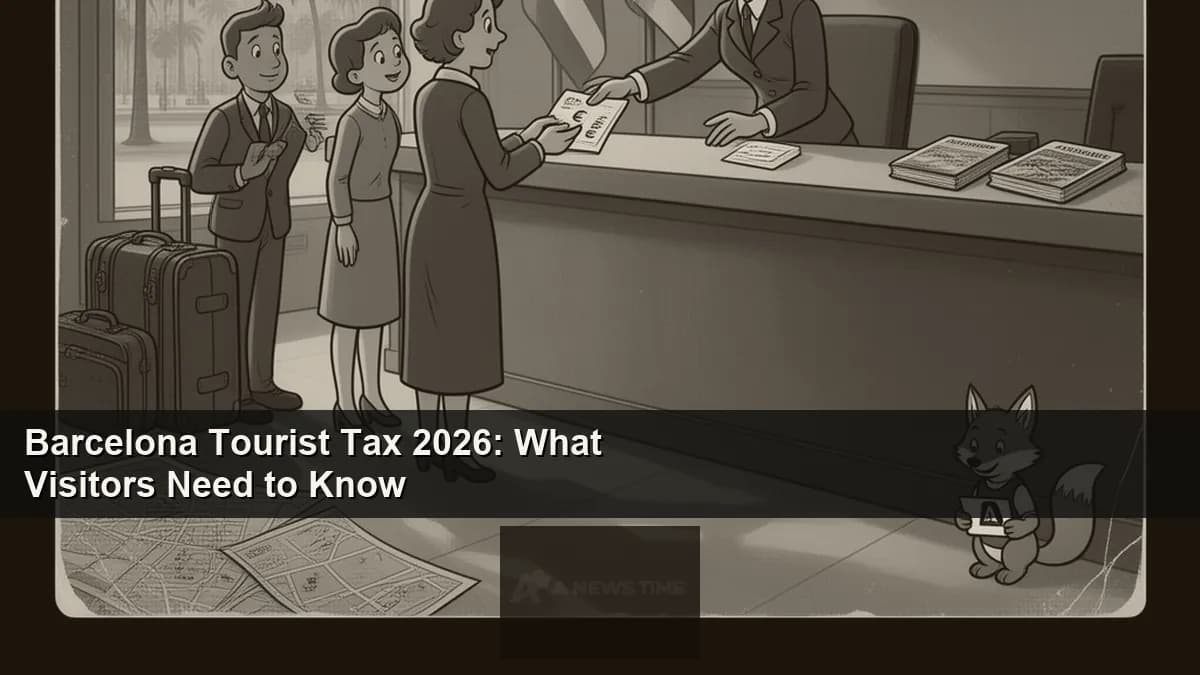
Entry fees and visitor taxes: Venice's day-tripper fee, Barcelona's tourist tax increase (see our full guide to Barcelona's 2026 tourist tax structure), and Amsterdam's nightly accommodation levy are all variations on the same principle: price tourism as a good that has externalities, and use the revenue to address those externalities. The challenge is that existing visitors have high price inelasticity. The people who fly from London to Barcelona for a weekend stag party are not deterred by an extra €15 per night. The people who might be deterred by price are the budget travelers who are often the lightest ecological footprint visitors.
Physical visitor caps: Dubrovnik has operated a cruise ship visitor limit since 2019, allowing a maximum of two ships in port simultaneously and capping total daily visitors at 8,000. The measure has materially reduced summer peak-day volumes but has not solved the seasonal concentration problem. The Cinque Terre villages in Italy have experimented with reservation systems for hiking trails during peak season, which work reasonably well for the specific bottleneck of trail access but do not address the towns themselves.
Airbnb and short-term rental regulation: Barcelona became the first major European city to announce it would not renew short-term rental licenses in the city center when they expire in 2028, a decision that will remove approximately 10,000 tourist apartments from the Airbnb-accessible inventory and return them to long-term residential use. Amsterdam has already enacted strict limits on the number of nights per year a primary residence can be rented on short-term platforms. These are among the most consequential overtourism policies in Europe because they address housing supply directly.
Geographic and temporal redistribution: Several cities, including Amsterdam and Prague, have invested in tourism promotion for neighborhoods outside the historic core and for shoulder-season travel periods. The effectiveness of these campaigns is mixed. Tourists visit the Rijksmuseum because it is the Rijksmuseum, and they tend to stay near what they came to see. But redistribution campaigns have had measurable effects at the margins: Amsterdam's Noord district, across the IJ waterway from Central Station, has seen tourism increase substantially following active promotion, and that increase has happened in an area with the infrastructure to absorb it.
Cruise ship restrictions: Venice's ban on large cruise ships from the historic lagoon, implemented in stages between 2021 and 2024, is the most visible European example of infrastructure exclusion as a visitor management tool. The ban removed the single largest source of day-tripper surges from the historic center and reduced the physical damage to the lagoon ecosystem from vessel wakes. It was fiercely resisted by cruise industry operators and their supply chains but has been broadly accepted as successful in its specific objectives.
Amsterdam and Lisbon: Two Cities on Different Trajectories
Amsterdam and Lisbon illustrate how similar problems can produce very different institutional responses depending on the political economy of each city.
Amsterdam has been managing overtourism consciously since at least 2018, when the municipal government began actively discouraging budget party tourism with a "Stay Away" campaign targeted at stag-party visitors from the UK. The city has incrementally tightened regulations on short-term rentals, restricted hotel development in the center, and used transport infrastructure (the ferry from Central Station to Noord, the east-west metro line serving residential neighborhoods) to spread visitor density. These measures have had real effects. The city is still crowded but the character of the crowding is somewhat more manageable.
Lisbon's trajectory is in the other direction, at least for now. The city benefited from its "safe haven" status during the period of Middle East travel disruption in early 2026 (hotel searches from Italy, the US, and Canada surged dramatically around Easter), and it has seen property prices and rents increase sharply as a result of combined tourism demand and digital nomad relocation. The political debate is intensifying, but the regulatory response is still in early stages compared to Barcelona or Amsterdam. The city's tourism minister is betting on managed growth rather than restriction.
Travelers planning Lisbon visits can still find the uncrowded version of the city in the residential neighborhoods of Mouraria, Intendente, and the areas around Penha de Franca. These are neighborhoods with excellent restaurants, historic architecture, and almost no tour groups. The window for discovering them before the guidebooks catch up is still open, but it is not unlimited.
The Heritage Question: What Gets Lost When Tourism Becomes the Economy
The most difficult dimension of the overtourism conversation is the one that is hardest to quantify. Cities like Venice, Dubrovnik, and the Alberobello trulli district in Puglia are inscribed on the UNESCO World Heritage List specifically because they represent irreplaceable concentrations of human cultural achievement. The condition of inscription includes obligations to preserve them.
The physical preservation of the buildings is not the primary concern in 2026. The major European heritage sites are generally well maintained and adequately funded. The concern is demographic and social: heritage cities that lose their permanent residential populations become something closer to theme parks than living communities. The artisans, the neighborhood associations, the local religious institutions, the schools, the informal social networks that constitute an actual urban community, all of these become unviable when housing costs price residents out and when every ground-floor commercial space converts to tourist-facing retail.
Dubrovnik has been conducting this experiment involuntarily for a decade. The result is a city that is physically intact and socially hollowed. The families that staffed the city's fishing boats and operated its small restaurants have largely moved to Dubrovnik-Neretva County's mainland municipalities. What remains is a staffed heritage attraction of extraordinary beauty, open from March to November, and a residential population that is increasingly composed of people connected to the tourism economy rather than to the city's historic trades and civic identity.
It is worth asking whether this matters. The buildings are preserved. The visitors come. Economic value is created. For Dubrovnik's former residents, now commuting in from Ploce or Konavle or abroad entirely, the answer about whether it matters is clear enough. For the tourists, the question is whether the city they are visiting still has enough living friction, enough genuine local particularity, enough of the texture of actual urban life, to justify the superlatives they will use to describe it when they get home.
How to Travel These Cities Better in 2026
The practical response to overtourism, from a traveler's perspective, is not to avoid the famous places entirely. It is to travel them differently.
Timing is the single highest-leverage variable. Visiting Barcelona in November rather than August means encountering a city that is still itself: the markets are full of locals buying produce rather than tourists buying saffron magnets, the beaches are empty, and the restaurants that actually feed Barcelona residents are open and seatable without a two-week advance reservation. The Sagrada Familia has the same architecture in November that it has in July. The crowds are approximately one-sixth of summer volume.
Neighborhood choice matters almost as much as timing. Every famous European city has a tourist gravity well, a neighborhood or circuit that absorbs the overwhelming majority of visitors. Staying outside that zone and visiting the highlights on day trips means that your hotel's surrounding streets, your morning coffee experience, and your evening walk home all exist outside the overtourism logic. In Venice, this means staying in Cannaregio or Castello rather than San Marco. In Amsterdam, the Jordaan and De Pijp are already partly tourist-adjacent, but the neighborhoods east of the Amstel River remain almost entirely local in character.
Spending decisions have a political economy. A night in a locally owned hotel, a meal in a restaurant that serves neighborhood residents, a tour led by a local guide who lives in the city rather than a large-format bus company: these choices shift the economic benefit of your visit toward the people whose lived environment you are using. This is not a minor distinction in cities where residents have concluded that mass tourism destroys more than it creates.
Finally, the tourist taxes and entry fees now in operation across European cities deserve to be understood for what they are rather than experienced as irritants. They represent an attempt by local governments to price in the external costs of tourism that visitors have historically not paid. Pay them without complaint. They are reasonable instruments, even if the revenue allocation is sometimes questionable, and the principle they express, that access to finite cultural resources carries a cost, is sound.
The Next Wave: Cities Approaching the Tipping Point
Monitoring which European cities are moving toward the Dubrovnik and Venice situation provides useful intelligence for travelers who want to visit beautiful places before the social fabric frays beyond repair.
Seville, Porto, Ljubljana, and Valletta in Malta all show the early indicators: rapid short-term rental growth, rising resident displacement from historic centers, visitor volumes growing faster than infrastructure investment. These are still cities where tourism and local life coexist in reasonable proportion. They may not be in another decade unless the regulatory responses being developed in Barcelona and Amsterdam are adopted earlier in the overtourism curve.
The broader story is about the limits of treating culture as a pure commodity. The most visited cities in Europe are facing the same tension: the things that make them worth visiting are inseparable from the living communities that created and still maintain them. When those communities are economically displaced by the tourism demand those places generate, the destination slowly becomes a postcard of itself. Beautiful, unchanged, and somehow no longer alive.
For the traveler who actually wants to experience European cities rather than to photograph them, the response to 2026's overtourism landscape is not to stop going. It is to go more thoughtfully, more carefully, and in ways that give the places you love a reason to remain themselves.