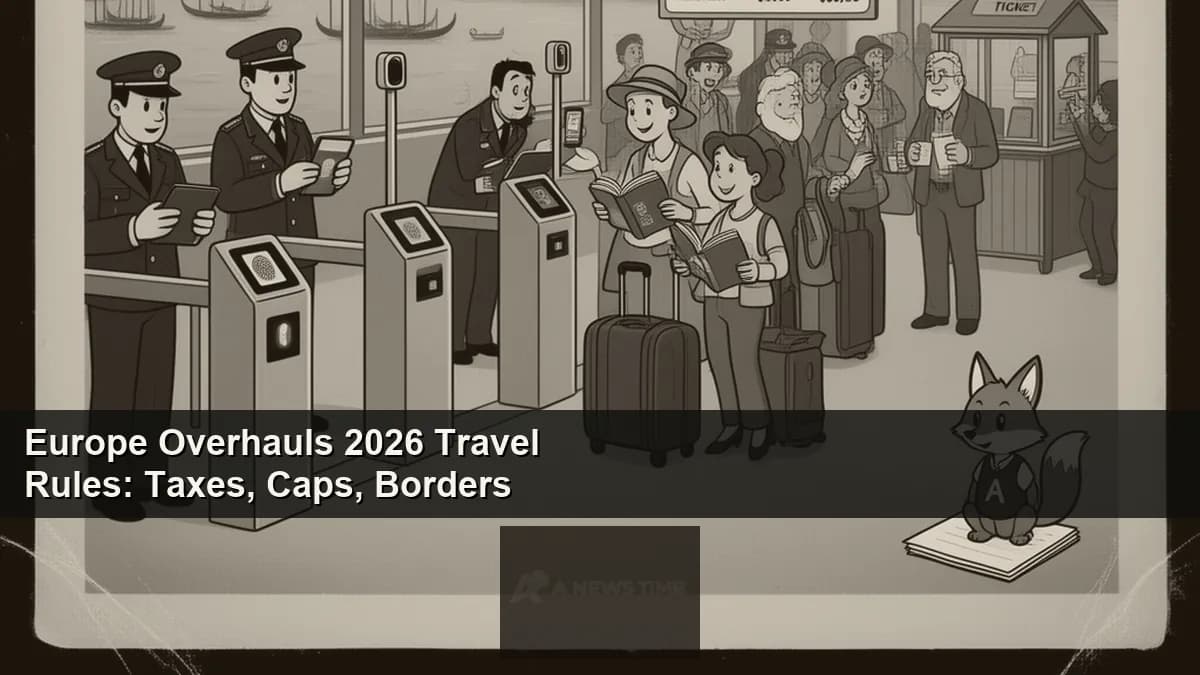
The queue at Santa Lucia railway station in Venice moves differently now. Where passengers once stepped off the train and walked straight into the city, there are check points, QR code scanners, and inspectors verifying that every day-tripper has paid the entry fee before setting foot on the cobblestones. It is a small moment, logistically speaking. But it marks something larger: the formal arrival of managed-access tourism across Europe, a continent that spent the last two decades being both the world's most visited destination and increasingly unable to cope with what that meant for the people who actually live there. In , governments from Rome to Amsterdam to Edinburgh are no longer debating whether to manage visitor flows. They are implementing the systems to do it.
The changes come in several forms at once: biometric border controls, expanded day-visitor fees, higher overnight levies, tighter short-term rental rules, and hard limits on crowd capacity at iconic sites. For American travelers especially, who grew up treating a Eurail pass and a rough itinerary as sufficient preparation, the 2026 landscape requires a different kind of readiness. Not alarm, but genuine attentiveness to a set of rules that are no longer aspirational policies or pilot programs. They are in force now.
The EES: Europe's New Biometric Border
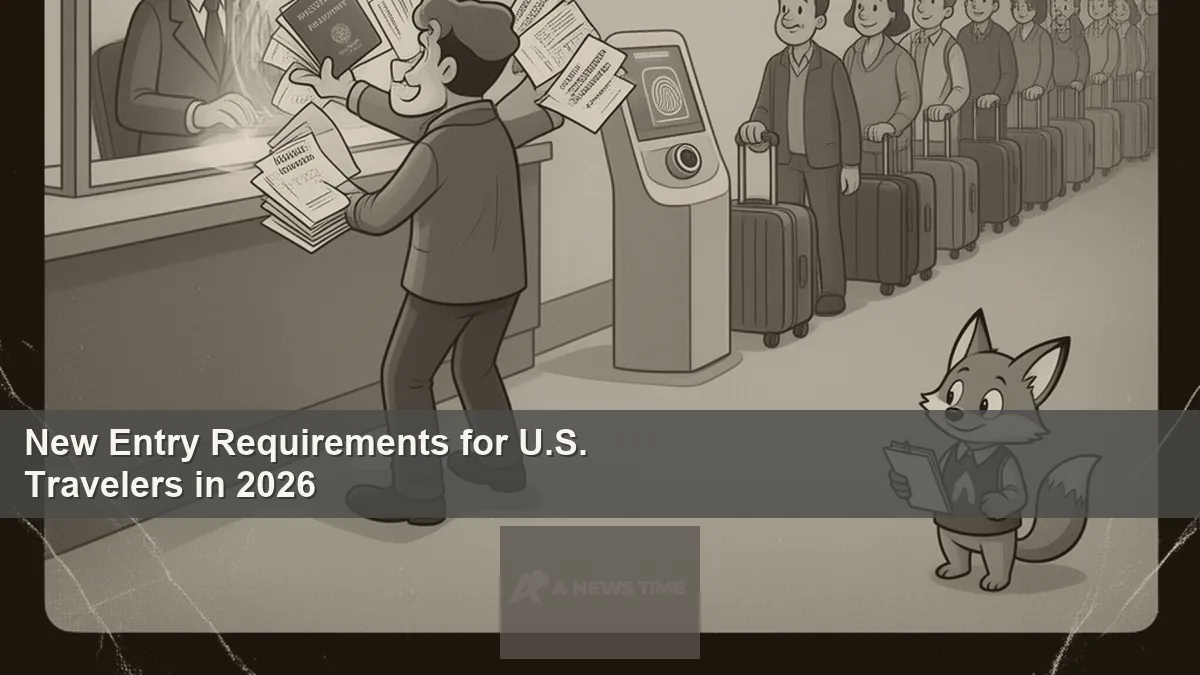
On , the European Union's EES entered full operation. The system replaces passport stamping with digital biometric registration for all non-EU, non-Schengen travelers entering the bloc. What this means at the airport or land border: your facial image, fingerprints, and passport data are captured digitally upon your first entry into the Schengen Area. That data links every subsequent entry and exit to your travel record, giving border authorities a precise picture of how long any given visitor has stayed across any rolling 180-day window.
The practical consequence for travelers is a longer border crossing. European Commission estimates projected that EES processing would add two to four minutes per traveler in stable conditions, a modest figure that compounds significantly when multiplied across peak-season passenger volumes. Airlines operating major Schengen-entry hubs including Frankfurt, Amsterdam Schiphol, and Paris Charles de Gaulle have advised passengers to add a minimum of 45 extra minutes to their pre-connection buffer time when arriving internationally. Travelers with connecting flights timed tightly against previous processing norms face real risk of misconnecting in the first months of full EES operation.
Children under 12 are exempt from fingerprinting but still photographed. No pre-registration is required: the EES processes you on arrival. Refusing biometric collection results in denied entry. For travelers with passports from the United States, Canada, Australia, and other visa-exempt countries, EES is not a visa. It is a tracking layer applied to a visit that remains, for now, visa-free. But the data it generates will also feed the forthcoming ETIAS system, a paid pre-travel authorization expected to launch in late 2026 or early 2027 that will function similarly to the US ESTA and cost approximately €7.
"The Entry/Exit System gives us the accurate data we need to protect the Schengen Area and ensure that short-stay rules are respected. This is not about making Europe less welcoming. It is about knowing, finally, who is here and for how long."
European Commission, Border Management Directorate, April 2026
The United Kingdom, operating outside the EU since Brexit, runs a parallel system. Since , visitors from US and other visa-exempt countries have been required to obtain an ETA before travel. The UK ETA costs £10 and covers multiple visits over two years. It is quick to obtain online but not optional: travelers who arrive at UK airports without one face refusal to board at departure. The systems are distinct from the EU's EES and ETIAS, meaning a trip combining continental Europe with the UK involves two separate pre-travel authorization requirements.
Venice: 60 Days of Entry Fees in 2026
Venice has charged day-trippers to enter its historic center since , when the city launched what it called a "contribution" for visitors arriving during peak hours. The 2024 pilot covered 29 designated days. The 2025 expansion covered 54. For , the city has extended the access fee to 60 peak days, running from April 3 through July 26, concentrated on weekends, holidays, and high-traffic shoulder days when visitor pressure on the lagoon city's narrow streets and vaporetto lines is most acute.
The pricing structure has a built-in incentive for advance planning. Visitors who register and pay through the official booking platform at least four days before their visit pay €5. Those who pay on the day of arrival pay €10. The QR code this generates is checked at one of seven entry points across the city, including Santa Lucia station, the Piazzale Roma bus terminal, and select vaporetto stops from the mainland. The city is not subtle about the enforcement mechanism: fines for non-payment and non-registration range from €50 to €300 per violation.
| Visitor Type | Fee | Condition |
|---|---|---|
| Advance booking (4+ days prior) | €5 | QR code via official platform |
| Same-day or late booking | €10 | QR code via official platform |
| Overnight guests in registered accommodation | Exempt | Must be registered with booking |
| Venice residents and Venetian-born visitors | Exempt | Identity verification required |
| Students and workers | Exempt | Documentation required |
| Arrivals before 8:30am or after 4pm | Exempt | Time-stamped entry only |
| Non-payment (no valid QR code) | €50 to €300 fine | Enforced at entry points |
The numbers behind Venice's decision are stark. According to data cited by Euronews, activists reported in that the number of tourist beds in Venice had officially overtaken the number of residents for the first time in the city's history. The permanent population of the historic center has fallen to approximately 50,000, down from a post-war peak of more than 170,000, driven by decades of housing market distortion, noise, and the grinding inconvenience of sharing every sidewalk with thousands of people who are simply passing through.
"We are not trying to stop tourism. We are trying to manage it in a way that makes it possible for Venice to remain a city and not just a museum."
Simone Venturini, Venice City Councillor for Tourism
The 2025 data suggests the fee produced modest results: average daily summer visitors dropped from 16,676 in 2024 to 13,046 in 2025. A reduction, but not a transformation. City planners and independent urban economists have noted that a €5 fee does not represent a genuine economic barrier for most visitors. Several advocacy groups have publicly called for fees in the €20 to €30 range, levels that would impose a meaningful cost while still allowing thoughtful, committed visitors to access the city. The 2026 structure looks like an intermediate step in that direction rather than a destination.
One practical tip that most booking guides miss: the time-window exemption for arrivals before 8:30am is real and routinely usable. Venice in early morning, before the day-trip ferries arrive from the mainland and the cruise ship passengers disembark at the waterfront, is a genuinely different place. The light off the Grand Canal at 7am has nothing to do with the midday scrum around the Rialto Bridge. If you can manage an early arrival, you get the better version of the city and avoid the fee.
Tourist Taxes City by City: The 2026 Map
Venice is the most visible example of Europe's expanding visitor-fee landscape, but it is far from the only one. Across the continent, cities and regions have either introduced new levies or substantially increased existing ones. The common logic: if visitors place costs on infrastructure, housing markets, and quality of life, those costs should be partially recovered through direct visitor contributions rather than entirely absorbed by local taxpayers.
| Destination | Fee Structure | Details |
|---|---|---|
| Venice, Italy | €5 (advance) / €10 (day-of) per day-tripper | 60 peak days, April to July |
| Barcelona, Spain | Overnight hotel surcharge (doubling in 2026) | Per-night levy on all accommodation types |
| Amsterdam, Netherlands | 7% accommodation tax + 12.5% city levy | One of Europe's highest combined hotel taxes |
| Edinburgh, Scotland | £2 per night visitor levy | Passed by City Council, phased introduction 2026 |
| Santorini and Mykonos, Greece | €20 per cruise passenger | Per port call, all cruise ships |
| Dubrovnik, Croatia | Seasonal day-visitor cap with associated fees | Hard limits on same-day entrances during peak season |
Barcelona's situation is worth particular attention. The city's overnight tourist tax, already among the highest in Europe before 2026, is being doubled for visitors staying at hotels rated four stars and above. The city has cited the need to fund public services, public housing investment, and cultural heritage maintenance under strain from 32 million annual visitors against a resident population of 1.6 million. Travel agents booking high-end Barcelona hotels have reported that the combined effect of higher room rates, the doubled tourist tax, and limited Airbnb availability following Spain's mass short-term rental enforcement actions has pushed Barcelona's effective cost per night substantially higher than comparable stays in Paris or Rome.
Amsterdam has taken a different approach, focusing less on per-visit fees and more on restricting the accommodation supply that drives visitor volume. The city reduced its short-term rental cap to 15 nights per year in , down from 30 nights. Enforcement has been substantially increased, with dedicated inspectors using digital monitoring to identify listings violating the cap. Hosts caught exceeding the limit face fines starting at €10,000 per violation. The practical effect on travelers: central Amsterdam Airbnb options that existed 18 months ago have largely disappeared, and hotel rates in the city reflect the tighter supply.
Visitor Caps and Timed Entry: Booking Before You Go
The access fee is one tool. The visitor cap is another, and in some cases more consequential for travelers who plan loosely. At a growing number of European sites, daily visitor limits are either already in place or being introduced in 2026, and the limit is a hard stop. When the cap is reached, access is closed. No waiting in line, no purchasing an upgraded ticket at the gate. The slot is gone.
The shift reflects a broader recognition that pure price mechanisms, charging more to reduce demand, are politically complicated and socially inequitable in ways that pure capacity limits are not. A €50 entry fee to the Uffizi in Florence restricts access by income. A booking system that allocates 500 timed slots per morning, available free or at modest cost to anyone who plans ahead, restricts access by planning behavior. European heritage site managers have increasingly opted for the second model, viewing it as more defensible and more effective at achieving the actual goal: preserving the site for both visitors and future generations.
For travelers, the operational implication is straightforward but unfamiliar to anyone whose Europe travel habits were formed before 2020. The most visited cultural institutions in major cities now routinely require advance booking. Popular sites in smaller, concentrated destinations sell out days or weeks ahead in peak season. Our guide to new entry requirements for US travelers in 2026 covers the full scope of documentation and booking requirements that apply to transatlantic trips this year.
- The Acropolis in Athens: timed entry slots, book at least 48 hours ahead in summer months
- The Colosseum in Rome: advance booking required for arena floor access; standard timed entry also recommended
- Sagrada Familia in Barcelona: all visits by timed ticket, often sold out 2 to 4 weeks ahead
- The Anne Frank House in Amsterdam: timed tickets required, high-season slots available only weeks in advance
- Cliffs of Moher in Ireland: timed entry reservation system introduced in 2025, now standard
- Plitvice Lakes in Croatia: daily cap enforced, summer slots often unavailable by May for July visits
The planning horizon that worked for a 2019 European summer, booking flights and accommodation two or three weeks out, booking sites when you arrive in the city, is no longer compatible with the access reality at the most visited attractions. Travelers who build itineraries around these sites without confirmed access are building on assumption rather than reservation.
Short-Term Rentals: The Quiet Restructuring
The visitor fees and biometric border systems get the headlines. The short-term rental changes may ultimately have a larger effect on how American travelers experience and budget European trips. Across the continent, cities are tightening the rules that govern STR platforms, and the tightening is happening fast enough that the rental market in 2026 looks materially different from what it was in 2023 or 2024.
Spain removed or ordered the removal of more than 65,000 short-term rental listings in Barcelona, Madrid, and the Balearic Islands in the first quarter of 2026, following enforcement actions tied to new municipal licensing requirements. The effect on Barcelona hotel occupancy has been immediate: February 2026 occupancy rates hit 91 percent, up from 84 percent in February 2025, as former Airbnb inventory disappeared. Travelers planning Barcelona trips based on rental availability and pricing from last year are operating with outdated data.
Croatia is in the legislative phase of similar changes, with draft laws circulating that would restrict new STR registrations in Dubrovnik, Split, and Hvar historic centers. Dubrovnik's walled city, which had approximately 1.7 million visitors in 2025 against a resident population that has fallen below 1,200 inside the walls, has been a particular focus for housing advocates and heritage groups who argue that short-term rental proliferation has eliminated what remained of normal neighborhood life inside the fortifications.
Italy has introduced a national STR registration requirement that took effect in early 2026. Hosts must obtain a national identification code before listing properties, and platforms are required to verify codes before publishing listings. The system brings Italian rental hosts into a formal compliance framework that many previously operated outside of. The impact is expected to be most visible in smaller Italian cities and towns where informal, unregistered rentals made up a disproportionate share of available accommodation.
This restructuring matters for travelers in concrete terms. The accommodation options, prices, and availability that informed past European trip budgets no longer apply in many of the most visited cities. Read our coverage of overtourism crackdowns across nine countries in 2026 for the full picture of how destination management policies are reshaping the on-the-ground experience of European travel.
The UK ETA and Edinburgh's Visitor Levy
The United Kingdom operates its own tourist management framework, separate from the EU's EES and ETIAS systems. Since , visitors from the United States and other visa-exempt countries have been required to hold a UK ETA before boarding flights to Britain. The ETA costs £10, is obtained through a mobile app or government website, and covers multiple visits over two years. The process typically takes a few minutes and approval is usually confirmed within hours, but travelers who forget to apply face denied boarding.
Scotland, as part of the UK, is introducing its own layer of visitor management. Edinburgh City Council passed a visitor levy bill in late 2025 that entered implementation in 2026. The charge, set at £2 per night per visitor, applies to all overnight accommodation in the city. Edinburgh, which processes a peak of more than 4 million visitors annually against a city population of around 550,000, has seen its Old Town and Royal Mile districts under sustained pressure from tourism intensity. The levy revenue is earmarked for city maintenance, public infrastructure, and cultural programming.
The combination of the UK ETA (a national requirement) and Edinburgh's per-night levy (a city-level requirement) illustrates the layered nature of travel costs in 2026. A family of four spending three nights in Edinburgh now pays the ETA fee, the Edinburgh visitor levy on each night of their stay, and accommodation costs that reflect a market partly compressed by the lack of short-term rental regulation that has restrained supply in comparable Scottish destinations. These costs are real, cumulative, and not always visible in initial hotel search results that quote room rates before taxes and fees.
What to Do Before You Book Europe in 2026
None of the 2026 changes make European travel impossible or unreasonably expensive in absolute terms. Most of the fees involved are modest: €5 to €10 for a Venice day visit, £10 for a UK ETA, €7 when ETIAS launches. The planning requirement is the real change. What used to be a loose sequence of flight, hotel, and maybe a museum reservation has become a structured checklist that needs to be completed in a specific order, well ahead of departure.
Here is what needs to happen before you travel:
- Check your passport validity. Most Schengen-area countries require your passport to be valid for at least six months beyond your intended departure. Post-Brexit, the UK requires your passport to be less than 10 years old on the day of entry.
- Apply for a UK ETA if your itinerary includes Britain. Do this weeks before departure, not the night before.
- Monitor ETIAS launch dates. The EU authorization system is expected in late 2026 or early 2027. If your trip extends into that window, factor in the application step.
- Add 45 to 60 minutes to Schengen border crossing time for EES biometric processing, especially if you have connecting flights at major hubs.
- Book must-see attractions well in advance. The Colosseum, Sagrada Familia, Anne Frank House, and many others require timed tickets. Do not assume walk-up access.
- Check Venice's peak-day calendar before booking your visit. If your dates fall on a fee day, register and pay the €5 advance rate rather than waiting for the €10 day-of charge.
- Budget tourist taxes into accommodation costs. Use the total cost including taxes function on booking platforms, or research the specific city levies for your destinations separately.
- Verify current short-term rental availability in Barcelona, Amsterdam, and other heavily regulated cities rather than assuming the Airbnb market mirrors what you found last year.
The most effective approach to 2026 Europe is the same one that has always distinguished competent travelers from frustrated ones: treat information as part of the preparation, not an afterthought. The rules are public, the fees are posted, and the booking systems are functional. The travelers who will struggle are the ones who arrive with 2019 assumptions at a 2026 border. For practical planning tools, our overseas trip preparation guide covers the full pre-departure checklist that applies to international travel this year.
What Europe's Travel Overhaul Actually Means
Taken together, the 2026 changes represent the most significant structural shift in how Europe manages international tourism since the introduction of the Schengen free-travel zone. The biometric border system creates, for the first time, a comprehensive data infrastructure tracking all non-EU visitor movements across the entire bloc. The access fees and visitor levies create revenue streams directly tied to visitor volume that give cities and governments a financial stake in managing that volume rather than simply maximizing it. The short-term rental restrictions redirect accommodation markets toward registered, taxed, and regulated supply.
For the traveler arriving at Santa Lucia station in Venice with a valid QR code and an EES-processed passport, none of this needs to feel like an obstacle. The city beyond the check point is still there: the Basilica di Santa Maria della Salute rising from the canal junction at dawn, the particular blue-green of the water between the gondola moorings, the way the sound changes when a vaporetto passes under a low bridge. The access architecture around it has simply become more formal, more documented, and in some cases, more expensive.
The longer trajectory of these policies points toward a Europe where the most visited destinations operate much more like ticketed cultural institutions than like open public spaces. Whether that is a loss or a correction depends considerably on whether you are a day-tripper arriving by coach from a cruise ship or a resident who has spent years watching your neighborhood transform around you. Both perspectives exist, and both are entirely real. The policies of 2026 are attempting, imperfectly and incrementally, to account for both.
FAQ: Europe Travel Rules 2026
- Do I need to do anything differently at EU airport border control in 2026?
- Yes. The EES biometric system launched April 10, 2026 for all non-EU, non-Schengen passport holders. You will have your photo taken and fingerprints scanned. No pre-registration is needed, but allow extra time at the border, particularly at large connection hubs like Frankfurt, Amsterdam, and Paris. Add at least 45 minutes to your border-crossing buffer if you have connecting flights.
- Does the Venice entry fee apply if I am staying overnight in Venice?
- No. Overnight guests registered at licensed accommodation in Venice are exempt from the day-tripper fee on all 60 designated days. The fee applies specifically to visitors arriving for the day, typically between 8:30am and 4pm. Guests arriving before 8:30am or after 4pm are also exempt regardless of whether they are staying or day-tripping.
- Is ETIAS (the EU pre-travel authorization) already required?
- Not yet as of April 2026. ETIAS has been delayed repeatedly and is currently expected to launch in late 2026 or early 2027. Monitor the official EU ETIAS portal for updates. When it does launch, it will require a paid pre-authorization (approximately €7) for all visa-exempt non-EU visitors before traveling to the Schengen Area.
- If I am traveling to both Europe and the UK, do I need separate authorizations?
- Yes, currently. The UK ETA (£10, applies to US and other visa-exempt visitors) is required for UK travel. The EU EES is a border-processing system with no advance application step. When ETIAS launches, it will cover Schengen-area travel. The UK and EU operate independent systems, so a combined itinerary involves compliance with both.
- Will tourist taxes significantly increase the cost of a European vacation?
- For most itineraries, the direct cost of tourist taxes and visitor fees remains relatively modest in absolute terms, typically adding €20 to €100 to a one-week trip depending on destinations and accommodation type. The more significant cost impact in 2026 comes from tighter accommodation markets in cities where short-term rental supply has been reduced, pushing hotel rates higher than equivalent periods in 2023 or 2024.