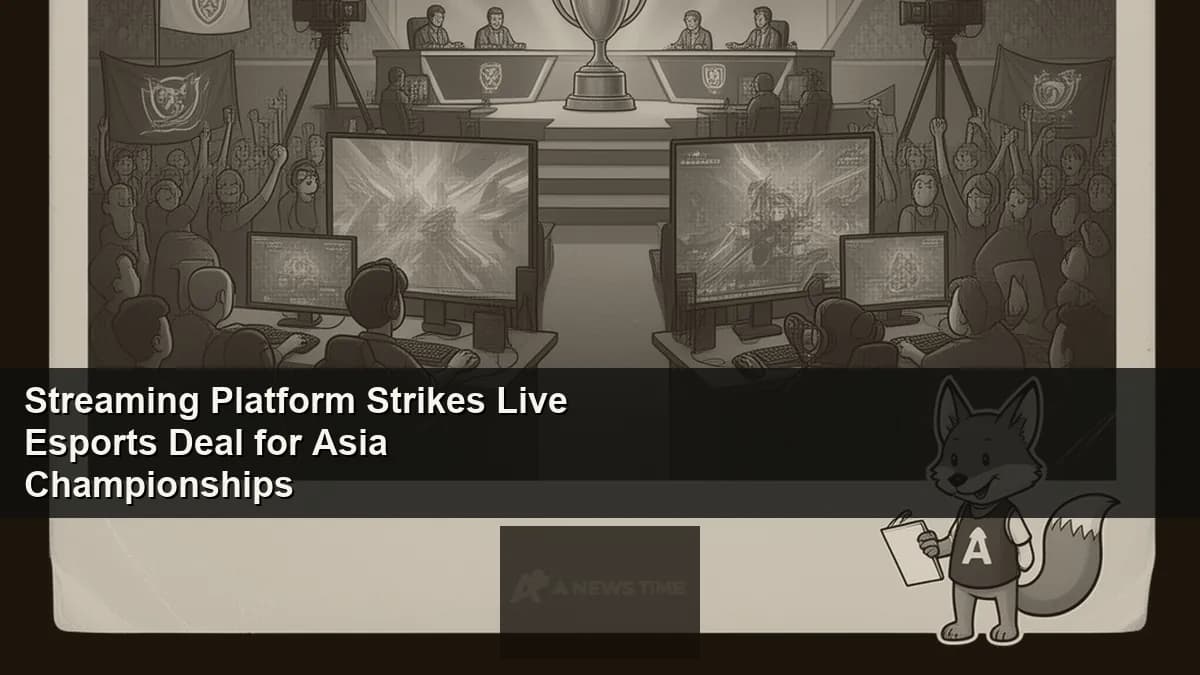
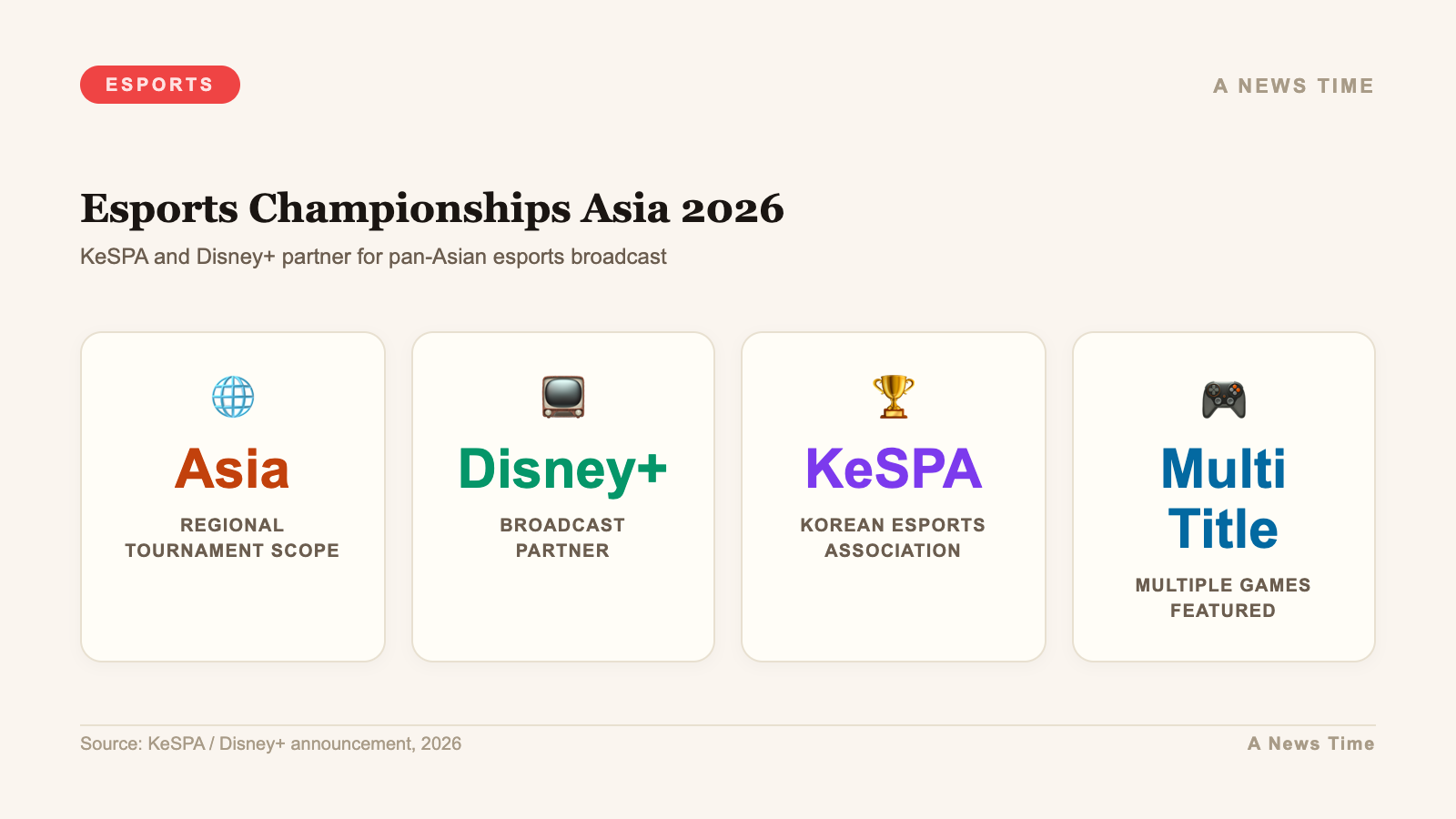
The announcement came quietly on a Tuesday morning in Seoul, but its implications were anything but small. Disney+ has reached a multi-year streaming agreement with the Korea e-Sports Association (KeSPA) to carry Esports Championships Asia 2026 as a live, premium content category on its platform across the Asia-Pacific region and internationally. It is the most significant distribution move for competitive gaming since Amazon Prime Video locked up the League of Legends Championship Series rights in North America, and it signals that the streaming wars have officially extended their front lines into esports.
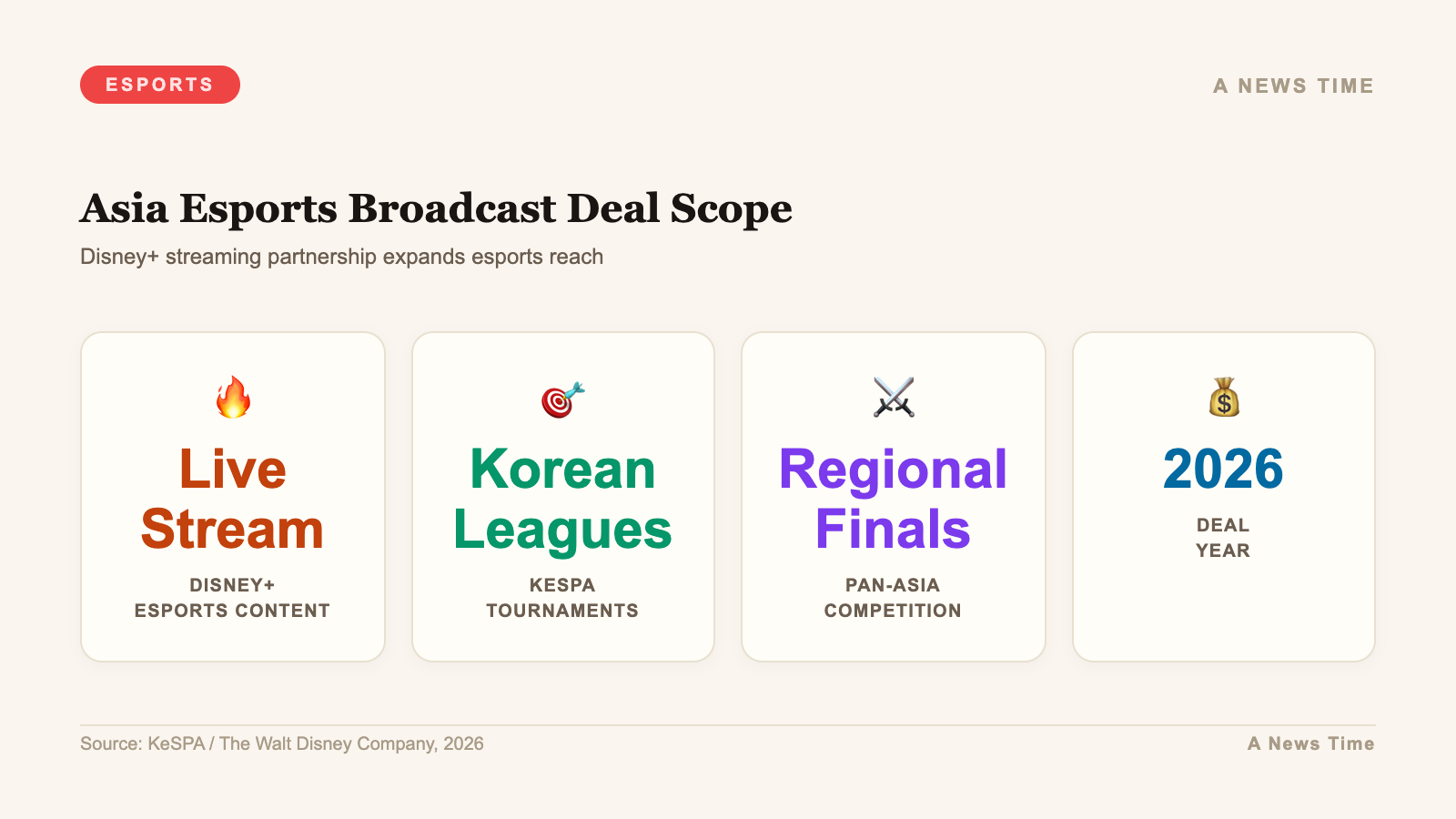
The deal covers live broadcasts, VOD replays, and exclusive behind-the-scenes documentary content tied to KeSPA's flagship competition circuit. It includes the summer and winter championship splits, regional qualifying events across South Korea, Japan, Southeast Asia, and emerging markets like Vietnam and the Philippines, and a planned All-Star invitational scheduled for late November. Disney+ subscribers will access the content through a dedicated Esports hub section launching alongside the summer split in early May.
What KeSPA Brings to the Table
For anyone outside the competitive gaming industry, KeSPA might not be a household name. But within esports, the Korea e-Sports Association is the institutional backbone of the entire Korean competitive scene, which has dominated international competition across titles including League of Legends, StarCraft, and VALORANT for over two decades. KeSPA licenses competition rights, sets player welfare standards, and coordinates with Riot Games, Blizzard, and other publishers on tournament structures at the national level.
The ECA -- Esports Championships Asia -- is KeSPA's expanded international venture, launched in 2024 as the organization sought to extend its governance model beyond Korean borders. The circuit now spans 11 countries and runs six major live events per year, with prize pools totaling approximately $8.2 million annually. Its League of Legends division in particular draws viewership that rivals the LCK domestic broadcasts, the gold standard for regional esports audiences.
What Disney gains from this partnership is direct access to one of the most engaged and demographically valuable audiences in streaming: male viewers aged 16 to 34, a cohort that the platform's traditional catalog of Marvel, Star Wars, and family animation has historically struggled to retain past their mid-twenties. KeSPA brings not just the content but the credibility that comes with decades of Korean esports prestige.
How This Fits Disney's Asia-Pacific Strategy
Disney+ has been navigating a challenging period in the Asia-Pacific market. Disney+ Hotstar, its South and Southeast Asian sub-brand, lost critical Indian Premier League cricket rights to JioCinema in 2023 and has been rebuilding its live sports proposition ever since. The esports deal represents the company's first major live competitive content commitment in the region since that setback, and it arrives with clear urgency.
Southeast Asia is the fastest-growing esports market in the world by active viewership, with Nielsen reporting a 34 percent year-over-year increase in competitive gaming consumption across Indonesia, Thailand, the Philippines, and Malaysia. Mobile esports in particular -- including Mobile Legends: Bang Bang and PUBG Mobile, both of which fall under the ECA umbrella -- have turned everyday smartphone users into regular tournament viewers in markets where PC and console ownership remain limited.
Disney's regional content team in Singapore has been developing an esports strategy document since mid-2025, according to sources familiar with the company's plans. The KeSPA partnership is the first public output of that strategy, but multiple industry contacts suggest additional deals with mobile esports bodies in Southeast Asia are in advanced discussion stages.
The Streaming Platform Race for Esports Rights
Disney is not alone in this calculation. The competition to own competitive gaming's live broadcast rights has intensified dramatically over the past 18 months as platforms have exhausted or over-bid on traditional sports properties and need new growth categories to justify subscriber retention spending.
Amazon Prime Video made the first major move when it secured exclusive LCS rights in 2024, a deal that brought League of Legends North America to a mainstream streaming audience for the first time. The results were mixed in raw viewership numbers but proved successful in reducing average subscriber age among Prime Gaming users and increasing conversion from free trial to paid subscriptions in the 18-25 demographic.
YouTube remains the dominant home for esports watch-time globally, with the Worlds championship for League of Legends regularly topping 10 million concurrent viewers on the platform. But YouTube's dominance is increasingly in VOD rather than live, as it lacks the subscription model that allows platforms like Disney+ and Prime to absorb the costs of exclusive live rights without direct per-event monetization pressure.
Twitch, which built esports streaming as a category over a decade, has seen its competitive gaming market share erode steadily. Parent company Amazon has redirected Twitch toward creator economy positioning rather than premium sports rights, leaving the door open for Disney+ to stake a claim on the premium, broadcast-quality end of the esports market.
What the Deal Means for Players and Teams
For the professional players and organizations competing under the ECA banner, the Disney+ partnership represents a meaningful infrastructure upgrade. Live production quality for KeSPA's international events has historically been strong but inconsistent, reflecting the patchwork of regional broadcast partners that have carried ECA content to date. Disney brings not just distribution reach but production investment, including a commitment to providing dedicated broadcast crews for the summer championship final in Seoul.
Team organizations stand to benefit from increased sponsorship leverage. When a competition is accessible through Disney+, brands that have historically avoided esports over concerns about brand safety and audience measurement suddenly gain access to familiar audience data through Disney's ad targeting infrastructure. This matters enormously for mid-tier ECA organizations that have struggled to attract non-endemic sponsors -- companies outside the gaming and peripheral industries -- which generate the highest sponsorship revenues.
The player welfare provisions in the KeSPA-Disney agreement are also worth noting. KeSPA negotiated broadcast revenue-sharing minimums that flow back to participating team organizations, with a floor structure that guarantees teams a base broadcast fee regardless of viewership performance. This addresses a longstanding criticism of how esports broadcast deals have historically been structured, with most revenue captured at the publisher and governance body level while team organizations absorb the operating costs of fielding rosters.
Reactions Across the Industry
The response from the competitive gaming industry has been broadly positive, with notable caveats. Rod Breslau, the veteran esports journalist and industry analyst, described the deal on his podcast as "the most important distribution announcement in Asian esports since Riot regionalized the LCK" while cautioning that Disney's track record in live sports requires patience and a willingness to let viewership grow over multiple seasons rather than demanding immediate ratings parity with its entertainment catalog.
Several esports executives who spoke with A News Time on background were more pointed in their observations. One executive at a League of Legends ECA organization noted that the initial broadcast deal covers production standards that are "significantly below what Worlds-level events receive" and expressed hope that Disney's investment would scale upward quickly once the first split demonstrated subscriber engagement metrics. Another executive at a competing regional governance body suggested that KeSPA's willingness to cede global distribution to Disney could create tension with member organizations that have their own established deals with regional platforms in markets like Thailand and Indonesia.
Riot Games declined to comment on the deal specifically, but the company's broader relationship with KeSPA is reportedly unchanged. Riot retains ultimate control over League of Legends and VALORANT competition structures globally, meaning that the Disney+ deal covers broadcast rights but does not alter the competitive governance relationship between KeSPA and Riot's own tournament operations.
What Viewers Can Expect Starting in May
For fans, the practical experience of watching ECA events through Disney+ will differ from the Twitch and YouTube streams that have been the default for years. Disney+ is presenting esports as a premium content category with full broadcast production values, meaning pre-show analysis, expert commentary teams drawn from both Korean and English language broadcasting talent, and multilingual overlay options that have historically been underserved on free streaming platforms.
The platform will also offer interactive features that Disney has been developing through its ESPN+ streaming infrastructure, including alternate camera angles, real-time statistics overlays, and a clip-sharing tool designed for short-form distribution across TikTok and Instagram. The latter is particularly relevant given that esports highlights and clip culture drive a disproportionate share of discovery for new fans entering the scene.
A tiered access structure means that while live events will require a Disney+ subscription, select VOD content including match replays and documentary clips will be available with a free Disney+ account at reduced quality. The goal, according to the company's press materials, is to use free-tier content as a funnel toward paid subscription conversion, a model borrowed from its successful launch strategy for original documentary series.
The Long View on Esports and Mainstream Media
The Disney-KeSPA deal is a specific transaction with specific terms, but it exists within a broader narrative about competitive gaming's relationship with mainstream media institutions. For the better part of a decade, esports executives and investors have predicted that the competitive gaming audience was one major broadcast rights deal away from achieving the same institutional recognition as traditional sports. Those predictions have been made prematurely before.
What makes the current moment different is the audience composition data. Nielsen's 2025 esports audience report showed for the first time that competitive gaming viewership in Southeast Asia had surpassed traditional cable sports viewership on an average-minute-audience basis. That metric -- the one advertisers and platform algorithms care most about -- had been the final barrier to institutional legitimacy, and it has now been crossed.
Disney's bet is that the window for capturing premium esports rights at sustainable prices is finite. As audience data matures and the category proves itself at scale, the cost of rights will increase significantly. KeSPA, recognizing the same dynamic, moved to establish a global distribution partnership now rather than waiting for the market to fully mature and accepting a smaller share of the resulting revenue.
Whether this specific deal succeeds will depend on execution factors that are difficult to predict: whether Disney's subscriber base in Korea, Japan, and Southeast Asia engages with ECA content, whether the production quality matches expectations, and whether the teams and players competing in the circuit deliver the kind of compelling storylines that convert casual viewers into dedicated fans. Esports history is littered with well-funded partnerships that underperformed because the content did not meet the platform's implicit promises.
But the structure of this deal, and the institutional weight behind it, suggests that competitive gaming has finally arrived at the point where the world's largest entertainment company is willing to place a real bet on its future. That fact alone changes the conversation about where esports sits in the media landscape, regardless of what the viewership numbers look like in the first summer split.
For more on the broader competitive gaming calendar and what 2026 looks like for tournament fans, see our full 2026 esports schedule breakdown and how the Honor of Kings World Cup is reshaping mobile esports.