A fragile Middle East ceasefire announced this week sent traders rushing back into risk assets and pushed the S&P 500 up 3.6 percent in its biggest weekly gain since late November, but Wall Street's most-watched strategists are warning their clients not to confuse the rebound with a return to the bullish 2026 setup most of them sketched at the start of the year. The damage from the six-week US war on Iran has already shown up in the inflation print, in the Federal Reserve's room to maneuver, and in the energy supply chain, and none of those things gets fixed by a truce that may not even hold past the weekend, according to Bloomberg reporting compiled on .
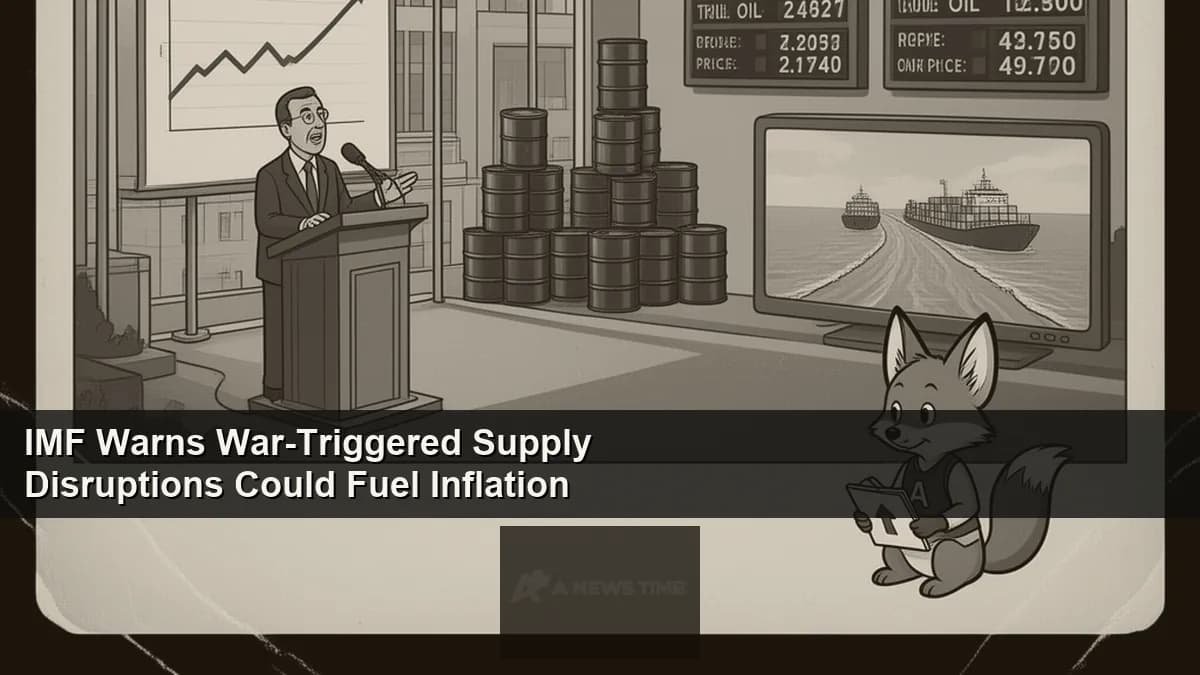
The numbers behind the recalibration are stark. Crude futures hit a record $144 a barrel this month after the closure of the Strait of Hormuz disrupted Persian Gulf shipping, and although prices have eased since, West Texas Intermediate is still hovering near $96. The oil shock fed the biggest one-month inflation jump since the 2022 price surge, dragged consumer sentiment to the lowest level on record, and left rate-cut traders pricing only an outside chance of a single quarter-point Fed cut before year end.
How the major shops are adjusting their books
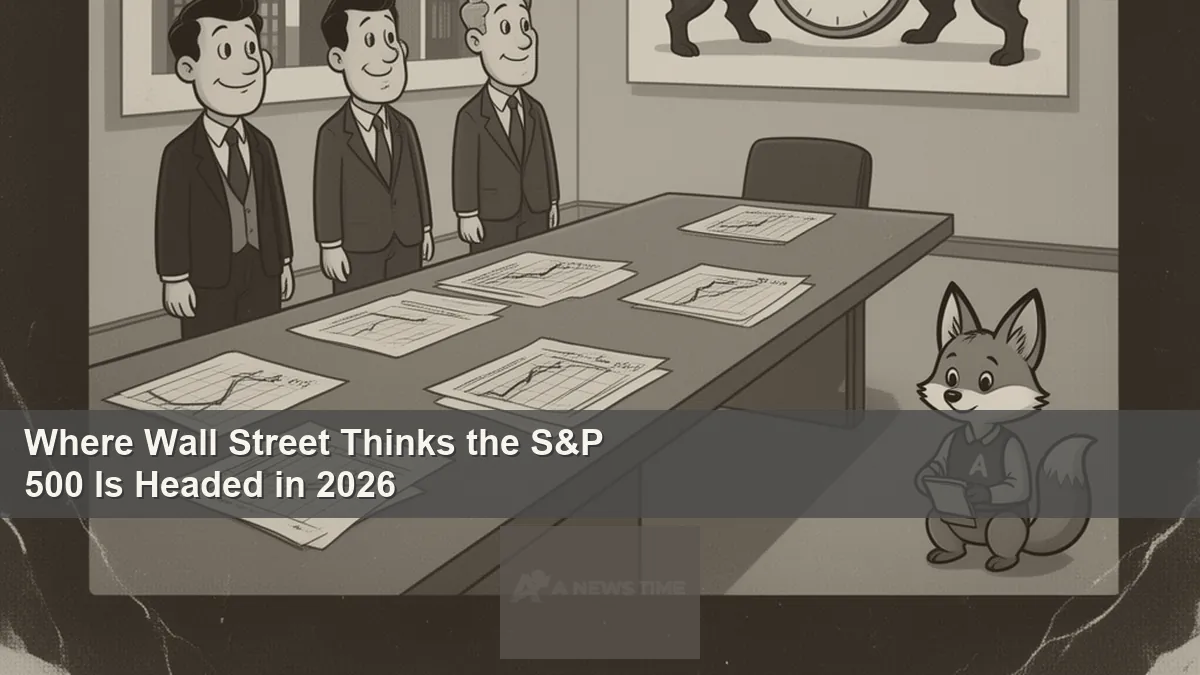
Bloomberg's interviews with eight of Wall Street's most-followed strategy desks reveal a consistent pattern. Almost no one is throwing out their year-end S&P 500 target. Almost everyone is stress-testing the assumptions underneath those targets, pushing rate-cut expectations later in the year, and gaming out scenarios they hadn't bothered modeling in January.
JPMorgan Asset Management. Chief global strategist David Kelly remains constructive, citing what he calls "even more promise in AI than there was three months ago," but acknowledges his Fed timetable has slipped. The bank had not modeled a scenario where gasoline jumps over $4 a gallon in the second quarter. Kelly now expects year-on-year inflation to peak near 4 percent this summer before easing into 2027.
Because a lot of what's pushing up inflation this year is temporary, it actually leads to less inflation next year. So I think inflation could dip below 2 percent next year, and that should enable the Fed to perhaps give us one to two more rate cuts next year.David Kelly, Chief Global Strategist, JPMorgan Asset Management
Goldman Sachs Asset Management. Alexandra Wilson-Elizondo, the firm's global co-head and co-chief investment officer for multi-asset solutions, said the Fed will likely remain "firmly on hold" until clearer signals emerge on growth and inflation, although she still expects one cut before year end. Goldman is more pointed on Europe, where Wilson-Elizondo expects the European Central Bank, with its single-mandate price stability mission, to be forced into hikes.
The reset has pushed up short-term Treasury yields, with the two-year note now yielding around 3.8 percent, a half-percentage-point higher than before the war began. Wilson-Elizondo is using the move to add fixed-income exposure in the United States.
BlackRock and the stagflation debate
BlackRock Investment Institute moved to a more neutral risk stance last month, a notable shift from the overweight allocation it carried into the year. Jean Boivin, head of BII, framed the call as binary. Either things shake out and the firm rotates back to pro-risk, or the supply shock and stagflation become the dominant story for the rest of 2026.
"It's a bit binary," Boivin said. "We could go back to our pro-risk stance or we might conclude that the damage from the supply shock and the stagflation is going to be more of the story." His read on AI is similarly cautious. The buildout, he argued, is real but capital-intensive, and the leverage required to finance it has not yet been priced in.
BlackRock has held its underweight in long-dated US Treasuries because of the inflation pressure and is favoring European bonds instead. Boivin sees long-term rates rising, with an abrupt and significant move as the key risk. "We've already seen disruptions that are probably enough to create pressure on inflation that will make it hard for the Fed to cut in 2026," he said.
The shops still calling for upside
Not everyone is dialing back. Pictet Asset Management's Luca Paolini said the team came close to reassessing its positioning, but the ceasefire shifted the calculus enough that the firm's targets are intact. Pictet still calls for the S&P 500 to finish at 7,250, more than 6 percent above Friday's close, with European equities up around 10 percent and the 10-year Treasury yield drifting below 4.25 percent. The firm now expects one cut from the Federal Reserve, one from the Bank of England, and none from the ECB.
Every crisis is different, so there is no obvious way to deal with these kind of events. We are having more meetings, more emails, more discussions. When we talk about geopolitics, everybody has a view, so there is more interest by everyone.Luca Paolini, Chief Strategist, Pictet Asset Management
Evercore ISI's Julian Emanuel is in the same camp. He pointed out that 10 of the past 11 years featuring double-digit earnings growth produced positive equity returns, and US companies are still on track to deliver double-digit earnings this year. The variable is oil. Emanuel set a clear threshold: if WTI can stay sustainably below $90 over the rest of 2026, equities should be fine. If it cannot, the math turns.
Citigroup's Scott Chronert, the bank's head of US equity strategy, said he is sticking to the upbeat view he published in mid-December "because much of what we're seeing looks transitional." His tail risks are oil-driven inflation, stress in the private credit market, and renewed tariff disruptions after several Trump-era levies were struck down by the Supreme Court last month.
The bears at the table
Allspring Global Investments has been the loudest among the big shops in flagging a slower 2026. Ann Miletti, the firm's head of equity investments, entered the year predicting two Fed rate cuts and now thinks at least one of them gets pushed into 2027.
"We see a bigger slowdown in growth," Miletti said. "The ramp up to inflation is stronger than we expected." She remains bullish on US small caps, which she said have been more resilient than expected, and is using the recent jump in yields to add exposure in both US and European equities.
Wells Fargo is the only major shop to actually downgrade its year-end S&P 500 target, cutting it to 7,300 from 7,800. The new number is still well above Friday's close of 6,817, so the bank is technically maintaining a bullish stance, but the move signals where the trajectory has slipped. Chief equity strategist Ohsung Kwon argued that economic sensitivity to oil is structurally lower than in past cycles, and that tax refunds will offset some of the household budget hit.
What the inflation print actually showed
The macro backdrop forcing the recalibration is the March CPI release. The Bureau of Labor Statistics' headline number was the largest monthly jump since the 2022 surge, driven almost entirely by energy. Core inflation, which strips out food and fuel, was firmer than economists had been modeling at the start of the year, suggesting the second-round effects from oil are already filtering into transportation and goods prices.
The Fed is now boxed in. Cutting rates while inflation is reaccelerating would cement the perception that the central bank has lost its independence under political pressure. Holding rates while consumer sentiment is at a record low risks pushing the economy into a stagflation episode the Fed has not had to manage in 40 years. The compromise the Bloomberg-surveyed strategists are gravitating toward is one cut, late in the year, contingent on oil cooperating.
That fragile balance is exactly the setup our earlier analysis tracked when the Federal Reserve first signaled it might delay its 2026 cuts. The de-escalation rally earlier this week gave traders cover to add risk back. The strategists this story tracks are warning their clients not to overread the bounce.
What to watch next
The variables to track are concrete. WTI's behavior over the next two weeks will determine whether the inflation surge looks transitory or structural. The progress of the Middle East peace talks, currently underway in Geneva, will determine whether the supply shock fades or recurs. And the next CPI release on May 14 will tell every shop on Wall Street whether their March recalibrations were enough or whether they need to cut targets again.
For now, the pattern across the eight strategy desks is clear. No one is pulling the bull case off the table. Almost everyone is hedging it. The market spent the first quarter pricing optimism. The second quarter is going to be priced on whether oil stays put.