

There is a travel category that has been growing steadily for a decade and quietly reached an inflection point in 2026. It does not have a single viral moment to point to. Instead, it has accumulated data, government backing, infrastructure investment, and a fundamental shift in how a growing segment of travelers answers the question: what is a trip actually for?
Fitness tourism, or wellness travel as it is sometimes called in its broader form, has moved from niche to pillar. And the countries positioning themselves to capture its growth, Spain, Portugal, Italy, Montenegro, Greece, Thailand, Indonesia, and the United Arab Emirates, are doing so not by accident but through coordinated policy, infrastructure development, and a clear-eyed read of what the post-pandemic traveler actually wants. Travel and Tour World's April 2026 analysis synthesized official tourism board data and government-verified destination insights to document the scale of this shift.
Why Spain's entry into the top tier matters
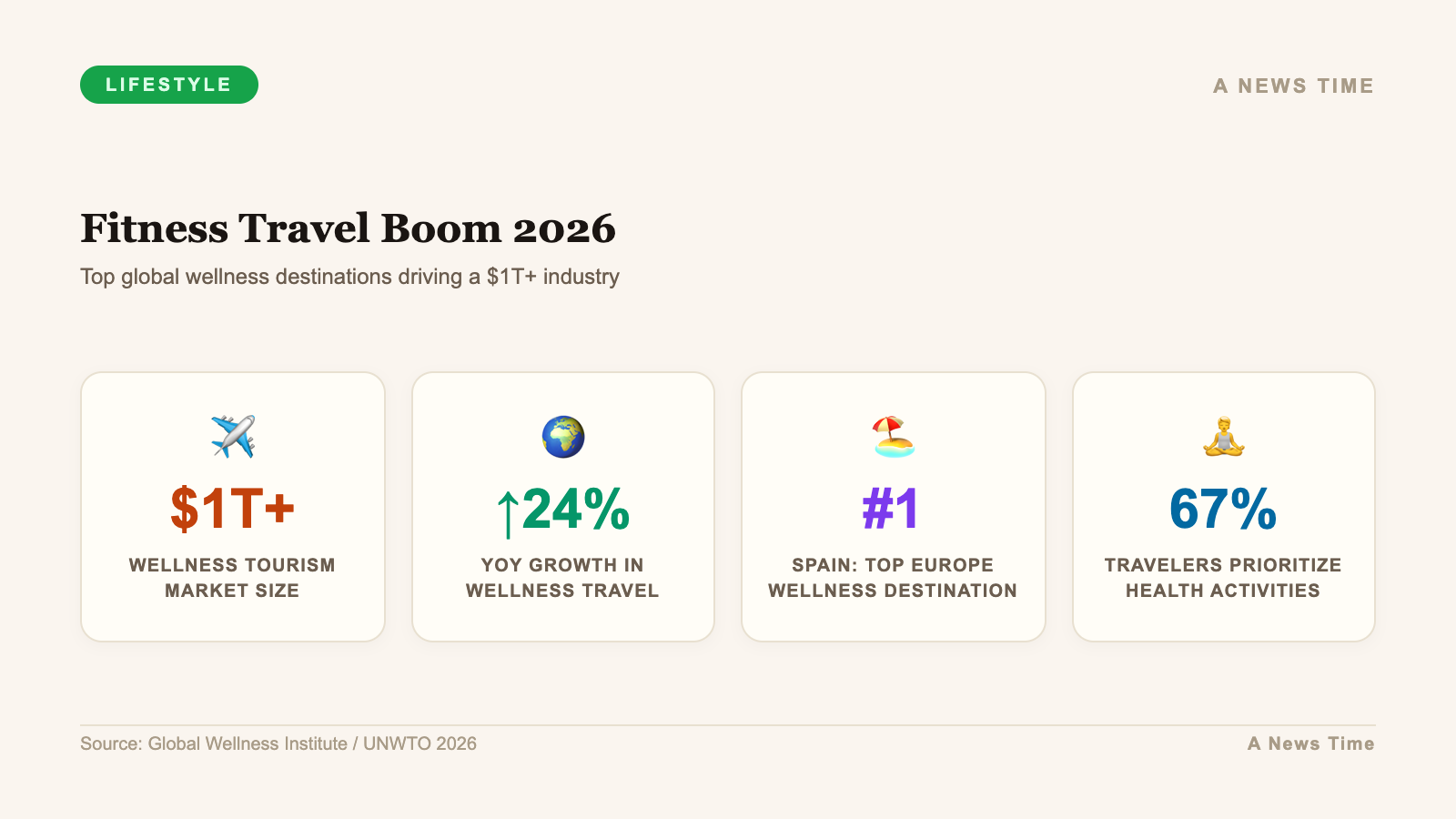
Spain is the headline story in the April 2026 data set, not because it is the most established wellness destination, but because it represents the broadest and most infrastructure-backed new entrant in the group. Spain's tourism strategy has historically emphasized sun, beach, culture, and food. The deliberate pivot toward active tourism, outdoor sports, and wellness retreats as key economic pillars represents a meaningful strategic reorientation.
The country's natural advantages are real. A climate that supports outdoor training year-round, coastal and mountain terrain suited to endurance sports, and a cycling infrastructure that already attracts professional and semi-professional athletes from across Europe. What Spain has added is the policy architecture to formalize and market these strengths: government-supported active tourism programs, subsidized training camp infrastructure, and national tourism messaging that explicitly targets the fitness traveler rather than simply welcoming them as a byproduct of general tourism.
The profile Spain is building for looks specific: goal-oriented travelers seeking structured training environments rather than passive relaxation. Cyclists riding the same Pyrenean and Andalusian routes that professional pelotons use in spring racing season. Triathletes using coastal towns as preparation bases in the weeks before Ironman events. Endurance runners using the altitude and terrain of the Canary Islands for pre-race build periods. These travelers spend more per day, stay longer, and return more frequently than conventional beach tourists, which aligns with Spain's sustainability objectives as much as its revenue goals.
The eight-country landscape: distinct approaches, common logic
What makes the 2026 data interesting is not just the individual country profiles but the differentiation between them. Each country has carved a specific identity within the fitness tourism category, and those identities are complementary rather than competitive in the way that beach tourism tends to be.
Portugal's offering is built around high-performance wellness, with regions like the Algarve developing state-backed sports hubs and integrated training campuses that combine professional coaching with family-accessible environments. The positioning targets families where at least one member is a serious athlete: a setting where a triathlete can train with a professional coach while a spouse surfs and children attend supervised sports programs. The dual-purpose infrastructure is more expensive to build but commands a significant premium over single-activity destination alternatives.
Italy occupies the luxury end of the spectrum, blending elite sports academies with high-end wellness resorts in a way that makes athletic performance feel aspirational rather than utilitarian. Racquet sports, particularly padel and tennis, have expanded rapidly in Italian resort environments, and luxury wellness retreat programming increasingly integrates performance diagnostics and recovery technologies alongside the aesthetic and culinary experiences Italy is traditionally known for.
Montenegro and Greece represent the quieter end of the category. Montenegro is building a biohacking and recovery identity, leveraging tranquil coastal settings and newly developed wellness infrastructure focused on sleep optimization, rehabilitation, and advanced recovery therapies. The positioning targets a high-income traveler who is not primarily interested in training but in the science-backed recovery practices that have migrated from elite sport into mainstream wellness culture. Greece approaches wellness from a more nature-immersive angle: yoga retreats, hiking, water-based fitness, and a holistic orientation that emphasizes balance and mindfulness over performance metrics.
Asia and the Middle East: the established leaders and the disruptor
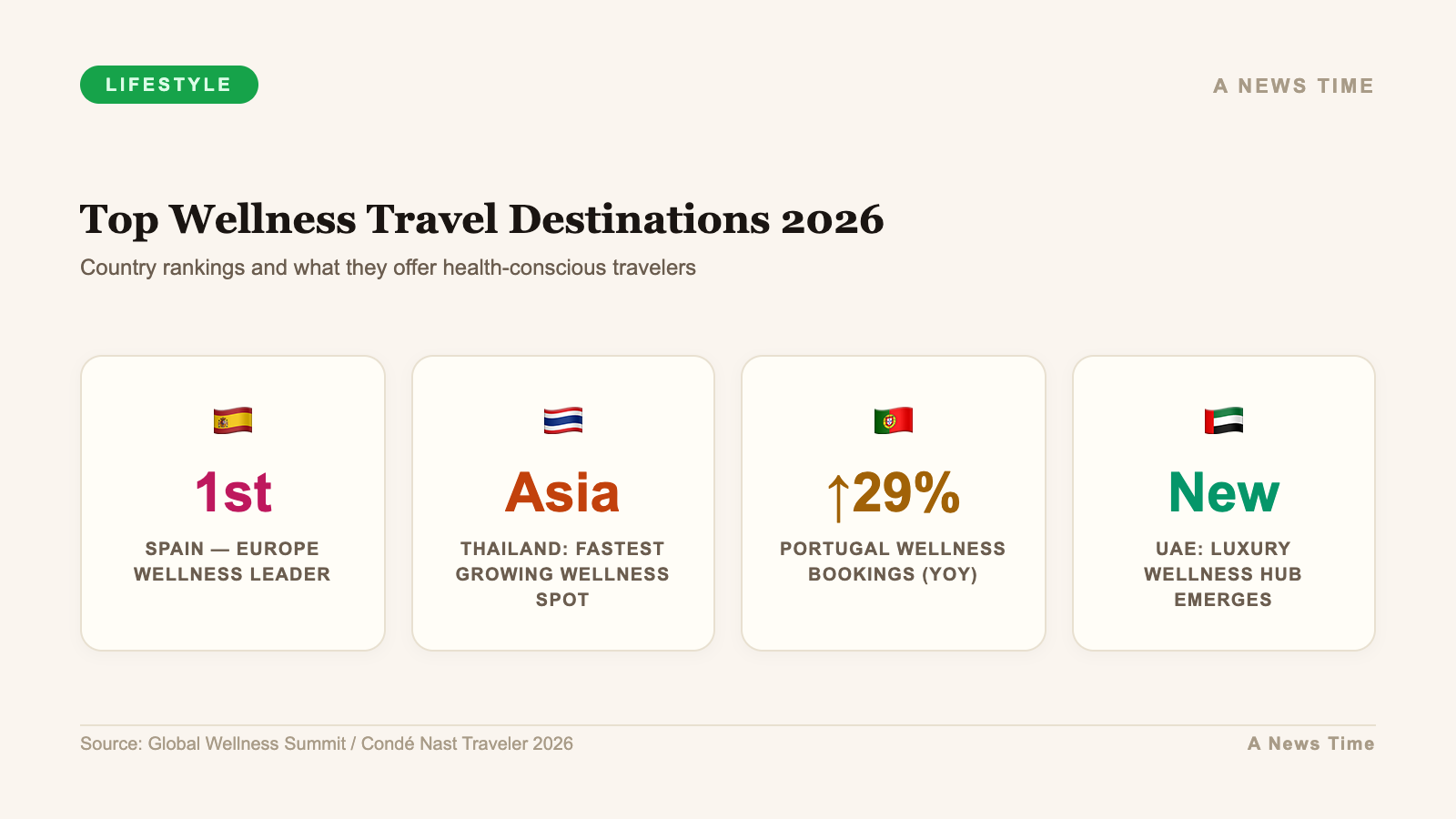
Thailand and Indonesia have the longest track records in this category and the clearest international brand recognition. Thailand's government-backed wellness sector has been operating at scale for years, built on Muay Thai training camps, detox retreats, and holistic healing traditions that attract a transformation-driven international audience. The data shows consistent repeat visitation, high program enrollment rates, and a clear profile: travelers who arrive wanting a physical and mental reset and are willing to commit to intensive programming to achieve it.
Indonesia, particularly Bali, has become synonymous with a specific type of long-duration wellness travel that combines fitness programming with spiritual practices and a digital nomad lifestyle that blurs the line between vacation and relocation. The wellness community infrastructure in Ubud and Canggu supports practitioners who stay not for a week but for months, integrating yoga, meditation, local food culture, and remote work into a coherent daily routine. Indonesia's government has recognized this as a distinct tourism segment worth supporting, and the country's tourism KPIs now track long-stay visitor numbers and digital nomad wellness community growth as primary metrics.
The United Arab Emirates is the most interesting case study in the group precisely because its advantages are entirely constructed rather than natural. The climate is actively hostile to outdoor fitness for much of the year. The local wellness tradition is not ancient. And yet the UAE has built one of the most compelling fitness tourism offerings in the world through sheer infrastructure investment: luxury recovery centers, advanced training technology, indoor facilities that operate regardless of ambient temperature, and a service model calibrated to high-income travelers who want cutting-edge and personalized.
The UAE is betting that enough travelers exist who want the most technologically advanced wellness experience available and are willing to pay a premium for it in a logistics-convenient, politically stable location. The early data suggests that bet is paying off. High-value tourist spending and utilization of luxury wellness facilities are strong, and the UAE's positioning as a hub for high-end performance travel complements rather than competes with Thailand's transformation retreats or Greece's nature immersion model.
The data on why fitness travelers are more valuable
The economic logic driving government investment in fitness tourism is not complicated, but it is compelling. Fitness travelers spend more per day than conventional tourists, stay longer, come in smaller groups, and require less of the overcrowded infrastructure that mass tourism demands. A triathlete preparing for an Ironman in the Algarve may book six weeks of accommodations and hire a professional coaching team. A conventional tourist staying in the same region for ten days spends a fraction of that total.
Government tourism reports across the eight-country group consistently cite higher revenue per visitor, longer stays, and reduced pressure on overcrowded sites as the core arguments for prioritizing fitness and wellness travelers. The emphasis on quality over quantity is not just aspirational language. It is a response to the real costs that mass tourism has imposed on popular destinations: degraded infrastructure, resident displacement, environmental pressure, and the commoditization that makes a destination feel less worth visiting over time.
The KPI frameworks these countries are using reflect this shift. Spain measures success through high athlete arrival volumes, long-duration training camp stays, and repeat visits from professional and semi-professional athletes. Portugal tracks family-plus-athlete occupancy rates and increased average spend per visitor. Montenegro focuses on growth in recovery tourism bookings and longer stays linked to rehabilitation programs. Greece evaluates seasonal extension of tourism through wellness retreat bookings, which bring visitors in shoulder seasons when conventional beach tourism drops off sharply. Across all eight countries, the common KPIs are average length of stay, per-capita tourist spending, repeat visitation rates, wellness program participation, and off-season occupancy growth.
The traveler behavior shift underneath the data
The infrastructure investment and policy frameworks respond to a real change in how a specific and growing segment of travelers think about why they travel. The traditional vacation, designed to generate rest through passive relaxation, is not disappearing. But alongside it has emerged a different motivation: travel as a context for physical and mental improvement rather than simply escape from the ordinary.
The concept of train while you travel has moved from elite-athlete practice to mainstream aspiration. Remote work has accelerated this by making longer stays economically viable for people who previously could not take more than two weeks away. A remote worker who can maintain their professional output from Algarve has no structural barrier to spending six weeks there instead of ten days, particularly if the destination offers the fitness programming and coaching they want. The blend of work, leisure, and structured fitness, with professional coaching, peer community, and beautiful environment, is something that was only available to professional athletes a decade ago and is now accessible to a far broader demographic.
The social sports element is also significant. Padel has experienced explosive growth across Spain and Italy in particular, with thousands of new courts built in the past three years and a demographic profile that skews younger and more affluent than traditional racquet sports. Pickleball has had similar growth in the US and is now spreading through European resort markets. These sports are social, accessible, and intensely fun in a way that makes them more sustainable as travel motivations than more individualistic fitness pursuits. They also create natural repeat visitation: players who had formative padel experiences at a Spanish resort are highly likely to return to the same environment.
The sustainability alignment that tourism boards are starting to emphasize
Fitness tourism also aligns with sustainability goals in ways that conventional mass tourism does not. Fitness travelers tend to engage with natural environments through running, cycling, hiking, and swimming in ways that leave a lighter physical footprint than cruise ship disembarkation or major theme park visitation. Longer stays reduce the per-visit carbon cost of international travel. And the premium pricing model that fitness tourism supports allows destinations to generate higher revenue from smaller visitor numbers, which reduces the infrastructure strain that mass tourism creates.
This alignment is becoming a deliberate part of the marketing narrative for destinations like Greece and Montenegro, where environmental sensitivity is both genuinely valued and practically important for preserving the natural attributes that make the destination appealing in the first place. A yoga retreat in a pristine Greek island setting is only sellable as long as the island remains pristine. The business model of high-value, low-volume wellness tourism creates an incentive to protect the environment that mass tourism does not.
Our earlier coverage of fitness clubs evolving into wellness social hubs explored a similar convergence domestically: the blurring of the line between exercise infrastructure and community gathering space. Fitness travel is the geographic expression of the same shift. The destination is no longer background to the trip. It is the point.
What to watch through the year
Two things worth tracking in 2026. The first is whether global wellness tourism booking platforms, particularly those specializing in fitness retreats and adventure travel, publish data on year-over-year growth in bookings for the eight-country group. The policy and infrastructure data from government tourism boards tells one side of the story. Independent booking data would confirm whether the traveler demand is tracking with the investment. The second is whether the padel and pickleball infrastructure expansion in Spain and Italy attracts dedicated sports tourism packages from major European and US tour operators by Q4 2026. If the social sports segment develops its own travel vertical the way golf tourism did before it, the scale of the fitness travel market will expand significantly beyond the current endurance sports and retreat categories that currently dominate it.