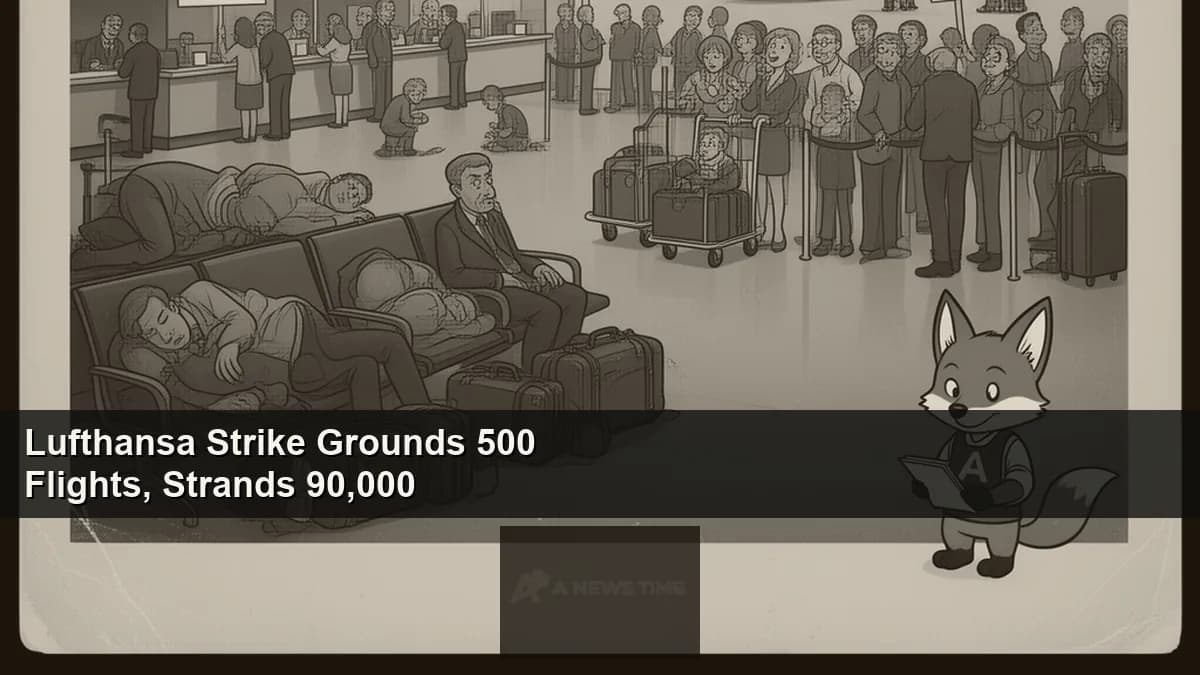
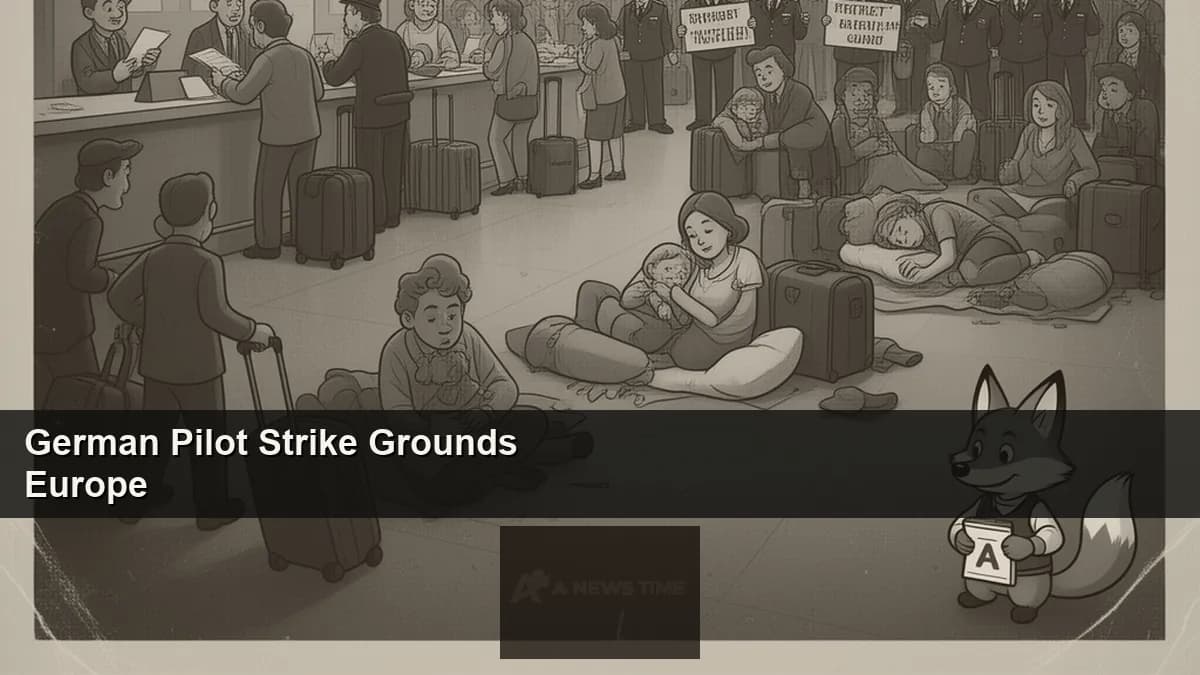
Vereinigung Cockpit, Germany's main pilots' union, called a 48-hour walkout that began in the early hours of , and rolled into , grounding more than 500 flights across Europe. Lufthansa was the primary target, but the ripple hit British Airways, EasyJet, KLM, SWISS, and Brussels Airlines as connection banks collapsed at Frankfurt and Munich. The union is pressing for pay increases, restored pension contributions, and cost-of-living adjustments that its members say have fallen behind two years of German inflation.
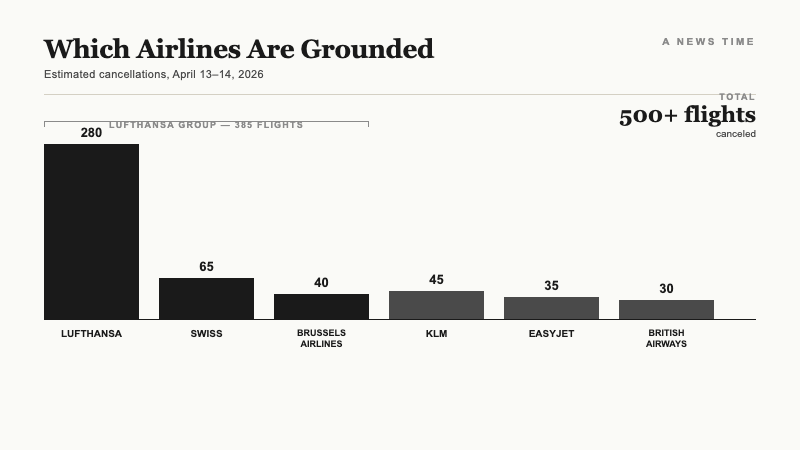
Which Airlines Are Grounded
The carrier list tells you how entangled European aviation has become. Lufthansa is the direct employer in the dispute, but its group structure means SWISS International Air Lines and Brussels Airlines, both Lufthansa Group subsidiaries, are absorbing the same operational damage. The non-Lufthansa names on the cancellation board, British Airways, EasyJet, and KLM, are not in the labor fight at all. They were cut down because their schedules depend on Frankfurt and Munich as connecting hubs, and when the inbound legs do not arrive, the outbound legs do not leave.
According to Travel and Tour World's running tally, the 500-plus figure understates the true disruption because it counts canceled sectors rather than affected passengers. One scrubbed wide-body between Frankfurt and Singapore can knock 340 travelers out of their Tuesday plans and burn through three days of rebooking capacity on alternative carriers.
What the Pilots Are Demanding
The headline demand is pay. Vereinigung Cockpit is asking for a compounded wage increase it describes as necessary to restore the real value of cockpit salaries after two years of elevated German inflation. But the sharper fight is over pension contributions, which Lufthansa scaled back during its pandemic-era cost restructuring and has been slow to rebuild at pre-2020 levels. The union has also flagged cost-of-living adjustments, the kind of indexation clauses that became standard in German collective bargaining in 2023 and 2024 but have not flowed to cockpit agreements.
The pension issue is not a side item. It is the reason some senior captains have been voting for industrial action when they would normally prefer a mediated settlement.Vereinigung Cockpit bargaining position, as reported by European aviation trade press
Lufthansa's public posture, consistent with its statements during the 2024 ground staff disputes, is that the airline cannot commit to open-ended cost-of-living clauses while fuel and Eurocontrol charges remain volatile. That is a legitimate financial argument. It is also the argument that has pushed negotiations to the picket line three times in twenty months.
Why Now
Easter. That is the short answer, and no one inside the union will say it on the record, but the calendar is not accidental. European carriers rely on the Easter holiday window for one of their three biggest yield peaks of the year, and April 13 sits squarely between the Good Friday outbound wave and the post-Easter return rush. A walkout on a low-demand Tuesday in February costs the airline a day of lost revenue. A walkout during the Easter window costs the airline a day of lost peak revenue, plus rebooking fees, plus hotel vouchers, plus the reputational tail that follows viral airport footage.
The broader context is a continent-wide wave of aviation labor actions that began in and has not really paused. Baggage handlers in Paris, cabin crew in Rome, air traffic controllers in Lisbon. The VC action slots into that pattern rather than breaking from it.
The Lufthansa Group Exposure
To understand why one German union can disrupt flights landing at Heathrow, you have to look at the group's operational footprint. Lufthansa Group typically operates between 1,200 and 1,500 flights per day across its brands, with Frankfurt and Munich acting as the two largest transfer hubs in continental Europe. SWISS feeds passengers through Zurich into that system. Brussels Airlines feeds passengers from Africa and southern Europe. When the German cockpit stops, the entire connective tissue of the network seizes.
For comparison, the last major VC action, in , grounded approximately 800 flights over three days and forced Lufthansa to issue a preemptive cancellation list the night before the strike began. This week's approach is similar. Lufthansa notified affected passengers by text and email starting Sunday evening, encouraging rebooking onto later departures or refunds.
| Carrier | Approx. Cancellations (Apr 13 to 14) | Rebooking Options |
|---|---|---|
| Lufthansa | 300+ | Rebooking on Lufthansa, United, Air Canada (Star Alliance) |
| SWISS | 70+ | Rebooking on SWISS, United, Singapore Airlines |
| Brussels Airlines | 55+ | Rebooking on Brussels, United, Ethiopian |
| British Airways | 30+ | Rebooking on BA, Iberia, American |
| KLM | 25+ | Rebooking on KLM, Air France, Delta |
| EasyJet | 20+ | Limited alternate carrier options; refund common |
What Passengers Are Owed Under EU261
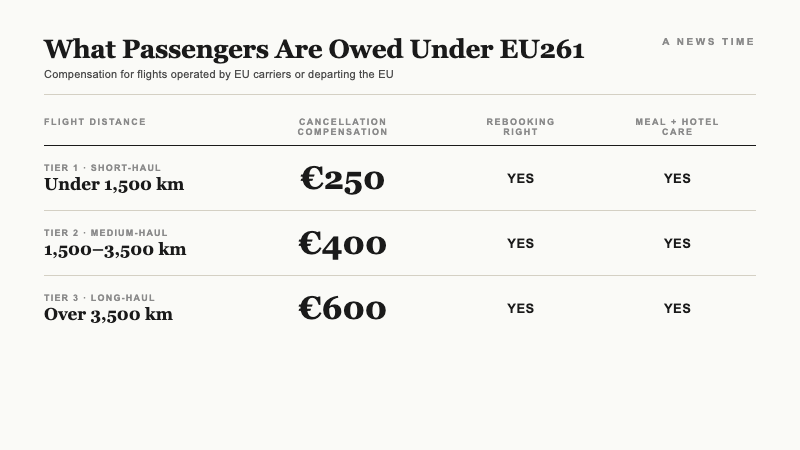
EU261, the European Commission's passenger rights regulation, is the governing document here, and it is the source of a lot of airport-counter confusion. The regulation entitles passengers whose flights are canceled or significantly delayed to care (meals, phone calls, overnight hotel if needed), rerouting, or refund. Cash compensation of 250 to 600 euros per passenger is layered on top for cancellations that the airline could reasonably have prevented.
The legal gray area is the phrase "extraordinary circumstances." Airlines routinely argue that strikes, particularly wildcat actions, qualify as extraordinary and exempt them from compensation payments. The European Court of Justice has pushed back on that defense when the strike involves the airline's own employees, reasoning that labor relations are an ordinary part of running an airline. When the strike is by external parties, say air traffic controllers, the extraordinary defense tends to hold. In this case, VC members are Lufthansa employees, so Lufthansa passengers have a stronger claim than, say, KLM passengers who were delayed because their Lufthansa connection never boarded.
Here is what passengers affected by the strike are entitled to under the regulation, per the European Commission's passenger rights portal:
- Right to care. Meals and refreshments proportional to waiting time, two phone calls, and hotel accommodation plus transfers if an overnight stay is required.
- Right to rerouting or refund. The passenger chooses between a full refund within seven days, rerouting at the earliest opportunity, or rerouting at a later date of the passenger's choosing subject to seat availability.
- Right to compensation. Between 250 euros (flights up to 1,500 km) and 600 euros (flights over 3,500 km), reduced by half if rerouting brings the passenger within two to four hours of the original arrival time.
- Right to information. Written notice of rights, in a language the passenger understands, provided at the airport.
- Non-waiver. The airline cannot require passengers to sign away these rights as a condition of rebooking or refund.
What Travel Insurance Covers
Insurance is the other variable, and it is messier than most travelers realize. Standard trip cancellation policies issued before a strike is announced typically cover strike-related cancellations as a named peril, which means a passenger who bought insurance in March for an April 14 trip is generally covered for non-refundable hotel nights, prepaid tour reservations, and the difference between a refunded ticket and a last-minute replacement. Policies purchased after a strike has been announced or threatened are usually excluded, which is the point where travelers stop reading the fine print and start calling the broker.
Credit card travel protection, the kind bundled with premium Visa or Amex products, varies wildly by issuer. Chase Sapphire Reserve and Amex Platinum tend to cover strike-related interruptions at meaningful limits. Mid-tier cards often cap out at 500 dollars per trip or exclude labor actions entirely. The practical answer for affected passengers is to pull up the benefits guide for whichever card paid for the ticket and read the interruption section before heading to the rebooking desk.
The Economic Backdrop
Spring 2026 was supposed to be aviation's recovery year. Load factors across European carriers were tracking above 2019 baselines in January and February, and yield, the revenue per seat mile that airlines actually care about, had finally crept back to pre-pandemic levels on transatlantic routes. That is exactly the environment in which cockpit unions sharpen their leverage, because a strike during a weak quarter costs the airline less than a strike during a strong one.
Hertz's 2026 spring travel trends report pegged Europe as the top inbound destination for American travelers this season, with Germany specifically in the top five searched countries. That translates to a meaningful share of the 500 canceled flights carrying passengers who are both paying premium fares and encountering the European passenger rights system for the first time. American travelers used to the more constrained U.S. Department of Transportation framework tend to be pleasantly surprised by what EU261 entitles them to, once they find the right counter.
When Service Normalizes
Lufthansa's operational guidance, consistent with how the airline handled the March 2024 action, suggests schedules return to roughly 85 percent of normal by , with full recovery by Thursday or Friday depending on aircraft positioning. The complication is crew legal rest limits. Pilots who were scheduled to fly on Monday but did not, because the strike grounded them, still count against duty rosters for the week, which means some Friday flights will be scrubbed because there are not enough legal pilots in the right cities.
The other complication is whether Vereinigung Cockpit calls a second wave. The union's public position as of Monday evening was that this action is a warning strike, meaning a short, targeted walkout designed to pressure negotiations rather than a prolonged stoppage. Warning strikes can escalate. In 2024, a two-day warning strike became a five-day strike after mediation collapsed. Travelers booked on Lufthansa, SWISS, or Brussels Airlines flights through the end of April should treat their itineraries as provisional until the carriers announce a negotiated settlement.
The Second Weekend of the Easter Window
The return wave of the Easter holiday, which peaks and , is what airlines are now focused on protecting. Lufthansa's dispatch teams will be pre-positioning aircraft and crew on Wednesday and Thursday specifically to rebuild the operational buffer that normally absorbs weather disruptions and minor delays. That buffer is gone. Any additional friction, a runway closure at Frankfurt, a thunderstorm over Munich, a second union action, will cascade faster than normal.
For travelers still planning a European Easter weekend getaway, it is worth reading the broader 2026 Europe travel rules coverage and the ongoing reporting on this year's wave of airline disruptions, because the pilot strike is not happening in isolation. It is happening against a backdrop of fuel volatility, entry system rollouts, and the ETIAS authorization requirement that has been tripping up Americans at passport control since January.
The Union Case, Restated
It is tempting in stories like this to position the union as the antagonist because the visible cost of the strike is the stranded family at Terminal 1. That framing does not survive contact with the actual numbers. Cockpit compensation in Germany has risen roughly 4 percent over the past three years, while German consumer prices have risen approximately 11 percent over the same period. Pension contributions, which are a deferred form of compensation, were cut during the pandemic and only partially restored. The airlines that are negotiating these contracts are the same airlines reporting strong load factors and improving yield. The union's position is that if the recovery is real, it should show up in the contracts, and if it is not real, the airlines should stop telling shareholders it is.
That is an argument worth reporting seriously, not burying under a cancellation count. Vereinigung Cockpit has approximately 10,000 members across German carriers, and the bargaining strength it is demonstrating this week will shape the terms of every cockpit contract signed in the country for the next two years.
Insider Note
One detail that is not in the cancellation reports: Lufthansa's loyalty desk, the Miles and More service line reserved for Senator and HON Circle members, has been the fastest route to rebooking for any passenger who holds status. Call volume on the standard line peaked at roughly 90-minute hold times Monday morning. The status line was averaging under 15 minutes. For elite passengers, that is the difference between making the next flight out and sleeping at the Sheraton attached to Terminal 1. The rest of the rebooking population is waiting on app notifications and counter lines, which is the default experience of a major strike and the reason loyalty programs keep working even when passengers swear off them after each disruption.