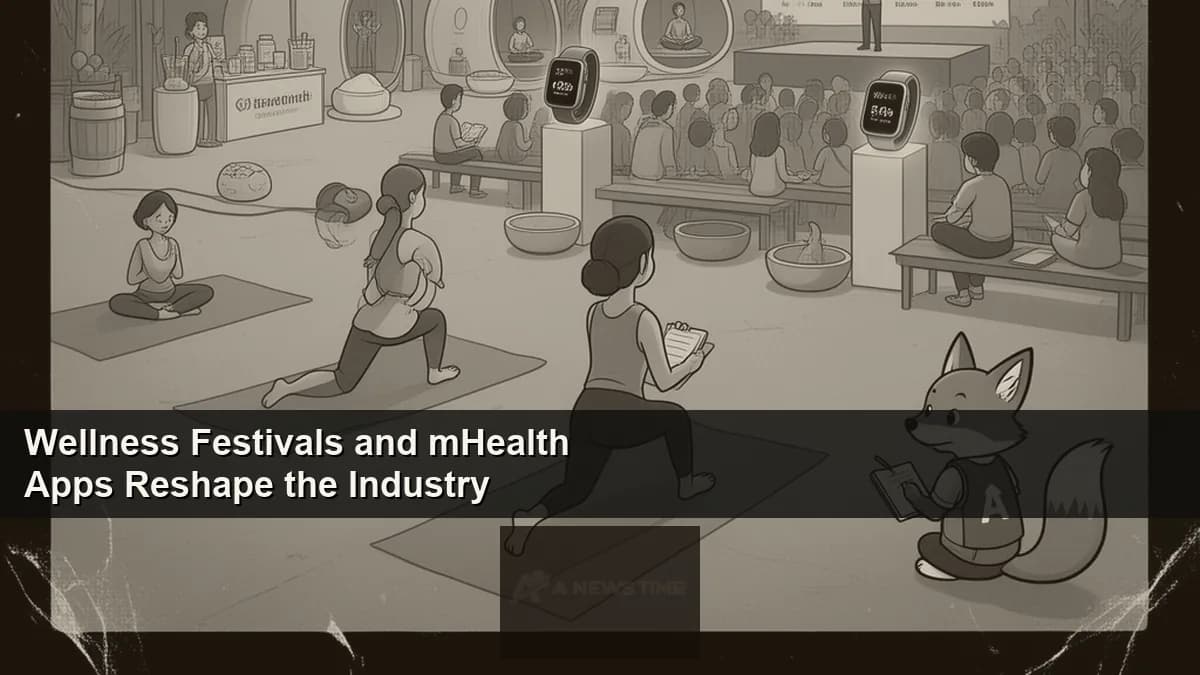
Last month, someone in my neighborhood convinced four different people to meet at 6 a.m. for a cold plunge followed by breathwork and a gut-health-focused breakfast. Not a retreat. Not a class. Just a Thursday. Ten years ago that sentence would have been unintelligible. Today it reads as a normal morning for a growing slice of the American population that has rebuilt its daily infrastructure around well-being in ways that go well beyond what the wellness industry spent decades selling them.
This is the moment WellNXT Miami x Fest is arriving into. The two-day gathering scheduled for and at The Sacred Space Miami in Wynwood is not, by its organizers' own framing, a wellness conference or a fitness expo. It is positioned as an immersive experience within what they describe as the global $10 trillion wellness economy. The framing matters. The people building this event are betting that the consumer who once bought a yoga mat and a green juice has become someone who shows up to curated gatherings, invests in longevity science, tracks nervous system recovery, and expects brands to meet them there with something real.
Whether that bet is well-placed is worth examining carefully, because the data behind it is striking in ways that go well beyond the usual wellness industry boosterism.
From Product Category to Personal Infrastructure
The shift happening in wellness right now is not about new products. It is about a change in how people organize their lives. Consumer behavior research published in early 2026 describes the pattern precisely: individuals are no longer focusing only on fitness or nutrition. They are exploring options that support relaxation, recovery, and daily balance, and that shift is influenced by changing work patterns, increased awareness of mental health, and a growing interest in routines that extend beyond traditional health frameworks.
The practical result of this is that the line between wellness products and lifestyle products is dissolving. Items that were once considered niche are entering mainstream daily routines. What is emerging, as the Food and Agriculture Organization has noted, is not just a trend cycle but a structural shift in how products are developed and used, with emphasis moving toward integration: health, lifestyle, and daily experience intersecting in ways that redefine what consumers expect.
This is why events like WellNXT Miami x Fest make a certain kind of cultural sense right now. They are not selling wellness. They are building the context in which wellness happens. The programming across the two days reflects this breadth: movement and physical performance on Day 1 moves into gut-brain nutrition, nervous system optimization, and social wellness on Day 2. Sessions range from breathwork and cold plunging to financial wellness and business-of-wellness panels. The through-line is not a product category. It is an orientation toward well-being as something you inhabit rather than something you purchase.
Stevi Gable Carr, who co-founded WellNXT and serves as CEO of WISe Wellness Guild, brings a credential set that reflects the industry's evolution. Her career spans Fortune 500 brand partnerships with Kroger and Procter & Gamble, healthcare system work with AdventHealth, a Harvard/McLean Institute of Coaching Fellowship, and recognition as an Inc. Magazine Female Founders 500 honoree. That combination, brand strategy plus healthcare plus wellness entrepreneurship, is becoming the profile that defines serious operators in this space.
The mHealth Surge: What $113 Billion in Apps Actually Signals
The most striking number in the current wellness landscape is not the global market size. It is the trajectory of the mHealth apps segment specifically. The market sits at approximately $45 billion in 2026 and is projected to reach $113 billion by 2034. That is roughly a 151 percent increase over eight years, driven by a compound annual growth rate that outpaces almost every other segment of the consumer technology market.
| Segment | 2026 Market Size | 2034 Projection | Growth |
|---|---|---|---|
| mHealth Apps (global) | $45 billion | $113 billion | +151% |
| Global Wellness Economy | $10 trillion | Expanding | Ongoing |
| Boutique Fitness (annual growth) | Near double-digit | Accelerating | vs. flat big-box sector |
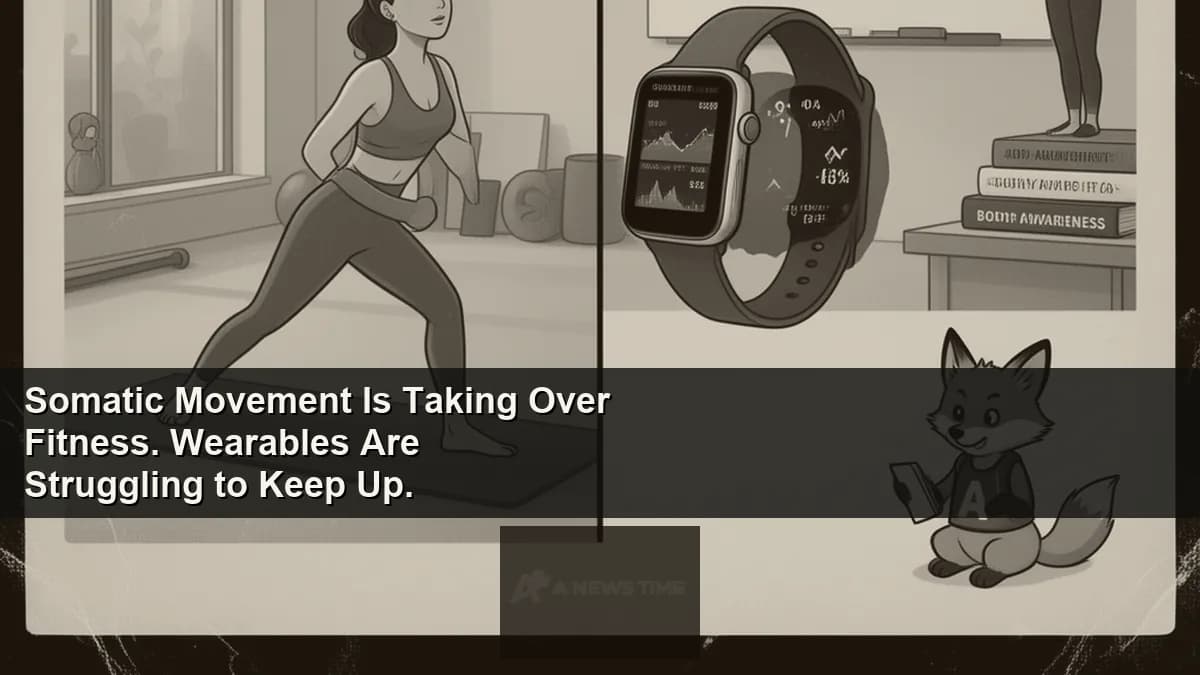
What is driving this growth is not a single category of app. It is the convergence of several behavioral shifts arriving at the same time. Wearables have normalized continuous health data collection, creating demand for platforms that can interpret and act on that data. The somatic movement and fitness tracking trend has moved from early adopter territory into mainstream consumer behavior. Mental health awareness has generated a separate and fast-growing category of apps focused on stress, sleep, and emotional regulation. And personalization technology has matured to the point where apps can deliver genuinely differentiated experiences rather than generic content libraries.
What the mHealth number actually signals is that digital wellness infrastructure is becoming as normalized as digital financial infrastructure. People now expect an app to help them manage their money, their schedule, their social connections, and increasingly, their body systems and mental state. The wellness app is no longer a novelty or a luxury. It is a utility.
This connects directly to the consumer behavior pattern described in the lifestyle products research: personalization is no longer a premium feature, it is becoming an expectation. Consumers are moving away from one-size-fits-all solutions and toward options that can be tailored to individual preferences. The brands and platforms succeeding in the mHealth space are the ones delivering against that expectation, not the ones offering the most features.
Bangkok, Bali, and the Geography of Wellness Expansion
One of the most underappreciated dimensions of the current wellness boom is how geographically distributed it has become. The narrative has historically centered on American coastal cities and European spa destinations. What is happening in paints a more global picture.
In Bangkok alone, four new sports and wellness spaces launched this month. The Lobb Club brings a design-led sport and social approach to Sathu Pradit, merging indoor tennis, pickleball, and an all-day dining concept under the tagline "Play, Balance, Belong." Sterling Sport & Wellness on Sukhumvit 24 integrates padel, Muay Thai, barre, private sauna, cold plunge, and nutrition-focused dining in a single destination. The Big Chill introduces a social spin on ice baths, deliberately positioning cold exposure as a community-driven experience rather than an individual performance practice. And The O2 Bangkok, opening in June, is planning what will reportedly be Thailand's first AI-managed gym within a 10,200-square-meter sports and medical complex built around an "injury-to-membership" model connecting treatment, rehabilitation, and performance training.
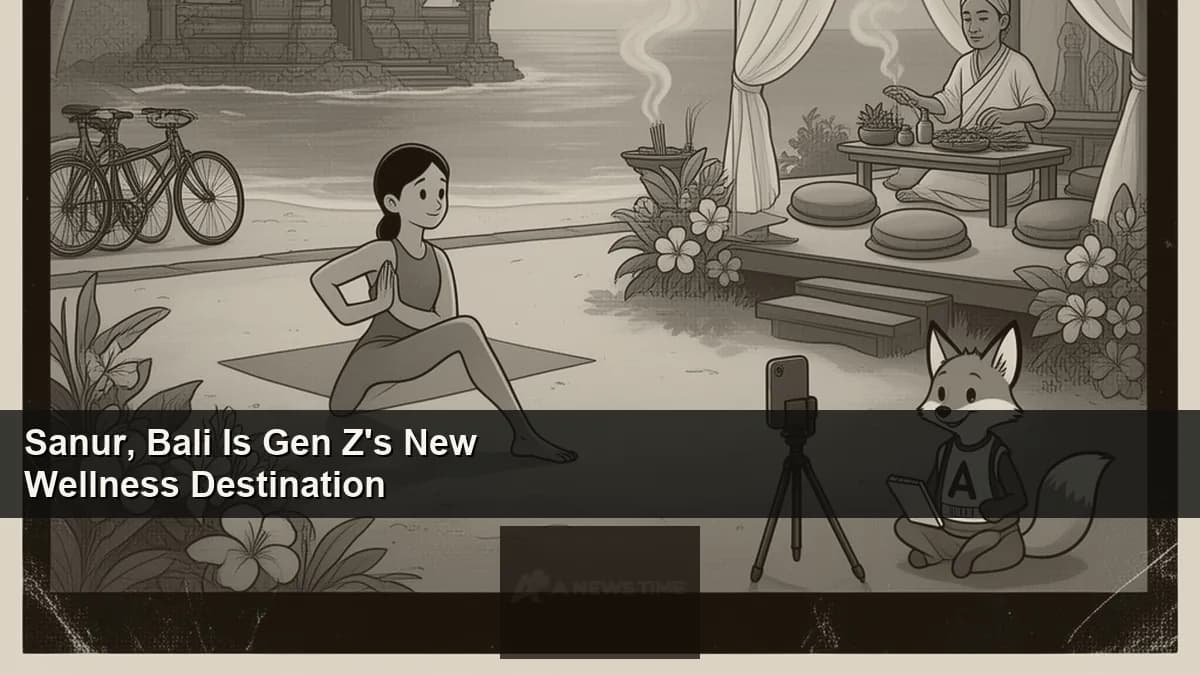
These are not boutique additions to an established wellness scene. They represent a structural buildout of wellness infrastructure in markets that are investing seriously in this category as both a consumer offering and a cultural positioning. Thailand's expansion mirrors what has been documented in Bali's emergence as a Gen Z wellness destination, where the draw is not luxury spa treatments but community, accessibility, and the integration of wellness into daily urban life.
A new generation of lifestyle clubs is emerging in Bangkok. The Lobb Club merges bold, photogenic design with a holistic approach to active living under the concept "Play, Balance, Belong," with facilities including indoor tennis courts, private simulator rooms, and a pickleball court alongside a wellness zone with recovery features such as ice baths.
Natasha Sethi, Lifestyle Asia Bangkok, April 2026
The Kempinski The Spa in Bangkok is simultaneously running a limited residency with holistic healer Rajeshwari Nerurkar, who brings a multidisciplinary approach combining chakra healing, Reiki, Tuina bodywork, and sound therapy. The juxtaposition of a century-old luxury hotel brand running an energy healing residency alongside an AI-managed gym opening in the same city in the same month captures the current wellness landscape precisely: ancient practices and emerging technology occupying the same market, serving the same underlying consumer desire for feeling better and living more intentionally.
The Cultural Shift That Numbers Do Not Fully Capture
The wellness boom's most significant dimension is not captured in market projections. It is visible in the changing definition of what wellness is for. A generation ago, wellness was primarily a corrective category. You pursued it when something was wrong: a health crisis, a weight concern, a stress problem you needed to manage. The goal was restoration to a baseline.
What is observable in is a different orientation entirely. Wellness is increasingly understood as optimization and identity, not correction. The consumer showing up to WellNXT Miami x Fest is not trying to fix something. They are investing in a version of themselves they are actively building. This shift has implications for how brands, events, and platforms need to engage with this audience.
This also explains one of the more interesting programming choices at WellNXT Miami x Fest: the inclusion of a "Business of Wellness + Financial Empowerment" track, featuring iHeartRadio's "Best in Wellness: Miami" competition and sessions on financial wellness alongside the fitness and recovery programming. The organizers are recognizing that their audience's orientation toward well-being extends into their professional and financial lives, not just their bodies. Wellness has become a total lifestyle lens, and the events and platforms succeeding in this market are the ones that treat it as such.
It is also why the women's health and mental wellbeing conversation in 2026 is framed so differently than it was even five years ago. The conversation has moved from managing conditions to building systems, from reactive to proactive, from individual symptom management to community-supported well-being infrastructure. That language appears throughout the WellNXT programming, including the Day 2 close with relationship expert Jillian Turecki, a New York Times bestselling author and podcast host whose work focuses on how stronger relationships support long-term well-being and quality of life.
| Old Wellness Model | New Wellness Model |
|---|---|
| Corrective (fix what is broken) | Proactive (optimize what is working) |
| Individual, private practice | Community-integrated, shareable |
| Separate from lifestyle | Embedded in daily infrastructure |
| Product-driven (buy this supplement) | Experience-driven (attend this gathering) |
| Single-category (fitness OR nutrition) | Multi-system (movement + recovery + relationships + finance) |
| Destination (retreats, spas) | Ambient (woven into urban daily life) |
What WellNXT Gets Right, and What the Market Still Gets Wrong
WellNXT Miami x Fest is positioned inside what its organizers call a curated "Wellist Week" running April 13 through 19, 2026. The festival itself takes place April 18 and 19, with general admission free and VIP access priced at $95, a deliberately accessible price point that reflects the event's community-building thesis. The venue, The Sacred Space Miami in Wynwood, is an established gathering space known for transformational retreats and experiential events, which provides a physical context that generic convention centers do not.
The speakers include figures who span the spectrum from the practical to the more aspirational: Tony Thomas, a celebrity trainer and Celsius Athlete whose "440 Seconds to Stronger" session on Day 2 is designed for accessibility; Samina Rind, a futurist and longevity expert; Alexandra Lizardo, a Harvard Medical School and ICF-credentialed lifestyle medicine and wellness coach; and NAMI Miami-Dade, the mental health organization, whose presence signals that the event is taking the full-spectrum nature of well-being seriously rather than defaulting to the aestheticized version that dominates much of the wellness festival space.
What this event gets right is the integration thesis. The wellness consumer in 2026 does not want to silo their interests. They want their fitness, recovery, nutrition, mental health, social connection, and even professional development conversations happening in the same room, with practitioners who understand how those dimensions interact. WellNXT's programming architecture reflects that understanding more coherently than most events in this space.
What the broader market still consistently gets wrong is the gap between the cultural wellness trends that go viral and the evidence behind them. The cold plunge market, to take one example, is exploding at the same moment that the research on therapeutic cold exposure for recovery is more mixed than the marketing suggests. The wellness industry's tendency to race ahead of its evidence base is not new, but in a market projected to reach $113 billion in mHealth apps alone, the scale of potential consumer harm from poorly evidenced claims is growing proportionally.
The most thoughtful operators in this space, which includes WellNXT's leadership given their healthcare system partnerships, understand that the long-term value proposition of wellness is built on trust and genuine outcomes, not aesthetic packaging and trend capture. The events, apps, and spaces that will still matter in 2030 are the ones building that trust now.
The View from Here
The wellness festival and mHealth boom of 2026 is not a bubble. It is a response to a real and sustained shift in how people prioritize and structure their lives. The Thursday morning cold plunge and breathwork gathering is not a quirk. It is a data point in a pattern that runs from Bangkok to Bali to Wynwood, from $95 VIP tickets to $113 billion in projected app revenue, from ancient energy healing practices to AI-managed gyms opening in the same city in the same month.
What is being built right now is not a wellness industry in the traditional sense. It is a wellness infrastructure: a set of spaces, platforms, practices, communities, and cultural norms that embed well-being into the ordinary architecture of daily life. The fitness tracking and somatic movement trend is one branch of this infrastructure. The social hub fitness club model is another. WellNXT Miami x Fest and the Bangkok space buildout are others still.
The question worth asking is not whether this infrastructure will keep growing. At $10 trillion globally and accelerating, that much is settled. The question is who gets to participate in it, at what price point, and with what quality of evidence behind the practices being promoted. As the market scales, those questions will matter more, not less. The events and platforms that take them seriously now will be the ones setting the terms of the conversation in 2030.
Sources
- WellNXT Miami x Fest 2026 press release, Fitt Insider, April 2026
- Trends in Health and Lifestyle Products Gaining Popularity Among Consumers, Gila Herald, April 2026
- The Wellness Edit: What's new in Thailand wellness this April, Lifestyle Asia Bangkok, April 2026
- mHealth apps market research, multiple industry analysts, 2026 projections through 2034