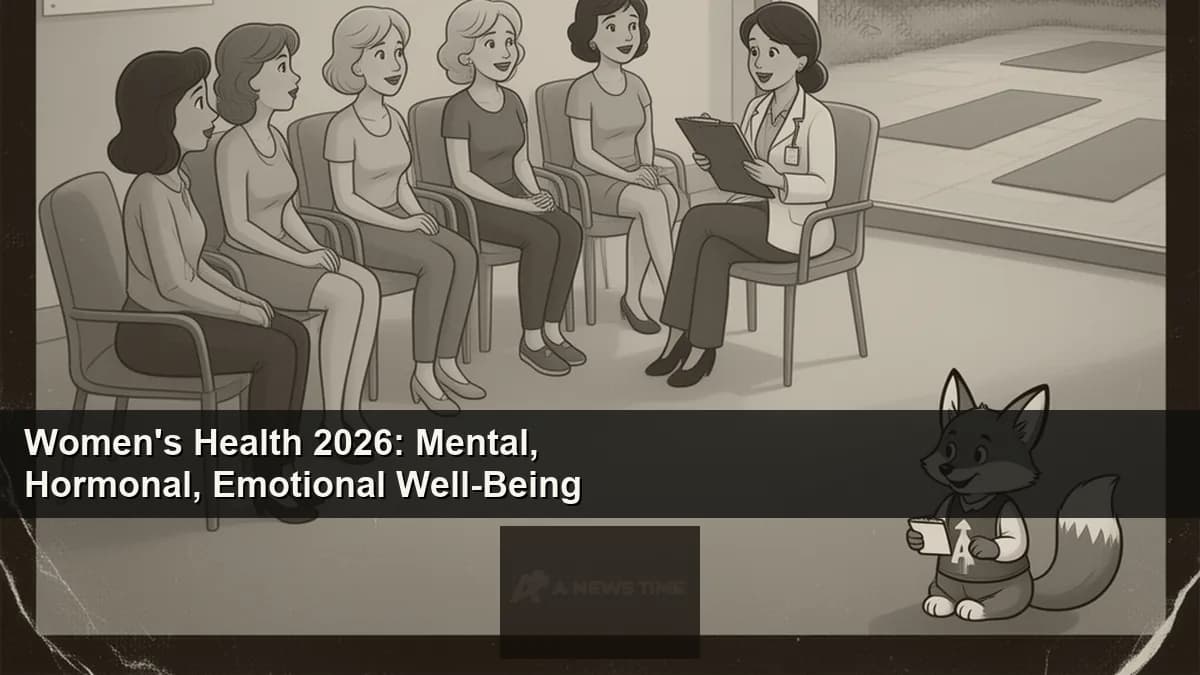
At the start of 2026, something notable is happening in the way women's health is being talked about, researched, and experienced. On , World Health Day, the framing dominating health advocacy has shifted in a direction that would have seemed peripheral just five years ago. Physical benchmarks, the cholesterol numbers, the BMI readings, the annual checkup metrics, are no longer the primary unit of conversation. The language coming from clinicians, researchers, and women themselves has moved toward something more integrated: mental clarity, hormonal literacy, emotional regulation, and the recognition that these dimensions of health are not supplementary concerns but foundational ones.
The shift is not simply rhetorical. It reflects accumulating research, changing patterns of healthcare-seeking behavior, and a growing body of clinical evidence that the physical and the psychological are more tightly coupled in women's health than the siloed specialty structure of modern medicine has typically acknowledged. Hormones affect how women sleep, how they perceive stress, how they experience identity across decades of life. Chronic stress, in turn, disrupts hormonal function in ways that cascade through every other system in the body. Emotional states influence immune response. None of this is separable.
When Physical Health Was the Whole Conversation
For most of modern medical history, women's health research and clinical practice were organized almost entirely around reproductive biology and physical pathology. The landmark medical research trials that defined standard treatment protocols for heart disease, depression, and immune disorders often used male subjects as the default, treating women's health as a variant rather than a subject of study in its own right. The hormonal complexity that defines much of the female lifespan, the fluctuations of the menstrual cycle, the neuroendocrine transitions of perimenopause, the postpartum hormonal landscape, was treated as background noise rather than central to understanding health outcomes.
That framing has been eroding steadily, pushed by a combination of patient advocacy, demographic shifts in the medical research workforce, and the slow accumulation of studies that could no longer be explained by a body-only model. But 2026 marks something more definitive: the integration of mental, hormonal, and emotional wellbeing into the mainstream of women's health discourse, not as a specialty subset but as the core framework.
Dr. Aditi Govitrikar, a physician, psychologist, former Mrs. World, and prominent voice in women's health advocacy, articulates the pattern she sees repeatedly in clinical and public health settings. "Women normalize burnout, endure hormonal imbalances, and push through emotional exhaustion as if these are the expected costs of a full life," she has observed. "Hormones affect sleep. They affect stress response. They shape self-perception in ways that women are often the last to recognize in themselves." The normalization she describes is not individual pathology but a systemic cultural expectation: that women will absorb and manage these pressures without identifying them as health concerns that warrant attention.
The consequences of that normalization are measurable. Research on cortisol patterns in women who report high stress and low sleep quality consistently shows disrupted hormonal rhythms that extend well beyond the stress response itself, affecting thyroid function, insulin regulation, and reproductive hormone balance. The body's stress architecture, centered on the HPA axis, does not distinguish between the stress of an overloaded work schedule and the stress of physical danger. Chronic activation of that system at relatively low but sustained levels produces the same physiological outcomes as acute stress, just more slowly and with less obvious triggering events.
The Hormone-Stress-Emotion Loop
Sailendra Raane, a wellness practitioner and researcher who has spent over a decade working with stress physiology and its relationship to hormonal function, describes the mechanism in terms of systems thinking rather than linear cause-and-effect. "Chronic stress causes inflammation. Inflammation interferes with hormonal function. Disrupted hormones affect mood, energy, and cognitive clarity. Compromised cognitive clarity makes managing stress harder. The loop runs in all directions at once," Raane explained in a recent presentation on integrative wellness approaches.
His practical orientation toward nervous system regulation rather than symptom suppression reflects a growing clinical consensus. "The yoga approach, the breathwork approach, the vagal tone work, all of these are not separate from treating hormonal health or emotional health. They are the same intervention applied at the level of the nervous system, which is where all of these systems ultimately talk to each other," Raane noted. The implication is that a protocol focused solely on hormone supplementation, or solely on talk therapy, or solely on physical fitness, will always be incomplete because the underlying regulatory system spans all three domains.
"The yoga approach, breathwork, vagal tone training, these are not separate from treating hormonal health or emotional health. They are the same intervention applied at the nervous system level, where all of these systems ultimately communicate."
Sailendra Raane, wellness researcher
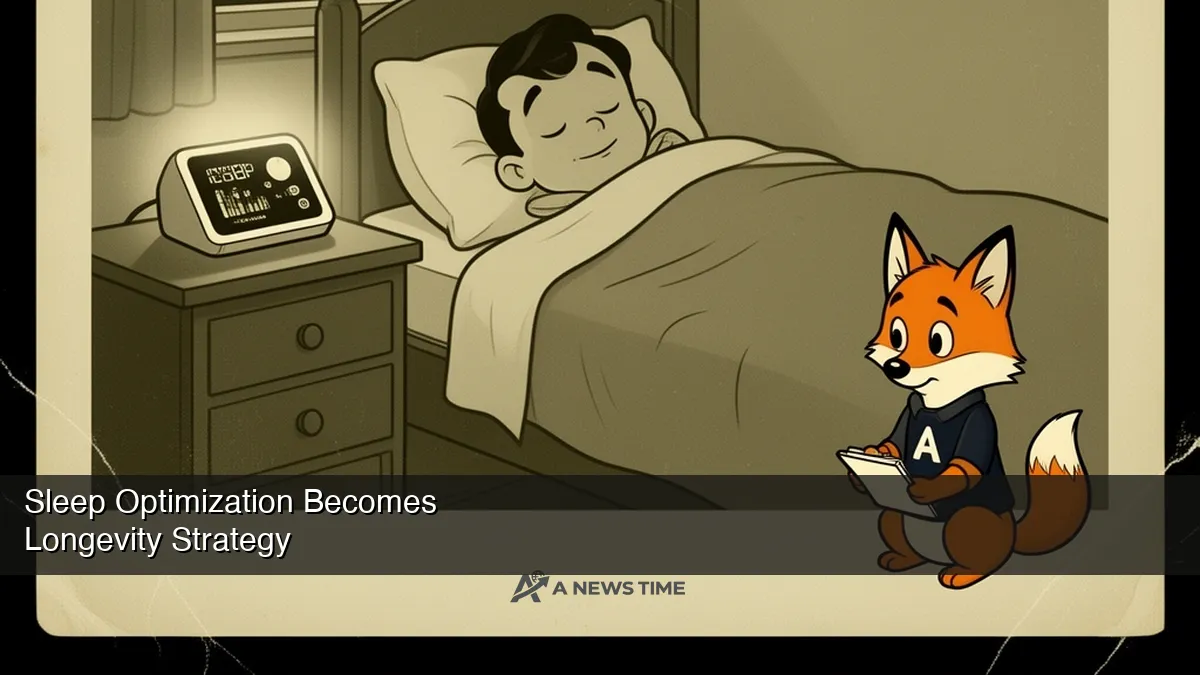
This systems view has practical implications for how women are beginning to approach their own health management. Rather than seeking specialist interventions for each symptom, the emerging pattern among health-aware women involves looking for upstream regulatory interventions that address the nervous system environment in which hormonal and emotional health either flourish or deteriorate. Sleep quality, which is tightly coupled to both cortisol regulation and estrogen metabolism, has become a primary variable rather than a secondary lifestyle factor. Research on sleep as a longevity strategy has found that women's hormonal architecture makes sleep disruption particularly consequential, with downstream effects on everything from inflammatory markers to emotional reactivity.
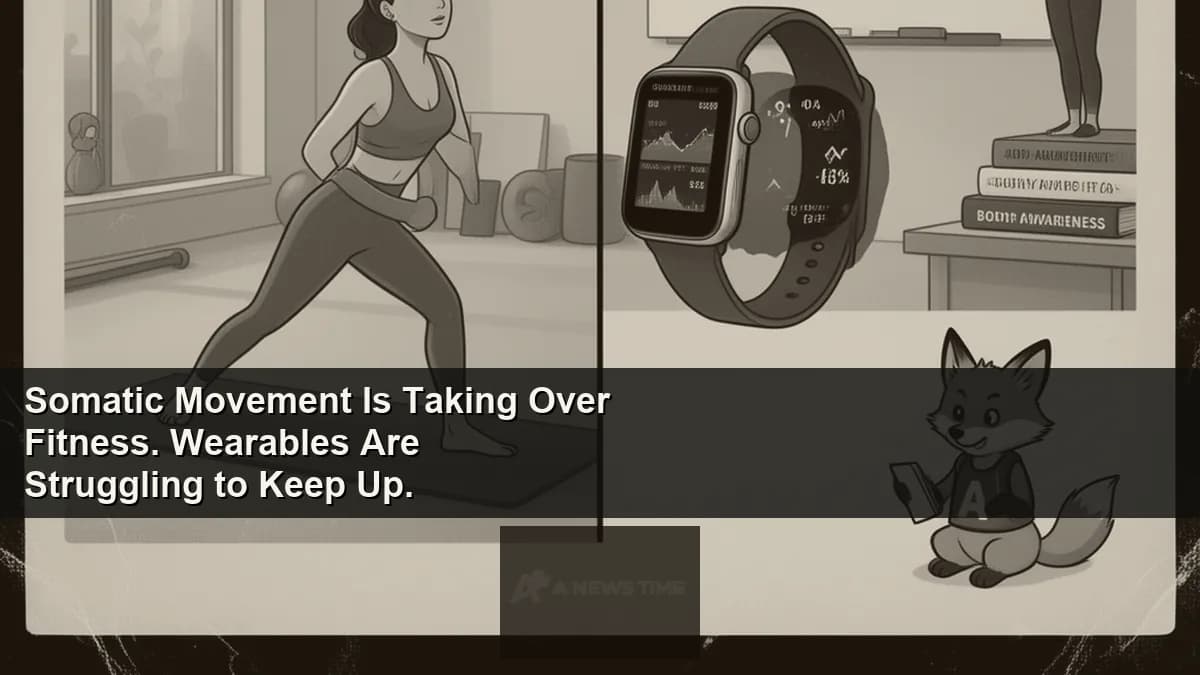
The role of the nervous system as the mediating architecture is central to why interventions like breathwork and somatic movement practices, which were once dismissed as peripheral wellness activities, are now appearing in clinical recommendations for hormonal health. Somatic movement practices have seen a 340% increase in search volume from 2024 to 2026, a pattern that reflects growing consumer recognition of the body-mind connection that clinicians have been documenting for years. The demand is real, and the science, while still developing, provides a credible mechanistic basis for these approaches.
Emotional Intelligence as a Health Metric
Dr. Taylor Elizabeth, an emotional intelligence researcher whose work focuses on the intersection of hormonal health and psychological functioning, has observed a shift in how women themselves conceptualize the relationship between their emotional experiences and their physical health. "Women are realizing the link between hormones, emotional control, and identity," Dr. Elizabeth has noted. "They are making connections that the medical system often didn't help them make, and that is changing what they want from healthcare."
The connections she describes are well-supported by research. Estrogen's role in serotonin metabolism means that the emotional volatility many women experience in the premenstrual and perimenopausal phases is not purely psychological but has a clear neurochemical substrate. Progesterone's relationship to GABA receptor sensitivity means that progesterone fluctuations directly affect anxiety levels through mechanisms that are independent of life circumstances. The hormonal infrastructure of the female body is, in a quite literal sense, an emotional regulation system, and its dysfunction has psychological symptoms that have historically been treated as separate from the hormonal disruption causing them.
| Health Dimension | Key Mechanism | Clinical Relevance in 2026 |
|---|---|---|
| Hormonal wellbeing | HPA axis, estrogen/progesterone cycling, cortisol regulation | Disrupted hormonal rhythms linked to sleep, mood, and cognitive function |
| Mental health | Serotonin-estrogen coupling, GABA-progesterone sensitivity | Psychiatric symptoms increasingly recognized as having hormonal substrates |
| Emotional regulation | Amygdala reactivity, prefrontal cortex function, vagal tone | Emotional dysregulation measurable as nervous system biomarker, not just mood |
| Chronic stress | Inflammatory cytokines, cortisol suppression of thyroid and reproductive hormones | Sustained low-grade stress produces cumulative hormonal disruption |
| Identity and self-perception | Body image, social comparison, internalized expectations | Psychological self-concept now recognized as health variable, not separate domain |
The practical consequence is that emotional intelligence, the ability to recognize, name, and regulate emotional states, is beginning to be taken seriously as a health practice rather than merely a personal development skill. Research on emotional granularity, the precision with which a person can identify distinct emotional states, shows that greater granularity is associated with better physiological stress recovery, lower inflammatory markers, and more adaptive coping behavior. The ability to distinguish between "anxious about a specific situation" and "in a low-cortisol state following a poor night's sleep" is not merely psychological sophistication; it is a form of body literacy with measurable health implications.
Hormonal Literacy and the Generational Shift
Namrata Jain, a psychotherapist practicing in Mumbai whose client base has expanded significantly over the past three years as demand for mental health services has grown, describes a generational pattern in how younger women are approaching their health. "There is increased hormonal literacy among women who are now in their twenties and early thirties," Jain noted. "They come in knowing their cycle phases. They have tracked their symptoms. They have a baseline understanding of how their hormones affect their mental state that previous generations simply did not have."
This literacy is partly a product of the information environment. Apps that track menstrual cycles have normalized the collection and interpretation of hormonal data. Social media communities organized around conditions like PCOS, endometriosis, and perimenopause have created peer knowledge networks that operate outside the formal healthcare system, giving women access to experiential knowledge and research summaries that were previously locked in specialist literature or simply not discussed. The result is a generation of women arriving at clinical encounters better informed, and better equipped to advocate for the kind of integrated care that addresses hormonal, mental, and emotional health together rather than separately.
"Younger women come in knowing their cycle phases and how their hormones affect their mental state. That level of self-knowledge changes the clinical conversation entirely."
Namrata Jain, psychotherapist
Jain also observes a related and perhaps more complex trend in her clinical work: the patterns she sees are intersecting with broader questions about identity, life structure, and social expectation. A study tracking attitudes among young urban women found that 18% of Gen Z women in major cities do not want children, a figure that represents not simply a preference but, for many, a statement about the relationship between bodily autonomy, mental load, and the management of one's own wellbeing in structures that have historically not been designed around women's health needs. The question of what a woman owes her body, and what institutional structures owe her in return, is running underneath the clinical conversation in ways that make the "mental, hormonal, and emotional wellbeing" framing feel less like wellness language and more like a demand for systemic change.
The emergence of neurowellness as the top wellness trend for 2026 reflects some of this same pressure. When nervous system optimization becomes a primary wellness priority, it reflects collective recognition that the environments most women navigate, professionally, socially, and domestically, are generating nervous system loads that require active management. The tools for that management, HRV biofeedback, vagal nerve stimulation, breathwork protocols calibrated to hormonal phase, are reaching the consumer market at a moment when the demand for them is acute.
What the Healthcare System Has Not Yet Caught Up To
The gap between what is now understood about women's integrated health and what the healthcare system routinely provides remains significant. Primary care visits average under fifteen minutes. Specialist referrals for hormonal concerns often route to separate endocrinology, gynecology, and psychiatry pathways that operate without coordinated communication. Mental health services remain separated from hormonal health management in most clinical settings, even as the research makes the case that they are addressing the same underlying systems through different access points.
The World Health Organization's 2026 World Health Day campaign explicitly named mental health, social connection, and chronic stress as priority dimensions of the global health agenda, a framing that extends well beyond the traditional disease-focused model of health promotion. But the translation of that framing into clinical practice, particularly for women navigating the hormonal transitions and life-stage-specific health challenges that current medical structures are not well designed to support, is a project that will take time.
Meanwhile, the women driving the shift are not waiting. The growth in direct-to-consumer hormonal testing, the expansion of integrative medicine practices that explicitly address mental-hormonal-emotional health as a unified domain, and the proliferation of peer-supported communities organized around conditions and experiences that conventional medicine has historically underserved are all signs of a population taking its own health needs seriously in the absence of systemic infrastructure that does the same.
Research published in The Lancet and JAMA Network Open over the past two years has reinforced the clinical case for integrated approaches to women's health, documenting the hormonal substrates of common psychiatric presentations in women, the bidirectional relationship between chronic stress and reproductive hormone disruption, and the measurable physiological benefits of emotional regulation practices when measured through biomarkers rather than self-report alone. The science is converging on a model that the patients arrived at first.
A Better Relationship With Health Itself
The phrase that has emerged from wellness summits, clinical advocacy, and patient communities to characterize what 2026 is reaching toward is "a better relationship with health itself." It is a phrase that deserves unpacking, because it contains a critique of the model it is displacing. The old relationship was fundamentally reactive, transactional, and pathology-focused: health was what you attended to when something went wrong, what you measured at annual checkups, what specialists managed in discrete compartments.
The relationship being described now is proactive, integrated, and oriented around systemic function rather than discrete disease states. It treats the nervous system as a primary regulatory variable, recognizes hormonal health as inseparable from mental and emotional health, and positions emotional intelligence not as a soft skill but as a physiological practice with measurable consequences. It acknowledges that burnout is not a personality trait or a sign of insufficient resilience but a predictable outcome of sustained systemic overload, and that preventing it requires addressing the load rather than increasing the individual's capacity to absorb it.
That reframing has practical implications for what women seek from clinicians, from wellness providers, from researchers, and from the institutional structures that shape healthcare access and quality. Research on social isolation and health has already documented how profoundly social disconnection affects physical health outcomes, adding another dimension to the integrated picture. The loneliness data, the hormonal data, the stress physiology data, and the emotional intelligence research are all pointing at the same conclusion: you cannot separate the pieces and expect to understand the whole.
The agenda for 2026, as articulated by researchers, clinicians, and the women driving the demand for change, is not simply better healthcare as currently defined. It is a healthcare system that is structurally capable of addressing what women have always known to be true about how their health works: that mental, hormonal, and emotional wellbeing are not separate categories to be addressed in sequence, but dimensions of a single integrated system that requires, and deserves, integrated attention.
Frequently Asked Questions
What does it mean to take a holistic approach to women's health?
A holistic approach means treating mental, hormonal, and emotional wellbeing as interconnected systems rather than separate concerns. This includes recognizing how hormonal fluctuations affect mood and cognitive function, how chronic stress disrupts hormonal balance, and how emotional regulation practices can produce measurable physiological benefits including improved sleep quality and lower inflammatory markers.
How do hormones affect women's mental health?
Hormones directly influence neurotransmitter systems that regulate mood and anxiety. Estrogen affects serotonin metabolism, which is why emotional experiences often shift across the menstrual cycle and during perimenopausal transitions. Progesterone influences GABA receptor sensitivity, which regulates anxiety levels. When hormonal balance is disrupted by chronic stress, poor sleep, or life-stage transitions, mental health consequences are a predictable biological outcome rather than a separate psychological phenomenon.
What is hormonal literacy and why does it matter?
Hormonal literacy refers to an informed understanding of how the menstrual cycle, reproductive hormones, and their interactions with stress physiology affect physical and psychological wellbeing. Women with higher hormonal literacy can identify when their emotional or cognitive experiences have a hormonal substrate rather than attributing everything to circumstance or personality, which improves their ability to seek appropriate care and make lifestyle adjustments that support hormonal health.
What role does nervous system regulation play in women's wellbeing?
The autonomic nervous system acts as the central regulatory hub connecting stress response, hormonal function, immune activity, and emotional processing. Practices that improve nervous system regulation, including breathwork, somatic movement, adequate sleep, and social connection, have downstream effects across all of these systems. Research supports vagal tone, measured through heart rate variability, as a biomarker for overall regulatory capacity and resilience to stress.
Why has women's mental and hormonal health historically been underaddressed?
Historical medical research used male subjects as defaults, leaving women's hormonal complexity underexplored in foundational studies. Clinical specialization created separate pathways for gynecology, psychiatry, and endocrinology that rarely communicated, making integrated care structurally difficult to access. Cultural expectations that women absorb burnout and emotional load without identifying them as health concerns compounded the medical system's structural limitations. Both factors are now being actively addressed in research, clinical training, and patient advocacy.