Crypto markets spent the week of April 6, 2026 in a familiar state: cautious price action on the surface, institutional infrastructure building underneath. Bitcoin maintained its grip on market dominance. Altcoins showed selective recovery signals. And XRP, the payment protocol token that has spent months grinding sideways, started forming a technical structure that traders recognize as a potential breakout setup.
This is the weekly picture that matters to understand. Not the meme coin du jour or the 24-hour price spike, but the base-building dynamics in large-cap assets and the institutional positioning that tends to precede sustained moves.
XRP: Technical Breakout in Progress
XRP closed the week between $1.20 and $1.30, holding the support zone that has defined its trading range for the past several weeks. The technical picture is specific enough to analyze with precision. A support zone between $1.17 and $1.30 has absorbed multiple selling attempts. The asset is forming what technicians call a "higher low" structure, meaning each successive price bottom is coming in above the previous one. That is the mathematical definition of accumulation.
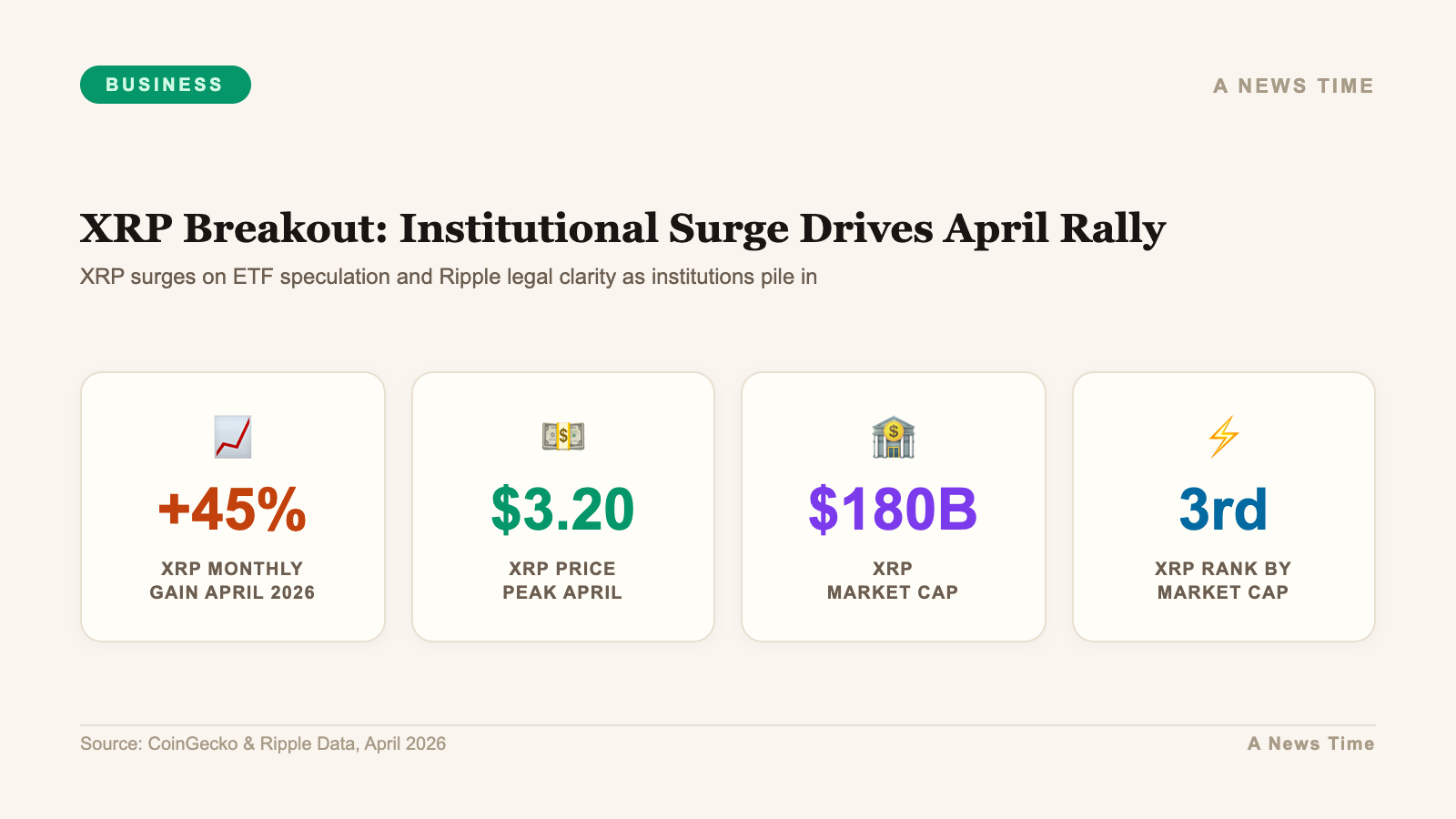
RSI on the weekly chart was tracking near 40 as of the April 6 close. RSI in the 30-45 range historically represents an early recovery phase: not overbought, not in freefall, but stabilizing and building the energy for a directional move. The question technicians ask at this point is whether the next catalyst will confirm or invalidate the structure.
| Asset | Weekly Change | Key Level | Narrative |
|---|---|---|---|
| Bitcoin (BTC) | +3.15% | $65K-$66K range | Institutional accumulation anchor |
| Ethereum (ETH) | +4.94% | $1,950-$2,050 range | Staking demand, L2 growth |
| XRP | +0.73% | $1.17-$1.30 support | Breakout setup forming |
| BNB | -1.55% | N/A | Macro headwinds |
| Solana (SOL) | -1.17% | $75-$82 range | High-beta altcoin volatility |
If XRP holds above the $1.17 support and confirms a breakout above the short-term trendline that has capped price action since Q1 2025, the measured move targets a range of $1.50 to $2.00. That is not a moon call. It is a technical extension based on the measured distance of the base formation, the standard methodology for projecting post-breakout targets.
Why XRP Is Structurally Different From Speculative Altcoins
Understanding XRP's positioning requires separating its utility function from its price performance. XRP is a payment-focused protocol designed for fast, low-cost cross-border transactions. Its use case is embedded in banking infrastructure and institutional payment rails, not in speculative DeFi yields or meme-driven narratives.
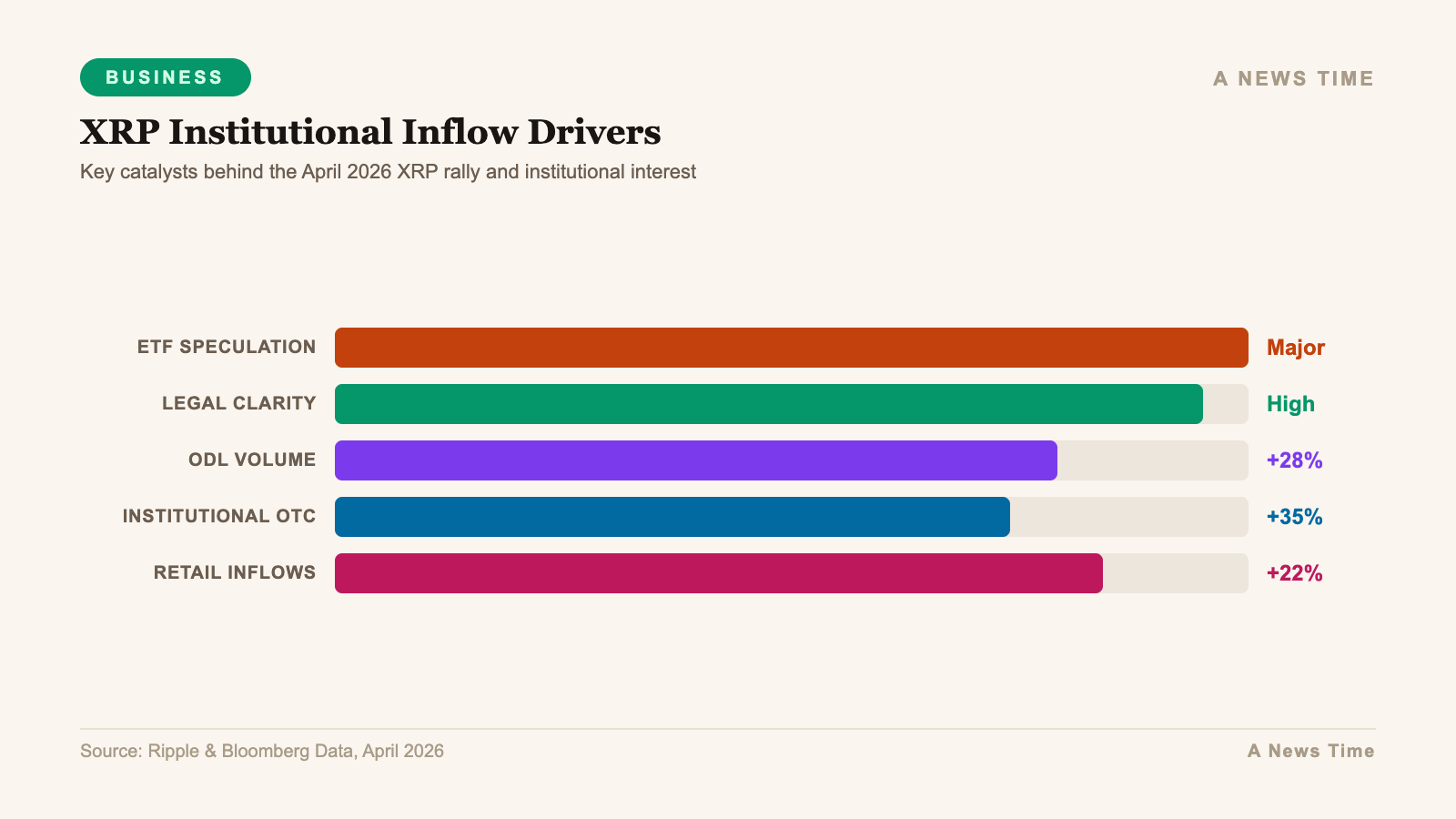
That structural positioning matters in the current environment. Ripple, the company that created and maintains the XRP Ledger, has been aggressively expanding its payments network and stablecoin infrastructure through the first half of 2026, even as XRP's price remained relatively static. RLUSD, Ripple's dollar-pegged stablecoin, has been gaining traction among financial institutions looking for blockchain-native settlement infrastructure that does not expose them to crypto price volatility.
The institutional appeal of XRP is not primarily speculative. It is functional. Banks and payment providers are evaluating XRP Ledger as a settlement layer because it processes transactions in 3-5 seconds with fees measured in fractions of a cent. That is not a feature that requires a bull market to remain relevant. It is infrastructure that either works or does not, independent of price action.
Bitcoin Dominance: The Institutional Liquidity Anchor
Bitcoin's market dominance exceeded 58% during the week of April 6, a multi-year high that reflects the current capital concentration pattern in crypto markets. When uncertainty is elevated, institutional capital flows into BTC first because it is the most liquid, most regulated, and most institutionally familiar crypto asset.
Metaplanet, the Japanese investment company that has been building a Bitcoin treasury strategy modeled on MicroStrategy, continued expanding its holdings during the week. That pattern, corporate treasuries using BTC as a reserve asset, represents an institutional demand source that is structurally different from retail speculation.
The broader institutional accumulation trend is documented by on-chain data. Bitcoin's held-by-long-term-holders metric has been rising, indicating that coins are moving from speculative hands into wallets that are not selling at current prices. That is not conclusive evidence of a price catalyst, but it is evidence of steady buy-side demand absorbing available supply.
Ethereum: Corporate Treasury Demand and Staking Yields
Ethereum's 4.94% weekly gain put it ahead of Bitcoin in performance terms for the week, driven by a combination of staking demand and continued Layer-2 ecosystem expansion. The most notable institutional development was BitMine's addition of $145 million in ETH to its corporate treasury.
The SEC's approval of the first staked Ether ETF in late March 2026 created a new institutional demand vector for ETH. A staked ETF pays holders the consensus layer yield generated from validation, approximately 3-4% annually, which converts ETH from a speculative asset into a yield-generating institutional instrument. That product redesign is significant because it opens the asset to pension funds, insurance companies, and other yield-mandated institutional investors who cannot hold purely speculative positions.
Lido DAO's proposal for a $20 million token buyback, announced during the week, added a supply-side dynamic to the narrative. Buybacks are a traditional corporate finance tool for signaling confidence in intrinsic value; their appearance in DeFi protocols suggests the sector is maturing its financial engineering toolkit.
The AI Narrative: From Buzzword to Infrastructure
One of the most consequential developments of the week received less attention than its long-term significance warrants. AI plus blockchain convergence entered what analysts described as an "execution phase," with real-world infrastructure launches rather than whitepaper announcements.
The specific development: potential US rule changes that could unlock trillions of dollars from 401(k) retirement funds into crypto and AI-integrated investment vehicles. If implemented, that regulatory shift would represent the largest single potential capital inflow into digital assets in the sector's history.
The AI-crypto convergence narrative is not primarily about speculative tokens with "AI" in their names. It is about the practical intersection of decentralized infrastructure and AI compute markets: using blockchain for provenance verification of AI training data, decentralized GPU compute networks for AI inference, and smart contract automation of AI agent workflows. Those are real use cases with real infrastructure being built by real companies, and they are progressing on timelines that are measured in quarters, not years.
DeFi and NFT: Mixed Signals
DeFi total value locked held stable near $63 billion for the week, a figure that reflects the sector's base-building consolidation after the explosive growth of 2024-2025. Flat TVL in a volatile macro environment is, paradoxically, a sign of maturity rather than stagnation. DeFi protocols that would have hemorrhaged capital in previous cycles are maintaining their TVL bases, suggesting stickier institutional and professional user bases.
The NFT market told a different story. NFT market cap held around $1.05 billion with subdued trading activity. NFT volume tends to be highly correlated with broader retail speculative sentiment, and in an environment dominated by macro uncertainty, Iran war headlines, and tariff policy volatility, retail traders are not chasing JPEG price speculation. The NFT market will recover when retail sentiment recovers, but that recovery will likely lag the institutional-driven recovery in BTC and ETH.
Regulatory Catalysts: The CLARITY Act and MiCA
The week's most important forward-looking development for crypto market structure was the CLARITY Act. Treasury Secretary Scott Bessent publicly called on Congress to approve the bill rapidly, citing the broader mainstream adoption of crypto assets as justification for urgency. The bill, expected to be signed in the second half of April 2026, would provide the first comprehensive US federal regulatory framework for digital assets.
The practical significance of the CLARITY Act cannot be overstated. Institutional capital has been sitting on the sidelines waiting for regulatory clarity because compliance officers at major financial institutions cannot approve crypto investments without a clear legal framework. The Act would define which digital assets are securities versus commodities, establish custody and reporting requirements, and create a pathway for institutional participation that currently does not exist at scale.
On the European side, the MiCA (Markets in Crypto Assets) regulation full compliance deadline is July 1, 2026. EU-wide crypto regulation enters full enforcement, requiring exchanges to secure licenses or risk service restrictions. MiCA represents a structural shift for European crypto market participants, accelerating consolidation toward licensed, compliant entities and away from gray-market operators.
CME's planned launch of 24/7 crypto futures trading on May 29 provides another institutional infrastructure piece. Continuous trading on a regulated venue would attract institutional volume from offshore platforms and create better price discovery across global time zones.
The Big Picture: Base-Building for What
The honest answer to "base-building for what" is: for a catalyst that has not yet arrived. The current crypto market structure, Bitcoin dominance above 58%, institutional accumulation, infrastructure development, flat to modest altcoin prices, is consistent with the setup that preceded the 2023 rally and the 2025 institutional adoption phase. It is not yet a confirmed bull market breakout. It is pre-confirmation positioning.
The catalysts on the horizon are specific and time-bounded. CLARITY Act signing in late April provides regulatory clarity. CME 24/7 futures launch in May provides liquidity infrastructure. The FOMC meeting schedule and inflation data through Q2 provide the macro framework. Bitcoin is still down roughly 46% from its all-time high, a fact that provides historical perspective on both the damage done and the potential recovery magnitude.
XRP's technical setup is one piece of that broader puzzle. A utility-driven asset with real institutional adoption, a functional base formation, and a specific catalyst (CLARITY Act providing regulatory certainty for Ripple's payment operations) is exactly the type of asymmetric setup that institutional traders look for in a base-building market phase.
"Institutional developments and macro stability are shaping the next potential cycle. The market reflects a base-building phase, not a speculative phase."
CoinDCX Research, April 2026
What to Watch Next Week
The primary catalyst for the week of April 13 is inflation data and its implications for Fed policy. March CPI printing at 3.3%, driven by the energy shock from the Iran conflict, creates a macro backdrop that is neutral-to-cautious for crypto risk assets. Elevated inflation that prevents Fed rate cuts is not incrementally positive for risk assets. But the energy-driven nature of the spike, rather than broad demand-pull inflation, limits the bearish read.
XRP traders should monitor the $1.17 support level closely. A sustained close below that level invalidates the higher-low structure and suggests the consolidation pattern needs a reset. A breakout above $1.35 with volume confirmation would be the first technical signal that the base is converting into an expansion phase.