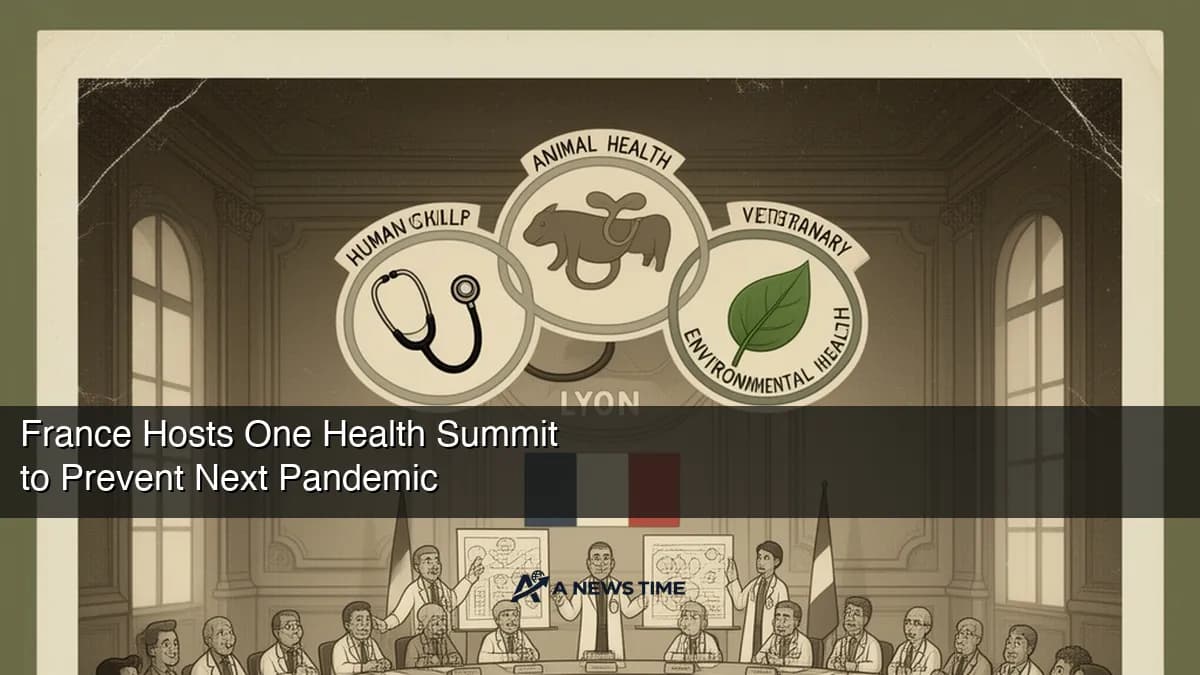
France convened a major international summit in Lyon from through to accelerate the implementation of the One Health approach, a framework that recognizes the interconnection between human health, animal health, food security, and environmental systems. The One Health Summit, the ninth edition of the One Planet Summit series, brought together governments, international organizations, researchers, and private sector partners to launch concrete cooperation programs and high-impact initiatives aimed at preventing the next pandemic before it begins.
What One Health Means and Why It Matters Now
The One Health approach is built on a straightforward premise: human diseases do not emerge in isolation. Approximately 75% of emerging infectious diseases in humans originate in animals (zoonotic diseases), and the factors that drive their emergence, including habitat destruction, intensive farming, pollution, and antimicrobial resistance, span the boundaries between public health, veterinary science, agriculture, and environmental management.
UN Secretary-General Antonio Guterres framed the stakes in a video message to the summit.
"The One Health approach, based on science, prevention and solidarity, is a matter of collective survival and our greatest asset for reducing risks before they turn into crises."Antonio Guterres, Secretary-General, United Nations
The COVID-19 pandemic demonstrated with devastating clarity what happens when zoonotic disease surveillance fails. The One Health Summit sought to build the institutional infrastructure that could detect and contain future threats before they cross species barriers and become global emergencies.
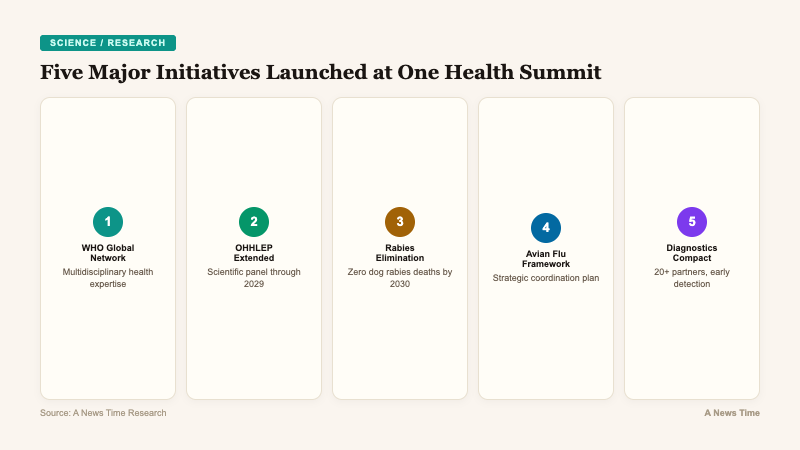
Five Major Initiatives Launched at the Summit
The summit produced several concrete outcomes, moving beyond the declaration-heavy format that has characterized previous global health gatherings:
| Initiative | Lead Organizations | Objective |
|---|---|---|
| WHO Global Network on One Health | WHO | Mobilize multidisciplinary expertise, coordinate country support |
| OHHLEP Extension (2027-2029) | FAO, UNEP, WHO, WOAH (Quadripartite) | Reinforce scientific advisory panel, shape global research agenda |
| Dog Rabies Elimination Initiative | WHO, WOAH, Institut Pasteur | Eliminate dog-mediated human rabies deaths by |
| Avian Influenza Strategic Framework | WHO, Quadripartite partners | Coordinate surveillance and response to bird flu threats |
| Global One Health Diagnostics Access Compact | 20+ international partners | Expand diagnostic access for early detection across human/animal/environmental health |
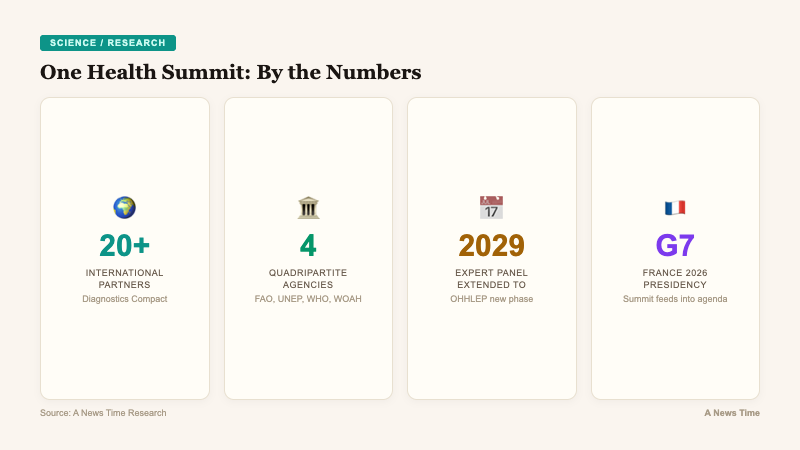
The Global One Health Diagnostics Access Compact, announced by more than 20 international partners including the World Economic Forum, represents the most ambitious of the new initiatives. Its goal is to expand diagnostic capabilities beyond human medicine to include animal health surveillance and environmental monitoring, enabling early detection of emerging threats across all three domains simultaneously.
The Quadripartite: Four Agencies Coordinating Global Health
Central to the One Health approach is the Quadripartite, a partnership of four international organizations that together span the relevant domains:
- FAO (Food and Agriculture Organization of the UN): food safety, agriculture, animal production
- UNEP (UN Environment Programme): environmental health, pollution, biodiversity
- WHO (World Health Organization): human health, disease surveillance, health systems
- WOAH (World Organisation for Animal Health): animal disease monitoring, veterinary standards
The four agencies announced the extension and expansion of the One Health High-Level Expert Panel (OHHLEP), a scientific advisory body that has guided One Health policy since its formation. The new phase, planned for through , will reinforce the panel's role in shaping the global research agenda, supporting the One Health Joint Plan of Action, and driving advocacy grounded in scientific evidence.
The OHHLEP extension is significant because scientific advisory bodies are only as effective as the institutional commitment behind them. By extending the panel's mandate and expanding its scope before the current term expires, the Quadripartite is signaling sustained investment in the One Health framework rather than treating it as a temporary pandemic-era initiative.
Thematic Sessions Tackle Four Urgent Threats
The summit organized its work around four thematic sessions, each addressing a specific dimension of the One Health challenge:
Sustainable food systems: The session examined how agricultural practices affect disease emergence, including the role of intensive animal farming in creating conditions for zoonotic spillover events. The discussion connected food production methods directly to pandemic risk, a framing that has gained traction since researchers traced the origins of multiple disease outbreaks to agricultural settings.
Zoonotic reservoirs and vectors: This session focused on the wildlife and insect populations that serve as disease reservoirs and transmission pathways. As habitat destruction pushes wildlife into closer contact with human settlements, the probability of zoonotic spillover increases. Climate change is simultaneously expanding the geographic range of disease-carrying vectors like mosquitoes and ticks.
Exposure to pollution: Environmental contamination affects both human and animal health, and the session explored how pollution monitoring can serve as an early warning system for health threats. The connection between environmental degradation and disease emergence is increasingly well-documented but remains underrepresented in global health policy.
AMR (Antimicrobial Resistance): Perhaps the most urgent long-term threat, AMR occurs when bacteria, viruses, and other pathogens evolve resistance to the drugs designed to kill them. The overuse of antibiotics in both human medicine and animal agriculture accelerates this process, and the One Health framework treats AMR as a problem that cannot be solved by addressing human medicine alone.
France's G7 Presidency and the Geopolitical Context
The summit's discussions and outcomes feed directly into France's presidency of the G7, giving the initiatives a pathway to broader political endorsement among the world's major economies. The timing was deliberate: by hosting the One Health Summit early in its G7 presidency, France positions itself to drive the agenda at subsequent G7 meetings throughout the year.
The geopolitical context adds both urgency and complication. The ongoing war in Iran has disrupted global supply chains including pharmaceutical and medical supply distribution, highlighting the fragility of the health infrastructure that One Health initiatives aim to strengthen. At the same time, the accelerating climate crisis is expanding the geographic range of disease vectors and increasing the frequency of extreme weather events that create conditions for disease outbreaks.
Guiding the summit, according to the official program, were four principles: the importance of science, research, and innovation; promotion of proactive multilateralism; recognition of the key role of public-private partnerships; and inclusive participation of civil society, local government bodies, and young people.
From Declarations to Implementation
Global health summits have historically been better at producing declarations than delivering implementation. The One Health Summit's organizers appear aware of this critique, and the emphasis on specific, actionable initiatives rather than broad policy statements represents an attempt to close the gap between aspiration and execution.
The diagnostics compact, with its 20+ partner commitment, comes with built-in accountability because the participating organizations will face scrutiny on delivery. The rabies elimination initiative sets a concrete, measurable target () that can be tracked. And the OHHLEP extension provides institutional continuity that outlasts the summit itself.
Whether these initiatives translate into reduced pandemic risk depends on factors well beyond the scope of any single summit: sustained funding from member states, coordination across national health systems that have different priorities and capacities, and the political will to address root causes like habitat destruction and agricultural practices that powerful economic interests resist changing.
The One Health framework's strength is that it names the connections between human, animal, and environmental health that siloed institutions have historically ignored. Its challenge is that addressing those connections requires coordination across exactly the bureaucratic boundaries that make the problem so difficult to solve. The Lyon summit moved the institutional architecture forward. The harder work of implementation begins in the months and years ahead, measured not in communiques but in surveillance networks built, diagnostics deployed, and outbreaks caught before they become pandemics.