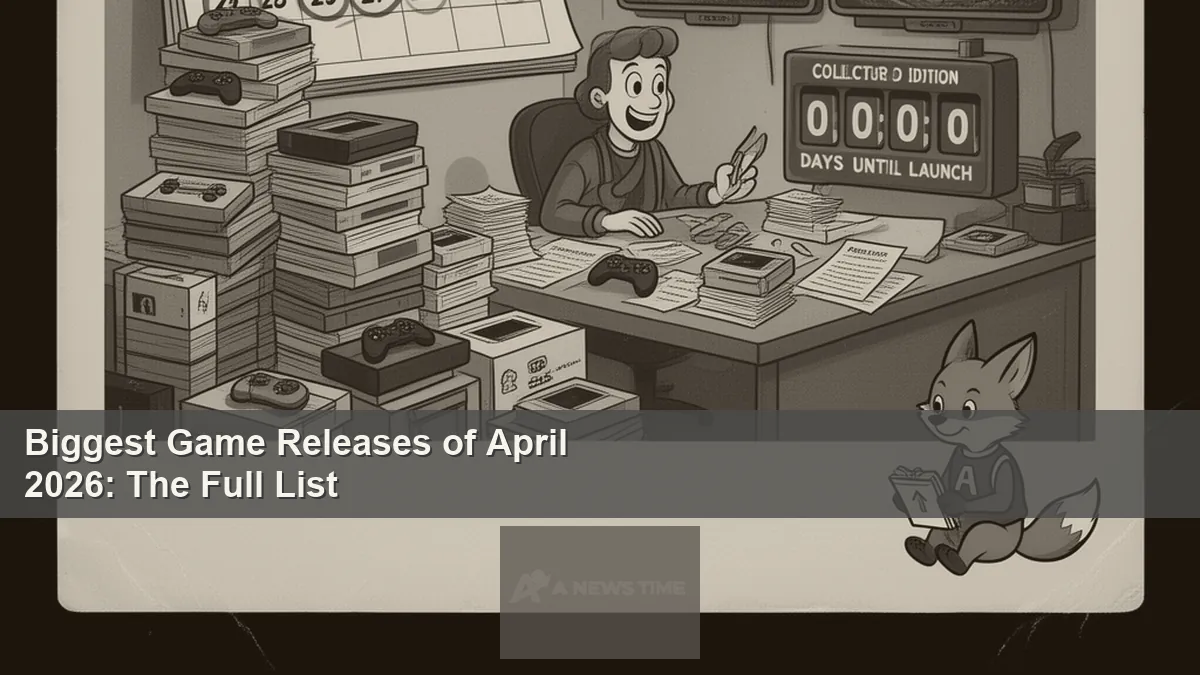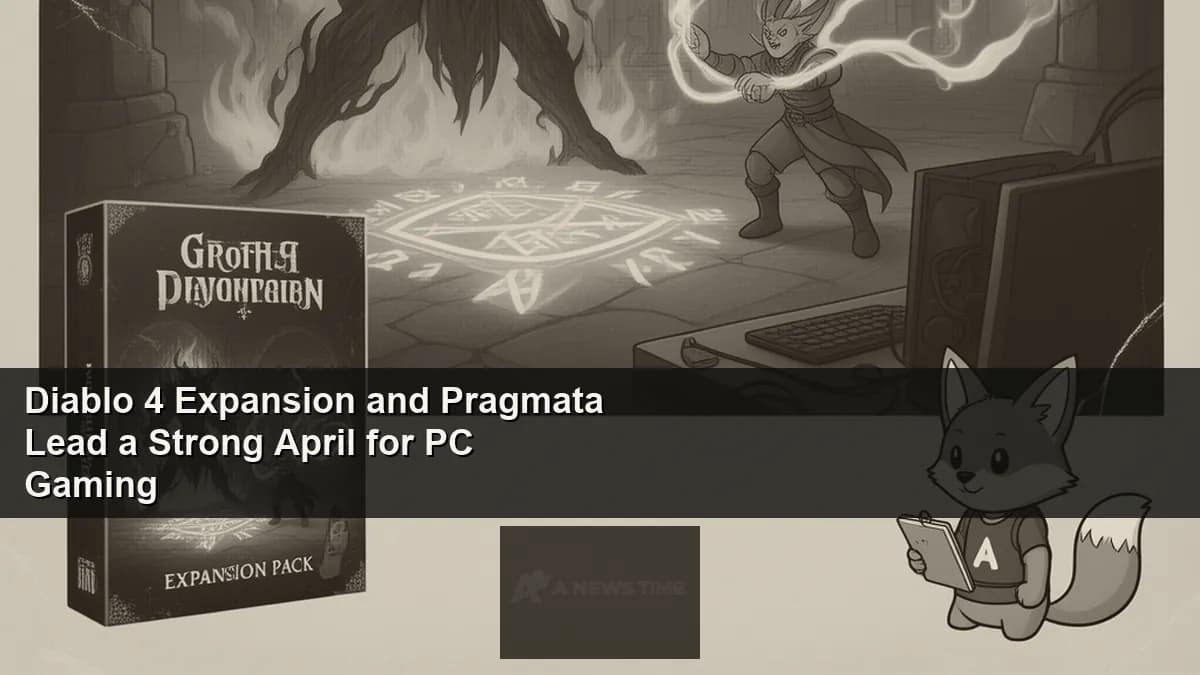
After a relatively sparse first quarter, April 2026 delivers the kind of high-profile release calendar that PC gamers have been waiting for. The month's biggest release is Diablo IV: Lord of Hatred, Blizzard Entertainment's second major expansion for the ARPG, dropping on . Five days earlier, Capcom's Pragmata arrives after years of development and delays, bringing one of the industry's most anticipated science fiction action titles to PC and consoles. The combination of a returning franchise expansion with a new IP debut from two major publishers makes April the most compelling month for PC gaming since the November 2025 releases.
Diablo IV: Lord of Hatred takes its name from Mephisto, the Lord of Hatred, one of the three Prime Evils in Blizzard's long-running lore and the villain who serves as the primary antagonist of Diablo II. The expansion adds a new act set in the corrupted city of Caldeum, a new playable class, a new endgame progression system that addresses criticisms of the base game's end-of-content depth, and a substantial seasonal content layer that extends the replayability beyond the main campaign. Priced at $39.99, it represents Blizzard's attempt to re-engage the significant portion of the Diablo IV player base that completed the base game and expansions and then stepped away.
Diablo IV: Lord of Hatred - What's New and Why It Matters
The base game Diablo IV launched in June 2023 to strong sales but a contentious player reception that evolved significantly through its first year. Initial criticisms centered on the endgame's repetitiveness and the seasonal content cadence, which many players felt did not provide sufficient replayability to justify continued engagement between major updates. Blizzard's response, including the Vessel of Hatred expansion in 2025 and several seasonal content overhauls, substantially improved the game's long-term engagement metrics. The player base that returned for those updates represents the core audience that Lord of Hatred is targeting.
The new class added in Lord of Hatred is the Necromancer's spiritual successor, the Spiritcaller. Where the Necromancer summons undead minions from corpses, the Spiritcaller channels primal forces tied to the game's broader cosmology, creating a playstyle that emphasizes resource management and timing over the persistent summon armies that defined Necromancer gameplay. The design reflects lessons from how the original Necromancer class was received: the summon-heavy playstyle became dominant in endgame builds to a degree that Blizzard felt reduced build diversity.
| Feature | Details |
|---|---|
| New act / region | Caldeum (corrupted, expanded beyond Vessel of Hatred) |
| New class | Spiritcaller |
| New endgame system | Infernal Depths (procedural dungeon layer) |
| Price | $39.99 (standalone) / included in Premium Pass |
| Launch date | April 28, 2026 |
| Platforms | PC, PlayStation 5, Xbox Series X/S |
The Infernal Depths endgame system addresses the most persistent criticism of Diablo IV's post-campaign content: the repetition of running the same content on increasing difficulty tiers without meaningful structural variation. The procedural dungeon layer introduces randomized layouts, objective combinations, and modifier pools that change how established builds must adapt rather than simply executing the same rotations at higher enemy health values. Whether the execution delivers on the concept will be the key question in early reviews.
"We heard the feedback about endgame depth clearly. Lord of Hatred is built from a foundation that takes that feedback seriously. The Infernal Depths system is what happens when you design for the players who are still there 200 hours in."
Rod Fergusson, Diablo franchise general manager, Blizzard Entertainment, GDC 2026 presentation
Pragmata: Six Years in the Making
Pragmata was first revealed at Sony's PlayStation 5 showcase in June 2020 with a trailer depicting a hazmat-suited protagonist and a mysterious young girl in a near-future, abandoned version of New York City. The game has been the subject of speculation, anticipation, and concern about its development status ever since, having been delayed from its original 2022 window to 2023, then to 2025, and finally to its confirmed release date.
Capcom has been careful about revealing Pragmata's gameplay systems, keeping narrative and combat details deliberately limited ahead of launch. What is known: the game is a third-person action title with science fiction horror elements, developed by Capcom's internal studio rather than outsourced, and is reportedly built on the RE Engine that powers Resident Evil Village, Devil May Cry 5, and Monster Hunter Wilds. The RE Engine's track record on PC specifically has been exceptional, with technically clean PC ports and strong performance across a wide range of hardware configurations.
The extended development cycle cuts both ways as a signal. Long development times can indicate troubled projects where foundational decisions were repeatedly revised, or they can indicate ambitious projects where the scope required time that shorter cycles could not deliver. Capcom's track record since the RE Engine transition has been consistently strong, with both critical and commercial successes across multiple franchises. The goodwill from that track record is a significant factor in pre-release anticipation for Pragmata: the company has earned the benefit of the doubt in a way that a studio with a more inconsistent history would not.
Final Fantasy XIV Patch 7.5 and What Online Players Are Getting
Square Enix released Final Fantasy XIV Patch 7.5 in April 2026, continuing the content update cadence for the Dawntrail expansion that launched in mid-2024. Patch 7.5 adds a new Ultimate raid, additional story content, and the second installment of the expansion's crafted gear progression tier. For the substantial population of FFXIV players who engage primarily with the raiding and crafting ecosystems rather than the story content, Patch 7.5 is the primary reason to return to the game after the interlude between major updates.
The FFXIV player community's consistent engagement with content update cycles, even years into an expansion, reflects the game's unusual position in the online gaming landscape: it has maintained a committed player base through multiple expansion cycles precisely because its update cadence is predictable, its community has developed a reputation for accessibility, and the producers have built substantial trust through years of transparent communication about development decisions. Patch 7.5 is not a headline release by any major metric, but it matters for understanding the sustainable engagement model that online games can achieve when they execute their content strategies consistently.
The Broader April Release Context
Beyond Lord of Hatred, Pragmata, and the FFXIV update, April 2026 brings a collection of releases across genres that rounds out one of the year's strongest single-month calendars:
- Darwin's Paradox (released April 2) - A first-person science fiction exploration game with environmental storytelling mechanics reminiscent of Outer Wilds
- Morkull: Ascend to the Gods - A 2D action platformer with mythological themes and a demanding difficulty curve in the tradition of recent Soulslike-influenced platformers
- Whisper in the Dark - A psychological horror adventure with an emphasis on text-based decision making and atmospheric audio design
The concentration of quality releases in April reflects a broader industry pattern: the spring window between the holiday rush and the summer Game Developers Conference period has become increasingly competitive as publishers have learned that the reduced competition relative to November produces better commercial performance for quality titles than releasing into the autumn/winter window where premium releases are crowded.
The gaming hardware context for April's releases is also relevant. The Nintendo Switch 2's installed base continues to grow following its March launch, and April's release calendar includes a small but notable set of Switch 2 titles that take advantage of the hardware upgrade. For PC specifically, as we covered in our analysis of GPU pricing conditions in 2026, the hardware market remains challenging in ways that affect how ambitious the PC versions of these releases can be technically and what players need to spend to run them at target quality settings.
Looking Ahead: May and Summer 2026
April's strong release calendar positions PC gaming well for what promises to be a competitive spring and summer. Several major releases are confirmed for Q2 2026, including titles from studios that have not yet revealed details beyond window announcements. The pattern of concentrated quality releases in the January-to-June window reflects the industry's increasingly deliberate spacing strategies, and April's contribution to that pattern is among the year's most substantial.
Whether Diablo IV: Lord of Hatred re-engages the portion of the player base that stepped away from the franchise after earlier content cycles, and whether Pragmata delivers on the half-decade of anticipation it carries, will be among the most-watched commercial outcomes of the spring gaming season. Both answers will inform how Blizzard and Capcom structure their subsequent content strategies, making the next four weeks consequential for both studios in ways that extend beyond April's sales figures.