Byline: Kieran Wolfe, Senior Gaming Reporter
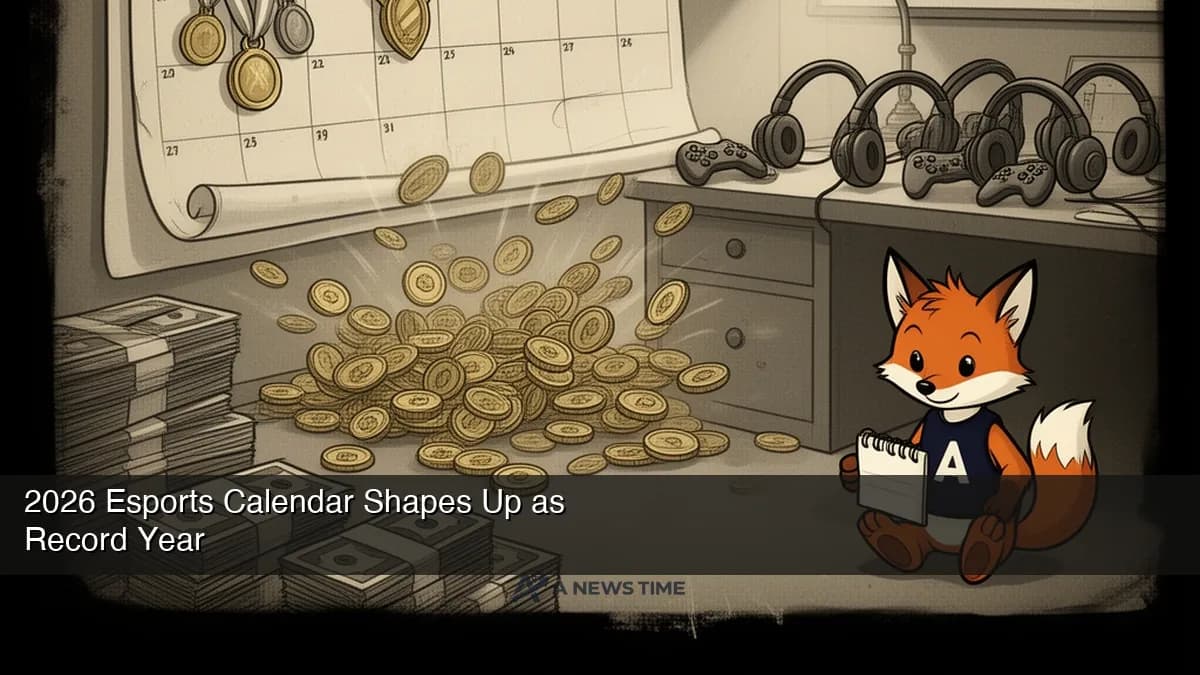
The 2026 competitive gaming calendar is the most ambitious the industry has assembled. Measured by aggregate prize money, number of marquee events, geographic scope, and the range of titles represented at the top competitive tier, there is no prior year that compares. The figures are not close. Esports analytics firm Escharts, tracking announced prize pools across titles and organizers, has documented a total top-tier prize commitment for 2026 that surpasses every previous year by a margin wide enough to settle the question of whether the industry is growing or merely cycling. It is growing, and the 2026 calendar is the clearest evidence yet of how far the organized competitive gaming infrastructure has developed from its fragmented early days into something that increasingly resembles the architecture of traditional professional sports leagues.
The Headline Numbers: A Record-Breaking Prize Pool Year
Start with the numbers that define the year's competitive scope. The Six Invitational, Rainbow Six Siege's premier annual championship, opened the year in February with a $3 million prize pool, the highest in the title's history and a figure that rivals the top-tier prize structures of games with considerably larger player populations. The tournament demonstrated that Ubisoft's sustained investment in competitive infrastructure has paid off in community engagement and viewer numbers that justify the financial commitment.
In June, IEM Cologne returns as the flagship Counter-Strike 2 Major, carrying a $1.25 million prize pool and the organizational weight of Cologne's established history as the game's most prestigious non-Valve Major venue. The event will serve as a critical qualification and ranking event for teams building toward the end of the year's competitive schedule, and the field is expected to include essentially every legitimate top-10 CS2 side in the world.
The Esports World Cup 2026 in Saudi Arabia, running across July and August, represents the single largest concentration of prize money in the history of competitive gaming. Across the multiple titles represented, the EWC is distributing more than $2 million per title, with the full multi-game prize commitment reaching a figure that, according to Escharts data cited by Insider Gaming, exceeds any previous single event series by a substantial margin. The Saudi investment in esports infrastructure through the EWC is transforming what was historically a gap period in the competitive calendar into the busiest and most financially significant month in the year.
Dota 2: The International 2026 and a Full Major Circuit
For Dota 2 specifically, 2026 represents one of the most fully scheduled competitive years in the game's history. The International 2026 is confirmed for Shanghai, China in August, returning the game's flagship event to a venue geography that has historically produced the tournament's largest live audiences. The prize pool for TI has operated on a crowdfunding model for most of its history, with a portion of cosmetic item sales contributing to the prize fund, but the base commitment and typical final figures place TI consistently among the highest single-event prize pools in esports.
Surrounding TI, the full Dota 2 calendar includes the BLAST Slam, DreamLeague, and the ESL One series, of which Birmingham is an early-year installment. These events collectively form the competitive infrastructure that determines team rankings, regional seeding, and the accumulated form data that teams carry into TI preparation. The density of the schedule creates a genuine tension between competitive performance and team sustainability: rosters that grind through every event risk burnout and declining performance precisely when TI preparation requires peak focus, while teams that selectively attend events risk falling in rankings and missing qualification thresholds.
The analytical sophistication around Dota 2 tournament preparation has advanced considerably. Teams now use statistical modeling to identify draft tendencies from prior events, evaluate individual player performance across different game states, and build preparation databases that inform both their own draft choices and their counter-draft strategies. The volume of competitive data that 2026's packed schedule will generate is, from a competitive intelligence standpoint, genuinely useful: more high-stakes games against more diverse opponents produces better preparation material for the teams that can process and act on the information efficiently.
VALORANT: Champions 2026 and the VCT Architecture
The VALORANT Champions Tour continues its international franchised league model in 2026, with regional stages feeding into an increasingly coherent global competitive structure. The VCT Masters circuit includes stops in Santiago and London before the season culminates in VALORANT Champions 2026, scheduled for China in September with a $2.25 million prize pool.
The decision to host VALORANT Champions in China is strategically significant. China represents both an underserved VALORANT audience and a market that Riot Games has been carefully cultivating through partnership structures and regional development programs. Placing the title's flagship event in the world's largest gaming market sends a clear message about the direction of Riot's long-term investment, and it mirrors decisions that other publishers have made about hosting major events in markets they want to develop rather than simply rewarding existing strongholds.
The VCT's franchised structure, controversial at its introduction because it displaced many legacy organizations and teams from the competitive ecosystem, has produced the kind of stable scheduling and production consistency that makes VALORANT Champions a genuinely compelling annual event rather than a variable qualifier outcome. Teams know their competitive calendar a year in advance, sponsors can plan activations around fixed event dates, and viewers develop the kind of seasonal investment that drives the long-term audience loyalty that esports has historically struggled to build. Grant Taylor-Hill, reporting for Insider Gaming, noted that VALORANT's 2026 viewership projections are running ahead of 2025 numbers at equivalent points in the season, which is a meaningful positive signal in a competitive media environment.
League of Legends Worlds Returns to the USA
Worlds 2026 is scheduled for October in the United States, bringing the LoL championship back to a market with an enormous existing player base and a live event attendance culture that has produced some of the most watched esports broadcasts in history. The US Worlds will benefit from the time zone alignment with North American audiences, an advantage that cannot be overstated for live viewership numbers: events held in Asia, despite their competitive quality, face structural disadvantages in reaching European and American audiences who represent the largest viewership pools outside of China.
For the LCS and its franchised teams, a US-based Worlds creates a home advantage narrative that has genuine marketing value and that may modestly boost performance: competing in familiar time zones, with reduced travel disruption, and in front of domestic audiences is a real contextual advantage, even if North American teams have historically underperformed relative to their resources when matched against Korean and Chinese sides.
The LoL competitive ecosystem's 2026 calendar also includes the full LEC Spring split and subsequent international stages. The European scene, which has produced some of the most tactically innovative teams in recent years, will be working to close the performance gap with LCK and LPL sides that has defined the global competitive hierarchy for most of the game's history. Whether the 2026 Worlds format, which has evolved considerably from its early single-elimination structure, gives non-Asian teams a more realistic path to the title remains the central narrative question of the competitive year.
Call of Duty and Rocket League: Two Mature Competitive Structures
The CDL Championship in July carries a $2.25 million prize pool, matching VALORANT Champions in financial terms and reflecting the continued investment Activision and its team owners are making in the franchise model despite the broader uncertainty that Microsoft's acquisition has introduced into the CDL's long-term organizational structure. The championship represents the culmination of a full season of city-based franchise competition, and the prize pool scale positions it as one of the year's marquee events alongside the VALORANT and CS2 flagships.
Rocket League's RLWC continues as one of the more stable competitive structures in esports, with a consistent format, a loyal audience, and a publisher in Psyonix that has maintained meaningful investment in competitive infrastructure across multiple years. The RLWC's viewership numbers have historically been more consistent year-over-year than many esports championships, a reflection of the game's tight competitive community and the clarity of its format. In an industry where viewership volatility is a genuine concern for event sponsors, Rocket League's consistency is a commercial asset.
The financial scale of these events represents a significant shift from even five years ago, when esports prize pools at this tier were considerably smaller and the franchise model was still proving its viability. The 2026 calendar suggests that multiple publishers have now reached a level of commitment to competitive programming that is unlikely to reverse: the infrastructure, the contracted team partnerships, and the audience expectations are all too established to dismantle without substantial cost.
PGL Major Singapore and the CS2 End-of-Year Schedule
The CS2 competitive calendar closes with the PGL Major Singapore in November, carrying a $1.25 million prize pool. The Singapore Major represents one of the most anticipated events for a Counter-Strike community that has experienced considerable organizational and competitive change since the transition from CS:GO to CS2. The Asian venue choice is both a market development signal and a recognition that Southeast Asian CS2 viewership and competitive participation have grown substantially over the past three years.
According to viewership and prize pool data tracked by Escharts, CS2 Majors consistently rank among the most-watched esports events globally, a reflection of Counter-Strike's two-decade history as the foundational title of PC competitive gaming. The transition to CS2 introduced disruption in team standings and individual player rankings, but the competitive community's resilience in absorbing that transition is evident in the prize pool commitments and viewer projections that the 2026 calendar reflects.
The two-Major CS2 structure in 2026 (IEM Cologne in June, PGL Singapore in November) creates a clean narrative arc for the competitive year: a midseason checkpoint and an end-of-year culmination, separated by enough time to allow for meaningful team development and roster adjustments between events. For teams seeking to qualify for both Majors, the scheduling requires careful management of regional circuit commitments alongside international preparation. The teams that navigate this balance most effectively tend to be those with the most sophisticated coaching infrastructure, which increasingly means dedicated data analysts and strategic preparation specialists alongside traditional tactical coaches.
New Entrants: Marvel Rivals and Overwatch World Cup
Two titles occupy interesting positions in the 2026 competitive calendar as relatively newer or recently revived competitive structures. Marvel Rivals Ignite 2026 represents one of the more closely watched new competitive series, given the game's player population growth since launch and the publisher's stated ambitions for organized competitive play. Whether the Marvel Rivals competitive structure achieves the traction its player base suggests is possible, or whether it joins the list of games that had strong casual populations without converting them into sustained esports audiences, will be one of the more informative data points of the year.
The Overwatch World Cup 2026 returns after a period of format uncertainty and organizational restructuring at Blizzard. The World Cup format, in which national teams compete rather than franchised clubs, has historically produced distinctive audience engagement from players who identify with national representation in ways they may not with geographic franchise markets. Whether the 2026 iteration can recover the viewership levels of earlier World Cup editions that preceded the OWL's challenges is an open question with meaningful implications for Blizzard's competitive investment plans.
For the industry as a whole, the diversity of titles represented in the 2026 calendar is a positive structural signal. An esports ecosystem dependent on a small number of titles is fragile: if one game declines in player engagement or competitive investment, the entire sector feels it. A calendar that distributes competitive activity across CS2, Dota 2, VALORANT, LoL, CDL, RLWC, and emerging titles creates the kind of redundancy and diversity that characterizes mature, resilient entertainment industries. The growth of the mobile gaming sector, covered in detail in our report on Honor of Kings World Cup 2026 expanding mobile esports, adds a further dimension to this diversification story.
Industry Implications and the Investment Thesis
The record 2026 esports calendar is not an accident. It reflects deliberate, multi-year investment decisions by publishers, event organizers, and the governments and venue operators who compete to host major events. The Saudi investment through the Esports World Cup, the Riot Games commitment to a fully franchised global circuit, the continued CS2 Major infrastructure, and the emerging competitive structures around newer titles all reflect a shared thesis: that organized competitive gaming is a durable entertainment category with long-term commercial potential that justifies significant upfront investment.
That thesis is being tested in real time. Viewership trends across esports are more complicated than simple growth narratives suggest. Some titles have seen declining peak concurrent viewers even as their competitive prize pools have grown. Audience fragmentation across streaming platforms, the competition for attention from traditional sports and entertainment, and the challenge of converting casual players into engaged spectators all represent genuine headwinds. The organizations committing to record prize pools in 2026 are making a bet that the audience is there, or can be built, to support the investment.
The same technology pressures affecting competitive hardware are worth noting in this context. As we reported in our analysis of MSI's challenging 2026 hardware market and GPU price increases, the infrastructure costs for competitive gaming are rising across the stack, from the hardware players use to develop skills to the server infrastructure that powers online competitive play. The esports organizations and publishers committed to building sustainable competitive ecosystems need to account for these infrastructure costs when modeling the long-term economics of their investment.
According to analysis from Escorenews, the aggregate prize pool commitment across tier-one esports events in 2026 represents a year-over-year increase of approximately 18 percent from 2025. In a period of general economic caution across many industries, that growth rate is a meaningful statement of industry confidence. Whether the audience growth and commercial revenue that justify these commitments materialize fully remains to be seen. But the 2026 calendar is the clearest articulation yet of what the esports industry's believers think the sector can become: a permanent, globally distributed, multi-title competitive entertainment ecosystem with financial stakes that rival traditional professional sports leagues in several individual markets.