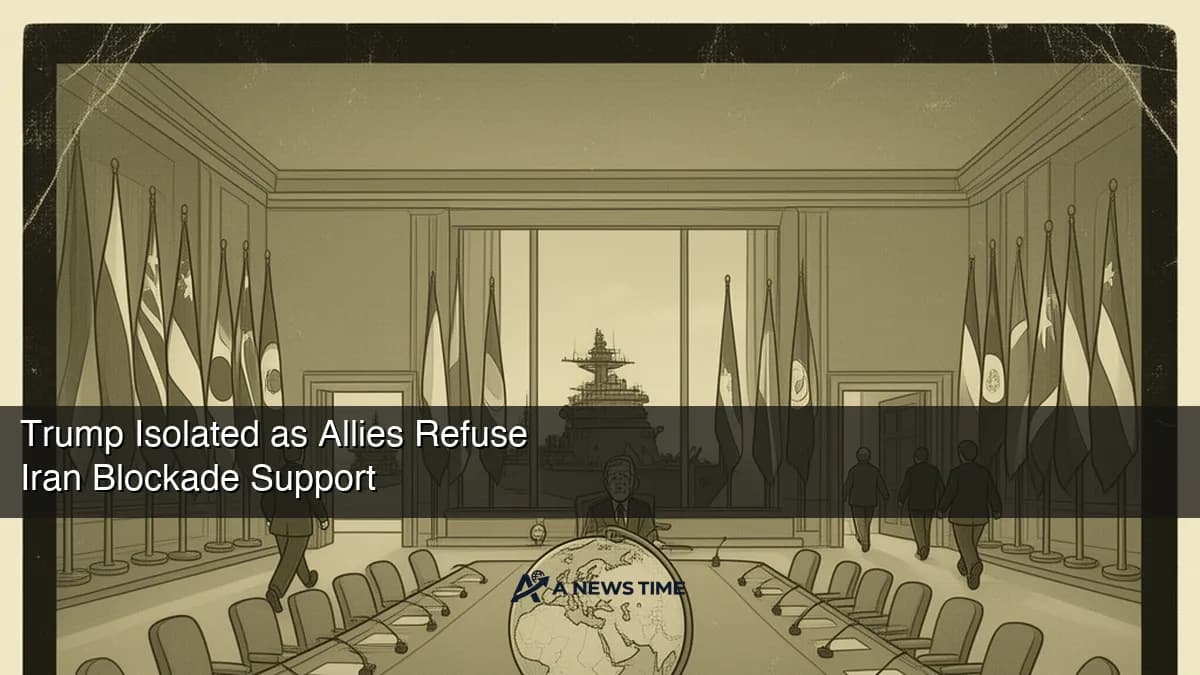
The war in Iran and President Donald Trump's rhetoric have driven US alliances with Europe to their lowest point in the post-World War II era, according to a Bloomberg investigation published on . The United States has offered what multiple European officials describe as a "diplomatic version of the silent treatment," refusing to loop longtime partners into plans for the Iran conflict, the Strait of Hormuz blockade, and the direction of peace negotiations. The result is an unprecedented isolation of American power at a moment when Washington needs international cooperation most.
Europe Frozen Out of War Planning and Peace Talks
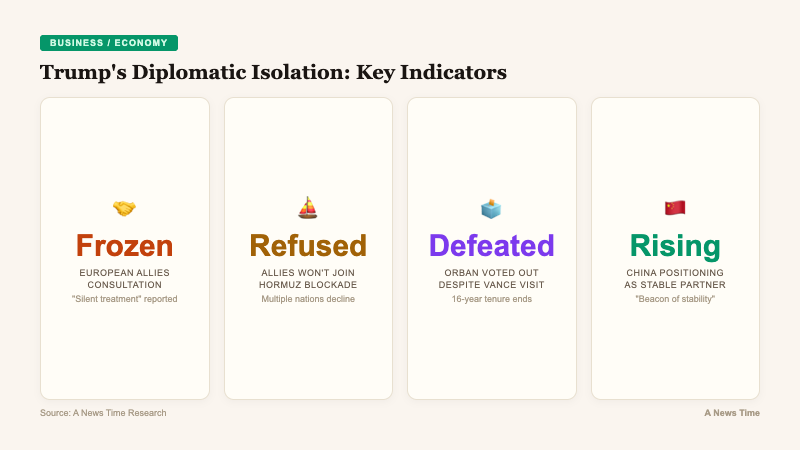
The scale of the diplomatic breakdown is remarkable. According to European officials speaking on condition of anonymity, Washington has systematically excluded its traditional allies from key decisions related to the seven-week-old conflict. The freeze includes:
- Blockade consultations: The US did not consult European partners before imposing a naval blockade against ships Iran had allowed to transit the Strait of Hormuz
- Russian oil waiver: Washington let a waiver on Russian oil expire without coordinating with European energy-dependent nations
- Peace negotiations: Progress reports from US-Iran talks have not been shared with European allies
- Military basing: The US launched strikes with Israel on without recruiting European countries to join the mission or requesting use of European military bases
The UK and France, which have drawn Trump's direct criticism for opposing the war, are expected to host their own conference on to discuss peaceful means to restore free transit through the Strait of Hormuz. Many allied nations have refused to participate in the US blockade entirely.
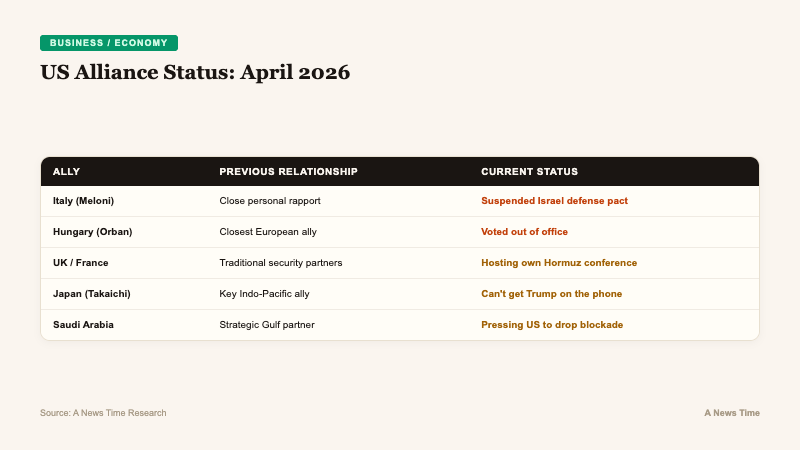
Meloni Breaks With Trump Over Pope Criticism
The fissures extend beyond policy disagreements into personal ruptures between leaders who once considered themselves allies. Italian Prime Minister Giorgia Meloni, who had cultivated a friendly relationship with Trump, called his public attack on Pope Leo XIV "unacceptable" after the pontiff criticized the war in Iran. Trump had called the pope "terrible for foreign policy."
Meloni went further than rhetoric. Italy suspended its two-decade-old defense pact with Israel, the US's partner in the conflict, citing "the current situation." Trump responded by telling the Italian daily Corriere della Sera that he was "shocked" by Meloni and no longer saw her as "brave," a sharp reversal from his previous praise for the leader he once described as a "beautiful young woman" who had taken Europe "by storm."
"President Trump and the people around him seem not to understand that American power floats on other countries' voluntary cooperation to drive down the costs and difficulty of anything we try and do in the world. He's imposing the cost of what is in America's and Israel's interests on everybody else in the world, and without even consulting others."Kori Schake, former George W. Bush administration official, American Enterprise Institute
Orban's Defeat and the Collapse of Trump's European Network
The diplomatic deterioration extends to the electoral arena. Hungarian voters over the weekend ended the 16-year tenure of Prime Minister Viktor Orban, despite a last-minute campaign visit by US Vice President JD Vance. The defeat was widely interpreted as a blow to Trump, who had repeatedly praised Orban as among his closest European partners.
Orban, a close ally of Russia's Vladimir Putin and a frequent irritant to the EU, represented one of the few European leaders willing to align publicly with Trump's foreign policy approach. His removal leaves Trump without his most prominent European supporter at a time when the rest of the continent is actively distancing itself from Washington.
| Ally | Previous Relationship | Current Status |
|---|---|---|
| Giorgia Meloni (Italy) | Close personal rapport, mutual praise | Called Trump's pope attack "unacceptable," suspended Israel defense pact |
| Viktor Orban (Hungary) | Praised as closest European ally | Voted out of office despite Vance campaign visit |
| UK / France | Traditional security partners | Hosting independent Hormuz conference, criticized war |
| Japan (Takaichi) | Key Indo-Pacific ally | Unable to secure a call with Trump since ceasefire |
| Saudi Arabia | Strategic Gulf partner | Pressing US to abandon Hormuz blockade |
Asian Allies Navigate Quietly but Are Equally Frustrated
Asian allies have been less vocal than their European counterparts, but the frustration is comparable. Japanese Prime Minister Sanae Takaichi has been unable to secure a phone call with Trump since the Iran ceasefire began but did speak by phone with Iranian President Masoud Pezeshkian on , a diplomatic signal that Tokyo is pursuing its own channels in the absence of Washington's engagement.
The energy supply disruption has hit Asian nations particularly hard. The weeks-long freeze of most oil and LNG cargoes through the Strait of Hormuz has caused cooking fuel shortages in Southeast Asian nations, forced emergency closures, and prompted at least one refinery shutdown. Trump's blockade threatens to further worsen the supply crunch for Japan, the Philippines, South Korea, and India.
Jet fuel supplies for both civil and military aircraft are of particular concern, European officials told Bloomberg. The disruption to normal fuel flows affects not just civilian aviation but military readiness across the alliance network.
China Positions Itself as the Beneficiary
Trump's actions have handed China what analysts describe as a strategic windfall. Beijing has warned that the US blockade threatens global trade and called for "calm and restraint," positioning itself as a responsible actor in contrast to Washington's unilateral approach.
"The Chinese believe that they are benefiting from being a beacon of stability in a very volatile world. They sort of feel that trends are working in their favor right now so they don't need to give much or do much to benefit from the windfall of President Trump's actions on the world stage."Ryan Hass, former National Security Council official, Brookings Institution
Western nations that have been pushed away by Washington are finding Beijing a more willing interlocutor. Canada and France have strengthened ties with China, and Beijing's restraint during the crisis, in contrast to Trump's confrontational approach, has enhanced its diplomatic standing without requiring significant concessions.
The economic consequences of the war make the diplomatic dimension more than symbolic. The energy shock has affected global growth forecasts, and countries that depend on Middle Eastern energy imports are increasingly weighing whether alignment with Washington comes at an acceptable cost. The rising recession risk across Western economies adds urgency to the calculation.
The Structural Problem Behind the Diplomatic Isolation
The White House pushed back on the characterization of isolation. Spokeswoman Anna Kelly said Trump is "disappointed with European allies for barring US forces from using their bases for the Iran campaign" and described his approach as restoring "America's standing on the world stage."
"He simultaneously will never allow the United States to be treated unfairly and taken advantage of by so-called 'allies,'" Kelly said in an emailed statement, using quotation marks around the word allies.
Former Republican Representative Carlos Curbelo offered a different assessment. Trump is driving an "isolationist, interventionist approach" that is out of sync with the post-World War II global order that previous presidents built to counter adversaries and project American soft power.
"It does appear that we're finally paying a price for all of that," Curbelo said. "I think he's isolated, and I think the country is isolated."
European officials privately concede that the break is unlikely to prove permanent. Security and energy concerns mean they cannot countenance a full split with Washington, and some even agree Trump's blockade may provide the necessary pressure to encourage a deal to end the war. But it will be up to Trump to unwind the crisis he helped create in the Middle East, and for the US Navy to potentially get involved in reopening the strait, at risk to American servicemembers.
What the Isolation Means for Ending the War
The diplomatic fallout has practical consequences for the conflict itself. A president attempting to negotiate an end to a war is typically strongest when backed by a coalition of allies that amplifies pressure on the adversary. Trump's isolation means that pressure on Iran must come almost entirely from American military and economic power alone, without the diplomatic, economic, and intelligence-sharing support that allied coalitions provide.
The UK-France conference on represents a parallel diplomatic track that operates independently of Washington, something that would have been unthinkable in previous conflicts where the US led and allies followed. Whether these parallel tracks eventually converge or continue to diverge will shape both the war's resolution and the post-war international order.
The coming weeks will test whether Trump's approach produces the results he claims to be pursuing (a favorable deal with Iran) or whether the diplomatic costs continue to mount without corresponding gains. The indicators to watch are straightforward: whether allies rejoin the blockade or continue to refuse, whether the Pakistan-mediated talks produce progress, and whether the Strait of Hormuz reopens. Until those questions are answered, markets, allies, and adversaries alike will be recalculating their positions in a world where American power is formidable but increasingly exercised alone.