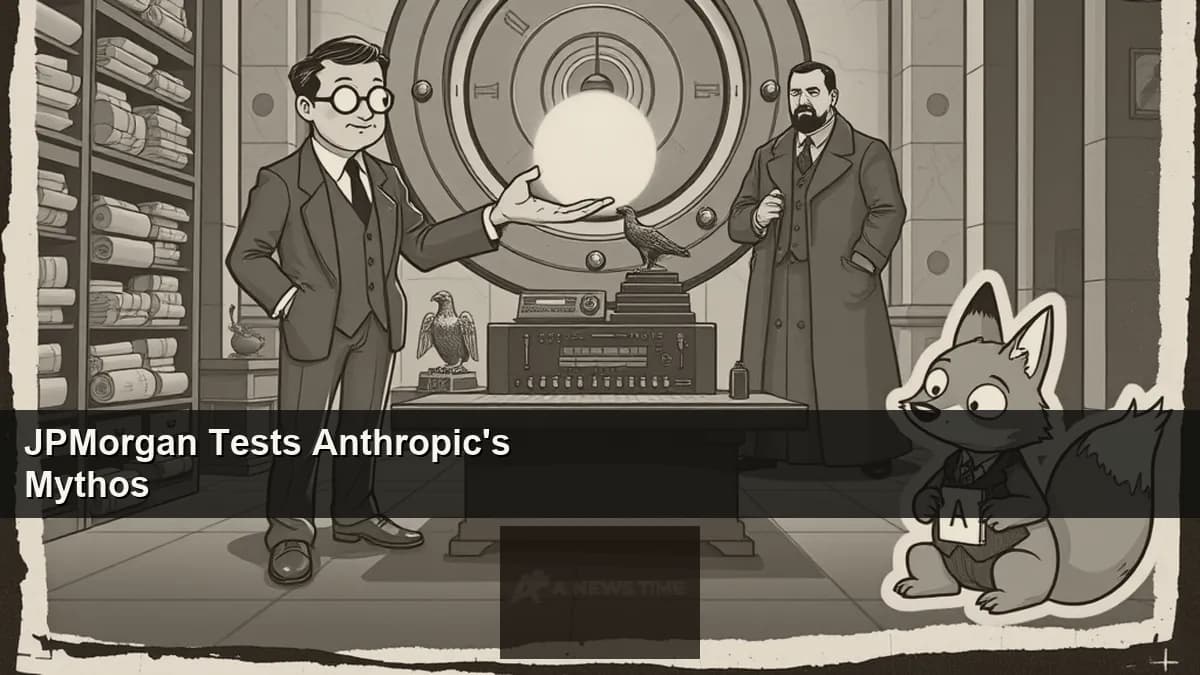
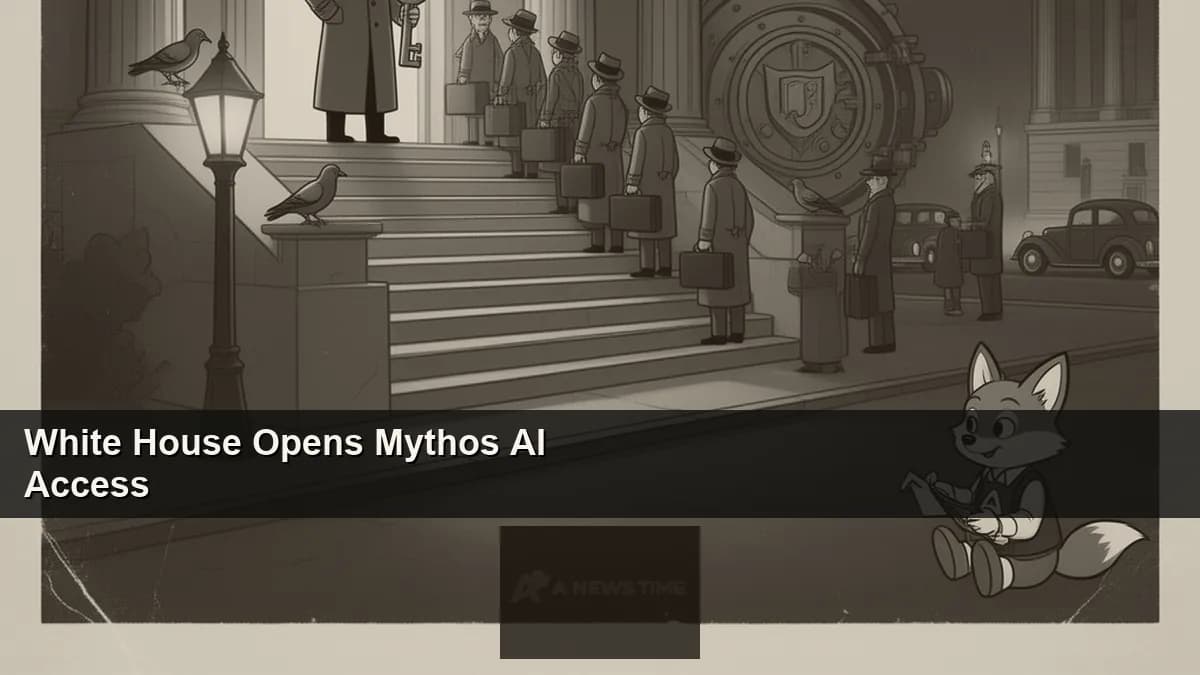
The White House Office of Management and Budget is moving to grant at least six cabinet departments access to Anthropic's Mythos AI model, according to an internal memo reviewed by Bloomberg and reported on . Gregory Barbaccia, the federal chief information officer, told top technology and cybersecurity officials at the Departments of Defense, Treasury, Commerce, Homeland Security, Justice, and State that OMB is "setting up protections" to let agencies begin using the model. The memo does not specify a timeline or which agencies will be first, but its existence signals a sharp reversal from the Pentagon's January designation of Anthropic as a supply-chain risk.
Pentagon Blacklist Meets White House Access Push
The contradiction at the heart of this story is striking. In January, the Department of Defense used an authority normally reserved for foreign adversaries to label Anthropic a supply-chain threat, a designation that would have barred federal use of its technology. Anthropic won a San Francisco court order last month temporarily blocking the ban, arguing the move could cost it billions in lost federal revenue. A federal appeals panel then denied Anthropic's broader bid to stay the blacklist.
The dispute, according to multiple reports, centered on whether Anthropic's models could be deployed for mass surveillance and fully autonomous lethal weapons systems, uses the company refused to authorize. The White House memo now effectively routes around that standoff by giving civilian and intelligence-adjacent agencies the ability to use Mythos for a narrower purpose: finding cybersecurity vulnerabilities in government systems before adversaries do.
"We're working closely with model providers, other industry partners, and the intelligence community to ensure the appropriate guardrails and safeguards are in place before potentially releasing a modified version of the model to agencies."Gregory Barbaccia, Federal Chief Information Officer, White House Office of Management and Budget
Barbaccia's message carried the subject line "Mythos Model Access" and was sent . It did not definitively say agencies will receive access. It told them to expect "more information in the coming weeks," language that suggests active negotiation over what a modified version of Mythos for federal use would look like.
What Mythos Actually Does
Mythos sits above Anthropic's publicly available models in capability, including the newly released Claude Opus 4.7. The company has kept it restricted to a small group of technology and financial firms because internal testing revealed the model could surface the kind of critical software bugs that typically require the world's best offensive security researchers to find. Anthropic executives determined that unrestricted release could hand hackers the equivalent of a force multiplier, turning skilled attackers into what one Bloomberg source described as "special forces operators."
The defensive use case runs in the same direction. Treasury Secretary Scott Bessent and Federal Reserve Chair Jerome Powell convened Wall Street leaders in Washington on the day Mythos was publicly disclosed, urging them to use the model to find weaknesses in their own banking systems. The Treasury Department has since been seeking its own access to hunt for vulnerabilities in federal financial software, Bloomberg reported.
| Agency | Likely Mythos Use Case | Operational Constraint |
|---|---|---|
| Treasury | Finding software flaws in payment and settlement systems | Cannot share findings with private banks without disclosure framework |
| Defense | Hardening internal networks against nation-state intrusion | Anthropic's no-autonomous-weapons policy limits offensive use |
| Homeland Security / CISA | Vulnerability research on critical infrastructure software | Coordination with vendor disclosure processes required |
| Commerce / CAISI | Standards development and model evaluation | Research-only access, not operational deployment |
| Justice | Forensic analysis of malware and exploit code | Evidence chain-of-custody and export control rules apply |
Anthropic previously briefed senior officials across the government on Mythos's full capabilities, including both offensive and defensive cyber applications, before its limited release. Staff at CISA and the Center for AI Standards and Innovation were among those briefed, according to an Anthropic official who spoke to Bloomberg on condition of anonymity.
Federal Agencies Were Already Testing It Anyway
Politico reported earlier this week that the Commerce Department's Center for AI Standards and Innovation and other government officials were quietly evaluating Mythos despite the Pentagon's formal blacklist. That parallel track, combined with the OMB memo, suggests federal interest in the model effectively bypassed the Department of Defense's designation rather than waiting for the legal process to resolve.
Anthropic co-founder Dario Amodei confirmed on , that the company is in active talks with the Trump administration about Mythos, even as the legal fight continues. The company declined to comment for this story, and a White House official said only that the government continues to engage with AI companies to secure critical software vulnerabilities, without answering specific questions.
Why the Safeguards Question Matters
The key phrase in Barbaccia's email is "modified version of the model." Anthropic has not yet detailed what a federally deployed Mythos would look like, but the company shipped Opus 4.7 on with new automated safeguards designed to detect and block requests that suggest prohibited or high-risk cybersecurity use. Those safeguards are explicitly framed as a testbed for what a broader Mythos deployment might use.
Security professionals can apply to Anthropic's new Cyber Verification Program for legitimate defensive use of Opus 4.7 including vulnerability research, penetration testing, and red-teaming. That program is the closest public analog to how a modified Mythos might be distributed: gated behind professional credentials and specific use-case approvals rather than offered through standard API access. The parallel to how the federal government is approaching model access is not coincidental.
The $800 Billion Question
The commercial stakes for Anthropic are substantial. The company's annual run-rate revenue reportedly hit $30 billion this month, driven largely by enterprise adoption of Claude Code and the Claude API. Venture investors are circulating term sheets valuing the company at $800 billion, more than double its $380 billion Series G valuation from February. Federal contracts, particularly multi-year cybersecurity deployments across cabinet departments, would add a meaningful revenue line and a strategic moat.
The Pentagon's supply-chain designation puts all of that at risk. Winning a federal carve-out for Mythos defensive use, while keeping the broader blacklist tied up in court, would let Anthropic claim both the commercial and the regulatory high ground. It would also set a precedent for how frontier AI labs navigate the increasingly frequent collisions between their safety policies and federal procurement rules.
The broader policy fight over how the Trump administration wants frontier AI deployed in national security contexts is unlikely to resolve this year. What happens with Mythos access over the next several weeks will signal how that fight actually plays out, beyond the press releases and court filings.
What to Watch Next
Three things will determine whether this access push becomes a durable policy shift or a temporary accommodation. The first is which agency gets Mythos access first, and under what contractual terms. Treasury and CISA are the most likely candidates based on public reporting, but the OMB memo went to six departments simultaneously.
The second is how Anthropic's Opus 4.7 safeguards perform in real-world use. If the automated blocks hold up against red-team probing over the next month, a Mythos rollout with similar guardrails becomes more defensible. If users find easy ways around them, the federal deployment timeline likely slips.
The third is whether the Pentagon drops its supply-chain designation voluntarily, or whether the newly released Opus 4.7 and a civilian-agency Mythos deployment effectively make the blacklist symbolic. Either outcome reshapes the landscape for how every frontier AI company negotiates with the federal government going forward, and Anthropic's position as the first mover through this process gives it outsized influence on the terms everyone else will face.
Sources
- White House Works To Give US Agencies Access To Anthropic Mythos AI - NDTV Profit / Bloomberg
- Trump officials negotiating access to Anthropic's Mythos despite blacklist - Axios
- Federal agencies skirt Trump's Anthropic ban to test its advanced AI model - Politico
- Anthropic talking to the Trump administration about its next AI model - Reuters