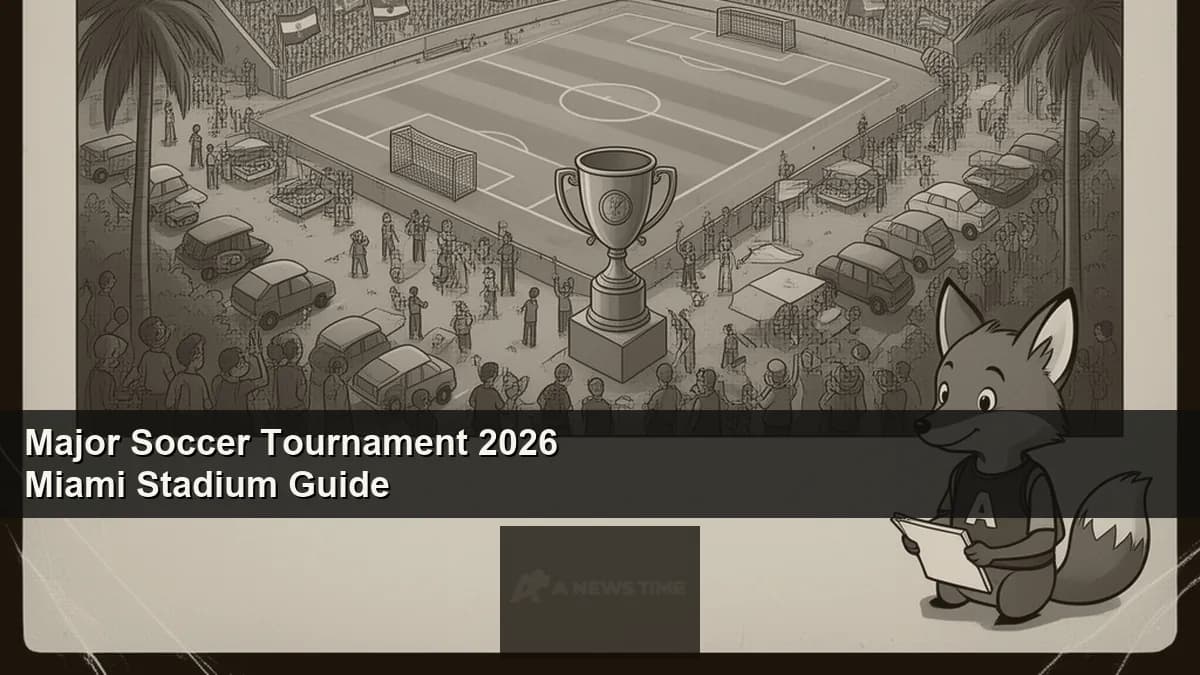
Hard Rock Stadium is one of the older buildings that FIFA selected for the 2026 World Cup, a fact that is neither a flaw nor an irrelevance. The stadium that opened in 1987 as Joe Robbie Stadium, in a era when multipurpose outdoor venues were the dominant model for professional sports facilities, has been renovated so extensively and so deliberately in the years since that calling it a 1987 building understates how different it now is. The most recent major renovation, completed in 2016 at a cost of over $550 million, produced a facility that architectural critics describe as genuinely striking: a large canopy structure of white spires suspending a permanent roof over the seating bowl, shading spectators and creating a distinctive silhouette visible from the highway approaches.
The renovation was designed specifically for Miami's climate. The city sits at the intersection of tropical heat and hurricane exposure, and the canopy system addresses both: it provides shade coverage that makes outdoor events in the summer months genuinely bearable, and it channels natural ventilation through the seating bowl in ways that reduce heat accumulation even on the most difficult June and July days. For a World Cup that will run from June through July 2026, those design decisions are not incidental to the fan experience. They are central to it.
Stadium History and Identity
The stadium's naming rights history reflects Miami's position as a major corporate market. Joe Robbie Stadium became Pro Player Stadium, then Dolphins Stadium, then Dolphin Stadium, then Land Shark Stadium (briefly, a naming rights deal with Jimmy Buffett's beer brand), then Sun Life Stadium, then Miami Dolphins Stadium, then Hard Rock Stadium in 2016, when the hospitality company signed a deal that remains in effect. The naming rights carousel is unusually long but the underlying identity has remained consistent: this is a Miami Dolphins facility that also serves as South Florida's primary large-scale outdoor event venue.
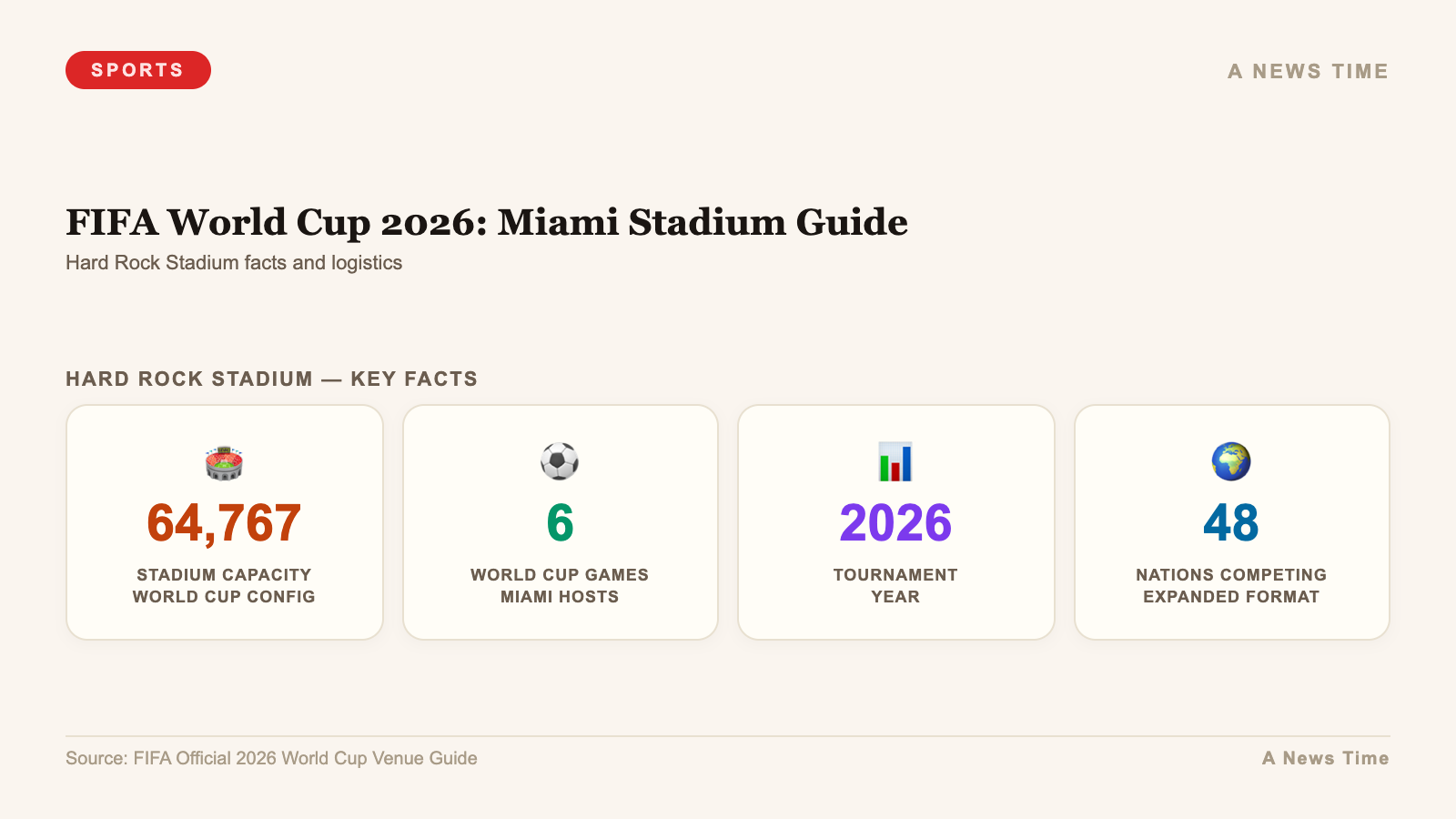
The Dolphins have played at the stadium since its opening. The franchise has won two Super Bowls, both in the 1970s under Don Shula, and the stadium has hosted five Super Bowls during its history, including Super Bowl LIV in February 2020, when the Kansas City Chiefs defeated the San Francisco 49ers 31-20. The stadium's capacity for NFL games is approximately 65,326, and it has held higher crowd totals for events like Copa America final matches and international soccer friendlies.
Beyond football, the stadium has become one of the most versatile large venues in the United States. The Formula 1 Miami Grand Prix, which launched in May 2022, uses a circuit laid out around the stadium's parking lots and surrounding land, with the stadium structure itself incorporated into the visual experience of the event. The race has sold out all three editions held to date and has established Miami as one of the F1 calendar's more glamorous stops. The Miami Open, one of the Masters 1000 events on the ATP and WTA circuits, takes place at Hard Rock Stadium using temporary courts installed on the stadium grounds, an arrangement that has drawn some criticism from players for the surface and conditions but has consistently produced strong attendance numbers.
The World Cup Configuration
Converting Hard Rock Stadium for soccer use requires modifications that are standard for NFL venues hosting the tournament. The primary change is the installation of a natural grass playing surface, replacing the artificial turf the Dolphins use for regular season play. FIFA mandates natural grass for World Cup matches, and Hard Rock Stadium's playing surface will be prepared and installed in the weeks before the tournament opens.
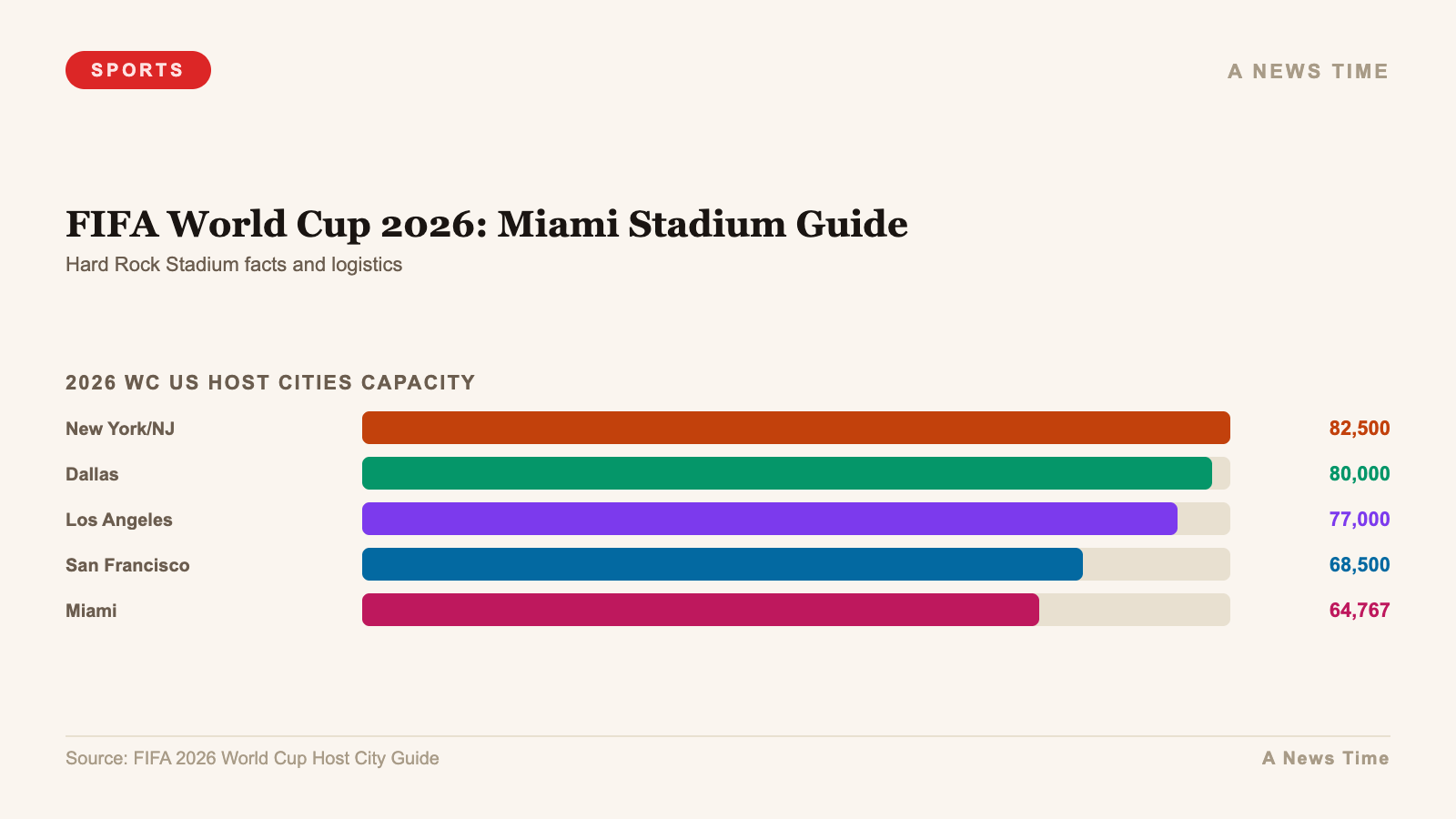
The seating configuration for soccer reduces the effective capacity slightly from the NFL maximum, primarily because soccer sightlines require different positioning relative to the touchlines than football sightlines require relative to the sidelines. The operational figure FIFA has approved for Hard Rock Stadium is approximately 65,000 for World Cup matches, which positions it comfortably in the mid-range for 2026 tournament venues. AT&T Stadium in Arlington, Texas, which will host the final, is configured for approximately 92,000 for the championship match. MetLife Stadium in New Jersey, which will host the other semifinal and a quarterfinal, is configured for approximately 82,500.
Miami's allocation is six group stage games and one Round of 16 match. The group stage schedule includes games from multiple groups, which means the stadium will host teams from different confederations across the course of the tournament's opening two weeks. The Round of 16 match falls in the first week of July, which is when Miami's weather is at its most challenging for outdoor events: afternoon heat indexes regularly exceed 100 degrees Fahrenheit, and the canopy system's ventilation design will receive its most meaningful test during those knockout stage conditions.
Getting to Hard Rock Stadium
Hard Rock Stadium sits in Miami Gardens, a city of approximately 110,000 people in Miami-Dade County, about 16 miles north of downtown Miami. The address is 347 Don Shula Drive, a renaming of the street from its original designation that honored the franchise's legendary coach following his death in 2020.
Transportation to the stadium is a practical challenge that the World Cup organizing committee has been addressing since Miami was confirmed as a host city. The venue is not directly served by Miami-Dade's Metrorail system, which limits the public transit options for fans relying on mass transit. The closest Metrorail station is Opa-locka, approximately 3 miles from the stadium, and a shuttle service connecting the station to the venue is planned for World Cup match days.
The stadium itself has substantial parking infrastructure, with capacity for approximately 14,000 vehicles in the surrounding lots and structured garages. For World Cup purposes, additional parking operations are being coordinated across nearby commercial properties, and the organizing committee has partnered with ride-share companies to establish designated pickup and dropoff zones that separate those vehicles from the general parking traffic flows.
Fans traveling from downtown Miami by car can expect the drive to take between 30 and 60 minutes on match days depending on departure timing relative to kickoff, with the worst congestion typically occurring in the 90 minutes before and after a match. The 836 Expressway and I-95 are the primary route options, and both are subject to significant event-day traffic management by Miami-Dade County's transportation department.
The Miami Market and Soccer
Miami's relationship with soccer is more complex than the city's general sporting profile might suggest. The metropolitan area is one of the most diverse in the United States, with large populations from Latin America and the Caribbean for whom soccer is the primary sport rather than a secondary one. The Miami International Airport sees significant flight traffic from Brazil, Argentina, Colombia, Mexico, and Central American nations during major soccer events, and the city's hospitality industry has consistently reported that Copa America and international friendly matches bring a distinctly different demographic than NFL games.
Inter Miami, the MLS franchise launched in 2020 with David Beckham as one of its principals and Lionel Messi as its most prominent player from 2023 onward, has shifted the city's relationship with professional soccer. Messi's signing generated a level of attention that no MLS event had previously received, and his presence at Chase Stadium in Fort Lauderdale created the kind of organic soccer culture that Miami had long been described as possessing demographically but struggling to activate commercially. The World Cup arrives into a Miami soccer environment that is more genuinely engaged than it was even three years ago.
That engagement creates specific challenges alongside the opportunities. The fan demographics for World Cup matches in Miami will skew heavily toward supporters of Latin American national teams, which is different from the more neutral or general sports fan attendance pattern that characterizes, say, the New York or Los Angeles World Cup markets. The organizing committee has been explicit about this in its planning: Miami match scheduling and ticket allocation has been structured with an understanding that Brazil, Argentina, Mexico, and Colombia matches at this venue will produce very different crowd compositions than generic allocation would create. For more on the tournament's broader picture, see our coverage of Italy's shocking qualification failure and what it means for European representation in North America.
World Cup Legacy Considerations
The legacy calculus for World Cup host venues is always complicated. The infrastructure investment made to prepare stadiums for tournament use does not typically produce proportional returns from the tournament itself, which occupies a venue for a handful of matches over a few weeks. The real legacy question is whether the preparation investment produces facilities that serve communities and attract events over the subsequent decade.
Hard Rock Stadium's case is among the cleaner ones in the 2026 host city set because the stadium already had a post-renovation identity as a multi-event venue before the World Cup was awarded. The existing relationships with Formula 1, the Miami Open, and college football's Orange Bowl, which has been played at the stadium since 1996, mean the facility has programmed revenue beyond the NFL season. The World Cup will not transform Hard Rock Stadium's business model; it will be an exceptional moment within an already diverse booking calendar.
The renovation that prepared the stadium for the 2016 Miami Dolphins season and the subsequent event bookings cost more than $550 million, funded through a combination of private investment from the Dolphins' ownership group and public infrastructure contributions. That investment predates the World Cup award and is not attributable to it, but it means Miami is bringing one of the better-prepared physical plants of any 2026 host venue to the tournament. Fans arriving at Hard Rock Stadium in June and July 2026 will encounter a facility that is significantly better than what they would have found at the same address a decade ago, which is not something every 2026 venue can claim with the same degree of confidence.