Starting , tourists entering the historic center of Venice, Italy on peak days will pay a €5 entry fee. The amount is modest, less than the price of a coffee at the city's famous Caffè Florian. The signal it sends is not. Venice is joining a growing list of destinations in 2026 that have moved from hand-wringing about mass tourism to implementing hard economic barriers against it. From Barcelona to Bali, from Mount Fuji to Machu Picchu, the destinations that defined aspirational travel for a generation are now actively managing, limiting, and in some cases redirecting the visitors who made them famous. The era of everywhere-for-everyone travel, if it ever truly existed, is formally ending.
This is not a single movement with a central coordinator. It is a convergence of independent local decisions driven by the same underlying conditions: infrastructure strained past capacity, resident quality of life deteriorating under tourist pressure, ecological damage to fragile sites, and housing markets distorted by short-term rental platforms. In each location, the policy responses reflect local political constraints, revenue dependencies, and institutional histories. But the direction is consistent: more limits, higher fees, and less availability for the casual or spontaneous visitor who assumed these places were simply there to be visited on demand.
Spain: 65,000 Airbnb Listings Gone
Spain has executed the most sweeping single action of the anti-overtourism movement in 2026. Over the course of the first quarter, Spanish housing authorities removed or ordered the removal of more than 65,000 short-term rental listings in Barcelona, Madrid, and the Balearic Islands, including Mallorca and Ibiza. The removals followed regulatory changes requiring short-term rental operators to hold specific municipal licenses, combined with enforcement actions against existing listings that lacked compliance documentation.
The policy was years in the making. Barcelona had been fighting with platforms like Airbnb and Vrbo since 2015, when the city first attempted to limit new tourist apartment licenses in residential neighborhoods. The 2026 enforcement represents a decisive shift from attempting to limit new licenses to actively removing existing operations. The effect on accommodation supply has been immediate: hotel occupancy rates in Barcelona rose to 91 percent in February 2026, up from 84 percent in February 2025, as former Airbnb inventory disappeared from the market. For travelers, this means Barcelona is more expensive and harder to book than it was a year ago, particularly outside the traditional hotel districts.
The Balearic Islands, which process more than 13 million tourists annually against a resident population of just over 1.2 million, have gone further. The regional government imposed a moratorium on new hotel construction in 2023 and is now actively reducing the number of legally operating tourist beds through license non-renewal. The math is deliberate: fewer beds means fewer visitors, and the visitors who do come pay more per night, theoretically generating equivalent revenue with less impact. Whether the theory holds in practice is still being tested.
Venice and the Access Fee Experiment
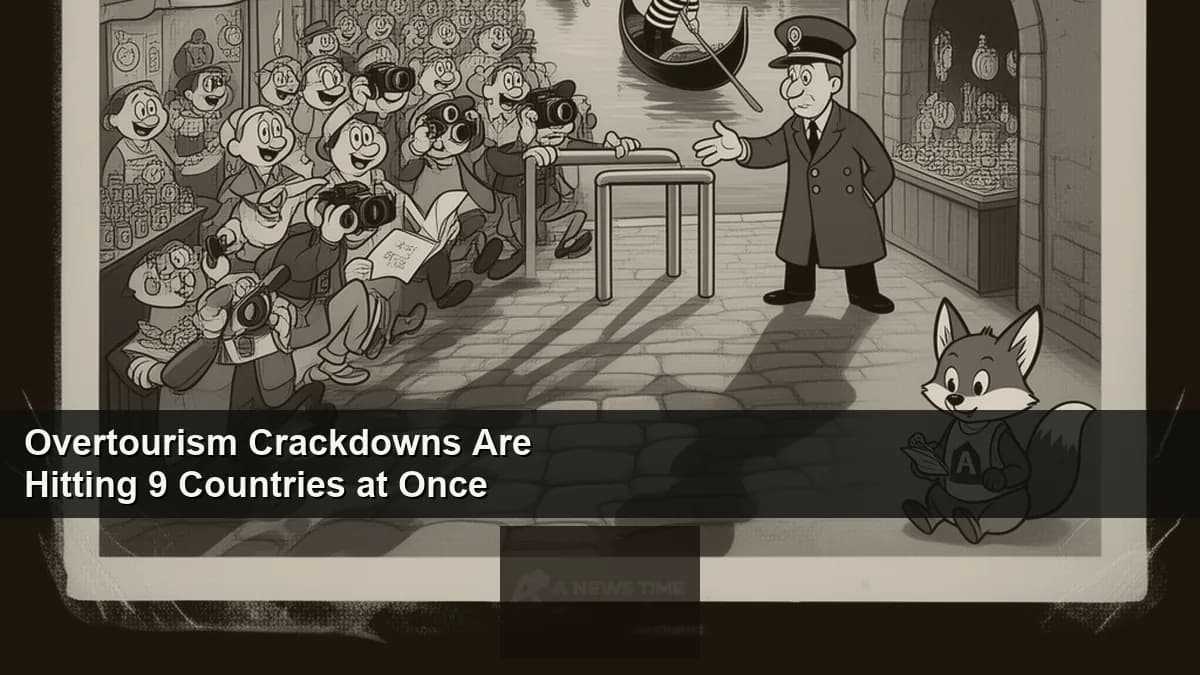
Venice's access fee, technically a "day visitor contribution," applies to tourists arriving in the historic center during peak days and hours. The initial €5 rate covers approximately 30 designated peak days in 2026, primarily weekends and holidays from April through July. Visitors staying overnight in registered accommodation are exempt, as are Venetians, workers, and students. The fee is enforced digitally: travelers must purchase a QR code before entering through designated access points.
The scale of the challenge Venice faces is worth stating plainly. The historic center has approximately 250,000 day visitors on peak summer weekends, arriving largely by ferry from the mainland, cruise ships at the waterfront, or private boats. The city's resident population has fallen below 50,000 from a post-war high of more than 170,000, driven out by a combination of rising housing costs, noise, and the degradation of daily life that comes from living in a city that is perpetually overwhelmed by visitors. The €5 fee is widely acknowledged by city officials and urban planners as a test of the access fee concept rather than a solution to the problem. At €5, the fee does not meaningfully reduce the number of budget day-trippers. It does generate revenue for the city and establishes the legal and technical infrastructure for higher fees in future years.
"We are not trying to stop tourism. We are trying to manage it in a way that makes it possible for Venice to remain a city and not just a museum."
Simone Venturini, Venice City Councillor for Tourism
The access fee model, if it produces meaningful revenue and political sustainability, could be adopted at higher price points. Several Venetian planning groups have publicly advocated for fees in the €20 to €30 range, levels that would genuinely deter the most casual day visits while maintaining accessibility for tourists who plan ahead and are committed to the city.
Greece: The Cruise Levy
Greece has taken a direct approach to one of its most significant tourism management challenges: cruise ships. In , the Greek government implemented a €20 per passenger levy on all cruise ships calling at Greek ports. The levy applies regardless of the ship's home port, operating carrier, or itinerary length. A ship with 3,000 passengers arriving at Santorini owes €60,000 to Greek port authorities for that call.
The destination context matters here. Santorini received approximately 2 million cruise passengers in 2025, an island with a resident population of roughly 15,000. On peak days, cruise passengers arriving outnumber permanent residents by a factor of ten to one, flooding narrow caldera paths and donkey-access trails with visitor traffic that the infrastructure was never designed to handle. The levy functions partly as a revenue generator, partly as a soft deterrent for cruise operators weighing port call decisions, and partly as political signal to residents who have demanded action on cruise-driven overcrowding for years.
Cruise industry representatives have objected, arguing that the levy disproportionately targets an economic activity that generates significant spending at local businesses. Tourism economists offer a more nuanced picture: cruise passengers typically spend far less per day than independent travelers or resort guests, because they sleep, eat, and spend their leisure time on the ship rather than in local hotels and restaurants. The €20 levy attempts to correct for the low economic return per visitor that characterizes cruise tourism at densely visited island destinations.
Amsterdam, Japan, Bali: Three Approaches
Amsterdam has implemented a 15-night annual cap on STR listings across the city, effective . Hosts who previously rented their apartments for 30 nights per year under the prior cap now face a 50 percent reduction. The city has also dramatically expanded enforcement, deploying dedicated inspectors who use digital monitoring tools to identify listings that exceed permitted nights. Hosts caught violating the cap face fines starting at €10,000 per violation.
Japan is grappling with a different scale of problem. The country welcomed a record 42.7 million international visitors in 2025, surpassing any previous year by a significant margin. The concentration of those visitors into specific sites has created friction points: residents near Kyoto's Gion district petitioned local government after tourists blocked traffic and entered private properties. The most publicized response was the introduction of a ¥4,000 fee (approximately $26) to access the Yoshida trail on Mount Fuji. The fee replaced a previous ¥2,000 charge and is accompanied by a daily cap on hikers using the trail.
Bali implemented a formal tourism levy of Rp150,000 per international visitor (approximately $9) from February 2025, with collection now fully embedded in the entry process. The levy applies to all foreign arrivals, not only cruise passengers or day visitors. The revenue is earmarked for infrastructure maintenance, environmental conservation, and cultural preservation programs. Indonesia's tourism ministry has emphasized that the levy is not intended to reduce visitor numbers but to ensure visitors contribute financially to the preservation of what draws them to Bali in the first place.
Croatia, Machu Picchu, and Cannes
Croatia is moving toward the legislative phase of its anti-overtourism response. Draft laws circulating in early 2026 would impose strict limits on new short-term rental registrations in the historic centers of Dubrovnik, Split, and Hvar, and would require existing unlicensed operators to either comply with new standards or cease operations. The Dubrovnik situation in particular has been extreme: the walled city received approximately 1.7 million visitors in 2025, against a resident population that has fallen below 1,200 people inside the walls. The laws, if passed, represent the culmination of a decade of advocacy by residents and heritage preservation organizations who have watched the old city transform from a living neighborhood into an accommodation and restaurant zone.
Machu Picchu, the most visited site in South America, enforces a capacity cap of 4,500 visitors per day that has been in place in modified form for several years. The cap was tightened further in early 2026 following infrastructure stress reports from site managers. Tickets must be purchased in advance through the official booking system, and the allocated slots for specific time windows frequently sell out 30 to 60 days ahead. Travelers who arrive at Aguas Calientes without a pre-purchased timed entry ticket will not be admitted to the site, regardless of how far they have traveled.
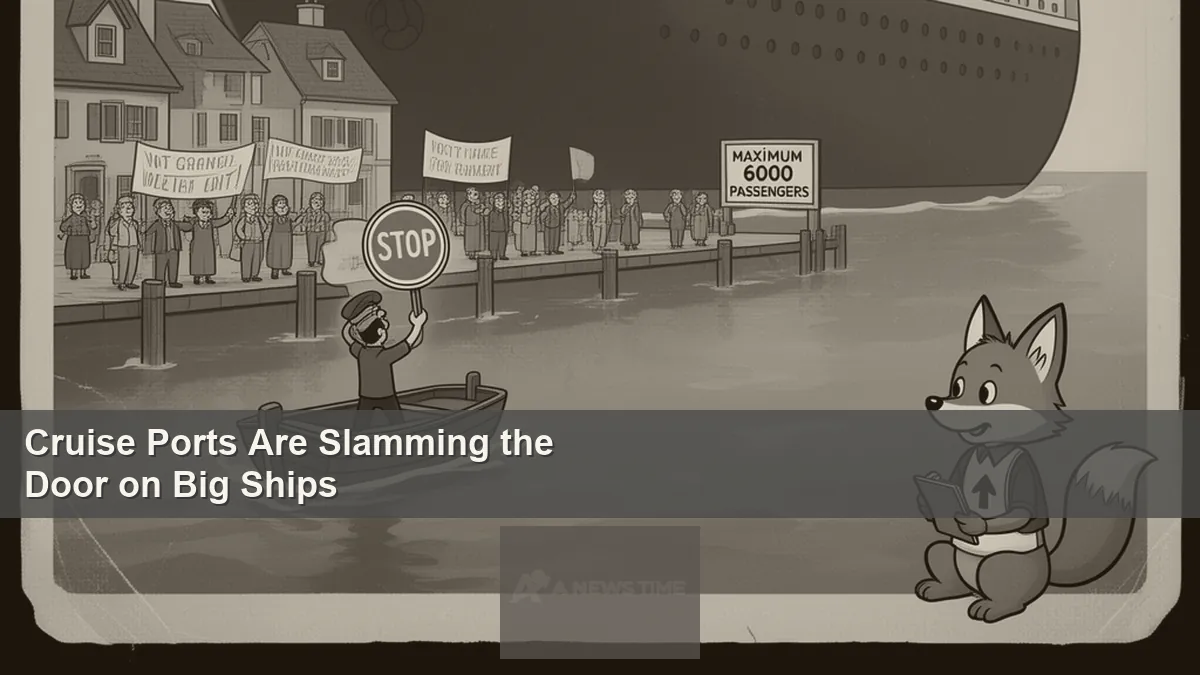
Cannes, the French Riviera city best known for its film festival, implemented in early 2026 a cap of 6,000 cruise passengers per day on its port calls. The cap specifically targets large cruise ships, with the municipal government expressing preference for smaller vessels that carry under 1,000 passengers and are considered more compatible with the character of the city and the carrying capacity of the bay. Cruise lines with existing port call agreements are being renegotiated to reflect the new limits. The policy reflects a broader French Riviera trend; the neighboring port of Villefranche-sur-Mer implemented similar caps in 2025.
What This Means for How You Travel
The practical implications of the 2026 overtourism crackdown wave fall into three categories.
Advance planning is no longer optional. Sites with daily caps, timed entry requirements, and fee gates require advance booking in ways that spontaneous travel to the same destinations in 2015 did not. Machu Picchu, Fuji's Yoshida trail, and Venice's peak-day access system all require tickets purchased before arrival. Travelers who show up without pre-arranged access will find hard limits where previously there were only long queues.
Accommodation markets are changing rapidly. Spain's Airbnb removal, Amsterdam's night caps, and Croatia's draft laws are restructuring accommodation availability and pricing in ways that make the hotels-versus-rentals calculation significantly different from prior years. In affected cities, hotel inventory is tighter and more expensive than it was 12 months ago. Travelers accustomed to finding last-minute Airbnb options in central neighborhoods of these cities are discovering that the inventory they relied on no longer exists at the same volume or the same price points.
The alternatives are getting better. Every destination that implements hard caps and access fees effectively redirects a portion of its visitor flow toward alternatives. The visitors who cannot get a Santorini cruise call slot or a Machu Picchu timed entry on their preferred date are not necessarily going home; many are going elsewhere. Destinations that have invested in tourism infrastructure, reduced bureaucratic friction, and positioned themselves as welcoming alternatives to overcrowded flagship sites are benefiting from the redirect. Our guide to countries actively welcoming travelers in 2026 covers several destinations positioned to absorb redirected visitor flow from the crackdown cities.
The broader story of 2026 is that the travel industry's long-standing assumption, that destinations would simply absorb as many visitors as wanted to come, is being replaced by a managed-access model that reflects the real costs of mass tourism on physical infrastructure, ecological systems, and resident quality of life. Destinations with lower visitor pressure offer increasingly compelling alternatives for travelers who value access and authenticity over the validation of having visited the most-photographed places. The crackdowns are, in a meaningful sense, directing travelers toward a richer version of what travel was supposed to be.