Every experienced international traveler carries a version of the same story: the thing they forgot that mattered more than anything they brought. The universal adapter left on the kitchen counter. The passport-sized document photo needed for a visa on arrival that no one mentioned in the travel forums. The packing list that was thorough about clothing and silent about connectivity. International travel in 2026 is more logistically demanding than at any point in recent memory, partly because the technology available to travelers has multiplied the number of decisions involved in preparation, and partly because airline and security policies have continued to evolve in ways that are not always communicated clearly at the point of booking. This guide addresses the categories that matter, with specific recommendations and the data behind them.
Universal Power Adapters: The Foundation of Connectivity
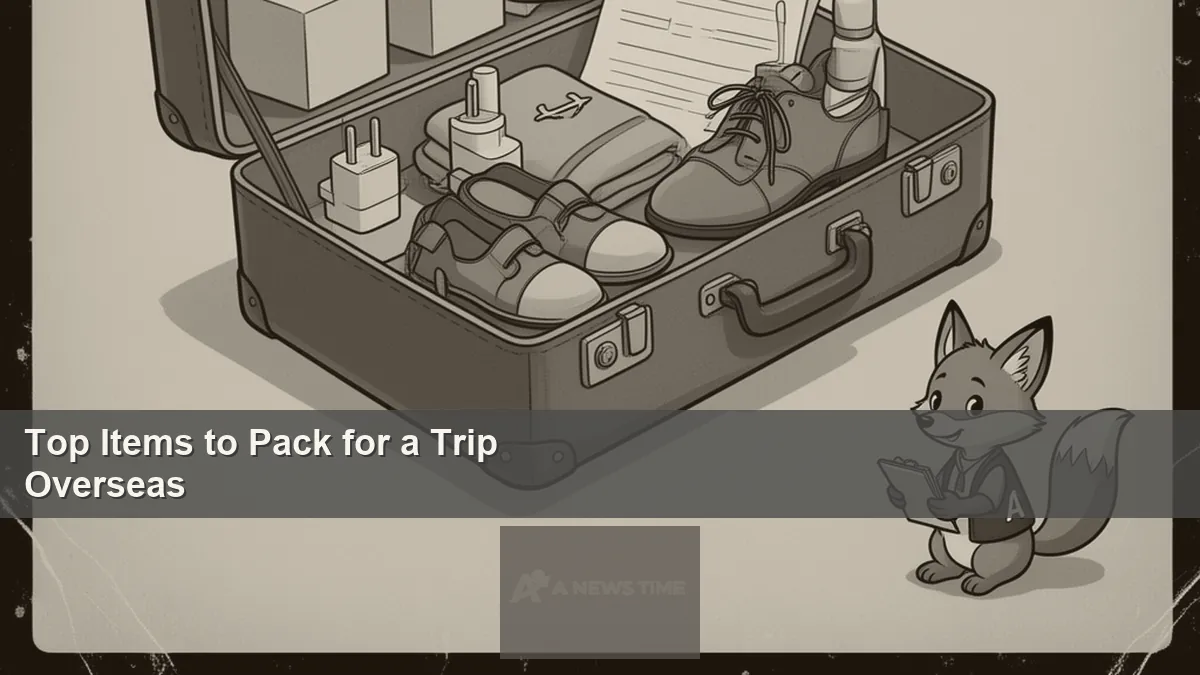
There are fifteen distinct electrical outlet configurations in use across the world's countries, and roughly a dozen voltage standards. Carrying a single universal power adapter that handles the AC outlet configurations for your destination regions is the baseline requirement for any international trip. The better universal adapters include built-in USB-A and USB-C ports alongside the plug adapter function, which reduces the number of physical items you need to carry. Anker, Belkin, and Ceptics are consistently recommended by long-haul travelers for build quality and reliability.
What a universal adapter does not do is convert voltage. Most modern consumer electronics, including laptops, phones, and camera batteries, are dual-voltage (typically labeled 100-240V), meaning they accept both the 110V standard of North America and the 220-240V standard common across Europe, Asia, and Africa. Checking the voltage label on any device before plugging it into an international outlet takes about three seconds and prevents damage. Older appliances and some hair tools are single-voltage and require a separate voltage converter, which adds weight and is often not worth carrying unless the device in question is irreplaceable.
The Transportation Security Administration permits power adapters in both carry-on and checked baggage without restriction. Budget approximately $25 to $40 for a quality universal adapter with USB ports built in.
eSIM Cards: Replacing the Physical SIM Ritual
The shift to eSIM technology has materially simplified international mobile connectivity. An eSIM is a software-based SIM card built into modern smartphones that can be loaded with a data plan without requiring a physical card swap. Most flagship smartphones released since 2021 support eSIM, including all iPhone 14 and later models, Google Pixel 7 and later, and Samsung Galaxy S22 and later devices. Travelers who previously budgeted time in arrival airports for physical SIM purchases now load a data plan before departure from a provider like Airalo, Holafly, or eSIM.me.
Pricing for international eSIM data plans has dropped significantly as the market has matured. A 5GB eSIM plan for Europe typically costs $10 to $25 depending on validity period and provider. Plans covering multiple regions simultaneously (useful for multi-country itineraries) are available from most major providers at competitive rates. The primary limitation is that eSIM data plans typically provide data only, not a local phone number, which matters for any trip where receiving calls or SMS verification codes on a local number is necessary. For most leisure travelers, data-only plans are sufficient.
Travel Insurance Documentation: Carry More Than the Policy Number
Travel insurance is one of the few categories where the gap between having it and being able to use it at the moment you need it depends entirely on preparation. Most travelers who purchase travel insurance carry a policy confirmation email and assume that is sufficient. In practice, medical providers in foreign countries often require a pre-authorization call or letter, an insurance card or equivalent document, and contact information for the 24-hour claims assistance line before treating a traveler as an insured patient rather than a self-pay patient.
Printing or saving offline copies of the policy declarations page, the claims phone number, and any pre-authorization instructions is a standard recommendation from travel medicine professionals. The U.S. State Department's Smart Traveler Enrollment Program (STEP), a free service, allows Americans traveling abroad to register their itinerary with the nearest U.S. Embassy and receive safety alerts. Enrollment takes about ten minutes and has been cited as directly useful in situations ranging from medical emergencies to natural disasters.
The travelers who have the worst experiences abroad are almost never unprepared for the travel itself. They're unprepared for the documentation requirements that activate when something goes wrong. Having your insurance policy pre-authorization instructions in your phone's offline notes has saved trips for people in ERs from Bangkok to Budapest.
Dr. Christine Stabell Benn, travel medicine researcher, University of Southern Denmark
Packing Cubes: Compression and Organization
Packing cubes are not a luxury item. They are a compression and organization system that reduces packing time, makes bag access faster, and genuinely fits more into a carry-on than loose packing achieves. The market has matured enough to have clear quality tiers: Eagle Creek's Pack-It series and Osprey's lightweight compression cubes are consistently reviewed as durable over multi-year use, while budget options from Amazon-native brands work adequately for occasional travelers who do not need the same longevity.
Compression packing cubes, which include a secondary zipper that compresses the cube to a smaller profile, are particularly useful for clothing-heavy trips. A standard set of three to four cubes in varying sizes (large, medium, and small) covers most international trip lengths from long weekend to two weeks. Allocating one cube per category (tops, bottoms, undergarments/socks) and compressing each before loading the bag reduces the bag's total volume by an amount that consistently surprises first-time users. Budget $30 to $60 for a quality three-pack.
Airline Carry-On Rules in 2026: What Has Changed
The most significant change to international carry-on rules in 2026 concerns lithium batteries and power banks. Airlines operating under International Air Transport Association (IATA) regulations continue to restrict lithium batteries above 100 watt-hours to carry-on only, prohibiting them from checked baggage entirely. Power banks, including external battery packs for phones and laptops, fall into this category. A power bank rated at 20,000mAh at 3.7V equals approximately 74Wh, which is within carry-on limits; a 30,000mAh unit exceeds 100Wh and requires airline pre-approval.
The practical implication is straightforward: check the watt-hour rating printed on any power bank before packing, and place all power banks in carry-on luggage, not checked bags. Airline gate agents and security screeners at international airports have become more consistent in flagging oversized or improperly packed batteries since several high-profile cargo incidents since 2022 drew regulatory attention to the issue. Some airlines, particularly in Southeast Asia, conduct additional checks at boarding gates for power banks specifically.
On the question of carry-on size: U.S. carriers have not fully standardized carry-on dimensions. American Airlines, Delta, and United each have slightly different maximum size specifications, and budget carriers including Spirit and Frontier have personal item and carry-on restrictions that differ meaningfully from the majors. For international travel on partner carriers, the published carry-on allowance at time of booking governs, and checking the specific operating carrier's website rather than the booking platform avoids unpleasant gate-check fees.
First Aid Kit and Medications
A compact travel first aid kit addresses the gap between needing basic wound care or over-the-counter medication in a country where pharmacy access is limited and waiting hours for assistance. The core items worth including are: adhesive bandages in multiple sizes, antiseptic wipes, blister treatment (specifically Compeed or equivalent for walking-intensive trips), oral rehydration salts, ibuprofen or acetaminophen, antihistamine, and any prescribed medications in clearly labeled original containers.
Prescription medications warrant specific attention for international travel. Many countries have different scheduling classifications for common medications, and drugs that are over-the-counter in the United States may require a prescription or be controlled substances elsewhere. Carrying a letter from a prescribing physician that describes the medication, dosage, and medical necessity is standard practice for any controlled substance crossing international borders. The letter does not guarantee entry but demonstrates good faith in the event of a customs inspection.
International Packing Checklist by Trip Type
| Item | Business Trip | Adventure/Outdoors | Beach/Leisure | Notes |
|---|---|---|---|---|
| Universal power adapter (with USB-C) | Essential | Essential | Essential | $25–$40, all regions |
| eSIM data plan (pre-loaded) | Essential | Essential | Recommended | $10–$25 for Europe; load before departure |
| Power bank (carry-on only, under 100Wh) | Essential | Essential | Recommended | Check watt-hours; never in checked bags |
| Travel insurance documents (offline) | Essential | Essential | Essential | Policy page, claims number, pre-auth instructions |
| Packing cubes (compression) | Recommended | Essential | Recommended | $30–$60 per set |
| Compact first aid kit | Recommended | Essential | Recommended | Include blister treatment for walking trips |
| Offline maps (downloaded) | Recommended | Essential | Recommended | Google Maps or Maps.me offline; works without signal |
| Passport photo copies (2–4) | Essential | Essential | Essential | Required for some visa-on-arrival countries |
| Noise-canceling headphones | Essential | Optional | Recommended | Significant quality-of-life improvement on long flights |
| Water purification (tablet or filter) | Optional | Essential | Optional | Essential for backcountry; useful in lower-infrastructure destinations |
Offline Maps and Digital Preparation
Connectivity gaps are more common than travelers anticipate, even in high-infrastructure destinations. Subway systems, rural day trips from major cities, and remote natural sites all frequently lack reliable mobile signal. Downloading offline maps for the destination region before departure costs nothing and takes a few minutes of preparation. Google Maps allows full offline map downloads by region, and Maps.me (now Organic Maps in its open-source fork) provides detailed offline mapping that includes hiking trails and points of interest not available in Google's database.
Screenshot-saving the addresses and contact information for the accommodation, nearest hospital, and the local U.S. Embassy (for American travelers) represents two minutes of preparation that has a disproportionate return in emergency situations. The State Department's STEP program enrollment is free and takes approximately ten minutes. For travelers to regions with higher advisory ratings, enrollment is particularly valuable given the embassy's capacity to make contact in the event of a serious incident.
The travelers who adapt best to disruption abroad are the ones who prepared for connectivity failure, not just connectivity. Knowing where you are and how to reach emergency services when your phone has no signal is a skill that requires about fifteen minutes of preparation at home and zero minutes of stress in the field.
Will Hatton, founder of The Broke Backpacker and long-haul travel writer
Frequently Asked Questions
Can I bring a power bank in my checked luggage on international flights?
No. Power banks and all portable lithium battery packs must travel in carry-on luggage on flights governed by IATA regulations, which covers virtually all international commercial aviation. Placing a power bank in checked baggage risks confiscation at check-in and can result in departure delays. The restriction applies regardless of the power bank's charge level. Units exceeding 100 watt-hours require airline pre-approval and are often not permitted at all.
Does an eSIM work in every country?
eSIM coverage depends on both the device and the plan provider. Most major destinations in Europe, Southeast Asia, the Americas, and East Asia have robust eSIM network coverage. Some countries with heavily regulated telecommunications sectors, including Cuba, North Korea, and a handful of others, have limited or no eSIM availability. Providers like Airalo list supported countries explicitly on their plan pages, which is worth checking before purchase for less common destinations.
How many passport copies should I carry internationally?
Carrying two to four color photocopies of the photo page of your passport is standard practice. Some visa-on-arrival countries require a physical passport photo (not a photocopy), so researching entry requirements for specific destinations before departure is essential. Digital copies saved to cloud storage and emailed to a trusted contact provide an additional layer of redundancy in the event of passport loss or theft.
What is the TSA liquid rule for international carry-on bags?
The TSA 3-1-1 rule requires all liquids, gels, aerosols, creams, and pastes in carry-on bags to be in containers of 3.4 ounces (100ml) or less, all fitting in a single quart-sized clear plastic bag, one bag per passenger. This rule applies to the outbound U.S. security checkpoint. Non-U.S. airports have equivalent rules that may vary slightly in enforcement; the 100ml per container limit is the EU and most international standard. Duty-free liquids purchased after the security checkpoint are typically permitted in sealed bags with receipts.
What medications require special documentation for international travel?
Controlled substances, injectable medications, and large quantities of prescription drugs typically require documentation when crossing international borders. A physician's letter stating the medication name, dosage, and medical necessity is the baseline requirement. Some countries maintain lists of medications that are legal elsewhere but prohibited domestically, and checking the destination country's embassy or customs website for their specific restrictions before packing is the responsible approach. The International Narcotics Control Board maintains publicly accessible country-specific guidance.