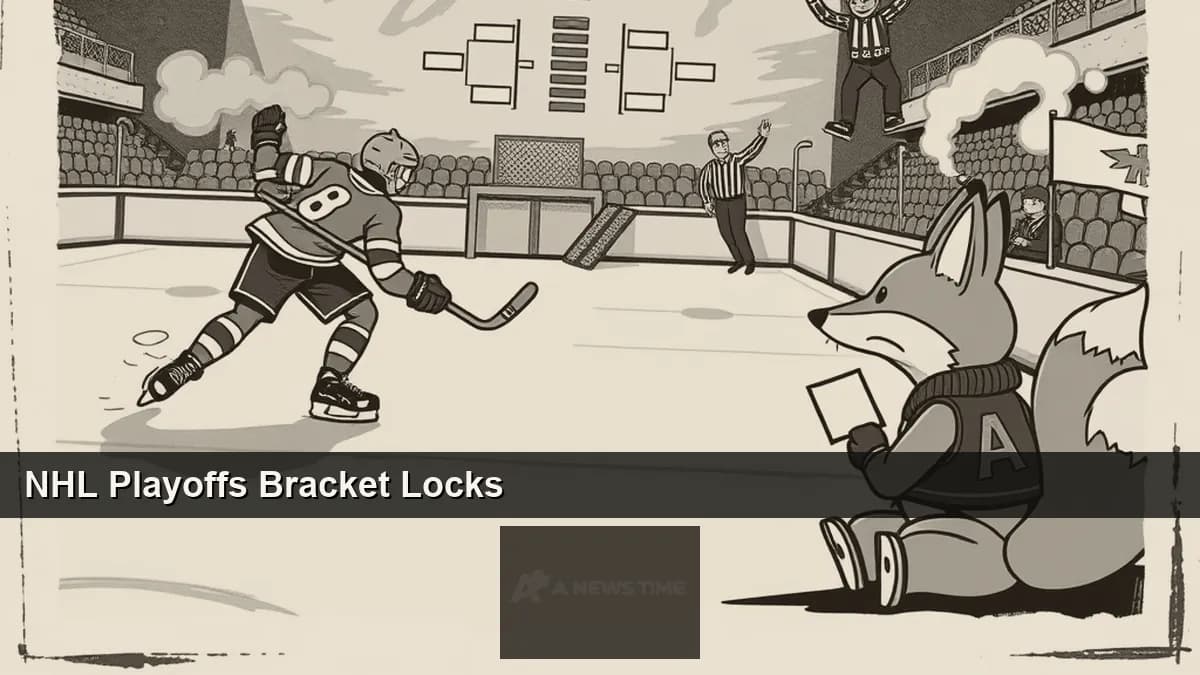
The NHL regular season closed Thursday night with the Edmonton Oilers beating the Vancouver Canucks 6-1, locking in the final piece of a 2026 Stanley Cup Playoffs bracket that begins . Sixteen teams start the postseason with the Colorado Avalanche carrying the heaviest expectations in the Western Conference and a wide-open field behind them in the East. The broadcast schedule is set across ESPN, TNT, and regional rightsholders, and for the first time in years the conversation heading into Round 1 is as much about the Buffalo Sabres ending their playoff drought as it is about which favorite has the clearest path to the final.
The Western Conference: Colorado's Path
The Avalanche open against the Los Angeles Kings in a matchup the statistical models and the markets have treated the same way. Colorado enters as a decisive favorite, with the roster's combination of established star power and depth scoring making it the consensus pick to advance, and likely to do so in short order. The Athletic's preview framed the series in plainly one-sided terms.
"Anything can happen in the playoffs, but the Avalanche are a force and are expected to make short work of the Kings."The Athletic, Avalanche vs Kings series preview, April 17, 2026
That framing is worth interrogating. The Kings have specific structural advantages the cold numbers do not fully capture. Their defensive system has been among the league's most disciplined in the second half, and they run four lines that can play against Colorado's top six without a clear exploitation mismatch. If the series runs long, it is because the Kings force the game into a lower-event style that reduces Colorado's offensive edge.
Beyond the Avalanche bracket, the Minnesota Wild enter Round 1 with an injury watch on captain and defenseman Quinn Hughes. Hughes missed a second consecutive practice Thursday with an illness. Wild head coach John Hynes said Hughes is expected to play Saturday, per a team source, but the status of the team's top defenseman is worth tracking through game day.
The East and the Sabres Story
The Buffalo Sabres ended the longest active playoff drought in North American major professional sports by clinching a postseason berth for the first time in more than a decade, and that has reshaped the emotional center of the entire Eastern Conference conversation. The Athletic's bandwagon guide named the Sabres the most compelling non-traditional playoff team in the field, and the franchise's first-round matchup will be one of the highest-rated series on television.
The broader Eastern picture is less settled than the West. There is no team in the East carrying the Avalanche's combination of roster talent and favorable matchup set. The top seeds have credible paths to the conference final, but each has at least one specific structural vulnerability that Round 1 opponents will try to exploit, whether goaltending consistency, power play efficiency, or depth beyond the top two lines.
The Bracket and the Schedule
| Conference | Key storyline | Round 1 narrative |
|---|---|---|
| West | Avalanche heavy favorite | Colorado vs Los Angeles, expected short series |
| West | Minnesota Wild Hughes watch | Captain Quinn Hughes illness, expected to play |
| East | Sabres drought ends | Buffalo in playoffs first time in over a decade |
| East | Top seeds vulnerable | No dominant favorite, wider bracket variance |
| Final seed | Oilers lock final slot | Edmonton 6-1 win over Vancouver Thursday |
The broadcast distribution spreads Round 1 across ESPN, TNT, and TBS in the U.S., with additional coverage on Sportsnet in Canada. The first-round schedule is front-loaded over Saturday and Sunday to give every bracket a window and allow the league's marquee matchups to avoid overlap. The full schedule, including dates, times, and networks, was published by The Athletic earlier in the week.
Stats That Explain the Top Seeds
The advanced numbers that matter most heading into Round 1 are expected goals percentage at five-on-five, penalty kill efficiency, and goaltending save percentage across the last 20 games. The Avalanche lead or are near the top of all three, which is the specific reason the models and the markets agree on Colorado's Cup odds. Most other conference favorites have strength in one or two of those categories without the combination.
Power play efficiency is where the most variance lives. A team that converts above 25% during the regular season often sees a meaningful drop in the playoffs as defensive structures tighten and officiating calls fewer minor penalties per game. The teams whose regular-season point totals were supported by power play conversion are the teams most likely to underperform seed expectation in Round 1.
Goaltending is the standard wild card. Every recent Stanley Cup run has featured at least one goaltender outperforming regular-season expectation for four consecutive series, and the teams with goaltenders who have done that before, or who are matched against goaltenders who showed playoff struggles last year, have structural advantages that do not show up in standings points.
The Business Around the Playoffs
The NHL playoffs continue to be one of sports broadcasting's most consistent draws relative to audience size, and the 2026 edition is arriving against a backdrop of improved U.S. regional interest in non-traditional hockey markets. The Sabres run has boosted ad-buy interest in Buffalo, and Florida, Carolina, and Nashville have continued to show the sustained local interest that the league's Sunbelt expansion strategy has bet on for two decades.
Betting futures have moved in the last week as the bracket finalized. Fox Sports' betting coverage noted that a handful of bettors hold six-figure paydays pending on specific NHL and NBA finals outcomes, the kind of positioning that typically only surfaces when a perceived favorite has faced adverse public sentiment during the regular season.
Our earlier coverage of the parallel NBA Playoffs bracket captured how the postseason landscape is shaping up across both leagues simultaneously, which is increasingly important for ad buyers and broadcast inventory planning across the two properties.
What to Watch Saturday
Three items are worth tracking on opening Saturday. First, the Hughes game-day status, which will be confirmed in morning skate availability and could change through the afternoon. Second, the Avalanche's starting lineup and whether head coach Jared Bednar rolls his lines aggressively against Los Angeles or plays a more matchup-focused style. Third, the Sabres crowd atmosphere in Buffalo, which will be a tone-setter for how the Eastern Conference's most-watched series unfolds.
The NHL regular season generated its share of narratives that will only fully resolve over the next two months. The Cup favorite and its path look settled. The sleeper teams, the goaltender surprises, and the coaching decisions that swing a series the other way are what the playoffs actually produce. Saturday is where those begin to separate.