Real estate has spent decades being primarily about two things: financial investment and shelter. In , a third dimension is asserting itself with notable force. The spaces where people live are being asked to actively extend healthy life, to serve as infrastructure for longevity, and to provide the physical and psychological resources needed to navigate a world that feels, to many of its inhabitants, increasingly precarious. The GWS, whose annual intelligence reports have reliably identified major wellness economy shifts before they reach mainstream markets, identified both longevity residences and disaster-ready design among its top trends for the year, and the underlying drivers behind both are worth examining in depth.
The two trends are distinct in their immediate focus but share a common premise: that where you live is not a passive backdrop to health but an active participant in it. A home designed to support preventive medicine and biological optimization is making a different bet about the future than one designed around resale value and square footage. A community built to function as an emergency shelter and resilience hub is making a different claim about what neighbors owe each other than one organized purely around property values and aesthetic cohesion. These are, at bottom, architectural expressions of particular views about what human life requires.
Longevity Residences: Real Estate Meets Preventive Medicine
The GWS designated longevity residences as its tenth major trend for 2026, describing a new category of residential development in which spaces are designed specifically to support longer, healthier lives. This goes considerably beyond the "wellness real estate" category that emerged in the previous decade, which largely meant amenities like on-site gyms, clean-air filtration, and proximity to green space. The longevity residence concept integrates preventive medicine, clinical diagnostics, biohacking infrastructure, and AI-driven personalization into the fabric of daily living in ways that would have been categorized as medical services a decade ago.
The most developed expressions of this concept currently operating in the United States resemble hybrid environments that sit somewhere between a luxury residential community and a medical campus. Residents have access to regular biomarker testing, metabolic health monitoring, and personalized nutrition and exercise protocols developed in response to ongoing data collection. Some communities employ on-site longevity physicians and health coaches. The AI-driven personalization component means that the recommendations evolving from this data are continuously updated rather than delivered as fixed prescriptions.
"The most significant shift is that real estate is becoming an active participant in extending healthy life rather than just providing a place to live it. The community itself is the intervention."
GWS Intelligence Report, 2026 Global Wellness Trends
The market for this kind of development is, for now, concentrated at the luxury end of the real estate spectrum. The communities attracting the most attention are priced accordingly, targeting the demographic that has the financial resources to treat their living environment as a health investment. Critics note, reasonably, that this framing risks encoding health optimization as a class privilege, available only to those with sufficient capital to buy their way into a community designed around it.
But the GWS and other analysts tracking this space argue that longevity residence features tend to migrate down-market over time, as they have in other wellness real estate categories. The on-site gym was once a luxury amenity. Building-level air filtration and water quality systems, which appeared first in premium developments, are now standard specifications in many mid-range residential buildings. The question is how long the migration takes and what gets lost or diluted in translation.
What Biohacking Infrastructure in a Home Actually Means
The term "biohacking" has accumulated enough cultural baggage to require careful unpacking. In the context of longevity residence design, it does not refer to the self-experimentation practices of extreme wellness enthusiasts but to a broader set of environmental and technological features that give residents systematic access to information about their biological state and tools to act on that information.
In practical terms, this means things like: dedicated spaces for cold immersion therapy, which has shown consistent evidence for cardiovascular and recovery benefits; red light therapy panels built into rooms rather than purchased as aftermarket devices; sleep-optimized bedroom environments with precise temperature control, blackout capability, and circadian-aligned lighting systems; and nutritional infrastructure like cooking facilities designed around longevity-focused dietary protocols rather than standard residential kitchen configurations.
The diagnostic dimension is perhaps the most significant departure from conventional residential design. Longevity communities that have attracted the most research attention embed regular testing into their residential model: quarterly blood panels that track biomarkers associated with metabolic health and disease risk, continuous glucose monitoring integration, and access to advanced imaging on a schedule determined by individual health profiles rather than by insurance coverage rules. This positions the community as a persistent health monitoring environment rather than simply a place where healthy amenities are available.
| Feature Category | Conventional Wellness Real Estate | Longevity Residence Model |
|---|---|---|
| Fitness | On-site gym, pool, yoga studio | Personalized protocols updated by ongoing biomarker data |
| Diagnostics | None, or occasional health fair | Regular blood panels, metabolic monitoring, advanced imaging access |
| Sleep environment | Blackout curtains, quality mattress | Temperature-controlled, circadian-optimized, sensor-integrated bedroom |
| Nutrition | Healthy food options in common areas | Personalized dietary protocols, kitchen infrastructure designed accordingly |
| Medical access | Proximity to healthcare facilities | On-site longevity physicians, AI-driven health coaching, preventive medicine programs |
The business model driving this development is, in part, a response to the limitations of the conventional healthcare system. Preventive medicine, the kind of systematic, continuous monitoring and intervention that longevity researchers argue is most effective at extending healthspan, is poorly served by insurance-based healthcare, which is oriented primarily toward treating disease after it has been diagnosed. Longevity communities are, among other things, an end-run around that structural limitation, delivering preventive services through a real estate subscription model rather than through the healthcare system.
Ready Is the New Well: Disaster-Readiness as Daily Practice
The GWS's fifth major trend for 2026 represents a departure from the more obviously health-optimizing direction of longevity residences, but it shares the same underlying premise about environmental design as an active health intervention. "Ready Is the New Well" is how the GWS framed what it identified as the next evolution of everyday resilience: a shift in which disaster readiness is not a niche concern for preppers and survivalists but a mainstream wellness practice.
The trend encompasses several overlapping developments: gyms being designed to function as emergency shelters; wellness retreats offering preparedness training alongside yoga and meditation; surging consumer demand for disaster-proof architectural features; and a broader cultural shift in which the capacity to function and support others during an emergency is being incorporated into mainstream definitions of health and fitness.
Forbes' annual "Wellbeing Ins and Outs" feature for 2026 noted that wellness is getting "quieter and more practical," a phrase that captures something real about the current moment. The aspirational, aesthetically polished wellness culture of the mid-2020s, focused on premium products, elaborate routines, and visible self-improvement, is giving way to something more functional and less performative. Preparedness is practical in the most literal sense: it is the capacity to actually do something useful when conditions deteriorate.
Elk Marketing's research into how Americans are rethinking wellness resolutions in found a notable shift toward practical, outcomes-oriented wellness goals over aspirational or appearance-focused ones. Participants in their surveys described wanting to be stronger, more capable, and more useful in a crisis, framings that map directly onto the preparedness wellness trend the GWS identified. The cultural moment that is producing longevity residences is also producing a renewed interest in resilience as a physical and communal virtue.
Disaster-Proof Architecture: What the Demand Actually Looks Like
The demand for disaster-proof architectural features is being driven by a combination of direct experience with extreme weather events, anxiety about geopolitical instability, and a growing recognition that the built environment's conventional assumptions about what constitutes adequate construction may no longer be appropriate for the conditions that climate projections describe.
Architects and builders responding to this demand are working with a range of features that vary in scale and cost. At the residential level, this includes passive survivability features: homes designed to remain habitable without active heating and cooling systems for extended periods by maximizing thermal mass, insulation, and natural ventilation. Backup power systems integrated at the design stage rather than added as afterthoughts. Water storage and filtration capacity built into the building's infrastructure. Structural reinforcement against specific hazards relevant to the home's location, whether that means seismic design in earthquake-prone areas, wind-resistant construction in hurricane corridors, or flood-adaptive foundations in areas with rising water table risk.
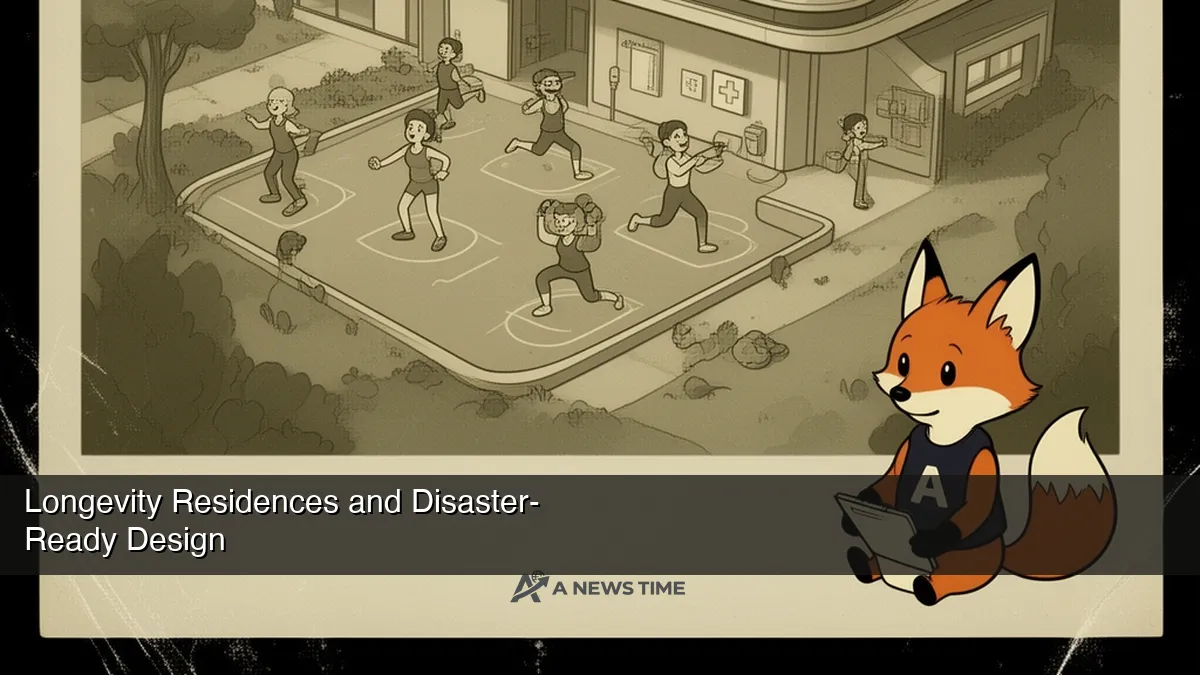
At the community scale, disaster-proof design involves thinking about how multiple buildings can function as an interconnected resilience system during an emergency. The gym-as-emergency-shelter concept the GWS identified is an expression of this: a space designed with the dual capacity to serve its primary recreational function under normal conditions and to house, feed, and coordinate community members during a disruption. This requires thinking about things like backup power with sufficient capacity to run essential systems, water storage, emergency supply staging areas, and communication infrastructure that does not depend on the same networks that disasters tend to disrupt.
Deloitte's 2026 analysis of higher education trends found a parallel practical wellness focus emerging in campus design, with universities increasingly thinking about how their facilities can serve both their academic missions and their emergency management responsibilities. The convergence of this thinking across residential, commercial, educational, and community facility design suggests that disaster-ready design is indeed becoming a mainstream architectural consideration rather than a specialty niche.
The Cultural Logic Behind Both Trends
What connects longevity residences and disaster-ready design, beyond their shared inclusion in the GWS's 2026 trend report, is a common orientation toward the future. Both represent a willingness to make significant upfront investments, in construction, in real estate premiums, in ongoing services, based on projections about what the next decades of life will require. Both reflect a growing conviction that the built environment has been underperforming as a health and resilience resource, and that closing that gap requires intentional design rather than lucky happenstance.
There is also a shared skepticism of institutional systems. Longevity communities are, in part, a workaround for a healthcare system that does a poor job of delivering preventive medicine at scale. Disaster-ready design is, in part, a response to a recognition that government emergency response has limits and that communities and individuals who can manage the first hours and days of a disruption independently create better outcomes for everyone. Forbes' observation that wellness is "getting quieter and more practical" applies to both: these are serious, structural responses to serious, structural problems, not wellness aesthetics.
The connection between these trends and the broader real estate market deserves consideration. The 2026 housing market is operating under considerable financial pressure, with elevated mortgage rates and constrained supply creating affordability challenges across the country. The premium features of longevity residences and disaster-proof construction add to already elevated costs. The challenge for advocates of both trends is making the case that these features belong in standard construction, not just in premium developments.
That case is easier to make than it once was. The research on the long-term costs of poor health and the economic impact of disaster damage is sufficiently robust that the financial logic of upfront investment in longevity and resilience features is increasingly defensible. The GWS frames it this way: in a world where chronic disease and climate disruption are both demonstrably worsening, the most expensive home is one that does nothing to address either.
The wellness industry is, of course, not a neutral observer here. There are significant commercial interests aligned with both trends, from real estate developers and construction companies to health technology firms and emergency preparedness product suppliers. The usual caution applies about distinguishing between genuine wellness innovation and marketing that appropriates wellness language to sell things. But the underlying forces driving both longevity residences and disaster-ready design, aging populations, climate instability, healthcare system limitations, and a growing appetite for practical rather than aspirational wellness, are real regardless of how they are being commercialized.
The homes being designed and built in that take these trends seriously will, if the trajectory holds, look less like the passive containers for life that most housing has been and more like active participants in the biological and social project of living well for a long time. Whether that vision becomes available only to those who can afford premium real estate or diffuses broadly enough to reshape mainstream residential design is the more consequential question. The architecture of longevity and resilience is most valuable precisely when it reaches the people who have the fewest other options for securing either. That challenge, more than any design trend, is where the real work remains.
Frequently Asked Questions
What is a longevity residence?
A longevity residence is a new category of residential development, identified by the Global Wellness Summit as a major 2026 trend, in which the built environment is designed to actively support longer, healthier lives. Features include integrated preventive medicine services, regular biomarker diagnostics, AI-driven health personalization, sleep-optimized environments, and biohacking infrastructure like cold immersion and red light therapy spaces.
How does disaster-ready design differ from conventional construction?
Disaster-ready design incorporates features that allow a building or community to remain functional during emergencies: passive survivability systems, backup power, integrated water storage and filtration, structural reinforcement relevant to local hazard profiles, and community-level capacity to serve as emergency shelter. It treats resilience as a design specification rather than an afterthought.
Why is the Global Wellness Summit describing preparedness as a wellness trend?
The GWS frames its "Ready Is the New Well" trend as an evolution of everyday resilience. Research and consumer surveys indicate that Americans are shifting toward practical, outcomes-oriented wellness goals, including the capacity to function usefully in a crisis. Wellness retreats are incorporating preparedness training, gyms are being designed as emergency shelters, and demand for disaster-proof architecture is rising.
Are longevity residences only for wealthy people?
Currently, the most developed longevity residence communities are priced at the luxury end of the real estate market. However, the GWS and market analysts note that premium wellness real estate features have historically migrated to mainstream residential construction over time. The challenge is accelerating that diffusion so that longevity-supporting design becomes a standard rather than a premium specification.
How is the 2026 housing market affecting the adoption of these design trends?
Elevated mortgage rates and constrained housing supply are creating affordability pressure across the country, making the premium costs associated with longevity and disaster-ready features more difficult to absorb in standard residential construction. Advocates argue that the long-term cost savings from better health outcomes and reduced disaster damage justify the upfront investment, but making that case in a financially stressed market is challenging.