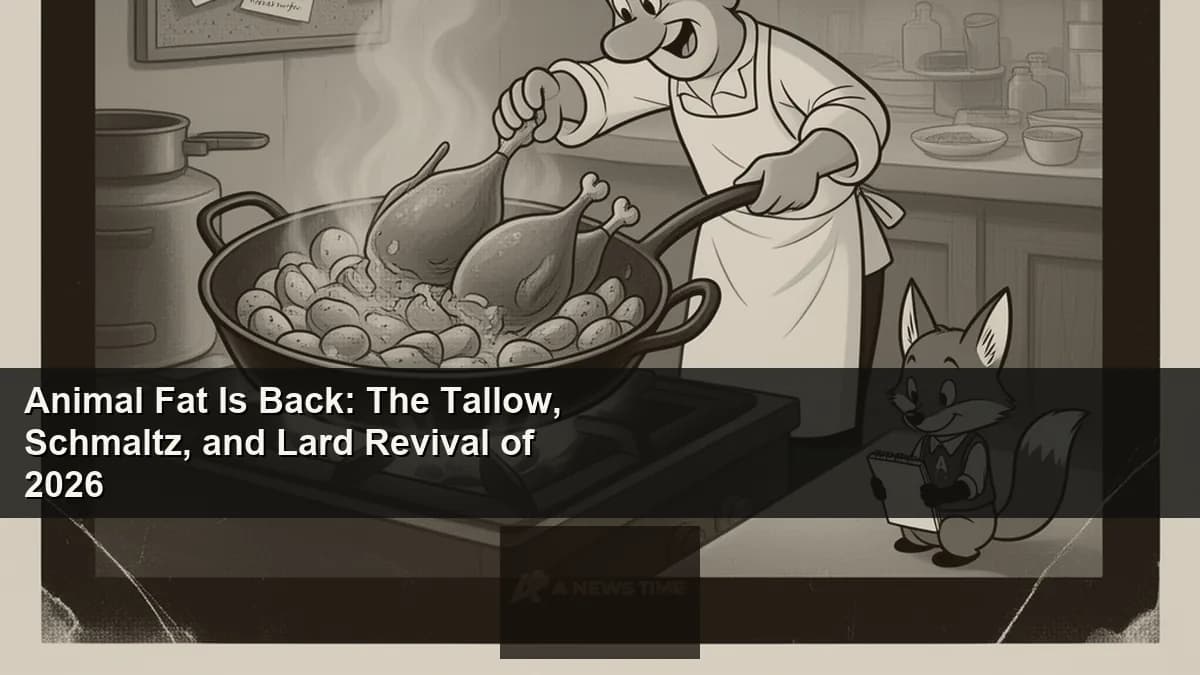
Scott Campbell, the executive chef at Butcher and Banker in New York City, has a direct way of explaining the animal fat revival to anyone who asks. "A little duck fat or tallow, it's like having the 64-color box of crayons," he told US Foods' Food Fanatics Magazine. "There's nothing it can't do." The metaphor captures something specific about why animal fats have returned to professional kitchens after decades of being treated as dietary villains: the flavor and textural effects they produce are qualitatively different from plant-based oils, and the culinary community has decided, with the encouragement of changing nutritional science and shifting cultural values, to stop pretending otherwise.
The 2026 version of this story is not simply the cyclical rehabilitation of an ingredient that fell out of fashion. It is happening at the intersection of several distinct cultural currents: carnivore diet enthusiasts crossing over into mainstream cooking, the Robert F. Kennedy Jr.-driven seed oil skepticism that has entered the political conversation around food, nose-to-tail cooking values that treat rendered animal fats as waste-reduction rather than indulgence, and a genuine culinary movement that frames traditional cooking fats as both more flavorful and more culturally authentic than the industrial oils that displaced them in the twentieth century.
What the Fats Actually Are: A Practical Guide
The animal fat category includes several distinct products with different flavor profiles, smoke points, and culinary applications. Understanding the differences matters for understanding what specific trend is actually happening in restaurants and home kitchens.
| Fat | Animal Source | Smoke Point | Flavor Profile | Classic Uses |
|---|---|---|---|---|
| Beef Tallow | Beef (kidney fat rendered) | 400°F / 204°C | Rich, beefy, savory | Frying, pastry, confit |
| Lard | Pork fat (rendered) | 370°F / 188°C | Mild, slightly porcine | Pie crust, tamales, frying |
| Schmaltz | Chicken or goose fat | 375°F / 190°C | Savory, poultry-forward | Matzo ball soup, sautéing |
| Duck Fat | Duck (rendered) | 375°F / 190°C | Rich, gamey, complex | Confit, roast potatoes, sautéing |
| Bone Marrow Fat | Beef bones | Not typically for frying | Buttery, umami-intense | Finishing dishes, toast spreads |
Beef tallow is the current frontrunner in the restaurant adoption of animal fats. McDonald's famously fried its French fries in beef tallow until 1990, when it switched to vegetable shortening and eventually to a canola-corn-soybean oil blend following pressure from health advocacy groups. The nostalgia around tallow-fried potatoes is genuine and culinary professionals have documented a measurable flavor difference, primarily a richer, more complex crust formation that vegetable oils do not replicate. Several fast casual chains have begun marketing their tallow-fried menu items explicitly, positioning the fat as an authenticity signal rather than hiding it.
Duck fat has the longest uninterrupted presence in professional kitchens, particularly in French cuisine where confit techniques have always depended on rendering and reusing duck fat at relatively low temperatures over extended cooking times. The technique produces textures, particularly in protein and vegetables, that cannot be achieved through other methods. Duck fat potatoes, where par-cooked potatoes are roasted in duck fat at high heat, have been a fixture on gastropub and upscale casual menus for years and represent the accessible entry point through which many diners encounter animal fats in a positive context.
The Seed Oil Controversy and Its Culinary Impact
The most politically charged element of the animal fat revival is its entanglement with the seed oil controversy. Critics of industrial seed oils, including canola, soybean, sunflower, and corn oil, argue that their high omega-6 polyunsaturated fat content and the high-heat extraction and refining processes used to produce them at industrial scale create oxidation products that are harmful to human health at the population level. The science on this question is genuinely contested: mainstream nutritional bodies have not endorsed the seed oil skepticism, while a growing body of researchers and clinicians have argued that the evidence for harm is more substantial than official guidelines acknowledge.
Robert F. Kennedy Jr.'s appointment to a prominent federal health role brought seed oil criticism into the political mainstream in a way that nutritional debates rarely achieve. His public statements framing seed oils as a contributor to chronic disease and animal fats as traditional foods with better health profiles have given the culinary rehabilitation of tallow and lard a political valence that was not there before. Whether that political association helps or complicates the food trend depends entirely on the diner's own political orientation, a dynamic that chefs and restaurant operators are navigating with varying degrees of caution.
The more culinarily grounded argument for animal fats does not need the health controversy to stand on its own terms. Chefs who have been using duck fat and lard throughout their careers did not stop because of seed oil concerns; they continued because the flavor and textural results were worth the higher ingredient cost and the slightly increased preparation complexity. The current moment is better understood as permission rather than discovery: ingredients that were being used by serious cooks anyway are now getting menu real estate and marketing support that they were previously denied by a broader culture that had decided fat was dangerous.
Nose-to-Tail Cooking and the Waste Reduction Angle
The animal fat revival has a more straightforward ethical framing in its connection to nose-to-tail cooking philosophy, the culinary movement that treats using every part of an animal as both a flavor imperative and an ethical responsibility. When a restaurant or home cook roasts a chicken, the rendered fat in the pan is schmaltz: a byproduct with genuine flavor that can be preserved and used, or discarded. The shift toward treating that fat as an ingredient rather than waste aligns with broader sustainability values around food production that have gained traction across the culinary world.
Whole Foods Market's inclusion of animal fats in its annual food trend predictions for 2026 frames the trend explicitly around "nose-to-tail values and customers supporting traditional preparation methods." The retail context matters: tins and jars of rendered tallow, duck fat, and chicken schmaltz are now available in mainstream grocery stores rather than exclusively through specialty butchers, reflecting a supply chain response to demand that was not there five years ago.
Datassential, the food industry research firm, has documented the trend in its 2026 menu analysis: "Restaurants have been trading in traditional oils for tallow to elevate everything from french fries to pastries." The menu penetration data shows tallow specifically growing in visibility on upscale casual, steakhouse, and farm-to-table menus at a rate that exceeds what typical ingredient trends achieve over similar time periods.
The Texture Obsession and Why Animal Fats Win
Beyond flavor, the texture argument for animal fats is perhaps the most compelling for chefs who must justify their ingredient choices on practical grounds. The specific fat composition of tallow, schmaltz, and lard, with higher saturated fat content and different crystalline structures than polyunsaturated vegetable oils, produces textural effects that have no direct vegetable oil equivalent.
Pie crust made with lard produces layers through a different mechanism than butter or vegetable shortening: the fat's specific melting point relative to the oven temperature creates steam pockets that form the flaky structure. Tamales in Mexican tradition depend on lard for the masa's specific texture; commercial substitutions with vegetable shortening produce a different and generally considered inferior result by practitioners of traditional tamale making. These are not small aesthetic preferences but fundamental textural differences that practitioners document with precision.
The culinary education implications are worth noting. Cooking schools that moved away from animal fat instruction in the 1990s and 2000s have been gradually reintroducing them into curriculum, not as a reaction to any specific cultural moment but as a recognition that a complete culinary education requires understanding fats that represent centuries of accumulated cooking knowledge. Students learning to make French pastry, German Schmalzbrot, Jewish deli cuisine, or Mexican traditional cooking encounter animal fats as essential rather than optional ingredients, and the skills involved in rendering and using them are worth preserving.
The Restaurant Menu Reality in 2026
The practical reality on restaurant menus in 2026 is that animal fat adoption is concentrated in specific segments. Fine dining and upscale casual operations that have always used duck fat and other premium fats are expanding their explicit menu labeling of those fats, treating the ingredient as a positive differentiator rather than something to leave unmentioned. Fast casual operations that target health-conscious but carnivore-diet-adjacent consumers are introducing tallow frying as a premium alternative to standard vegetable oil.
The mainstream fast food and family casual segments are moving more cautiously, aware that the health associations of animal fats remain negative in the perception of older consumers even as they become positive signals for younger demographics influenced by carnivore and ancestral eating communities. The marketing challenge is real: a brand that pivots too hard toward animal fat positioning risks alienating customers who have been conditioned for decades to associate saturated fat with cardiovascular risk.
"Fat was a little scary. After some nutritionists declared it as verboten, many diners shunned it. But fat never disappeared from professional kitchens. We just stopped talking about it."
Scott Campbell, Executive Chef, Butcher and Banker, New York City, Food Fanatics Magazine
The trajectory for 2026 and beyond is one of continued normalization rather than explosive growth. Animal fats are not going to displace vegetable oils on most commercial cooking operations, where cost, stability, and consistency favor the industrial options. But the niche of operations and home cooks who treat cooking fat as a quality ingredient rather than a commodity is expanding, and the availability, marketing, and cultural acceptance of animal fats as premium cooking ingredients has shifted in a direction that is unlikely to reverse.