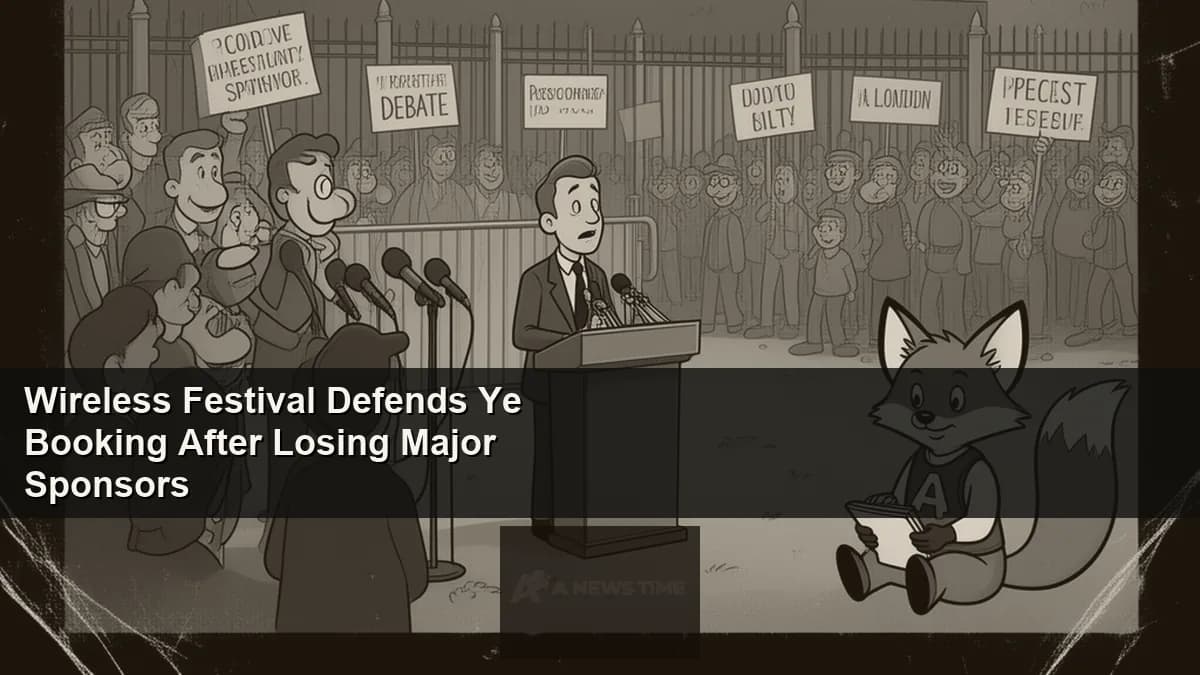
On , Wireless Festival found itself at the center of one of the most combustible debates in British live music history: whether a promoter that markets itself as a culture-first institution can separate a performer's catalogue from the performer's stated worldview. The answer from Festival Republic's managing director Melvin Benn is yes. The answer from Pepsi, PayPal, Diageo, and AB InBev is a firm no. And the answer from the UK government is still being formulated.
Ye, the artist formerly known as Kanye West, is booked to headline the edition of Wireless at Finsbury Park in London. The announcement, which drew immediate backlash given Ye's years of documented antisemitic statements, has now triggered the largest commercial exodus from a UK music festival in recent memory.
The Sponsors Who Left and Why It Matters
The list of companies that have ended their Wireless partnerships reads like a festival sponsorship hall of fame. Pepsi, which had backed the festival for over a decade, confirmed it would not renew its agreement. PayPal, a payments partner prominently featured in ticketing infrastructure, also withdrew. Diageo, the spirits conglomerate behind Guinness, Johnnie Walker, and Smirnoff, pulled out, as did AB InBev, the brewing giant whose portfolio includes Budweiser, Corona, and Stella Artois.
For context on what this withdrawal represents in commercial terms, major festival sponsorships at events of Wireless's scale typically account for between 20 and 35 percent of total event revenue, according to industry estimates from the UK Music industry body. Losing all four simultaneously is not a routine negotiating dispute; it is a structural revenue crisis that requires either replacement sponsors, a booking reversal, or the kind of sustained public argument Benn has chosen to make.
| Sponsor | Industry | Relationship Length | Status |
|---|---|---|---|
| Pepsi | Beverages | 10+ years | Withdrawn |
| PayPal | Financial Services / Payments | Multi-year | Withdrawn |
| Diageo | Alcohol / Spirits | Multi-year | Withdrawn |
| AB InBev (Budweiser/Corona) | Alcohol / Beer | Multi-year | Withdrawn |
None of the four companies issued statements calling for the booking to be cancelled outright. Their actions were framed as business decisions tied to brand values, which in practice amounts to the same outcome: a commercially significant vote of no-confidence in the Wireless position.
Melvin Benn's Defense: "Anti-Fascist to My Core"
Benn's public response to the withdrawal has been notably unusual for a festival promoter: extended, personal, and theologically specific. Speaking to media in the days following the sponsor departures, Benn described himself as "deeply committed anti-fascist" and disclosed that he had personally lived on a kibbutz that was among the communities attacked on . He used the disclosure not to underline his own suffering but to preempt accusations that he is indifferent to antisemitism.
"What Ye has said about Jews and Hitler is abhorrent. I am taking him at his word. But he has a legal right to come into this country and perform, and we are not giving him a platform to extol opinion. We are giving him a platform to perform songs."
Melvin Benn, Managing Director, Festival Republic, speaking to UK media outlets
Benn's framing rests on a distinction that is philosophically defensible and practically contested: that a music stage is not a pulpit, and that an artist's catalogue can be evaluated independently of their public statements. He invoked the language of "forgiveness and giving people a second chance," a framework that positions the Wireless booking not as an endorsement of Ye's ideology but as a conditional re-entry into public life through the specific medium of performance.
The argument has a long, complicated history in the entertainment industry. It echoes debates about whether to stream the work of artists with serious legal or moral accusations against them, whether to broadcast classic films with problematic origins, and whether artistic legacy operates independently of the artist's character. It is a question the music industry has never fully resolved, and Wireless is now at its epicenter.
Ye's Track Record: What the Sponsors Are Reacting To
It is worth being specific about the conduct that triggered this chain of events, because "controversy" is too soft a word for what the record shows.
Ye's pattern of antisemitic public statements escalated sharply in late 2022. In interviews and social media posts, he called for violence against Jewish people, described Hitler as a figure worthy of admiration, wore shirts featuring the swastika symbol on a promotional photo shoot, and released a track titled "Heil Hitler" that was subsequently banned from all major streaming platforms. The song was pulled by Spotify, Apple Music, and YouTube within hours of upload for violating hate speech policies.
The commercial consequences were significant at the time. Adidas terminated its Yeezy partnership, ending a deal that had generated an estimated $1.5 billion in annual revenue for the brand. Balenciaga ended its relationship. Creative Artists Agency (CAA) dropped him from representation. The Gap ended its Yeezy Gap collaboration. The scope of those departures was without precedent for an artist at Ye's commercial level.
- Adidas: terminated Yeezy partnership (est. $1.5B annual revenue)
- Balenciaga: ended brand relationship
- CAA: dropped representation
- The Gap: ended Yeezy Gap collaboration
- All major streaming platforms: banned "Heil Hitler" track
- Pepsi: withdrew Wireless Festival sponsorship (10+ year partnership)
- PayPal, Diageo, AB InBev: withdrew Wireless Festival partnerships
In , Ye published a statement in the Wall Street Journal that read: "I am not a Nazi or an antisemite." The statement cited his bipolar disorder diagnosis as context for his past behavior. It did not include specific retractions of the individual statements made. Jewish advocacy organizations issued mixed responses; some acknowledged the apology as a first step while others noted the absence of specific accountability for individual statements.
This is the record Benn is navigating when he uses the word "abhorrent" about Ye's statements in one breath and defends the booking in the next.
UK Government Response: Entry Review Underway
The political dimension of the story escalated when Prime Minister Keir Starmer publicly condemned the booking. Starmer, whose Labour government has positioned itself as a firm opponent of antisemitism following the party's own turbulent reckoning with the issue under previous leadership, called the decision wrong. His condemnation was followed by confirmation from government ministers that they are actively reviewing whether Ye meets the entry requirements for permission to travel to the United Kingdom.
The UK operates a visa and entry clearance framework that includes powers to deny entry on grounds including character and conduct. Previous applications of this power in entertainment contexts have been rare and have typically involved criminal convictions, which Ye does not have. A denial based solely on public statements, without criminal proceedings, would be legally novel and politically complex.
The review is ongoing. If Ye is denied entry, the booking becomes moot regardless of Wireless's position. If he is permitted entry, Wireless will face the festival itself with a significantly diminished sponsorship portfolio and a headline act performing under extraordinary public scrutiny.
Benn's framing that Ye "has a legal right to come into the country and perform" presupposes a positive entry decision, which is not yet confirmed.
The Comeback That Makes This More Complicated
What makes the Wireless situation structurally different from a straightforward protest-the-booking story is that audiences have been showing up. In the months following Ye's January apology and a series of comeback performances in the United States and Europe, ticket sales for events featuring his name have demonstrated that a significant portion of his fanbase either accepts his apology, separates the music from the man, or holds neither position with particular conviction.
This creates a commercial logic that Benn is implicitly relying on: that the audience demand for a Ye headline set is real and substantial enough to offset both the sponsor withdrawals and the political pressure. Live music economics are ultimately driven by ticket revenue, and if 90,000 people at Finsbury Park are willing to pay to see Ye perform, the event becomes financially viable with or without Pepsi activations in the beer garden.
The question is whether the festival's long-term brand equity survives a decision that has now been condemned by the country's Prime Minister and resulted in the departure of four major commercial partners. Wireless has built its identity as a prestige urban music festival, a platform for the culture it serves. The Ye booking is now a test of whether that identity is durable enough to absorb the damage, or fragile enough to be defined by this moment.
For readers interested in how the broader live music industry is navigating questions of scale and market power, our coverage of the Live Nation antitrust trial examines how the industry's concentrated ownership structure shapes decisions exactly like this one. And for context on how artists and labels have been managing reputational crises through the digital landscape, our report on Sony's removal of 135,000 AI deepfakes illustrates how completely the terms of artistic control have shifted.
What Happens at a Festival When the Headliner Is the Controversy
Wireless 2026 is still months away, and multiple scenarios remain plausible. The government review could result in an entry denial, ending the booking by external decision. Sponsors could be replaced, partially neutralizing the commercial damage. Benn's defense could persuade other cultural figures to publicly support the "music not ideology" framing, shifting the public conversation. Or the controversy could continue escalating through summer, making every other act on the Wireless lineup a decision about whether to perform on the same stage.
That last point is underappreciated in the current coverage. Festival headliners define the event in the public imagination, but the full lineup includes dozens of artists. Each of those bookings now carries a secondary question: how does appearing on the Wireless stage in read given the context of the top of the bill?
The music industry's relationship with Ye has never been clean. Even before 2022, his public conduct generated regular cycles of crisis and rehabilitation. What is different now is the specificity and severity of the statements, the documented commercial consequences, and the involvement of a national government. Festival Republic is not navigating a social media news cycle; it is navigating a policy process and a commercial crisis simultaneously.
Benn's "second chances" argument is one the entertainment industry makes regularly and believes genuinely. Whether it holds here, at this specific intersection of this artist and this moment, is something Finsbury Park will answer sometime in July.
Frequently Asked Questions
Why is Wireless Festival keeping Ye on the lineup despite the sponsor pullouts?
Festival Republic managing director Melvin Benn has argued that Ye's legal right to enter the UK and perform music should be separated from his public statements. Benn called those statements "abhorrent" but drew a distinction between giving an artist a platform to express opinions versus a platform to perform songs.
Which sponsors withdrew from Wireless Festival over the Ye booking?
Four major sponsors withdrew: Pepsi, which had partnered with Wireless for over a decade; PayPal; Diageo (the spirits company behind Guinness and Smirnoff); and AB InBev, the brewing conglomerate behind Budweiser, Corona, and Stella Artois.
Could Ye be banned from entering the UK?
UK government ministers confirmed they are reviewing Ye's permission to enter the country. The UK has powers to deny entry on grounds of character and conduct. However, using those powers based solely on public statements, without criminal convictions, would be legally novel and remains unresolved as of publication.
What antisemitic statements has Ye made that triggered this response?
Ye made a series of documented antisemitic statements beginning in late 2022, including expressing admiration for Hitler, wearing swastika imagery in promotional materials, and releasing a track titled "Heil Hitler" that was banned by all major streaming platforms. In January 2026, he published a statement in the Wall Street Journal stating he is "not a Nazi or an antisemite" and cited his bipolar disorder diagnosis.
Has Ye performed publicly since the 2022 controversy?
Yes. Following his January 2026 apology, Ye completed a series of comeback performances in the United States and Europe. Ticket demand for those events suggested a significant portion of his audience continues to attend his performances despite the controversy.