The OECD published its Digital Education Outlook 2026 on , and one finding ran through the entire 280-page report like a fault line: generative AI reliably improves the outputs students produce, but it does not reliably improve what they learn. The distinction matters more than it might initially appear. An educational system that teaches students to produce AI-assisted work without developing the underlying competencies is not an educational system that is working. It is an educational system that is producing a performance that disappears the moment the tool is removed.
The OECD's findings do not argue that generative AI has no place in education. They argue something considerably more specific and considerably more useful: that the difference between generative AI deployed with pedagogical intent and generative AI deployed without it is the difference between a tool that builds lasting capability and a tool that substitutes for it. That distinction is not widely understood in the institutions making decisions right now about how to integrate AI into classrooms, curricula, and assessment systems.
The Performance-Learning Gap
The report's most striking evidence concerns what happens when generative AI access is removed. Across a set of studies the OECD analyzed, students who used general-purpose generative AI tools during their coursework produced measurably better written outputs while doing so. Their essays were more organized, their arguments more developed, their prose more polished. In controlled assessments where AI access was removed, the improvement largely vanished. In some cases, students who had relied heavily on AI assistance during their coursework performed below where they had started, suggesting that the AI use had crowded out the practice they would otherwise have been doing.
The OECD framed this as the performance-learning gap. Performance, what a student produces, can be elevated by AI assistance. Learning, what a student can do independently after instruction, is a different outcome, one that requires engagement with difficulty, repeated retrieval practice, and the kind of productive struggle that AI assistance, applied without pedagogical intent, tends to eliminate rather than facilitate.
The gap is not new in education research. Calculators and spell-checkers produced versions of the same debate in earlier decades. What is new is the scale and depth of the substitution that generative AI enables. A calculator substitutes for arithmetic computation. Generative AI can substitute for reasoning, synthesis, argumentation, and expression — the cognitive activities that are, in the view of most educators and cognitive scientists, precisely the activities that education is supposed to develop.
"The evidence we reviewed consistently shows that generative AI improves what students produce when they have access to it. The evidence on whether it improves what students can do without it is considerably less consistent, and in some contexts it points in the opposite direction. That asymmetry is what educators and policymakers need to reckon with."
OECD Digital Education Outlook 2026, Chapter 4 synthesis
Where AI Does Produce Real Learning Gains
The report's finding about the performance-learning gap is not the whole picture, and the OECD was careful not to present it as a simple condemnation of AI in education. The evidence also shows, in consistent and reproducible ways, that generative AI deployed with explicit pedagogical intent produces different and substantially better outcomes. The question is what distinguishes pedagogically intentional AI use from the general-purpose variety.
The OECD identified three markers of pedagogically intentional AI deployment. First, the AI is designed or configured to promote student reasoning rather than replace it: asking questions rather than providing answers, surfacing gaps in student reasoning rather than filling them, and requiring students to explain their thinking before receiving further guidance. Second, the AI use is integrated with non-AI assessment that measures the same competencies, creating accountability for learning and not just for output quality. Third, teachers are actively involved in designing how students use AI, rather than simply permitting or prohibiting it.
When these conditions are met, the outcomes change. Students in programs using pedagogically intentional AI showed stronger argumentation skills on non-AI assessments than comparison groups. The gains were most pronounced among students who had entered the program with weaker baseline writing and reasoning skills, the population that arguably has the most to gain from well-designed educational intervention. The report described this as the pedagogical intent premium: the learning benefit that accrues when AI is used as a teaching tool rather than a production tool.
The finding has direct implications for the current institutional debates about AI in education, which have largely been structured as a choice between permitting and prohibiting. The OECD's evidence suggests that the choice between those two options misses the more important variable, which is how AI is deployed, not whether it is deployed at all.
Intelligent Tutoring Systems and the Digital Pedagogical Agent
One of the most technically significant sections of the OECD report concerns ITS, the category of educational software that has been building toward the capabilities that generative AI now makes available. Classical intelligent tutoring systems used rule-based models of student knowledge and learning pathways to provide adaptive instruction. They were effective for well-defined skill domains where correct and incorrect responses could be clearly specified. They were limited in their ability to handle open-ended reasoning, creative work, or the kind of dialogic exchange that produces deeper conceptual understanding.
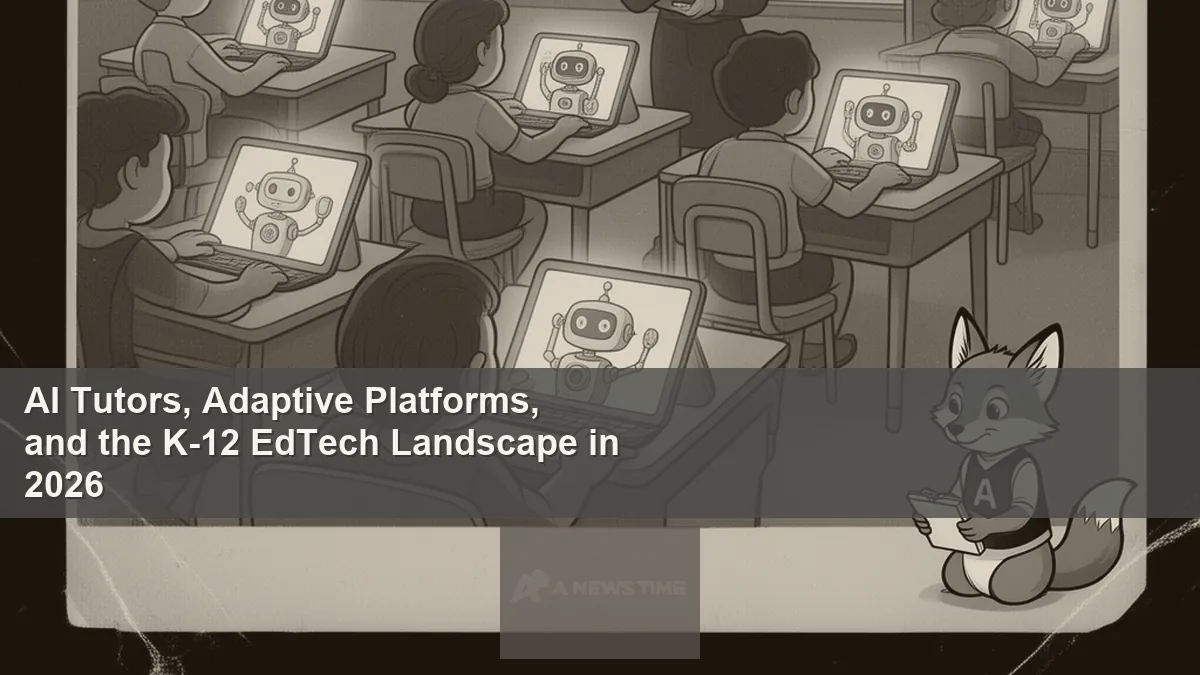
Generative AI changes the capability boundary of intelligent tutoring systems dramatically. The OECD report described the emerging category as digital pedagogical agents: AI systems that can engage in substantive dialogue about complex topics, respond to partially formed ideas, ask probing questions, and maintain a model of the student's reasoning development over time. The difference between a rule-based ITS and a generative AI pedagogical agent is roughly the difference between a software program and a patient, knowledgeable tutor who has read everything, remembers every prior conversation, and can adapt to an unlimited range of student responses in real time.
The impact data for these systems is early but notable. The OECD cited studies showing that low-performing students supported by educational generative AI, as opposed to general-purpose generative AI, achieved gains of approximately 9 percentage points on standardized assessments compared to comparable students without AI support. The gains were concentrated in the students who would otherwise have had the least access to individualized instruction, the students whose schools lack the resources for small-group or one-on-one tutoring, and who have historically been the most underserved by educational technology that assumes a level of self-direction that under-resourced students often have not yet developed.
The implication for educational equity is significant. High-quality tutoring has always been among the most effective educational interventions available, and it has always been among the most unequally distributed. If generative AI pedagogical agents can deliver a meaningful fraction of the benefit of individualized tutoring at scale, the equity implications are substantial. The OECD was careful to note that the evidence base remains preliminary and that the quality variance among existing systems is wide. But the direction of the evidence was consistent.
Research and Faculty: A Parallel Adoption Curve
The OECD report extended its analysis beyond student learning to the use of generative AI by researchers and faculty, finding a parallel adoption curve with similarly mixed implications. Since the launch of widely available generative AI tools in late 2022, the share of academic researchers using AI assistance for paper feedback, literature review, and writing support has increased sharply. The report tracked this adoption across a sample of academic disciplines and found that uptake has been fastest in fields with high publication volume and high reviewer burden: biomedical sciences, economics, and computer science.
The benefits researchers cited were consistent with those reported in other knowledge-worker contexts: faster literature synthesis, more efficient editing passes, and the ability to generate multiple alternative framings of an argument quickly. The concerns the OECD flagged were equally consistent with the student data. Researchers who used AI assistance for drafting showed a tendency to produce work that was structurally competent but less likely to contain the kind of genuine conceptual novelty that distinguishes consequential research from adequate research. Whether this represents a real effect or a selection artifact in the data the OECD examined is not fully resolved, but the pattern was strong enough to warrant the report's explicit attention.
For faculty who are simultaneously managing their own AI adoption and making decisions about how to regulate student AI use, the OECD's findings create an uncomfortable symmetry. The risk that AI substitutes for deep cognitive engagement is not a risk that applies only to students. It applies to everyone using the tools, including the educators and researchers who are setting the policies and models of use that students observe.
What the Policy Recommendations Actually Say
The OECD Digital Education Outlook 2026 included five policy recommendations, and reading them carefully is instructive because they are considerably more specific than the generic "integrate AI thoughtfully" language that tends to dominate institutional communications about AI in education.
The first recommendation was for human-centred teaching design: curricular frameworks that explicitly distinguish between tasks where AI assistance should be available and tasks where independent performance is required, with the second category systematically measuring the competencies that the first category is supposed to develop. The recommendation treated this as a design problem, not an enforcement problem. The question is not how to stop students from using AI, but how to structure learning experiences so that AI use builds rather than substitutes for capability.
The second recommendation called for dedicated public investment in educational generative AI research and development, with a specific emphasis on systems that embody pedagogical intent by design rather than as an afterthought. The OECD noted that most of the generative AI tools currently available in educational contexts were not built for education: they were general-purpose tools that educators have found ways to use. Building tools that start from pedagogical goals rather than retrofitting general AI to educational contexts is a different and more resource-intensive undertaking.
The remaining recommendations addressed teacher training, assessment reform, and data governance for student AI interactions. The teacher training recommendation was notable for its specificity: the OECD did not recommend training teachers to use AI generally, but to distinguish between AI use patterns that produce the pedagogical intent premium and those that produce the performance-learning gap. That distinction requires a level of understanding of cognitive science and assessment design that most current teacher training programs do not provide.
The assessment reform recommendation confronted the deepest structural problem in the current situation. Assessment systems that measure written outputs without controlling for AI access do not measure what they intend to measure. The OECD recommended a phased approach to assessment reform that maintains non-AI assessment as a core part of every curriculum while developing new forms of assessment that measure AI-assisted performance as a distinct competency. The goal is not to eliminate AI from assessment but to ensure that the assessment system maintains a clear view of what students can do independently, because that view is what the entire educational enterprise is organized to produce.
What the Evidence Means for Learners Now
For students navigating an educational system that has not yet resolved these questions institutionally, the OECD findings have direct practical implications. The performance-learning gap is real, and it applies individually as well as systemically. Using AI to produce better outputs without using it in ways that develop underlying competencies produces a credential gap: a diploma or degree that represents a level of performance that was AI-assisted, attached to a competency level that may be substantially lower.
The distinction becomes most consequential at the transition points where independent performance is actually tested: job interviews, high-stakes assessments, promotions based on demonstrated skill, and the kind of novel problem-solving that employers describe as the capability they most want and least find. A learner who has used AI as a production tool throughout their education arrives at those transition points with a more polished portfolio and less developed underlying capability than the credential might suggest.
The OECD evidence points toward a learning strategy that uses AI in the way that produces the pedagogical intent premium: as a dialogue partner that surfaces gaps in reasoning, as a feedback mechanism that requires the learner to respond and revise rather than accept, and as a tool that is deliberately set aside during practice and assessment that is designed to build independent capability. That approach requires more self-awareness and more discipline than using AI as a production accelerator. It also produces measurably better long-term outcomes.
The report did not provide an easy answer to the institutional question of how to implement this approach at scale. It did provide something more valuable: a clear account of what the evidence actually shows about where AI in education works and where it does not. That clarity is the starting point for educational systems that intend to produce real learning rather than impressive outputs.