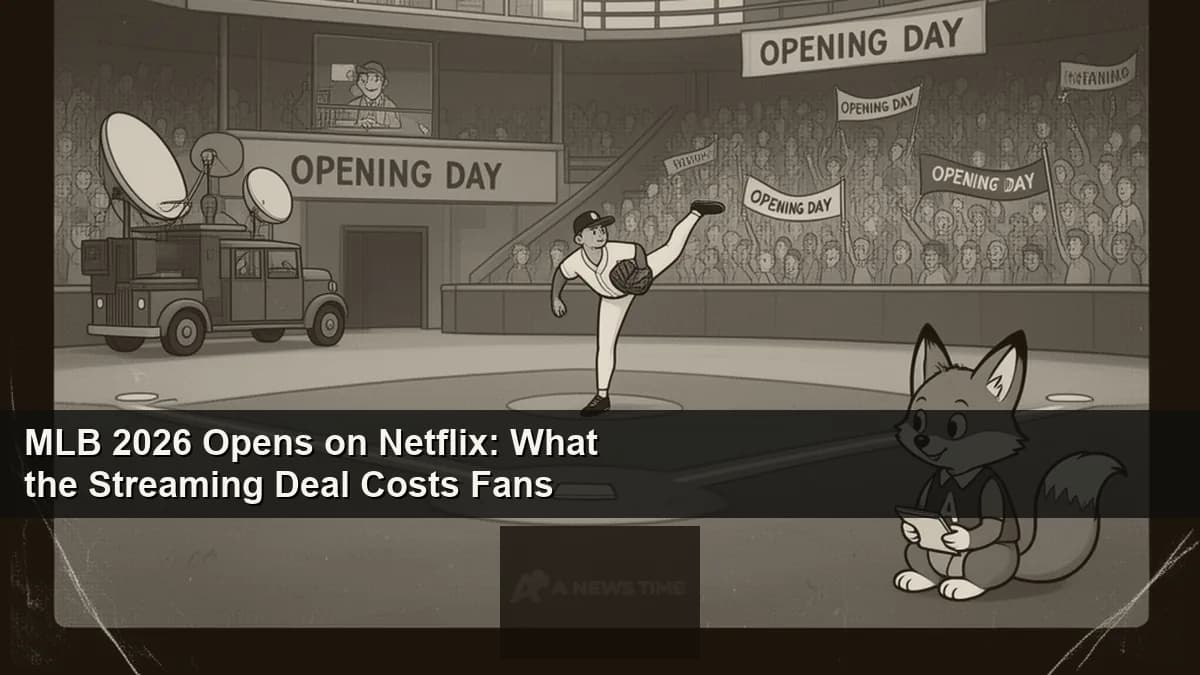
Major League Baseball launched its 2026 season on in San Francisco, with the New York Yankees facing the Giants at Oracle Park in an 8:00 PM Eastern start. The game was broadcast exclusively on Netflix, the first Opening Night game in MLB history distributed solely through a streaming service. Max Fried started for the Yankees against Logan Webb for the Giants, with a broadcast team including Barry Bonds, Albert Pujols, CC Sabathia, Matt Vasgersian, and Hunter Pence making for a lineup of Hall of Fame-caliber talent behind the microphones as well as on the field.
The exclusive Netflix broadcast was the most visible element of a broader transformation in how baseball will be distributed in 2026. The new television rights package fragments the sport across multiple platforms in ways that represent both the largest financial commitment to MLB in the sport's broadcast history and the most significant structural change to how fans access games since the advent of regional sports networks. Whether that fragmentation expands the sport's audience or simply raises the effective cost of being a comprehensive baseball fan is the central question of the new deal.
The New Rights Deal: What Fans Need to Subscribe To
The 2026 MLB broadcast rights landscape requires fans to navigate a multi-platform environment that has no single entry point for comprehensive coverage:
| Platform | Content | Cost |
|---|---|---|
| Netflix | Opening Night game, select primetime games | Included with Netflix subscription ($15.49-$22.99/mo) |
| NBC/Peacock | Sunday games package, postseason games | $7.99-$13.99/mo (Peacock) or standard cable NBC |
| Apple TV+ | Friday night games (multiple matchups) | $9.99/mo |
| Fox Sports / FS1 | National games, American League postseason | Included with cable subscription |
| ESPN/ABC | Sunday Night Baseball, playoff games | Included with cable or ESPN+ |
| MLB.TV | All out-of-market games, archive | $149.99/year |
A fan who wants to watch their out-of-market team for the full season while maintaining access to all nationally distributed content is looking at an annual cost of approximately $500 to $700 depending on their existing subscriptions, compared to approximately $200 for the same access under the previous rights structure. That difference matters at the margin for casual and younger fans who are the demographic MLB most needs to develop for long-term health. The current core subscriber who has been watching the sport for decades will absorb the cost. The 25-year-old trying to establish a baseball habit may not.
Why the League Made This Deal
The total rights value of the new deal dwarfs the previous agreement. MLB secured commitments that industry analysts estimated at $7.1 billion annually across all partners, compared to the $1.55 billion per year structure it replaced. For a sport that has faced attendance pressures and concerns about the pace of play and youth engagement, the financial windfall provides the resources to address competitive balance issues, player development infrastructure, and the technology investments that modern sports operations require.
The league also made a strategic bet that the streaming platforms' subscriber reach, particularly Netflix's 300 million global subscribers, would expose baseball to audiences in markets that had been inaccessible under traditional broadcast structures. Netflix's exclusive Opening Night game was watched by an estimated audience that included millions of international viewers who had never previously had convenient access to a live MLB broadcast. Whether those viewers convert to regular season followers is a longer-term proposition that the league will evaluate across the next several seasons.
Commissioner Rob Manfred has framed the streaming shift as a generational transition rather than a disruption. The argument is that younger demographics are already consuming sports through streaming platforms and are more likely to find baseball through Netflix or Apple TV+ than through a traditional cable sports package. The counterargument, which skeptics of the deal have voiced throughout the rights negotiation process, is that casual fans find sports through channel-surfing and incidental exposure that streaming's subscription-and-intentional-search model does not replicate.
"The Opening Night broadcast on Netflix reached fans in 190 countries. That's not something that was possible under any previous rights structure. The question is whether we convert that one-game exposure into lasting fans, and that's what we're working on throughout 2026."
MLB Commissioner Rob Manfred, post-Opening Night press statement
The Opening Night Game Itself
The game MLB chose to introduce to a global Netflix audience was compelling in its own right. Max Fried, the Yankees' left-handed ace who headlined one of the offseason's most significant free agent signings, faced Logan Webb, the Giants' veteran ace who has developed into one of the most durable starters in the National League. The pitching matchup delivered: both starters were sharp through the middle innings, and the game's outcome hinged on small tactical decisions and the kind of late-inning drama that characterizes elite pitching matchups.
The Netflix broadcast team represented a philosophical choice by the league's broadcast partners about how to position baseball for new audiences. Barry Bonds, Albert Pujols, and CC Sabathia are among the most accomplished players in the sport's recent history, and their presence behind the microphones provided a level of historical credibility that translates immediately to fans who know the sport. For viewers discovering baseball for the first time through Netflix, the combination of player-broadcast style and the high-production visual presentation Netflix developed for the game was designed to be accessible without being condescending to knowledgeable fans.
The viewership number Netflix reported for the Opening Night broadcast was presented as the highest-ever streaming audience for a regular season MLB game. The comparison to previous streaming audiences is the relevant benchmark rather than comparison to traditional broadcast numbers, because the streaming audience structure is inherently different: a Netflix viewer is an active subscriber who chose to watch, while a traditional broadcast audience includes passive viewers who tuned in because the game was on. Whether active streaming audiences are more or less valuable to the sport's long-term health than passive broadcast audiences is a question the media industry is still working through.
Early Season Storylines to Follow
The 2026 season opens with several compelling team narratives that the new broadcast distribution will need to reach fans effectively to sustain audience engagement through a 162-game schedule:
The Yankees enter the season as the most heavily invested team in the free agent market, with Fried's addition joining a roster built around Juan Soto and Aaron Judge. Whether that investment translates to the World Series victory the franchise's ownership and fan base expect, or whether the pattern of expensive underperformance in the postseason recurs, is the defining question of the American League's 2026 season.
The Dodgers, attempting to defend their 2025 World Series championship, open the season with the deepest pitching rotation in baseball and continue to set the market standard for how a well-resourced front office constructs a competitive team. Their ability to sustain that depth through a full 162-game schedule and into the postseason is the most important competitive variable in the National League.
The implementation of the new automated ball-strike system in its expanded form this season provides a storyline that connects fan curiosity about rule changes with the actual competitive implications of calling pitches differently at the margins. As we reported in our analysis of the MLB automated ball-strike challenge system, the technology affects plate discipline decisions, pitcher strategy, and the overall aesthetic of at-bats in ways that are still working through the fabric of how the game is played.
What the Streaming Shift Means for Baseball's Future
The 2026 rights structure is a five-year agreement, meaning the current platform fragmentation is not a one-season experiment. By 2031, when the current deals expire and a new rights cycle begins, the league will have a substantial evidence base for whether streaming exclusivity expanded or contracted baseball's core audience, whether the international subscriber reach of Netflix and Apple TV+ converted into meaningful global fan development, and whether the economics of the multi-platform model held up for the partners who made the financial commitments that drove the deal's total value.
The sport that emerges from this rights cycle will have been shaped by the access decisions made today. Commissioner Manfred and the league's ownership group have made a bet that the streaming generation will come to baseball through the platforms they already use rather than through the broadcast infrastructure that built previous generations of fans. The 2026 season is the beginning of finding out whether that bet is correct.