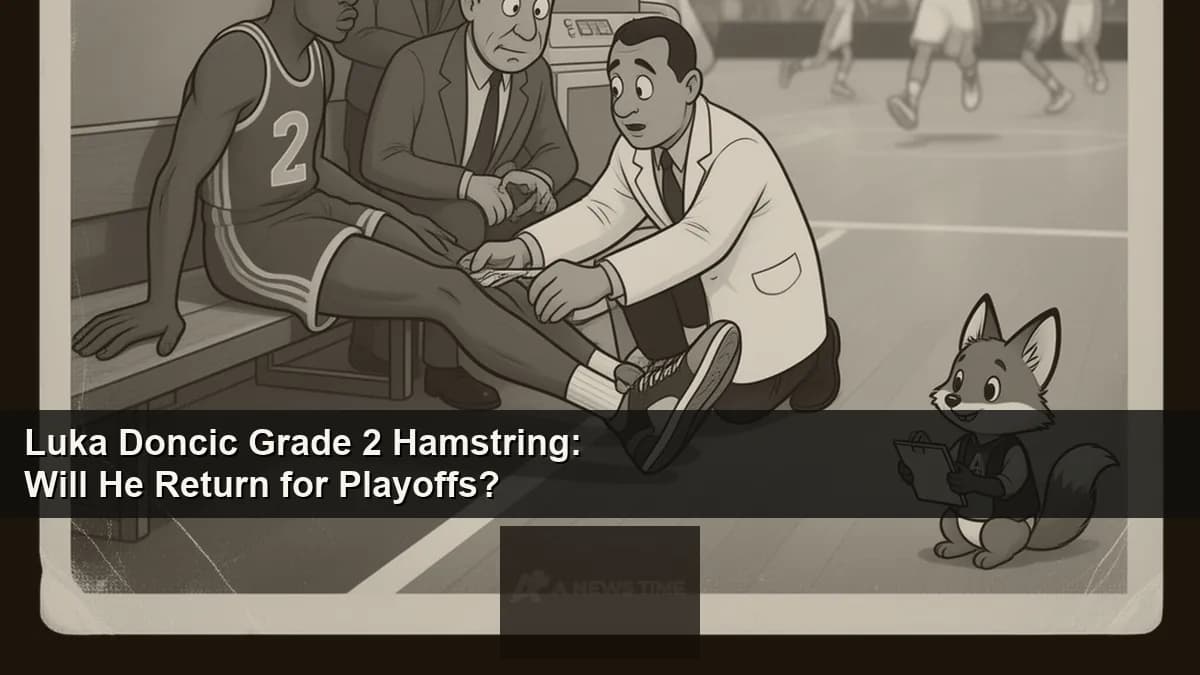
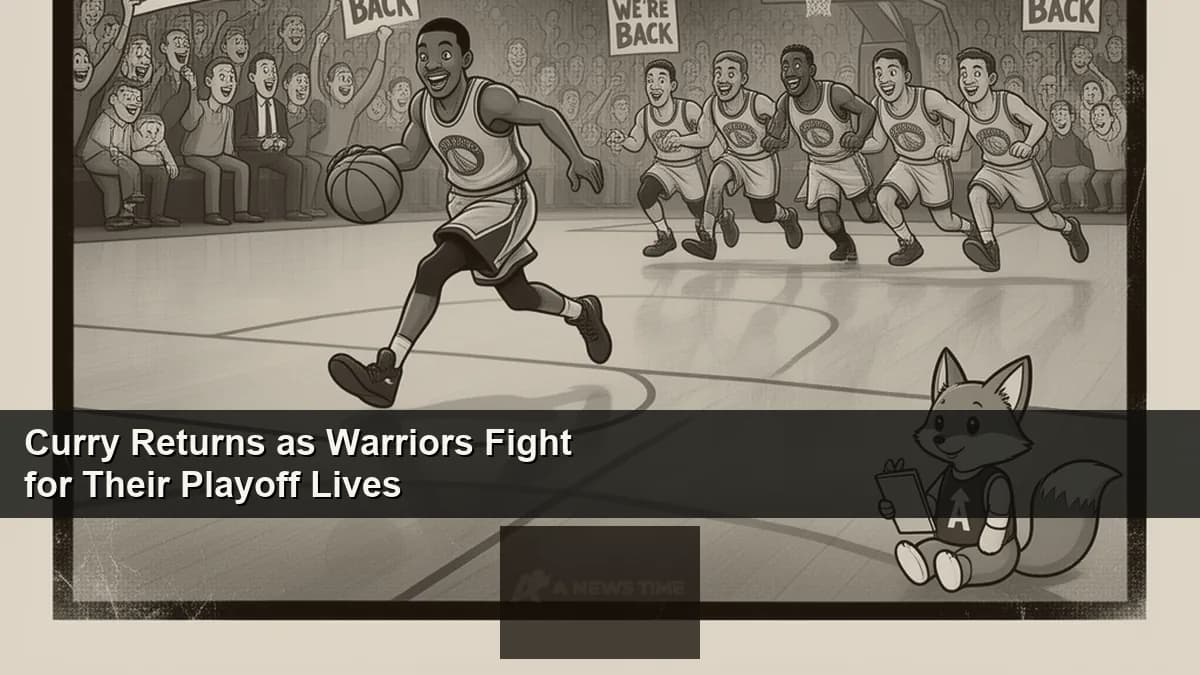
Stephen Curry is back. After missing 27 games with patellofemoral pain syndrome in his right knee, the Warriors point guard returned to the lineup on against the Houston Rockets at Chase Center. The return comes at the most consequential moment possible: Golden State sits at 36-41, currently the 10th seed in the Western Conference, holding a sliver of a playoff lifeline through the play-in tournament with five games remaining in the regular season. Without Curry, the Warriors were 12-15 during his absence. With him healthy, they are a different team entirely.
Head coach Steve Kerr confirmed Curry's return in a pregame media session, downplaying the significance of the qualifier on his availability. "He'll be listed as questionable, but is expected to play," Kerr said. "It'll be nice to have him back." That measured language from a coach famous for his understatement masks how pivotal this return is: the Warriors' five remaining games, against the Rockets, Kings, Lakers (twice), and Clippers, form a brutal closing stretch that requires Curry at something close to full effectiveness to navigate.
What Patellofemoral Pain Syndrome Means for a Player Like Curry
Patellofemoral pain syndrome, sometimes called runner's knee, involves irritation of the cartilage under the kneecap at the joint where the patella meets the femur. In athletes who produce explosive lateral movements and quick direction changes, the condition creates pain under and around the kneecap during loading activities. Unlike a torn ligament or structural damage, patellofemoral pain syndrome is typically managed through rest, strength work, and activity modification rather than surgery. The recovery timeline is variable and can be extended by pushing through symptoms, which makes management decisions during an NBA regular season genuinely complicated.
The 27-game absence suggests Golden State was unwilling to compromise Curry's long-term health for a regular season record that was already marginal before the injury. That is the appropriate decision. Curry's value is not in individual regular season games. It is in playoff series, where his ability to function at full effectiveness against elite competition determines whether the Warriors can compete. A Curry playing at 85% capacity against a first-round opponent is considerably less valuable than a fully recovered Curry entering the play-in tournament in peak health.
The risk of managing this condition across the intensity of a playoff run is real, however. Patellofemoral pain syndrome can recur under heavy loading, and the Warriors' playoff path, if they secure a play-in spot, could extend to 15 or more games against opponents specifically prepared to challenge Curry's movement. The team's medical staff will be managing that recurrence risk through the closing stretch and into the postseason, adjusting his minutes and practice load based on how the knee responds to full game action.
The Warriors at 36-41: A Playoff Picture Under the Microscope
The Western Conference play-in picture as of is tightly contested. The 10th seed position puts the Warriors in the bottom play-in bracket, where they would need to win two consecutive games against the 9th seed and then the 7th or 8th seed to reach the first round. That format historically produces an approximately 35% probability of converting a 10th seed position to a playoff berth, meaning the Warriors enter Curry's return with meaningful but not decisive odds.
| Remaining Opponent | Current Seed | Playoff Implications |
|---|---|---|
| Houston Rockets (April 6) | 5th West | Crucial road win to close gap |
| Sacramento Kings | 8th West | Direct play-in competitor |
| Los Angeles Lakers (x2) | 6th West | Head-to-head tiebreaker implications |
| Los Angeles Clippers | 11th West | Win to stay ahead in standings |
The schedule is unforgiving. The Rockets game on Curry's return day matches the Warriors against a team that clinched a top-five seed weeks ago and will be managing their own playoff preparations. The Kings game is a direct play-in competition: Sacramento and Golden State are separated by less than a game in the standings, making that matchup effectively a mini-elimination game five weeks before the postseason technically begins. The two Lakers games carry tiebreaker implications that could determine who plays whom in the play-in bracket.
Basketball oddsmakers currently price the Warriors at approximately +300 to reach the first round of the playoffs, reflecting genuine uncertainty about whether this version of the team, even with a healthy Curry, has enough depth and consistency to navigate the compressed demands of the final week and then the play-in gauntlet. The Warriors' statistical profile during Curry's absence showed a team that could win games with veteran execution but could not consistently generate the caliber of offensive creation that playoff opponents are specifically designed to eliminate.
Curry's Statistical Baseline and What to Expect on Return
Before the patellofemoral pain syndrome sidelined him, Curry was producing at a level that remains among the most efficient offensive baselines in the league. In the 41 games he played through mid-February, he averaged 27.2 points, 5.8 assists, and 4.6 rebounds per game on 47.1% shooting from the field and 41.8% from three-point range. The three-point percentage is elevated even by his career standards, reflecting a shooting stroke that had been particularly clean before the injury.
Return timelines for patellofemoral pain syndrome in professional athletes typically involve a brief adjustment period where the player is managing both the physical demands of full game action and the psychological process of trusting a previously injured joint. The first two to three games after return are often not representative of what the player will produce once the normal rhythms of movement and decision-making are fully re-established. Warriors fans and coaching staff should expect some variability in Curry's early return performances without concluding anything about his health status.
The more relevant question for playoff projection is whether Curry's three-point shooting, which is the primary mechanism through which he creates and sustains offensive advantages against playoff-caliber defense, will be at its characteristic level when the play-in games begin. A Curry hitting 40% from three in the play-in is a different tactical problem for opponents than one shooting 33%. The gap between those two outcomes is substantial enough to be the determining factor in whether the Warriors win or lose close games against prepared opponents.
The Draymond Factor and What the Team Around Curry Looks Like
Curry returning does not solve the Warriors' depth concerns. Draymond Green's suspension history and the supporting cast's limitations in half-court creation during Curry's absence remain facts. The team that Curry is returning to is built on the foundation of Curry as the offensive engine, with Green as the defensive anchor and tactical conductor, and a collection of veterans who execute rather than create. That model has produced championship basketball before. Whether it can do so in 2026 against a Western Conference that has several teams with more two-way depth is the open question.
The play-in format does provide a specific type of advantage for a team structured like Golden State: Curry's shooting creates immediate credibility for every offensive possession, and his movement off the ball creates spacing problems that force opponents into defensive choices that open up the cuts and post-ups that Green and the role players use. In a one-game-at-a-time elimination structure, that advantage is more reliable than it is over a seven-game series where opponents can specific-scheme adjustments.
"Stephen changes everything about how the defense has to play us. Without him, teams could show two defenders at the point of attack without worrying about what that left open. That math changes completely when he's on the floor."
Steve Kerr, Golden State Warriors head coach
The play-in tournament begins , giving Curry eight days across five games to re-establish his rhythm before the stakes escalate. Whether eight days is enough to reconstruct the offensive synchronization that makes the Warriors' system function at its ceiling is the key unknown as the 2025-26 Warriors season enters its most consequential stretch.
What a Warriors Playoff Run Would Mean for the League
The NBA regular season ends , with the play-in tournament running through and the first round beginning . If Curry and the Warriors navigate through to the first round, the matchup possibilities include potential games against the Thunder, Nuggets, or Timberwolves, each of which represents a genuine tactical challenge and each of which would draw significant national television audience for the storylines involved.
A Warriors playoff appearance in 2026 matters commercially for the NBA's broadcast partners and for the league's overall ratings picture. Curry's playoff performances are among the most-watched events in the sport regardless of opponent, and the Warriors' brand recognition in the markets that drive national viewership is still among the league's strongest despite the team's decline from the dynasty years. The league's interest in Golden State making the postseason is aligned with their own interest in demonstrating that the current roster can still compete at that level.
Whether this marks the beginning of a Warriors rebuild or the last competitive run of the Curry-Green core depends substantially on what happens over the next three weeks. The answer to that question starts with tonight's game against Houston and the health of a knee that has been rested for 27 games specifically to be ready for this moment.