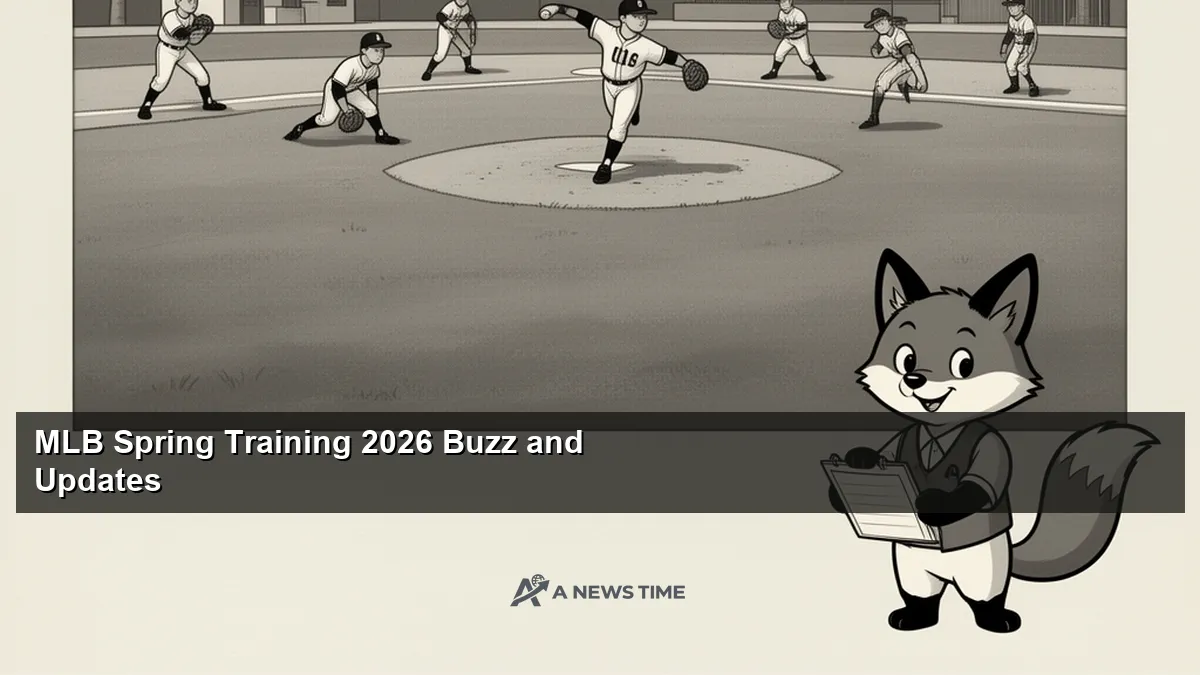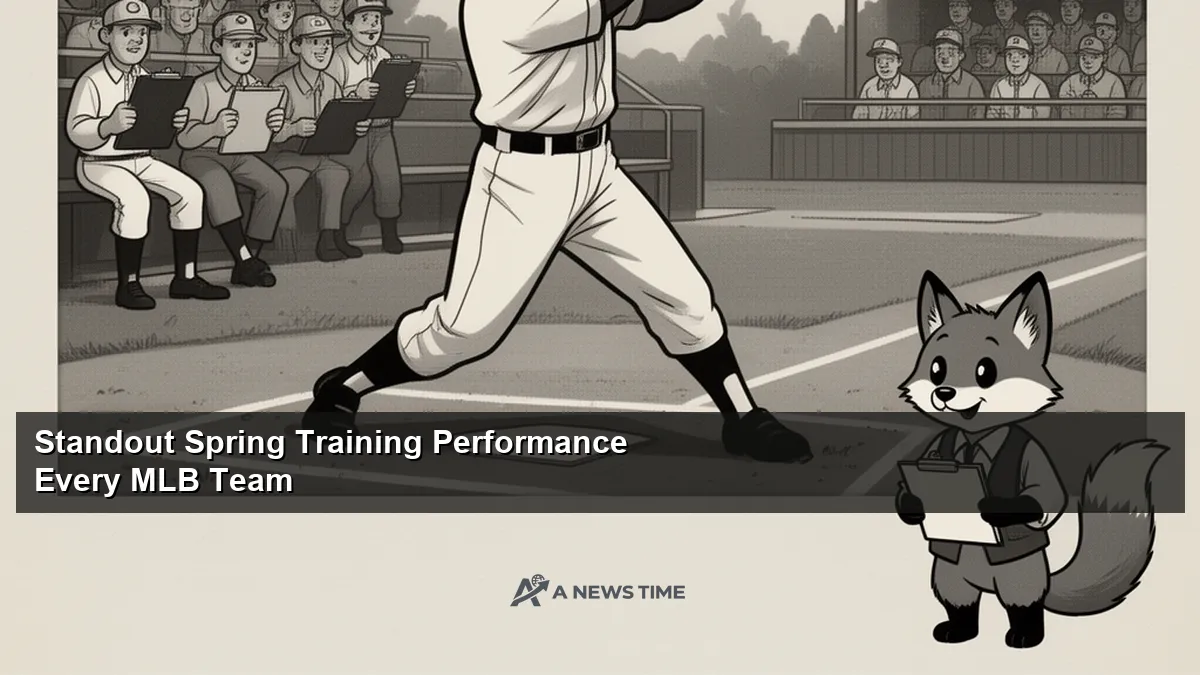
Spring Training is baseball's annual exercise in optimism, a six-week window when every team can plausibly claim that this will be their year. The exhibition games that fill the Cactus and Grapefruit League schedules are imperfect predictors of regular-season success, but they are not meaningless. They reveal which prospects are ready, which veterans have reinvented themselves, and which teams have found unexpected depth in corners of their rosters that were question marks entering camp. Here is one standout spring training performance for every MLB team heading into the .
American League East
Baltimore Orioles: Shane Baz, RHP. Fresh off his five-year extension, Baz has been electric this spring. Across 12 innings, he has struck out 15, walked 3, and posted a 1.50 ERA while touching 100 mph on the radar gun in his final spring start. The splitter he developed during his rehabilitation has been a revelation, generating a 48 percent whiff rate in spring outings. The Orioles are counting on Baz as their rotation anchor, and he has done nothing to suggest that their confidence is misplaced.
New York Yankees: Rookie Shortstop. The Yankees' top prospect has announced his arrival with a .389/.444/.667 spring line through 36 at-bats. His defensive actions at shortstop have been smooth and decisive, with scouts noting exceptional range to his left and a strong, accurate throwing arm. The player's maturity at the plate, evidenced by his 12 percent walk rate and 18 percent strikeout rate this spring, suggests readiness for the majors. He is expected to break camp as the starting shortstop, a role the Yankees have been trying to fill with a long-term answer for several seasons.
Toronto Blue Jays: Bounce-back Starter, LHP. A left-handed starter who posted a disappointing 5.12 ERA in 2025 has remade himself this spring. His velocity is up 2 mph (from 91 to 93), his slider has more depth, and his command has been noticeably sharper. Through 15 spring innings, he has posted an 18:3 strikeout-to-walk ratio and a 1.80 ERA. If the improvements are real and not a spring mirage, the Blue Jays' rotation goes from question mark to quietly solid.
Boston Red Sox: Power-hitting Outfield Prospect. The Red Sox's first-round pick from 2024 has mashed his way through Spring Training with a .375/.423/.750 line, 5 home runs, and an average exit velocity of 95.2 mph. His power is unquestioned. The question has always been whether he can make enough contact to survive against major league pitching, and his 22 percent strikeout rate this spring (down from 29 percent in Double-A last year) offers encouraging evidence. He is expected to open the season in Triple-A but could be in Boston by June if he maintains this trajectory.
Tampa Bay Rays: Versatile Reliever, RHP. A right-handed reliever acquired in a minor off-season trade has been dominant in multi-inning relief appearances: 10.2 innings, 14 strikeouts, 1 walk, 0 runs. His ability to throw three distinct pitches (fastball, cutter, changeup) for strikes makes him a weapon in high-leverage situations regardless of the opposing lineup's handedness. The Rays, who have built an organizational identity around bullpen optimization, may have found another gem. This kind of pattern recognition in identifying undervalued talent has been a hallmark of Tampa Bay's front office for years.
American League Central
Cleveland Guardians: Young Center Fielder. A 21-year-old center fielder who was not even on the 40-man roster entering camp has forced his way into the conversation with a .346/.400/.577 spring line and highlight-reel defensive plays in center field. His sprint speed of 29.8 feet per second ranks in the top 2 percent of all MLB players, and his routes in the outfield have been efficient and instinctive. He may not break camp with the team, but he has put himself on the fast track to a mid-season call-up.
Minnesota Twins: Rehabbing Ace, RHP. The Twins' ace, who missed the final three months of 2025 with an elbow injury, has looked sharp in his spring outings. Through 10 innings across four starts, he has allowed just 2 runs while striking out 11. More importantly, his post-outing evaluations have shown no signs of discomfort or mechanical compensation, suggesting that the elbow is fully healed. His return at full strength would immediately make the Twins one of the more dangerous rotations in the American League.
Detroit Tigers: Converted Reliever, RHP. A reliever who has spent his entire career pitching one inning at a time is making a bid to join the rotation after posting a 2.08 ERA and a 32 percent strikeout rate across 13 spring innings (his longest outing was 4.1 innings). His two-pitch mix (fastball, slider) has been effective through multiple trips through the lineup in spring, and the addition of a developing changeup gives him a realistic path to being a viable starter. The conversion project is a long shot, but the spring results have been too good to ignore.
Kansas City Royals: International Signing, SS. A 20-year-old shortstop signed out of the Dominican Republic in 2022 has been the surprise of the Royals' camp. His .333/.393/.556 spring line through 27 at-bats has been accompanied by defensive plays that drew audible reactions from scouts in attendance. His arm strength (93 mph on throws from deep in the hole) and his body control during double-play turns have been particularly impressive. He will start the year in High-A, but his spring performance has accelerated his timeline significantly.
Chicago White Sox: Reclamation Project, LHP. A veteran left-hander who was released by his previous team last August has found new life on the South Side. His spring line (11.1 IP, 13 K, 2 BB, 2.38 ERA) has been encouraging, but the real story is the velocity. After sitting 88-90 mph for most of 2025, he has averaged 93.1 mph this spring, a jump that he attributes to a mechanical adjustment identified by the White Sox's pitching development team. If the velocity is real (and sustained), the White Sox may have found a back-end rotation option at the cost of a minor league contract.
American League West
Houston Astros: Switch-hitting Catcher. The Astros' catching depth chart was a concern entering spring, and a switch-hitting catcher acquired in a winter trade has alleviated those worries with a .350/.412/.600 line and solid defensive metrics behind the plate. His framing numbers this spring have been above average, and his game-calling (as assessed by the pitching staff's collective spring ERA when he is behind the plate versus other catchers) has been noticeably superior. The Astros value catcher defense highly, and this player's spring has secured him the backup role and possibly more playing time than originally planned.
Texas Rangers: Power Bat, 1B/DH. A slugging first baseman who missed most of 2025 with a wrist injury has looked healthy and dangerous this spring: .308/.385/.692, 4 home runs, and an average exit velocity of 96.1 mph that ranks among the highest in all of spring training. His ability to punish fastballs (he is 7-for-12 on fastballs 95 mph or harder this spring) suggests that the wrist is fully healed and that the power stroke that made him one of the game's most feared hitters before the injury is back.
Seattle Mariners: Teenage Pitching Prospect, RHP. The Mariners invited a 19-year-old right-hander to big league camp as a non-roster invitee, and he has been the most talked-about young arm in the Cactus League. Across 7 spring innings, he has struck out 10, walked 2, and posted a 1.29 ERA while flashing a fastball that sits 96-98 mph and a curveball with spin rates above 3,000 rpm. He is at least a year away from the majors, but his poise against major league hitters has been remarkable for a teenager. Sometimes the most striking phenomena are the ones that arrive ahead of schedule.
Los Angeles Angels: Utility Infielder. A utility player who can play all four infield positions has hit .340/.400/.520 this spring while playing flawless defense at second base, shortstop, and third base across 18 games. His versatility gives the Angels' manager flexibility in lineup construction and in-game substitutions, and his spring production suggests that he can handle the bat well enough to be a productive regular when filling in for starters on rest days.
Oakland Athletics: Young Outfielder. The A's, now in their new Las Vegas stadium, have gotten a breakout spring from a 22-year-old outfielder who slashed .367/.429/.633 with 3 home runs and 4 stolen bases. His combination of speed and power (he ranks in the top 10 percent of minor leaguers in both sprint speed and exit velocity) gives him a rare physical profile that the A's front office has been developing for two years. He will break camp as the starting center fielder, and expectations are quietly building.
National League East
Atlanta Braves: Healthy Ace, RHP. After a 2025 season limited to 18 starts by a shoulder impingement, the Braves' ace has been dominant this spring: 16 innings, 21 strikeouts, 2 walks, 0.56 ERA. His velocity is back to its peak (97-99 mph fastball), his slider is regaining its late-season form from his breakout year, and his command has been sharp from the first outing. A healthy version of this pitcher is a Cy Young contender, and the spring evidence strongly suggests that he is healthy.
Philadelphia Phillies: Breakout Reliever, LHP. A left-handed reliever who bounced between the majors and Triple-A in 2025 has been untouchable this spring: 9 innings, 14 strikeouts, 0 walks, 0 runs allowed. His slider, which he refined during the offseason with the help of the Phillies' pitching lab, has become a legitimate put-away pitch with a 52 percent whiff rate. He has earned a spot in the major league bullpen, and some evaluators believe he could be a high-leverage option by midseason.
New York Mets: Veteran Addition, 2B. The Mets' biggest offseason signing has lived up to the hype in Spring Training, posting a .344/.414/.563 line while making every routine play at second base. His presence in the middle of the lineup has noticeably improved the quality of at-bats from the hitters around him, a ripple effect that is difficult to quantify but visible in the team's overall spring offensive numbers (.268 team batting average, up from .241 in spring 2025).
Washington Nationals: Pitching Prospect, LHP. The Nationals' top pitching prospect, a 22-year-old left-hander, has made a strong case for a rotation spot with a 1.93 ERA, 16 strikeouts, and just 3 walks across 14 spring innings. His changeup, which grades as a 70 on the 20-80 scouting scale, has been his best pitch, generating swings and misses from both left-handed and right-handed hitters. If he can sustain his command (his 5.3:1 strikeout-to-walk ratio this spring is far better than his minor league career mark of 3.1:1), he could be a revelation in the Nationals' rotation.
Miami Marlins: International Outfielder. A 21-year-old outfielder signed out of Cuba last year has been the Marlins' most exciting position player this spring: .357/.400/.643, 3 home runs, and defensive plays in right field that showcase a plus arm and excellent instincts. His swing generates natural loft, and his barrel rate (the percentage of batted balls with an exit velocity above 98 mph and a launch angle between 8 and 32 degrees) of 14.3 percent this spring would rank in the top 15 percent of major leaguers. He is a future star in the making.
National League Central
Milwaukee Brewers: Staff Ace, RHP. The Brewers' ace has been sharp this spring, posting a 1.64 ERA with 19 strikeouts in 11 innings. His cutter, which he added last season, has become a legitimate third pitch that gives him a weapon against left-handed hitters. His spring outings have demonstrated the kind of pitch mix depth that projects to ace-level performance over a full season.
Chicago Cubs: Second-Year Phenom, SS. The Cubs' young shortstop, who won NL Rookie of the Year honors in 2025, has picked up where he left off. His .375/.450/.625 spring line has been accompanied by defensive plays that defy conventional shortstop range charts. He has added 10 pounds of muscle in the offseason, and the added strength is visible in his exit velocities, which are up an average of 2.3 mph from his rookie season.
St. Louis Cardinals: Closer Candidate, RHP. The Cardinals' bullpen was their biggest weakness in 2025, and a right-hander acquired from Japan's NPB has emerged as the leading closer candidate. His spring numbers (8 IP, 13 K, 1 BB, 0 ER) have been outstanding, and his split-finger fastball has been virtually unhittable, generating a 56 percent whiff rate. The transition from NPB to MLB is not always smooth, but this pitcher's combination of stuff and composure suggests a player who is ready for the stage.
Pittsburgh Pirates: Young Third Baseman. A 23-year-old third baseman who hit .291 with 22 home runs in Triple-A last year has carried his momentum into spring: .333/.393/.611, 3 home runs, and improved defensive metrics at the hot corner. His plate discipline (9 percent walk rate, 19 percent strikeout rate this spring) has been the most encouraging development, addressing the concern that kept him in the minors for the full 2025 season. He is expected to be the Opening Day third baseman.
Cincinnati Reds: Outfield Prospect. The Reds' top outfield prospect has combined elite speed (a 6.3-second 60-yard dash) with improved contact skills (.345/.400/.517 this spring) to force his way into the Opening Day roster conversation. His ability to play all three outfield positions and his baserunning instincts (4 stolen bases in 4 attempts this spring) give the Reds a dynamic weapon off the bench if he does not crack the starting lineup immediately.
National League West
Los Angeles Dodgers: New Acquisition, LHP. The Dodgers' marquee offseason pitching addition has been everything advertised: 14 spring innings, 20 strikeouts, 2 walks, 1.29 ERA. His four-pitch mix (fastball, cutter, curveball, changeup) gives the Dodgers' already loaded rotation another weapon, and his ability to generate swings and misses at an elite rate (38 percent whiff rate this spring) while also limiting hard contact (average exit velocity allowed of 84.3 mph) is the profile of a true number-one starter. Like a franchise adding a blockbuster to its slate, the Dodgers have added the kind of arm that makes an already formidable rotation feel unfair.
San Diego Padres: Comeback Player, RHP. A right-hander returning from a second Tommy John surgery has been the feel-good story of the Padres' spring. His 10.1 innings have produced 12 strikeouts, 3 walks, and a 2.61 ERA, and his fastball velocity (94-96 mph) is back within range of his pre-injury levels. The road back from a second Tommy John is long and uncertain, but his spring performance provides genuine reason for optimism.
Arizona Diamondbacks: Young Catcher. The D-backs' 22-year-old catcher has been impressive on both sides of the ball: .318/.364/.545 at the plate and a 38 percent caught-stealing rate behind it. His game-calling and framing have also been above average, per the pitching staff's collective spring performance with him behind the plate. He is the catcher of the future in Arizona, and his spring has accelerated that future to the present.
San Francisco Giants: Veteran Outfielder. A veteran outfielder who signed a one-year deal in February has provided exactly the stabilizing presence the Giants' lineup needed. His .321/.407/.500 spring line has been built on the same disciplined approach (13 percent walk rate, 16 percent strikeout rate) that defined his prime years, and his leadership in the clubhouse has been cited by multiple teammates as a positive influence on the team's younger players.
Colorado Rockies: Starting Pitcher, RHP. The Rockies have long struggled to develop pitching that can survive Coors Field, and a young right-hander's spring performance (13 IP, 15 K, 4 BB, 2.77 ERA) offers hope that the pattern may be breaking. His ground-ball rate of 54 percent this spring, generated primarily through a heavy sinker and a sharp slider, is the kind of pitch profile that can mitigate Coors Field's impact on fly balls. If he can maintain that ground-ball rate in the regular season, the Rockies may finally have a homegrown arm capable of thriving at altitude.
Spring Training performances must always be viewed with appropriate skepticism. Small sample sizes, split-squad games, and the absence of regular-season intensity all limit the predictive value of exhibition numbers. But the performances highlighted above are not just statistical anomalies. They represent real skill development, genuine health milestones, and competitive breakthroughs that will shape the 2026 season in meaningful ways. The teams that correctly identify which spring performances are signal and which are noise will have a significant advantage when the games start counting.
Byline: Aisha Mbeki, Senior Sports Reporter