By Amara Osei, Senior Food & Culture Reporter
Published:
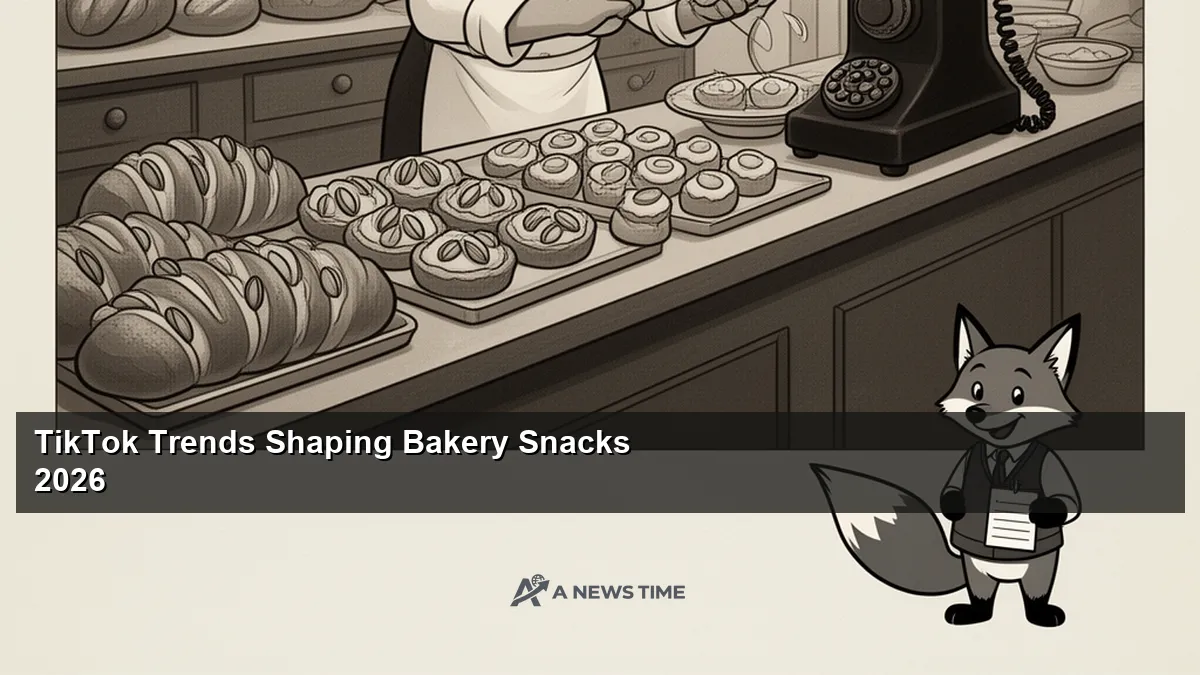
The scent of freshly baked pistachio croissants has become so pervasive in American bakeries this spring that you could be forgiven for thinking the nut had only just been discovered. In reality, pistachios have anchored dessert traditions from Iran to Sicily for centuries. What changed is TikTok. A cascade of viral videos featuring pistachio cream layered into flaky pastry, swirled through soft-serve, and stuffed into cookie dough created a consumer demand signal so powerful that bakery manufacturers across the industry scrambled to reformulate their product lines. According to a detailed analysis from Bakery and Snacks, pistachio is just one of ten TikTok-driven trends reshaping the $230 billion global bakery and snack sector in 2026. The platform has become the primary trend incubator for an industry that once relied on trade shows and focus groups to identify the next big flavor.
1. Pistachio Takes Over Everything
The pistachio wave did not arrive without precedent. Dubai chocolate, the viral pistachio-kunafa chocolate bar that swept TikTok in late 2024, primed the market. But 2026 has seen pistachio move from a singular viral product into a full flavor platform. Pistachio cream-filled croissants, pistachio butter spread, pistachio-crusted cookies, and pistachio swirl brownies are all appearing across artisan bakeries and mass-market shelves simultaneously.
The economics are notable. Pistachio is not a cheap ingredient. Wholesale pistachio paste prices have risen 18 percent year over year, driven partly by demand from the bakery sector and partly by constrained supply from drought conditions in California and Iran, the world's two largest producers. Yet manufacturers are absorbing the cost because the "pistachio premium" allows them to position products at higher price points. A pistachio croissant at a New York bakery commands $7 to $9, compared to $4 to $5 for a plain butter croissant. The margin expansion justifies the ingredient cost.
"Pistachio has crossed from trend to platform. It is no longer a single viral moment. It is a flavor identity that consumers now expect to find across categories, from bakery to frozen to beverages."
Marco Pellegrini, Global Bakery Trends Director, Puratos
2. Pull-Apart Textures and Shareability
The second major trend reflects TikTok's inherently visual and social nature. Pull-apart breads, tearable pastries, and segmented cookie formats are surging because they produce the kind of satisfying visual content that performs well on the platform. The physical act of pulling apart a warm loaf of cheesy bread or tearing a section from a babka generates a sensory moment, the stretch, the steam, the reveal of the filling, that translates powerfully to short-form video.
Bakery manufacturers have responded by developing products specifically designed for shareability and visual appeal. Brands like Bimbo Bakeries and Grupo Bimbo have introduced pull-apart bread formats in their commercial lines for the first time. Artisan bakeries report that pull-apart items now account for a growing share of their weekend sales. The trend connects to a deeper cultural appetite for communal eating experiences, where the act of sharing food around a table (or a screen) carries as much meaning as the food itself. This communal impulse around food echoes the way shared entertainment experiences continue to shape how people gather.
| Trend | TikTok Views (2025-2026) | Product Category Impact |
|---|---|---|
| Pistachio everything | 4.8 billion | Croissants, cookies, spreads, ice cream |
| Pull-apart formats | 2.3 billion | Bread, pastries, cakes |
| Indulgent layering | 3.1 billion | Cookies, brownies, bars |
| Croffles/hybrid pastries | 1.9 billion | Croissant-waffle hybrids, croissant-muffins |
| Stuffed cookies | 2.7 billion | Oversized filled cookies |
3. Indulgent Layering and Over-the-Top Formats
If the health food movement defined the 2010s, 2026 bakery is defined by unapologetic indulgence. TikTok's most successful bakery content tends to feature products with visible layers of filling, frosting, or toppings that create a cross-section reveal when cut open. The "cookie reveal" genre, where an oversized cookie is split in half to expose a molten chocolate, caramel, or peanut butter center, has generated billions of views and spawned an entirely new product format: the stuffed cookie.
Crumbl Cookies, the Utah-based chain that has grown to over 1,000 locations, has been perhaps the most visible beneficiary of this trend. Each week's rotating menu of oversized, elaborately topped cookies is designed explicitly for TikTok content. The company's TikTok account has over 8 million followers, and its weekly flavor reveal videos routinely exceed 10 million views. Crumbl's success has prompted competitors, from Insomnia Cookies to Subway's cookie program, to develop their own oversized, visually dramatic cookie formats.
The indulgence trend is not just about size. It is about textural contrast: crunchy exteriors with soft centers, smooth glazes over rough crumbles, crispy shells filled with molten fillings. These contrasts create multisensory content that performs well in both video and still photography, making them ideal for the platforms driving discovery.
4. Hybrid Pastries Continue to Multiply
The cronut, Dominique Ansel's 2013 invention, proved that hybridizing two pastry formats could generate cultural phenomena. In 2026, the hybrid pastry category has exploded. Croffles (croissant waffles) remain popular, but they have been joined by cruffins (croissant muffins), brookies (brownie cookies), and the latest entrant: the croissant cube, a laminated dough product cut into a cube shape and baked until each layer separates into crispy, butter-soaked sheets.
The croissant cube originated in Seoul's bakery scene, was amplified by Korean food creators on TikTok, and reached American bakeries within weeks. This trajectory, from an Asian bakery innovation to TikTok virality to global adoption, has become a repeating pattern. Korean bakery culture, in particular, has become one of the most influential forces in global pastry trends, with Seoul functioning as a kind of trend laboratory whose innovations reach the world through social media.
5. Stuffed Cookies Become a Standalone Category
The stuffed cookie has graduated from trend to category. What began as a novelty, oversized cookies with a visible pocket of filling, has become a permanent fixture in both artisan and commercial bakery. Stuffed cookie sales in US retail grew 89 percent year over year in the 12 months ending , according to Circana data. The product format appeals to consumers who want a single, shareable, portable indulgence that feels special enough to justify a $4 to $6 price point.
The fillings have diversified well beyond the original Nutella and cookie butter options. Bakeries are now offering stuffed cookies with biscoff cream, matcha white chocolate, dulce de leche, and the ubiquitous pistachio cream. The format has also moved into savory territory, with some bakeries experimenting with cheddar-stuffed pretzel cookies and everything bagel-seasoned cookies filled with cream cheese.
6. Sourdough Extends Beyond Bread
The pandemic sourdough boom left a lasting infrastructure of home bakers and commercial operations that understand fermented dough. In 2026, sourdough has moved far beyond loaves. Sourdough pizza crusts, sourdough crackers, sourdough pancake mix, and sourdough discard recipes (which use the portion of the starter that would otherwise be discarded) represent a category extension that leverages both the tangy flavor profile and the perceived health benefits of naturally fermented grains.
"Sourdough has become a trust marker. When consumers see 'sourdough' on a label, they associate it with real fermentation, longer processes, and better ingredients. It signals craft in a way that 'artisan' no longer does because that word has been overused."
Amy Scherber, Founder, Amy's Bread, New York
7. Global Sweet Traditions Find New Audiences
TikTok's ability to surface culinary traditions from around the world has brought a wave of global sweets into mainstream American awareness. Mochi, the Japanese rice cake, is now available at virtually every major grocery chain. Turkish baklava has experienced a renaissance, driven by creators showcasing the intricate layering process. Basque cheesecake, the intentionally "burnt" style from San Sebastian, Spain, has become a standard offering at bakeries that would never have considered it five years ago.
The most significant new entrant in 2026 is kunafa (also spelled knafeh), the Middle Eastern dessert made with shredded filo dough, cheese, and sugar syrup. Kunafa went viral through Dubai chocolate, but it has since established an independent identity. Dedicated kunafa shops are opening in New York, Los Angeles, and Chicago, and several frozen versions have appeared in grocery stores. The dish's combination of crunchy, stretchy, and sweet textures makes it inherently compelling for video content, which continues to drive discovery. This global cross-pollination of dessert traditions parallels how international travel patterns are connecting people to food cultures they might never have encountered otherwise.
8. Smaller Portions, Higher Prices
A quiet but significant trend in the bakery sector is the premiumization of smaller formats. Mini croissants, petit fours, bite-sized brownies, and single-serving cakes allow consumers to indulge without committing to a full portion. For bakeries, these smaller formats command a higher price per ounce while addressing the portion-control concerns of health-conscious consumers. The "little treat" culture, itself a TikTok-amplified phenomenon, has given commercial legitimacy to premium small-format bakery items.
9. Clean-Label Indulgence
Consumers in 2026 want indulgent bakery products, but they also want to understand the ingredient list. The clean-label movement, which prioritizes recognizable, minimally processed ingredients, has reached the indulgent bakery category. Products that can deliver the visual drama and flavor intensity TikTok demands while using real butter, unbleached flour, and natural colorants are winning shelf space over competitors relying on artificial ingredients.
This has created formulation challenges for manufacturers. Natural colorants, for example, are less stable and more expensive than synthetic alternatives. Real butter behaves differently in production than margarine. But the consumer signal is clear: 71 percent of bakery shoppers say ingredient quality influences their purchase decision, according to a 2026 Innova Market Insights survey. Manufacturers who can marry TikTok-worthy visual appeal with clean ingredient lists are capturing the most valuable segment of the market.
10. Seasonal and Limited-Edition Drops
The final trend borrows directly from streetwear culture. Bakeries and snack brands are increasingly using limited-edition product drops, available for a short window and promoted through social media anticipation, to drive urgency and engagement. Crumbl's weekly rotating menu is the most successful example, but the model is spreading. Levain Bakery in New York now releases monthly limited-edition cookies. Trader Joe's has amplified its already-strong seasonal rotation with TikTok-first marketing. The drop model creates content cycles that feed the algorithm: anticipation posts, reveal posts, review posts, and "last chance" posts, each generating engagement that reinforces the product's visibility.
"The bakery industry has learned from fashion. Scarcity creates desire. A cookie that is only available for one week generates more engagement and more sales per day than a cookie that is on the menu permanently."
David Chang, Restaurateur and Founder, Momofuku
Where the Bakery Industry Goes From Here
The ten trends reshaping bakery and snacks in 2026 share a common thread: they are all either born on TikTok or amplified through it. The platform has become the primary mechanism through which consumer demand signals reach the industry, replacing the trade shows, trend reports, and focus groups that once served that function. For bakery manufacturers, the strategic imperative is clear: build the internal infrastructure (social listening, rapid prototyping, flexible production) to respond to these signals at the speed the culture demands.
For consumers, the result is a bakery landscape that is more diverse, more visually spectacular, and more globally influenced than at any point in American food history. The pistachio croissant from Iran by way of Dubai by way of TikTok by way of your neighborhood bakery is not just a pastry. It is a map of how food culture moves in 2026: fast, visual, global, and fundamentally shaped by the platforms where billions of people spend their attention. As the broader transformation of TikTok into a food R&D lab continues to accelerate, the bakery sector stands at the intersection of tradition and algorithm, and the results, so far, are delicious.
Frequently Asked Questions
Why is pistachio so popular in bakeries in 2026?
Pistachio's dominance in 2026 bakeries stems from the Dubai chocolate viral moment in late 2024, which introduced pistachio-kunafa flavors to global audiences via TikTok. The nut's rich flavor, vibrant green color, and premium positioning have made it a full flavor platform across croissants, cookies, and spreads.
What are croffles?
Croffles are croissant-waffle hybrids made by pressing laminated croissant dough in a waffle iron. The result is a crispy, buttery, grid-patterned pastry that originated in Korean bakeries and went viral on TikTok before reaching bakeries worldwide.
How has TikTok changed the bakery industry?
TikTok has replaced traditional product development pipelines with a real-time trend identification system. Bakery manufacturers now monitor viral content for demand signals and can move from trend identification to product launch in weeks rather than months.
Are stuffed cookies a lasting trend or a fad?
Stuffed cookies appear to have lasting power. US retail sales of stuffed cookies grew 89 percent year over year through February 2026, and the format has diversified from novelty fillings to a wide range of flavors including matcha, dulce de leche, and even savory options.
What is clean-label indulgence?
Clean-label indulgence refers to bakery products that deliver rich, visually dramatic flavors and textures while using recognizable, minimally processed ingredients like real butter, unbleached flour, and natural colorants rather than artificial alternatives.