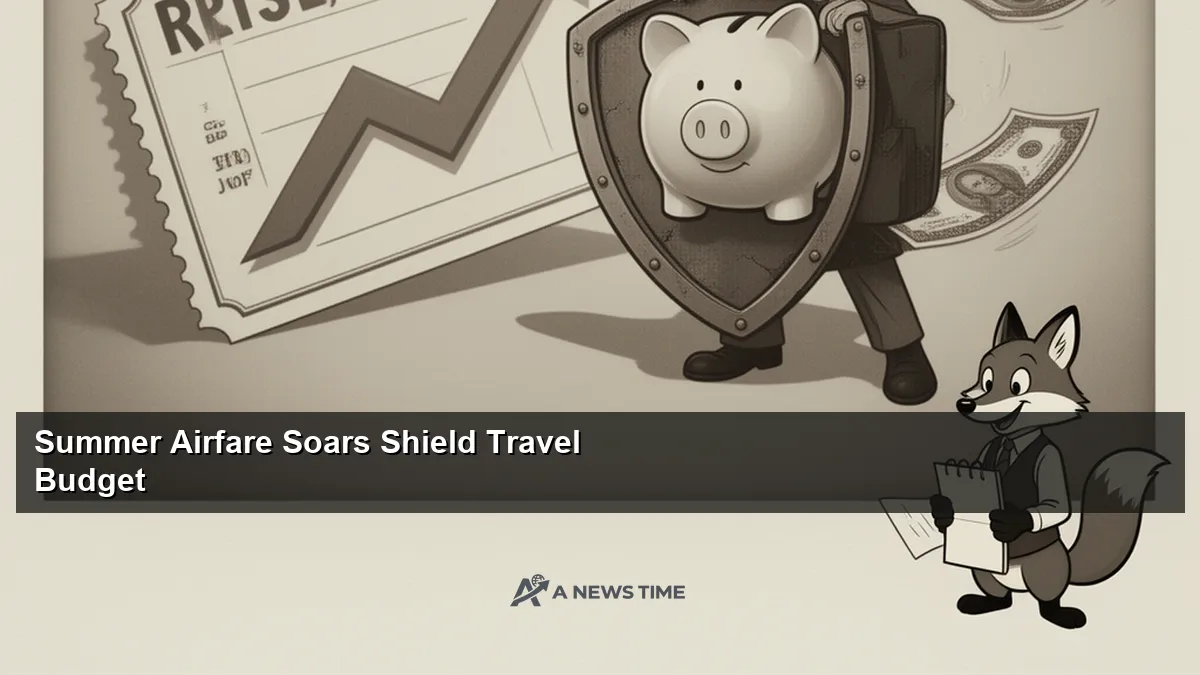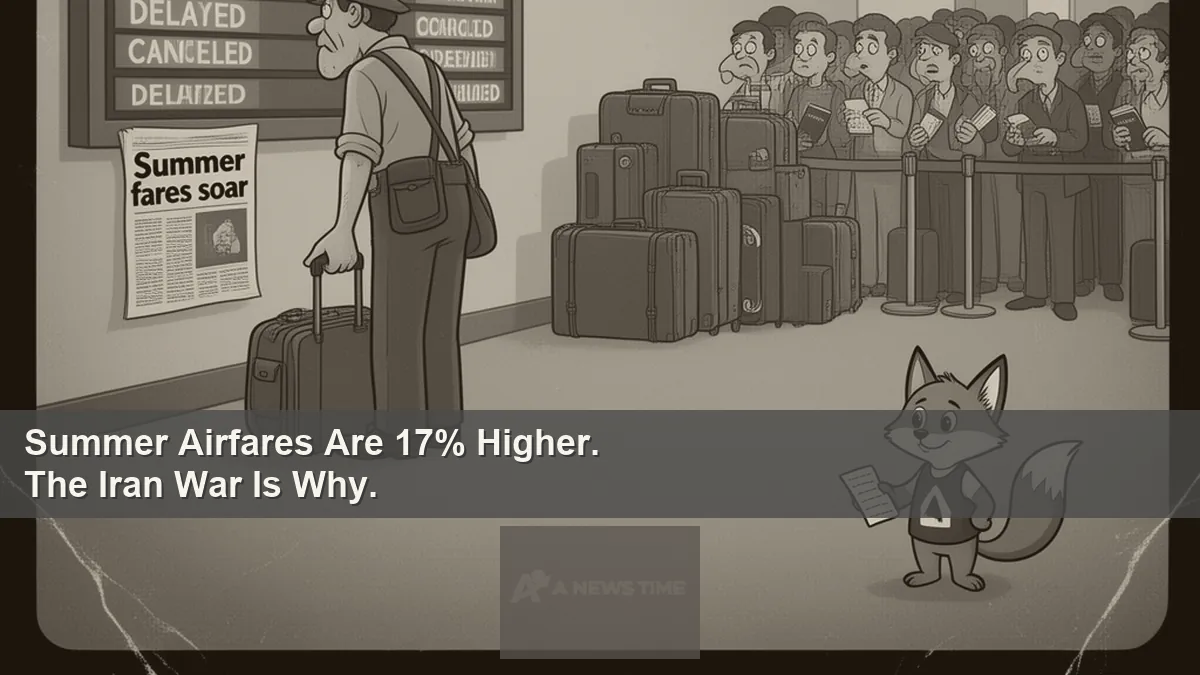
The number came from a straightforward analysis of booking data, but it carries weight: summer 2026 airfares are running 17 percent higher year-over-year, according to Going flight deal analyst Katy Nastro, who tracks fare trends across hundreds of routes. The culprit is not a single airline decision or a demand spike. It is the cascading math of the Iran War, which has forced carriers to burn more fuel on longer routes while simultaneously driving fuel costs to their highest point in four years. The travelers booking summer vacations right now are absorbing the early edge of a price wave that analysts warn has not yet crested.
Understanding what is happening to airfares requires understanding what happened to jet fuel. Since the conflict between the United States, Israel, and Iran escalated in early , the price of jet fuel has climbed to $3.98 per gallon, a 59 percent increase from pre-conflict levels. For an airline, fuel typically represents 20 to 30 percent of operating costs. When that component jumps 59 percent, the financial pressure to raise fares is immediate and significant. Airlines do not absorb fuel cost increases; they pass them on, with a lag of roughly four to eight weeks as yield management systems update pricing algorithms based on new cost bases.
What the Industry Is Warning
Scott Kirby, CEO of United Airlines, offered the most direct corporate signal in late March, warning analysts and investors that fares on routes affected by the Middle East conflict could rise by up to 20 percent before summer. United operates a significant number of routes that either overfly the affected region or compete with carriers whose cost structures have been disrupted. Kirby's warning was notable for its specificity, a departure from the usual airline practice of speaking in generalities about "revenue environment" and "capacity discipline."
"Fuel is the number the market keeps underestimating. A 59-percent increase in jet fuel doesn't produce a 59-percent increase in fares, but it does produce a very different pricing floor than we had in January."
Katy Nastro, Flight Analyst, Going
The mechanism is worth understanding. Airlines hedge fuel costs, purchasing contracts months in advance at locked-in prices. That hedging means the full impact of the fuel spike does not hit airline income statements immediately. As hedge positions expire and airlines roll into unhedged market prices, the pressure on fares increases. Most major U.S. carriers entered 2026 with hedge coverage on roughly 30 to 50 percent of their fuel needs. As those contracts roll over through the spring and summer, unhedged exposure grows, which means the 17 percent fare increase Nastro identified for current summer bookings may represent the beginning of the repricing rather than the peak.
Michael Gunther, an analyst at Consumer Edge Research who tracks travel spending data across hundreds of thousands of credit and debit card holders, offered a more nuanced read of the demand picture. Gunther noted that travel demand surged unusually in and , as consumers who had been uncertain about the geopolitical environment rushed to book before things got worse. That pull-forward of demand temporarily supported fares at elevated levels. Then, as the conflict became entrenched and consumer confidence deteriorated, booking pace softened. The University of Michigan consumer sentiment survey, released in mid-March, showed confidence at its lowest level since 2023, reflecting broader anxiety about economic conditions under wartime pressure.
"What you get in a situation like this," Gunther told Bloomberg in late March, "is a bifurcated market. The consumers who were already committed to traveling book early and absorb higher fares. The marginal traveler, the one who was on the fence, pulls back entirely. That dynamic actually keeps overall fares elevated because the remaining pool of buyers is less price-sensitive."
The Route Math: Why Rerouting Costs So Much
The fuel cost story is inseparable from the airspace story. The FAA has prohibited U.S. carriers from operating in Iranian airspace (FIR Tehran) and Iraqi airspace (FIR Baghdad), effectively cutting off the traditional southern Asia routes that saved thousands of miles for long-haul flights. The European Union Aviation Safety Agency issued equivalent restrictions for European carriers. This is not a matter of airlines choosing a preference; they are legally barred from the most direct paths.
For a United or American Airlines flight from New York to South Asia or Southeast Asia, the traditional northern or southern routing options now require significant detours. Flights that previously tracked southeast through Persian Gulf airspace must now route north through Turkish airspace and then east across Central Asian corridors. A New York-to-Mumbai flight that once took approximately 14 hours is now running 16 to 17 hours on rerouted paths. Each additional flight hour burns approximately 2,500 to 3,000 gallons of fuel in a widebody aircraft. At $3.98 per gallon, a two-hour rerouting extension costs an airline between $19,900 and $23,880 per flight, costs that compound across thousands of daily departures.
The secondary effect is crew hour constraints. Aviation regulations limit the number of hours flight crews can operate within defined rest windows. Longer flights consume more crew hours, which sometimes requires adding crew members (and their positioning costs) or reducing frequency. Several major carriers have reduced frequencies on their most affected long-haul routes rather than operate every planned departure with extended flight times, further tightening supply of seats precisely when demand is already elevated.
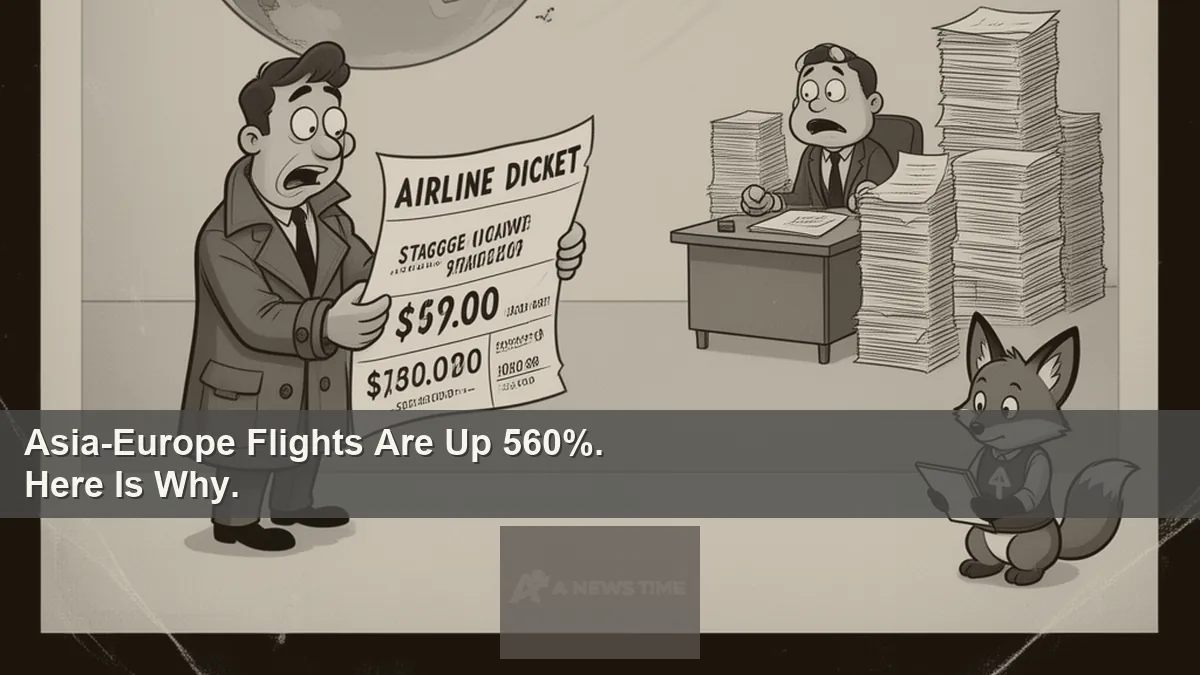
Airlines serving Asia-Europe routes face a particularly sharp version of this math. The traditional great circle routes between European capitals and East/Southeast Asian cities crossed Iranian or Gulf airspace. Rerouted alternatives through Turkish airspace or over the pole add flight time and fuel burn that directly affects per-seat economics. The fares you see today on London-to-Bangkok or Frankfurt-to-Singapore reflect this reality in sharp form, as covered in our detailed reporting on the 500 percent surge in Asia-Europe flight prices.
Domestic Fares Are Not Immune
A common assumption among U.S. travelers is that the Middle East conflict does not affect domestic airfares because domestic routes do not cross affected airspace. That assumption is partly correct and partly wrong. Domestic fares are not being pushed up by rerouting costs. They are, however, being pushed up by the same fuel price increases that affect international routes. U.S. carriers operate a single fuel supply chain, and jet fuel purchased for flights between Atlanta and Chicago comes from the same market as jet fuel purchased for flights between New York and London. The 59 percent increase in fuel prices hits all routes, domestic and international alike.
The domestic fare impact is somewhat moderated by competition and the absence of rerouting costs, but Nastro's data shows domestic summer fares are running approximately 9 to 12 percent above the same booking window in summer 2025. That is below the 17 percent increase on international routes, but it is not zero. Travelers hoping to pivot from international plans to domestic alternatives because they expect domestic travel to be significantly cheaper may be disappointed by the gap between expectation and current pricing.
Which Routes Are Least Affected
Not all international routes carry equal fare pressure. The most affected routes are those that previously used Iranian or Gulf airspace: Europe-to-Asia, North America-to-South Asia, North America-to-the-Gulf, and trans-Pacific routes via southern corridors. Routes unaffected by airspace closures are seeing less upward pressure, with fare increases driven purely by fuel costs rather than the compound of fuel plus rerouting.
Trans-Atlantic routes between North America and Western Europe are seeing a moderate fuel-driven increase but are not experiencing the rerouting surcharges hitting Asia-bound fares. Similarly, routes within the Americas (Caribbean, Central America, South America) are less exposed to the specific conflict dynamics. If your summer travel priorities are flexible enough to include destinations in these corridors, the fare picture is meaningfully better than for Asia-bound or Middle East-adjacent travel.
Mexico and the Caribbean are currently drawing strong interest precisely because savvy travelers are recognizing the relative value in those corridors. Several travel agents reported in late March that they were fielding unusual volume of inquiries about beach alternatives closer to home, as travelers recalibrated against international prices. This demand shift is beginning to push Caribbean fares up, but they remain below the levels of Europe or Asia for comparable summer travel. Our earlier analysis of the cheapest destinations for U.S. travelers this year remains a useful reference for finding value in the current environment.
How to Navigate Summer Booking Right Now
The practical question for anyone with summer travel planned or in mind is what to do. The answer depends on where you are in the booking process and how flexible your plans are.
If you have not yet booked: The current moment is likely the best near-term window for booking, according to Nastro. The 17 percent increase over last year is already baked into current prices. If fuel costs continue to rise as hedge contracts expire and airlines reprice, those who book now will lock in fares below what may be available in April or May. The standard guidance about booking international travel eight to twelve weeks in advance applies with additional urgency in 2026.
If you are considering redeeming miles or points: Award availability and redemption rates are worth checking carefully. Some airlines have already adjusted saver award availability on high-demand routes in response to tighter capacity. Others have made adjustments to the cents-per-mile value of different redemptions. The value of your miles is not static, and comparing the cash cost of your preferred flight against the redemption rate on your program is worth the fifteen minutes it takes to run the numbers.
If you are holding an existing booking: Refundable tickets and changeable itineraries have real monetary value right now that they do not always have. If you have a non-refundable booking on a route that is being affected by disruptions, understanding your options, including whether your airline is offering change fee waivers for conflict-affected routes, is worth checking directly with the carrier.
Flexibility on dates and airports: Midweek departures (Tuesday, Wednesday) and flying into secondary airports within a reasonable distance of your destination continue to produce meaningful savings. These are not new strategies, but their financial benefit is larger in a higher-fare environment. A $150 difference in fare that seemed marginal when fares were at baseline levels now represents a proportionally smaller share of a $1,200 ticket but still reflects real money.
The Bigger Picture: How Long Does This Last?
The honest answer is that fare pressure will persist as long as the conflict persists. Airspace closures do not end until the military situation changes enough for aviation authorities to reopen the airspace, and fuel prices will not retreat significantly until the oil markets that underpin jet fuel prices stabilize. Those are geopolitical variables that airline pricing departments cannot control and that analysts are reluctant to forecast with specificity.
What the airline industry does control is capacity. If carriers begin cutting flights on high-cost routes, as some have started to do, the reduction in supply keeps fares elevated even if some demand softens. The combination of higher costs, tighter supply, and a traveler pool that has already been winnowed to the less price-sensitive end of the demand curve creates structural support for elevated fares through the summer season.
For context, the last comparable disruption, the 2022 post-COVID fare surge, lasted approximately 18 months before fares normalized to pre-pandemic ranges. That surge was driven by demand recovery against reduced capacity. This surge is driven by cost increases and airspace constraints against relatively stable demand. The dynamics are different, and the trajectory may be different, but the lesson from 2022 is that fare spikes in aviation tend to be stickier than travelers hope and shorter than the industry fears. The more significant disruption in flight rerouting patterns may ease before fares do, simply because airlines will resume normal routing the moment airspace opens, while fuel hedging adjustments will take longer to unwind.
The travelers who navigate this best will be the ones who book with eyes open to the current pricing reality, use the tools available to find relative value within the elevated landscape, and accept that summer 2026 is simply a more expensive travel year than 2025 was. That is not a reason to cancel; it is a reason to plan carefully.