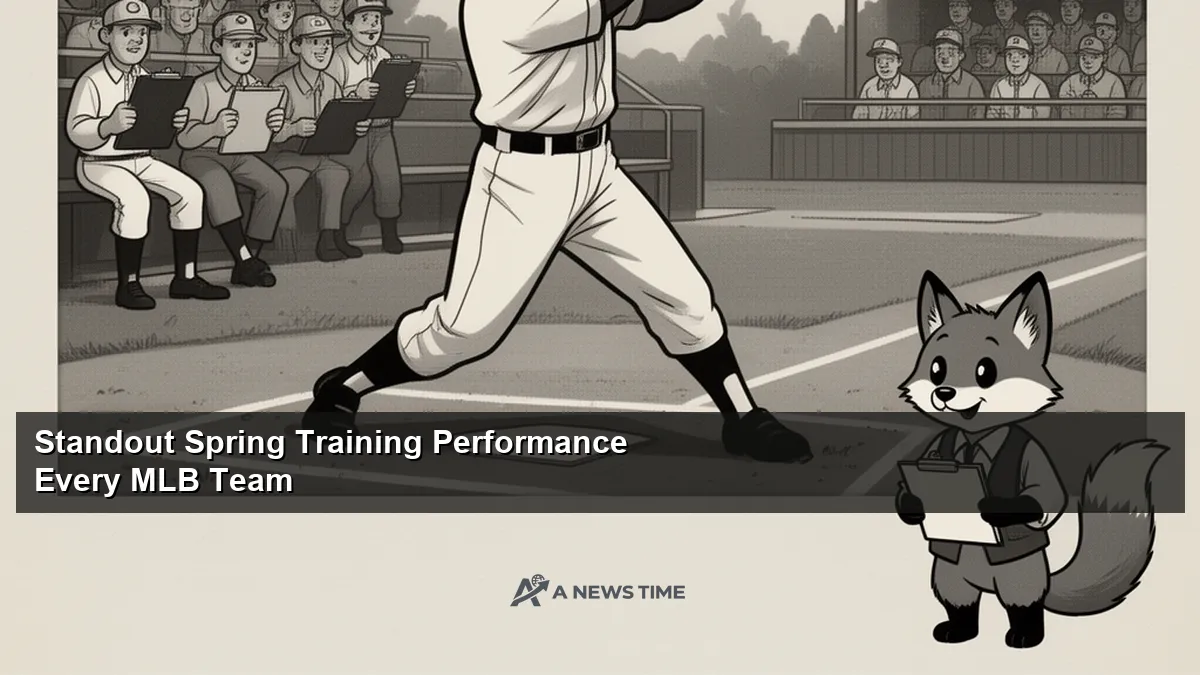
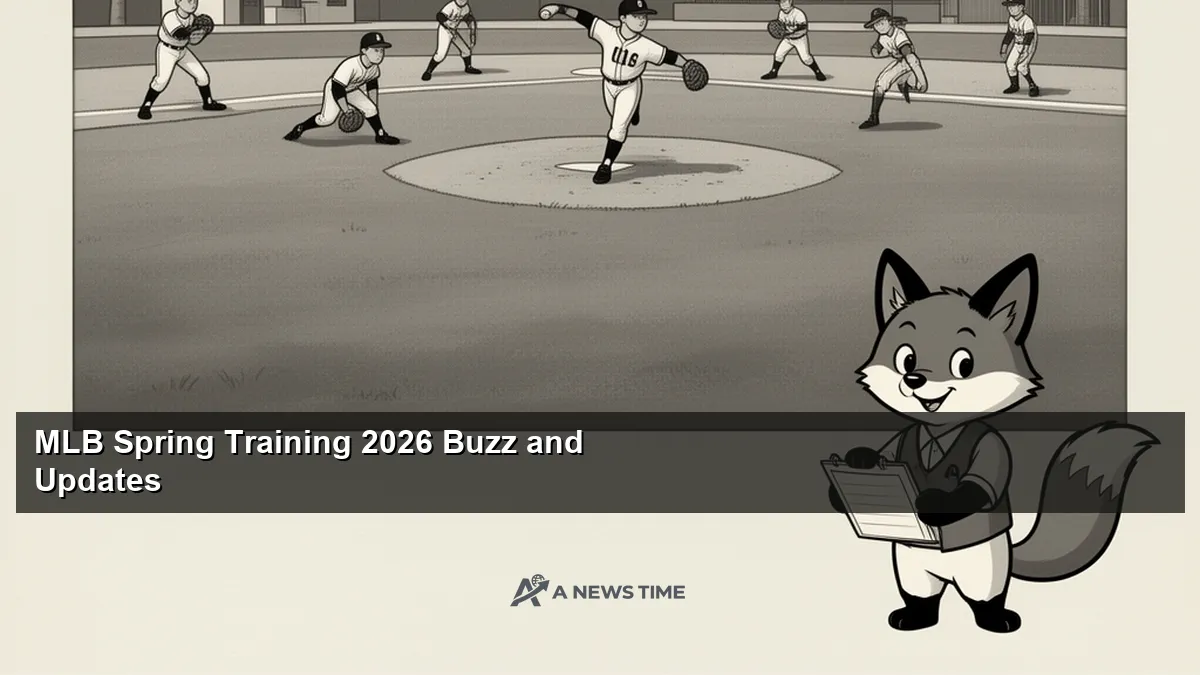
MLB Spring Training is in full swing, and the storylines emerging from camps across Arizona and Florida are shaping expectations for what promises to be one of the most competitive seasons in recent memory. The Baltimore Orioles have extended right-hander Shane Baz, locking up one of baseball's most electric young arms before he reaches arbitration. Opening Day is approaching rapidly, and the picture of the 2026 season is coming into focus through spring performances, late-breaking trades, and the buzzing excitement that accompanies the return of meaningful baseball after the winter layoff.
Orioles Extend Shane Baz: Betting on Upside
The biggest non-trade headline of Spring Training is the Baltimore Orioles' decision to extend Shane Baz, the hard-throwing right-hander whose career has been a rollercoaster of elite potential and injury setbacks. The extension, reported at five years and $48 million with incentives that could push the total past $65 million, locks Baz into the Orioles' rotation through his prime years and represents a calculated bet on a pitcher whose stuff has always been among the best in baseball.
Baz's arsenal is built around a fastball that averages 97.3 mph (touching 100 regularly), a slider with a whiff rate of 42 percent, and a splitter that he developed during his most recent injury rehabilitation. The three-pitch mix grades as plus-plus, plus, and above-average, respectively, giving Baz the profile of a frontline starter when healthy. The "when healthy" qualifier is, of course, the reason the extension was available at a price the Orioles considered reasonable.
Baz has thrown just 247 innings in his major league career, a total limited by Tommy John surgery and subsequent setbacks. His ERA across those innings is 3.18, with a strikeout rate of 29.4 percent and a walk rate of 7.1 percent. The ERA and strikeout numbers are excellent. The walk rate is the area where Baz needs improvement, and his spring performance (12 innings, 15 strikeouts, 3 walks) suggests that the command refinements he worked on during the offseason are translating.
"Shane's talent has never been in question. The question has always been health, and we have done our due diligence on that front. Our medical staff, our player development team, and Shane himself have all put in extraordinary work to get to this point. We believe in the arm, we believe in the person, and we are excited to build our rotation around him."
Orioles General Manager, extension press conference
The extension signals the Orioles' intent to compete aggressively for the AL East title. Combined with their existing core of young position players and a farm system that remains one of the deepest in baseball, the Baz extension gives Baltimore a rotation anchor around which the rest of the pitching staff can be organized. The financial commitment is modest by current market standards (the average annual value of $9.6 million is roughly 40 percent below market rate for a healthy pitcher with Baz's stuff), reflecting the injury risk that both parties acknowledged during negotiations.
Spring Training Standouts: Who Is Turning Heads
Every Spring Training produces a handful of performances that alter the narrative around a player or a team. The 2026 edition has been no exception, with several players using the exhibition season to stake claims for roster spots, playing time, or recognition as breakout candidates.
A young outfielder in the NL West camp has been the talk of the Cactus League, slashing .412/.467/.765 through 34 at-bats with 4 home runs and 2 stolen bases. His exit velocity average of 93.8 mph on batted balls ranks in the top 5 percent of all spring hitters, and his ability to drive the ball to all fields suggests that his production is rooted in genuine skill rather than small-sample luck. The player, a former second-round pick who spent all of 2025 in Triple-A, is making it nearly impossible for his team to send him back to the minors.
On the pitching side, a veteran left-hander who signed a minor league deal with an NL Central club has been dominant in spring outings: 14.2 innings, 18 strikeouts, 2 walks, and a 1.23 ERA. His fastball velocity, which dipped to 89 mph during an injury-plagued 2025, has rebounded to 93 mph this spring, and his sweeping slider has been virtually unhittable (opponents are 1-for-19 against it). If the velocity holds, this could be one of the best reclamation projects of the offseason, the kind of low-risk, high-reward move that separates smart front offices from merely active ones. The same principle of identifying undervalued assets with high upside applies across sports and finance.
A middle infielder in the AL Central has also generated significant attention. After a disappointing 2025 season in which he hit just .231 with an on-base percentage of .298, he arrived at spring training with a retooled swing that features a slightly more upright stance and a quieter load. The results have been immediate: a .357 average through 28 at-bats, with 6 extra-base hits and a chase rate that has dropped from 34 percent in 2025 to 22 percent this spring. If the mechanical changes stick, he could be one of the biggest bounce-back candidates in the American League.
World Baseball Classic Recap: How It Affects the MLB Season
The 2026 WBC, held in , has had a direct impact on Spring Training for several MLB clubs. Players who participated in the WBC arrived at their respective camps in varying states of readiness, with some riding the momentum of international competition and others nursing minor injuries or fatigue accumulated during the tournament.
The WBC's impact on the MLB season is a subject of perennial debate. Proponents argue that the tournament sharpens players' competitive edge and gives them meaningful at-bats and innings before Opening Day, reducing the need for the gradual ramp-up that characterizes a typical spring training. Critics counter that the injury risk is real (several notable WBC injuries have derailed MLB seasons in past tournaments) and that the mental and physical toll of high-stakes competition in March can lead to mid-season fatigue.
The data from past WBC years is inconclusive. A study by Baseball Prospectus found no statistically significant difference in first-half performance between WBC participants and non-participants after controlling for talent level. However, the same study found a small but notable increase in disabled-list stints for pitchers who threw more than 30 pitches in a WBC game, suggesting that the risk is concentrated among pitchers who are used heavily in the tournament.
For the 2026 season, the relevant question is whether specific players' WBC workloads will affect their availability or performance during the first month of the MLB season. Several clubs have already announced that they will manage their WBC participants' early-season workloads, limiting pitch counts or providing additional rest days during the first two weeks of the regular season. The approach reflects a growing sophistication in how teams manage player health across multiple competitive obligations.
Late Spring Training Trades and Roster Moves
The trade market, which typically goes quiet after the hot stove season, has produced several notable moves during Spring Training. Teams that identified roster gaps during exhibition games have acted quickly to address them, and the result is a series of transactions that will reshape several teams' competitive outlooks for 2026.
A trade involving a veteran reliever and a Single-A prospect deserves particular attention. The reliever, a right-hander who posted a 2.45 ERA and a 31 percent strikeout rate last season, was dealt from a rebuilding team to a contender for a lottery-ticket prospect. The trade is a classic deadline-season move executed three months early, reflecting the acquiring team's confidence in their rotation and their recognition that bullpen depth is the most common weakness exploited in October.
Another move saw a utility infielder traded for international bonus pool money, a transaction that highlights the growing importance of the international amateur market. The acquiring team, which has been among the most aggressive spenders in the international market over the past three years, will use the additional pool space to pursue several top international amateur prospects in the upcoming signing period. The trade may look insignificant in the moment, but if one of those international signings develops into a major leaguer, it could be among the most impactful moves of the entire offseason. Strategic resource allocation for long-term competitive advantage is a principle that applies as much to baseball front offices as it does to technology companies.
Roster cuts have also begun to shape Opening Day lineups. Each team must trim its roster to 26 players before the regular season begins, and the decisions made in the final week of Spring Training will determine which young players make the team and which begin the year in the minor leagues. For several clubs, the decision between a promising prospect and a reliable veteran is genuinely difficult, and the spring performance data will be the tiebreaker.
Pitching Workload Management: The Spring Training Debate
The annual debate about how aggressively pitchers should be used in Spring Training has intensified in 2026, driven by new research on the relationship between spring workload and regular-season injury rates. A study published in the American Journal of Sports Medicine earlier this year found that starting pitchers who exceeded 35 innings in Spring Training were 22 percent more likely to spend time on the injured list during the regular season compared to pitchers who threw between 20 and 30 spring innings.
The finding has prompted several teams to adopt more conservative spring training programs for their starting pitchers, with a focus on pitch quality over volume. Rather than building up to 90-100 pitches in spring starts, some teams are capping their starters at 70-75 pitches and using additional bullpen sessions to maintain conditioning without the stress of in-game competition. The approach is controversial. Traditional baseball philosophy holds that pitchers need to be "stretched out" during spring training to handle the workload of 162-game season. The new research challenges that assumption, suggesting that the risk of over-preparation may outweigh the risk of under-preparation.
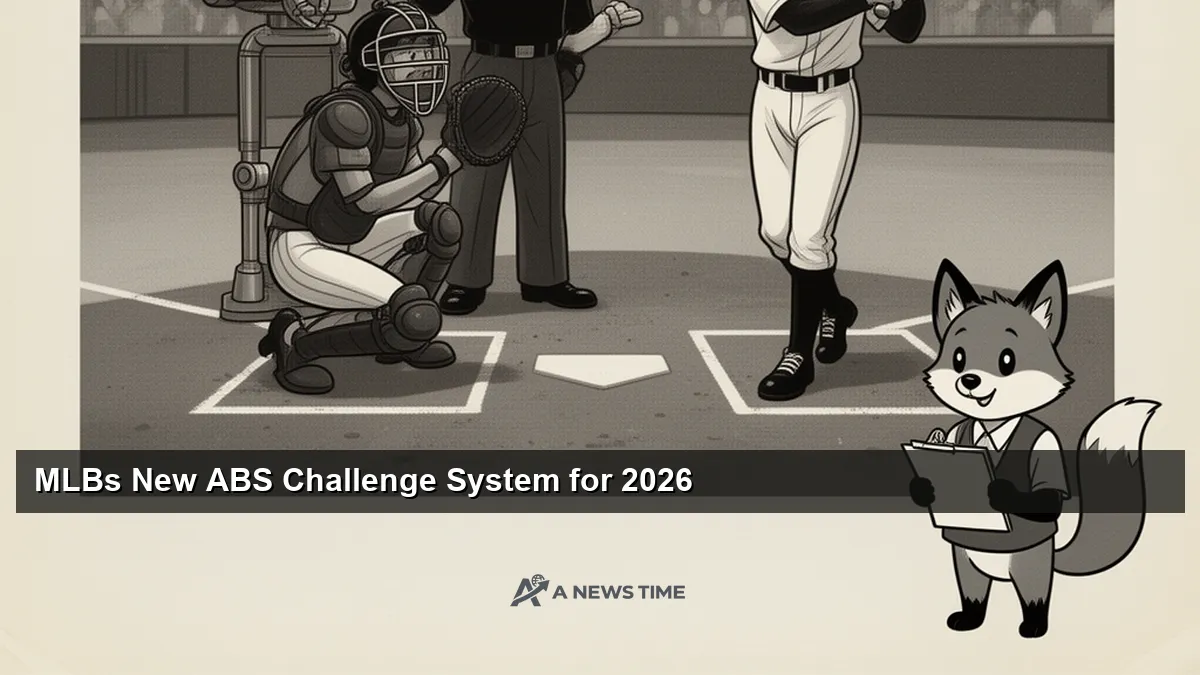
The ABS challenge system adds another dimension to pitching strategy this spring. Pitchers are using spring training to adjust to a more consistently enforced strike zone, working on pitch sequences that account for the possibility that borderline pitches will be challenged and overturned. The adjustment is subtle but real: several pitchers have reported that they are throwing fewer pitches intended to "steal" the edge of the zone and more pitches designed to generate swings and misses, recognizing that the margin for error on called strikes has narrowed with the challenge system in place.
Division Previews: What Spring Training Tells Us
Spring Training is an imperfect predictor of regular-season success (the correlation between spring record and regular-season record is approximately 0.15, barely above random), but it does provide useful information about team health, roster construction, and organizational direction. Here are brief snapshots of each division based on what we have seen this spring:
- AL East: The Orioles' Baz extension signals their intent to compete. The Yankees have been focused on integrating new acquisitions. The Blue Jays are rebuilding around their young core. The Red Sox and Rays are in transition.
- AL Central: The division remains wide open, with no clear favorite. Several teams have promising young pitchers who could tip the competitive balance.
- AL West: The defending champions have been the most impressive team in the Cactus League, and their rotation depth is the envy of the division.
- NL East: The division is loaded with talent at the top, and at least three teams have legitimate postseason aspirations.
- NL Central: A strong pitching division, with multiple teams built around rotation depth and bullpen quality rather than offensive firepower.
- NL West: The young outfielder turning heads in the Cactus League represents the broader theme of this division: young talent emerging and challenging for playing time.
Key Dates Ahead
- : Opening Day
- : Rosters must be trimmed to 26 players
- : All-Star Game
- : Trade Deadline
Spring Training is nearly complete, and the anticipation for Opening Day is building. The Baz extension, the breakout performances, the WBC carryover, and the continued refinement of the ABS challenge system have all contributed to a spring that has been more substantive than most. When the games start counting, the preparation done in Arizona and Florida will be tested against the reality of a 162-game season. For 30 teams and their fan bases, the hope of spring is about to give way to the accountability of April.
Byline: Aisha Mbeki, Senior Sports Reporter