The bearish housing case has been made, retracted, and remade multiple times since mortgage rates began climbing in 2022. The logic was straightforward: higher borrowing costs reduce affordability, reduced affordability kills demand, and reduced demand means lower prices. The problem is that this analysis treats the housing market as if it operates like an equity market, where price adjusts freely to new information. It does not. Housing supply is constrained by zoning laws, permitting timelines, labor markets, and material costs. Housing demand is underpinned by demographic necessity, not speculation. And a large share of existing homeowners are effectively locked out of selling by the math of their own mortgages.
The result, entering 2026, is a market that the NAR describes as "the most balanced it has been in almost a decade" — but balanced at price levels that remain dramatically above pre-pandemic norms. Understanding why requires pulling apart the supply and demand dynamics separately.
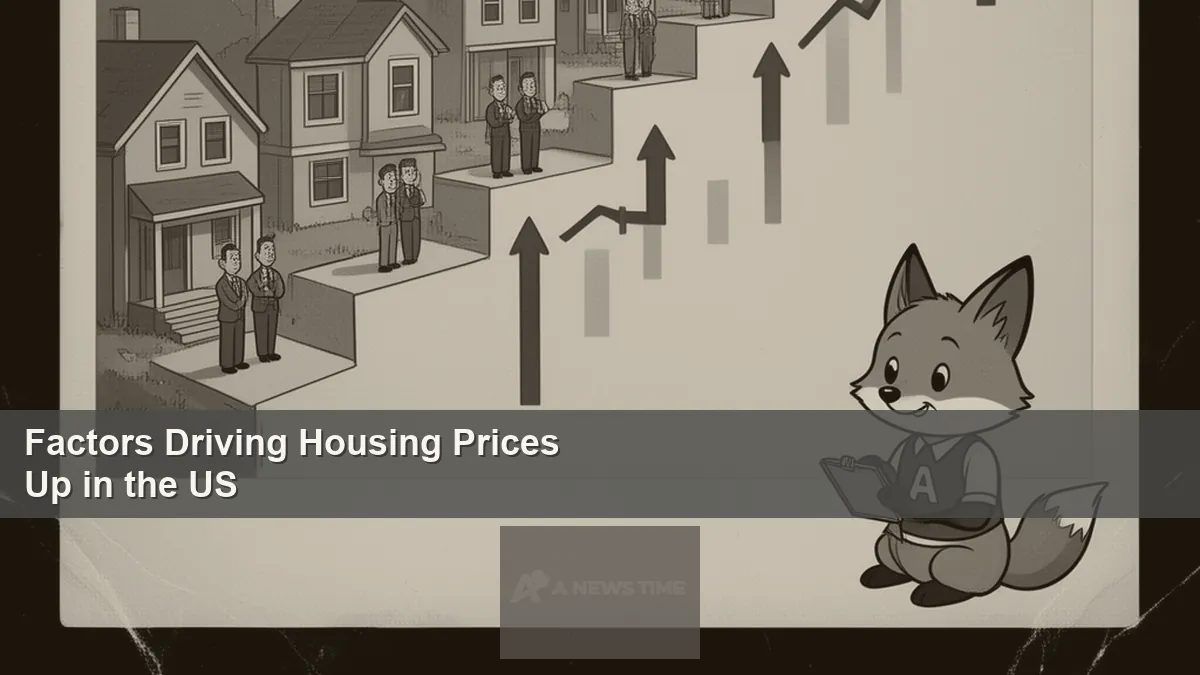
The Supply Deficit Is Structural, Not Cyclical
Realtor.com's 2026 Housing Supply Gap Report, published in , put the national housing deficit at 4.03 million homes. This figure represents the cumulative gap between the number of homes that should exist given household formation rates and the number that actually exist. It is not a short-term inventory figure — it is a balance sheet problem that has been accumulating for more than a decade.
In 2025, approximately 1.41 million new households formed while only 1.36 million housing starts were recorded. The resulting annual deficit of roughly 50,000 homes appears modest, but it adds to an existing hole that already exceeds 4 million units. To put that in context: the US would need to build at a pace roughly 50% above its 2025 rate and sustain it for approximately seven years just to eliminate the existing deficit, according to Realtor.com's own modeling.
"Even when annual construction and household formation are roughly balanced, the market is still digging out from more than a decade of underbuilding. A supply gap exceeding 4 million homes underscores how deeply rooted the shortage has become. Without a sustained and targeted increase in housing supply, particularly in areas with strong job growth and persistent demand, affordability challenges will continue to sideline many would-be buyers."Danielle Hale, Chief Economist, Realtor.com
Robert Dietz, chief economist at the NAHB, offered the same diagnosis from the supply side:
"The housing stock is not large enough given the size of the population. This housing deficit remains a major constraint on affordability. The only way to really solve the housing affordability challenge is to build our way out of it."Robert Dietz, Chief Economist, National Association of Home Builders
Single-family starts fell to approximately 940,000 units in 2025, the lowest since 2019. Zoning restrictions, permitting delays, labor shortages from immigration enforcement actions, and elevated material costs all constrain builders' ability to respond to demand, regardless of how strong that demand is.
The Lock-In Effect: Why Existing Homeowners Won't Sell
The single most underappreciated supply constraint in the current market is not builder capacity — it is the behavior of existing homeowners. Between 2020 and 2022, roughly 14 million American homeowners refinanced into mortgages at rates between 2.5% and 3.5%. With current rates hovering above 6%, the financial penalty for selling is severe: a homeowner with a $400,000 balance at 3% would see monthly payments jump by approximately $800 on an equivalent loan at 6.5%.
Research from Harvard's JCHS quantified this effect, finding that rate lock explains approximately 40% of the increase in aggregate home prices relative to rents since 2022. The mechanism is straightforward: homeowners who would otherwise trade up or downsize are staying put. This removes resale inventory from the market and concentrates available supply in new construction and distressed sales — two categories that together represent a fraction of normal transaction volume.
The NAR reported existing home inventory at approximately 20% above year-ago levels heading into 2026, but Nadia Evangelou, NAR senior economist, noted that even with this improvement, inventory remains well below pre-COVID norms. The market is looser than 2021 and 2022 — it is not loose by historical standards.
Demographic Demand: The Millennial Cohort Has Not Peaked
The demand side of the equation has its own structural driver. Millennials, the largest generational cohort in US history, are now aged 29 to 44, precisely the age range at which household formation and first-time home purchases historically peak. The pandemic's disruption delayed many of these purchases by two to three years. That demand has not evaporated — it has accumulated.
The Realtor.com Supply Gap Report estimated that 1.82 million Millennial and Gen Z households were "missing" in 2025 — meaning they should exist based on demographic norms but have not formed due to housing cost barriers. The minimum recommended income to purchase a median-priced starter home reached approximately $86,000 in 2025, with a median down payment of roughly $30,400, representing about 14.4% of purchase price. At median savings rates, the accumulation of that down payment takes an estimated seven years.
When rates do fall enough to open the market, or when the down payment hurdle is cleared through family wealth transfer or savings accumulation, this pent-up demand will hit a market that is already supply-constrained. NAR chief economist Lawrence Yun projected home sales to increase approximately 14% nationwide in 2026, driven partly by this demographic cohort re-entering the market as affordability modestly improves.
Jessica Lautz, NAR deputy chief economist, highlighted a parallel demographic trend that complicates the picture:
"Baby boomers are really the dominating force in today's housing market. They have a ton of housing wealth, and they're able to make trades right now. They're not making many concessions on their home choices, and they have the funds to really make those choices."Jessica Lautz, Deputy Chief Economist, National Association of Realtors
The practical effect: the most active buyers in the market are all-cash boomers downsizing into the same inventory that cash-poor millennials are competing for. This dynamic compresses the relative affordability for first-time buyers even in a market where nominal prices are flat.
Regional Price Divergence: Not All Markets Are Equal
The national headline number obscures enormous regional variation. The South currently has the largest cumulative housing shortage at 1.62 million missing homes, followed by the Northeast at 952,000, the Midwest at 865,000, and the West at 660,000. When measured relative to new construction activity, the Northeast faces the most severe constraints, a function of decades of restrictive zoning and limited developable land near major job centers.
| Region | Cumulative Housing Deficit (2025) | Price Trend (2025) | New Construction Activity |
|---|---|---|---|
| South | 1.62 million homes | Moderating; some markets correcting | Highest nationally; some overbuilding in TX/FL |
| Northeast | 952,000 homes | Still rising; limited supply response | Highest since 2015, still insufficient |
| Midwest | 865,000 homes | Rising; emerging hotspots (Columbus, Indianapolis) | Growing, especially near universities |
| West | 660,000 homes | Mixed; coastal markets elevated, some interior relief | Moderate; constrained by land costs and zoning |
Robert Dietz flagged an important geographic shift for 2026: "Markets like Columbus, Ohio, Indianapolis, and Kansas City — areas that have long been more affordable and are close to major universities — are showing outsized growth," he noted, while previously hot Texas and Florida markets have seen some cooling due to prior overbuilding and persistent rates above 6%.
The Case-Shiller Home Price Index data through showed national year-over-year price growth slowing to roughly 2% to 3%, down from the double-digit gains of the pandemic era. The NAR projects similar modest appreciation for 2026. Prices are not falling — they are growing more slowly than they have in several years, while income growth is modestly outpacing them.
What Would Actually Bring Prices Down
The honest answer from every major housing economist in 2026 is the same: prices will only fall materially if supply increases dramatically and/or demand collapses. Demand collapse would require either a severe recession that drives significant unemployment (which historically triggers both forced selling and demand destruction) or a demographic reversal that is not on any reasonable forecast horizon.
The supply solution is theoretically clear but operationally difficult. Realtor.com's Let America Build campaign has been pushing for zoning reform, streamlined permitting, and reduced regulatory barriers to development since 2025. The NAHB has made similar arguments for years. Progress exists but is slow: zoning changes require municipal and state-level action across thousands of jurisdictions. Building timelines from permit to occupancy run 12 to 24 months even in permissive regulatory environments.
Middle-income buyers face the starkest arithmetic. Before the pandemic, middle-income households could afford approximately 50% of homes on the market. In 2025, that number had fallen to approximately 21%, according to NAR analysis. The path back to 50% requires some combination of price moderation, income growth, and mortgage rate reduction. All three are moving in the right direction in 2026, but slowly. No single factor is large enough to rapidly restore affordability on its own.
For related context on how mortgage rate movements are affecting the 2026 market specifically, see our earlier coverage: Mortgage Rates Jump: How the Iran War Is Reshaping the Housing Market.
Frequently Asked Questions
Why haven't US home prices crashed despite high mortgage rates?
Because the primary driver of elevated prices is a structural supply deficit of 4.03 million homes, not speculative demand that evaporates when financing costs rise. Existing homeowners are locked into low-rate mortgages and have no financial incentive to sell. Builders face zoning, labor, and material cost constraints that prevent rapid supply response. These forces are slower-moving than interest rate changes and do not self-correct quickly.
What is the "lock-in effect" in housing?
The lock-in effect describes the behavior of homeowners who refinanced into mortgages at rates of 2.5% to 3.5% between 2020 and 2022 and are now reluctant to sell because doing so would require taking on a new mortgage at rates above 6%, dramatically increasing monthly payments. Harvard's JCHS research found this effect explains roughly 40% of the increase in home prices relative to rents since 2022.
Which US regions have the worst housing shortages?
By absolute number of missing homes, the South has the largest deficit at 1.62 million, followed by the Northeast at 952,000, the Midwest at 865,000, and the West at 660,000. When measured relative to construction activity (how badly the shortage is relative to building capacity), the Northeast is the most constrained, followed by the Midwest.
How long would it take to close the US housing supply gap?
According to Realtor.com's modeling, even under an optimistic scenario where construction increases 50% above 2025 levels and pent-up demand fully dissipates, it would still take approximately seven years to eliminate the 4.03 million home deficit.
Will home prices fall in 2026?
Leading economists including Lawrence Yun at NAR and Danielle Hale at Realtor.com project price growth of 2% to 3% nationally in 2026, roughly in line with inflation. Nominal price declines nationally would require a significant demand shock, not just high mortgage rates. Regional variation is large: some overbuilt Sun Belt markets may see modest nominal corrections while supply-constrained Northeast and Midwest markets continue appreciating.
Sources
- NAR REALTOR Magazine: 2026 Real Estate Outlook — What Leading Housing Economists Are Watching (January 2026)
- Construction Owners: US Housing Shortage Tops 4 Million Homes, citing Realtor.com 2026 Supply Gap Report (March 2026)
- Harvard Joint Center for Housing Studies: Did Mortgages Locked in Low Rates Lead to Rising House Prices?
- Realtor.com Research: Case-Shiller Home Price Index — December 2025 Commentary