Byline: Sophia Winters, Senior Entertainment Reporter
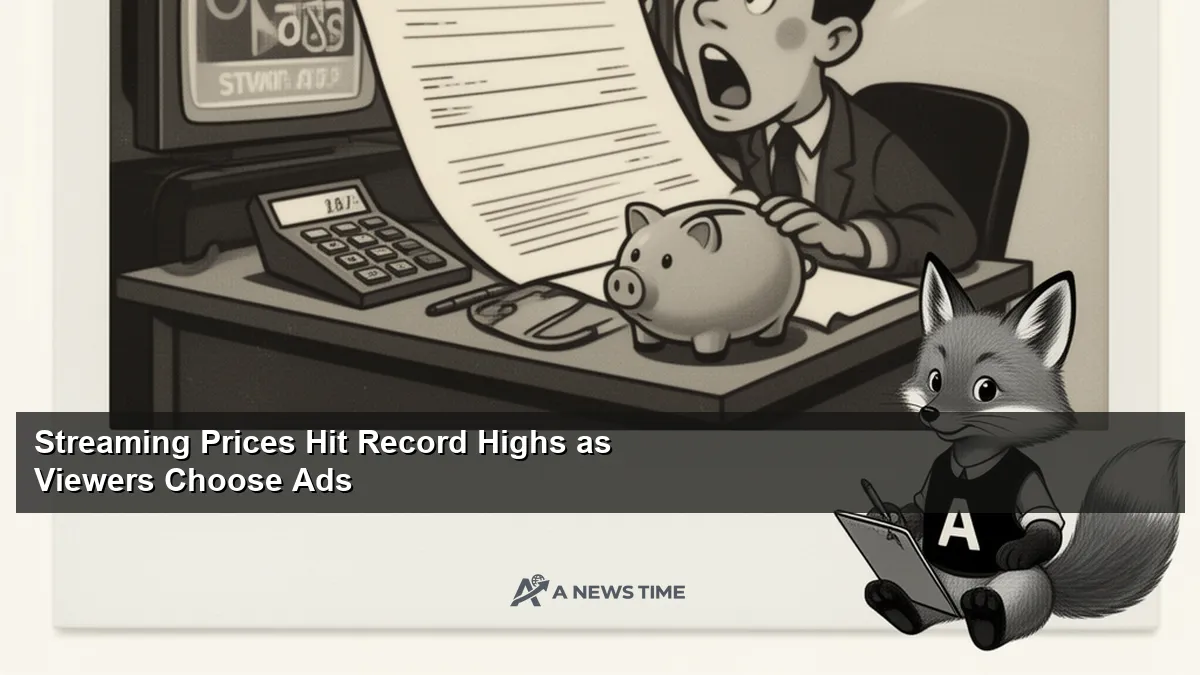
The average American household now spends $69 per month on streaming services. That number, drawn from Deloitte's 2026 Digital Media Trends report, would have seemed absurd a decade ago when Netflix was the only game in town and $10 a month felt like all the entertainment anyone could need. Today, with a half-dozen platforms competing for attention and each one raising prices on what feels like an annual schedule, the streaming bill has quietly become one of the most significant recurring expenses in American households.
The consumer response has been decisive and measurable. According to the same Deloitte report, 60 percent of subscribers say they would cancel a service if it raised prices by just $5. Two-thirds of streaming subscribers are now on ad-supported tiers, a 20 percent increase from 2024. The streaming industry built its identity on the promise of premium, ad-free entertainment at a reasonable price. That promise is fracturing, and the industry that emerges from the other side will look very different from the one that killed cable.
The Numbers That Explain Everything
Deloitte's 2026 report provides the clearest picture yet of how dramatically the streaming landscape has shifted. The $69 per month average represents households that subscribe to multiple services, which is the norm rather than the exception. The average household maintains subscriptions to four streaming platforms, down from a peak of 4.7 in 2023 as consumers have become more selective about where their money goes.
The price sensitivity revealed in the data is striking. That 60 percent figure, the proportion of subscribers who would cancel over a $5 increase, represents a genuine constraint on the pricing power that streaming companies have been exercising with increasing aggression. Netflix, the industry leader, has pushed its premium ad-free tier to $24.99 per month and is preparing to raise it to $27 in the coming months. Disney+ has followed a similar trajectory, and even smaller players like Peacock and Paramount+ have implemented their own increases.
The cumulative effect is a monthly bill that, for many households, has reached or exceeded what they were paying for cable. The irony is not lost on consumers. The cord-cutting revolution that promised freedom from expensive, bloated cable packages has delivered a streaming ecosystem that is increasingly expensive and increasingly bloated. The key difference is that consumers now have the ability to cancel individual services month to month, a flexibility they did not have with cable. And they are using that flexibility aggressively.
"The streaming industry has reached a pricing inflection point. Consumers have absorbed years of increases, and the data shows they are approaching a hard ceiling on what they are willing to pay."
Deloitte 2026 Digital Media Trends Report
The Ad-Tier Migration
The most significant behavioral shift captured in the Deloitte report is the mass migration to ad-supported streaming tiers. Two-thirds of all streaming subscribers are now on plans that include advertising, a 20 percent increase from 2024 and a number that would have been unthinkable when Netflix first launched its ad-supported option in late 2022 to widespread skepticism.
The logic from the consumer side is straightforward. If the premium, ad-free tier of Netflix costs $24.99 (soon to be $27) and the ad-supported tier costs $7.99, the $17 monthly difference is real money. Multiply that savings across four streaming subscriptions, and a household can cut its streaming bill by $50 or more per month simply by accepting ads. For many consumers, particularly those who grew up watching broadcast television with commercial breaks, that trade-off is entirely acceptable.
From the industry side, the economics of ad-supported streaming have become increasingly attractive. Michael Smith, a professor of information technology and public policy at Carnegie Mellon University who has studied streaming economics extensively, puts it bluntly. "The ad-supported tier is sufficiently profitable on its own," Smith told the Los Angeles Times. "The revenue per user from advertising, combined with the subscription fee, often exceeds what platforms earn from ad-free subscribers. The math works, and it works well."
That assessment is supported by the data. Netflix reported that its ad-supported tier had reached 70 million monthly active users globally by the end of 2025, a number that exceeded even the company's internal projections. The advertising revenue generated by those users, combined with their subscription fees, has made the ad tier one of Netflix's most profitable products on a per-user basis.
The implication is that streaming companies may actually prefer users on ad-supported tiers, even if the subscription price is lower. The dual revenue stream of subscription fees plus advertising creates a more robust business model than subscription fees alone. This dynamic helps explain why platforms have been raising ad-free prices so aggressively. They are not just extracting more money from premium subscribers. They are nudging price-sensitive consumers toward the ad tier, where the combined economics are often better for the platform.
What the Ads Actually Look Like in 2026
Part of the reason consumers have been willing to accept ads is that the advertising experience on streaming platforms has improved significantly since the early days. When Netflix launched its ad tier in 2022, the ad loads were relatively light: four to five minutes per hour, compared to the 15 to 20 minutes per hour typical of broadcast television. That restraint helped ease consumers into the transition.
By 2026, the ad loads have crept up on most platforms, but they remain substantially lighter than traditional television. Netflix currently runs approximately six to seven minutes of advertising per hour on its ad tier. Disney+ is in a similar range. The ads themselves are more targeted and, in many cases, more relevant than the generic commercial breaks that characterized cable television. Streaming platforms can leverage their data on viewing habits to serve ads that are at least theoretically aligned with consumer interests.
The advertising format has also evolved. Several platforms now offer "pause ads" that appear when a viewer pauses content, interactive ads that allow viewers to engage with products directly, and "binge ads" that reduce ad frequency during extended viewing sessions as a reward for continued engagement. These innovations are designed to make the ad experience less intrusive, and the data suggests they are working. Consumer satisfaction with ad-supported streaming tiers has increased steadily, even as ad loads have grown.
Jennifer Hessler, a media industry analyst who tracks consumer streaming behavior, points to the broader competitive picture. "Winning the discovery battle is what matters now," Hessler noted in a recent industry report. "Consumers are not loyal to platforms. They are loyal to content. The platforms that make it easiest to find something worth watching, regardless of the ad experience, are the ones that retain subscribers."
"Winning the discovery battle is what matters now. Consumers are not loyal to platforms. They are loyal to content."
Jennifer Hessler, Media Industry Analyst
The Churn Problem and the Bundle Solution
Subscriber churn, the rate at which customers cancel their subscriptions, remains the streaming industry's most persistent headache. The Deloitte report found that nearly half of all streaming subscribers had canceled at least one service in the previous six months. The pattern is now well established: subscribe for a specific show, binge it, cancel, move to the next platform. Repeat indefinitely.
The industry's response has been bundling, a strategy that anyone who lived through the cable era will find deeply familiar. Disney, which owns Disney+, Hulu, and ESPN+, has aggressively promoted its bundle pricing, which offers all three services at a discount compared to subscribing individually. Warner Bros. Discovery has explored partnerships with other streamers. And Apple TV+ has leaned on its integration with the broader Apple ecosystem to reduce churn among existing Apple customers.
The most aggressive bundling play has come from Verizon and other telecom companies, which are now offering streaming bundles as part of their wireless and internet packages. This strategy mirrors exactly how cable companies once operated: package content together, make it convenient, and bet that inertia will keep subscribers from canceling. The main difference is that the content comes from multiple competing companies rather than a single cable provider.
For consumers, bundling offers genuine savings but also introduces a new form of the complexity that cord-cutting was supposed to eliminate. Managing multiple streaming subscriptions, even when bundled, requires keeping track of which content lives where, which bundle includes which services, and when promotional pricing expires. The dream of a simple, affordable streaming experience has given way to a reality that, in many ways, resembles the cable packages consumers were so eager to leave behind.
The AI Content Question
One of the more surprising findings in the Deloitte report concerns consumer attitudes toward AI-generated content on streaming platforms. According to the data, 40 percent of consumers say they would accept AI-generated content if it is clearly labeled. That number is higher among younger demographics and lower among older viewers, but the overall willingness to engage with AI content marks a significant shift in consumer sentiment.
The implications for the streaming industry are enormous. AI-generated content, whether that means fully AI-produced shows, AI-assisted writing, AI-generated visual effects, or AI-driven dubbing and localization, could dramatically reduce the cost of content production. For an industry that is spending billions on original content while struggling to achieve profitability, the potential cost savings are difficult to ignore.
The entertainment industry's labor unions, including SAG-AFTRA and the Writers Guild of America, negotiated significant AI protections in their 2023 contracts, and those provisions will be tested as studios explore AI applications. The consumer willingness data suggests that the market may be more receptive to AI content than the creative community would like, creating a tension between consumer demand and worker protections that will define industry negotiations for years to come.
The 40 percent figure comes with important caveats. "Accept" does not mean "prefer." Most consumers still express a preference for human-created content when given the choice. And the "clearly labeled" condition is doing significant work in that statistic. Consumers want transparency about how content is made, and platforms that try to pass off AI-generated content as human-created risk a significant backlash. The labeling requirement functions as a consent mechanism: give people accurate information and let them make their own choices.
For a deeper look at how AI is reshaping creative industries beyond streaming, our coverage of AI applications across various sectors provides additional context on the technology's expanding role.
Where the Industry Goes from Here
The streaming industry in 2026 is at a crossroads that looks increasingly like a roundabout leading back to where television started. Prices are rising. Ads are returning. Bundling is back. The only meaningful difference between the streaming ecosystem and the cable ecosystem it replaced is consumer flexibility. The ability to cancel at will, without contracts or early termination fees, gives consumers a leverage that cable subscribers never had.
That flexibility is a double-edged sword for the industry. It keeps platforms accountable, since a bad month of content or an aggressive price increase can result in immediate subscriber losses. But it also makes the business model inherently unstable, with quarterly subscriber numbers subject to the whims of individual shows and cultural moments.
The Deloitte data suggests several likely near-term developments. First, ad-supported tiers will continue to grow as a share of total subscribers, potentially reaching 75 percent or more within two years. Second, premium ad-free pricing will continue to rise, but at a pace constrained by the 60 percent cancellation threshold identified in the report. Third, bundling will become the norm rather than the exception, with most consumers accessing streaming content through packages rather than individual subscriptions.
The $69 monthly streaming bill is not the ceiling. It is the current floor for households that want access to the breadth of content available across platforms. Whether consumers continue to pay that amount, trade down to ad-supported tiers, or simply cancel and find entertainment elsewhere will determine the shape of the industry for the next decade. The data so far suggests they will do all three, in varying proportions, creating a market that is more segmented and more complex than anyone anticipated when Netflix first started mailing DVDs in red envelopes.
- Average monthly streaming spend: $69 per household (Deloitte 2026)
- Price sensitivity: 60% would cancel if prices rose $5
- Ad-tier adoption: Two-thirds of subscribers, up 20% from 2024
- Netflix premium price: $24.99 rising to $27
- AI content acceptance: 40% accept if clearly labeled