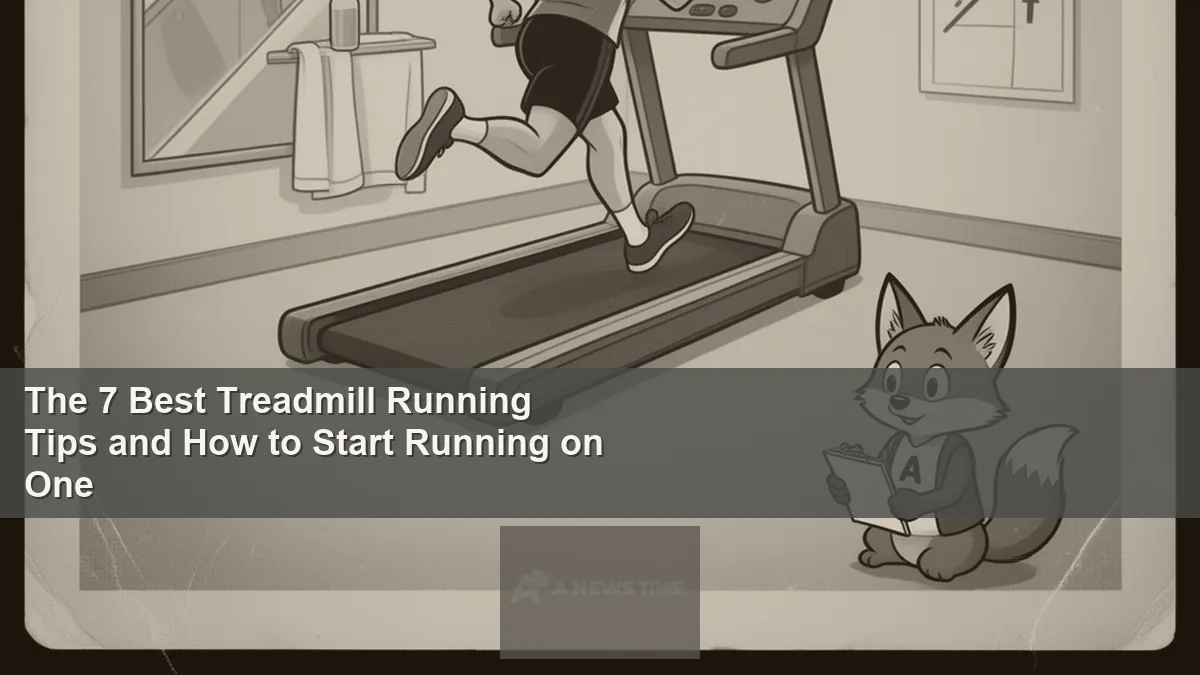
It is January, which means the treadmill rows at every gym are crowded with people who will, statistically, stop using them by mid-February. But there is a parallel reality: for a significant portion of regular runners, the treadmill is not a compromise or a bad-weather backup. It is a primary training tool. Ultramarathon runners use it for controlled long runs. Physical therapists prescribe it for gait retraining. Athletes recovering from injuries use it to maintain fitness before returning to outdoor terrain.
The treadmill's reputation problem is partly cultural and partly biomechanical. Culturally, it has absorbed the connotation of joyless obligation, the "dreadmill" nickname stuck for a reason. Biomechanically, there are real differences between treadmill and outdoor running that, if misunderstood, can lead to either dismissing the treadmill unfairly or using it in ways that don't actually prepare you for the demands of outdoor running. Exercise science has a reasonably clear picture of what those differences are and what to do about them.
Tip 1: Set the Incline to 1%
This is the most-cited treadmill tip in exercise science, and it is rooted in a specific piece of research. A study by Jones and Doust, published in Journal of Sports Sciences in 1996, examined the physiological cost of treadmill running compared to outdoor running and found that a 1% incline best approximated the additional energy cost of air resistance encountered during outdoor running at typical training paces. The study remains foundational and has been replicated and cited extensively since.
The mechanism is straightforward: outdoor runners must overcome air resistance, which creates a small but measurable drag force. On a flat treadmill, that resistance is absent, which makes the same pace slightly easier than it would be outside. At a 1% incline, the additional muscular demand roughly compensates for this deficit. At very slow paces (below about 7 minutes per mile), the difference is negligible and the incline matters less. At race paces and tempo efforts, it becomes meaningful.
The practical implication: unless you are specifically training for downhill running, running on a completely flat treadmill at your "outdoor pace" is slightly easier than you think. Setting 1% is a simple habit that makes treadmill effort more transferable to outdoor performance.
Tip 2: Understand What the Belt Does
The moving belt of a treadmill does something that outdoor ground does not: it assists in the backward sweep of your leg during the push-off phase of the gait cycle. On outdoor surfaces, your leg must actively push backward against static ground to propel you forward. On a treadmill, the belt's backward motion contributes to this movement, which can subtly reduce the demand on hip extensors and hamstrings.
This is part of why biomechanical research shows some differences in muscle activation between treadmill and outdoor running. A review found that treadmill running tends to produce slightly reduced hamstring activation and a somewhat shorter stride length compared to overground running at equivalent speeds. Neither difference is large enough to make treadmill running counterproductive, but it does mean that exclusive treadmill training may not fully replicate the muscular demands of outdoor running.
For runners who train primarily on treadmills and race outdoors, incorporating some outdoor running, or adding resistance-based hamstring work to their strength routine, helps address this gap. For the majority of recreational exercisers using the treadmill for fitness rather than race preparation, the difference is largely irrelevant.
Tip 3: Start Slower Than You Think You Need To
One of the most common beginner mistakes on a treadmill is selecting a pace based on what feels manageable for the first 30 seconds. The treadmill has a unique property: the pace is externally set and does not adjust to how you feel. Outdoor runners instinctively slow down when fatigued. On a treadmill, you have to consciously reduce the speed, and the visual commitment to a number on a display creates psychological pressure to maintain it even when the body is telling you otherwise.
For new runners, exercise physiologists consistently recommend starting at a pace that feels easy, not comfortable, but genuinely easy: a pace at which a conversation would be possible without significant breathiness. This is roughly equivalent to zone 2 intensity, the training range associated with aerobic base building and mitochondrial adaptation. Beginning at this pace builds aerobic capacity without the injury risk that comes from too-fast-too-soon efforts.
A useful framework for beginners is the run-walk method developed by Olympic marathoner Jeff Galloway. Research on run-walk intervals shows that they reduce injury risk while still producing cardiovascular adaptations, and the structured recovery periods prevent the "I need to stop or fall off this thing" experience that drives many new treadmill runners to quit. A typical beginner interval might be 30 seconds running at a manageable pace, followed by 90 seconds walking, repeated for 20 minutes. The walk intervals are not failure; they are part of the method.
Tip 4: Resist the Urge to Hold the Handrails
This one is worth addressing directly because it is extremely common and reduces the effectiveness of treadmill training significantly. Holding the handrails while running or walking substantially reduces the physiological effort compared to moving without support. It shifts weight off the legs, reduces the cardiovascular demand, and changes the gait mechanics in ways that do not transfer to unsupported movement.
Studies have measured the oxygen consumption difference between handrail-supported and unsupported treadmill walking and found reductions in energy expenditure of up to 25 percent when people actively lean on the rails. If someone is walking at a pace they describe as "hard" while holding rails, the effective effort level is likely "moderate" or lower.
If the pace or incline requires handrail support to maintain, reduce the pace or incline. The training effect comes from unsupported effort. The handrails are there for emergency support, not as a mechanism for making a too-demanding setting manageable. This is particularly relevant for people using steep incline walking (the "12-3-30" protocol, walking at 12% incline at 3 mph for 30 minutes, which became a social media fitness trend), where the entire cardiovascular and muscular benefit is compromised if the rails are used.
Tip 5: Manage the Mental Demands Deliberately
Treadmill running is harder to sustain psychologically than outdoor running, and there is research explaining why. Outdoor running provides continuous environmental variation: terrain changes, visual stimuli, slight pace fluctuations that keep the experience dynamic. Treadmill running is metronomic and visually static, which amplifies the perception of effort and time.
A study examining perceived exertion on treadmills versus outdoor running found that at equivalent physiological intensities, treadmill runners reported higher RPE, that is, their workouts felt harder than they physiologically were. This is relevant for pacing and enjoyment. People quit the treadmill not because it is harder for their bodies, but because it is harder for their attention.
Practical strategies that have research support: music consistently reduces RPE and improves treadmill performance and enjoyment. Podcasts or audiobooks work for moderate-intensity sessions where talking pace allows for comprehension. Breaking sessions into intervals, even arbitrary ones like "run to the end of this song" or "three more minutes," reduces the cognitive weight of time remaining. Covering the display works for some runners who find the number-watching compulsive and anxiety-producing.
Tip 6: Use the Treadmill's Controllability as a Feature
The thing that makes the treadmill feel clinical, its precise pace and incline controls, is also what makes it a genuinely useful training tool when used intentionally. The controlled environment allows for training modalities that are difficult or impossible to replicate outdoors.
Tempo runs, sustained efforts at a pace slightly faster than comfortable ("comfortably hard"), are easier to execute on a treadmill because the pace does not drift. The treadmill prevents the common outdoor tempo mistake of starting too fast and fading. Progression runs, where pace increases every few minutes to simulate a negative-split race strategy, are precisely controllable. Interval work, alternating between easy and hard efforts, can be executed with exact timing without worrying about terrain or traffic.
| Training Goal | Speed (mph) | Incline | Effort Level | Session Format |
|---|---|---|---|---|
| Easy recovery / beginner base | 3.5-5.0 | 1% | Zone 2 (conversational) | 20-45 min continuous or walk-run |
| Aerobic base building | 5.0-6.5 | 1% | Moderate (zone 3) | 30-60 min |
| Tempo / threshold | 6.5-8.5 | 1% | Comfortably hard (zone 4) | 20-40 min or 3x10-15 min |
| Interval training | 8.0-10.0+ | 0-1% | Hard (zone 5) | 6-10x 1-3 min with recovery |
| Incline walking (cardio/glutes) | 2.5-3.5 | 8-15% | Moderate-hard | 20-40 min (no handrail) |
| Hill sprint simulation | 6.0-8.0 | 5-10% | Very hard (zone 5) | 8-12x 30-60 sec with recovery |
Tip 7: Warm Up and Cool Down Deliberately
The treadmill environment, particularly in an air-conditioned gym, can create a false sense that warming up is optional. The muscular and connective tissue demands of running are the same regardless of equipment. Going from seated or standing to a running pace without a proper warm-up increases injury risk, particularly for the Achilles tendon and plantar fascia, which need progressive loading before handling full running impact.
A practical treadmill warmup: three to five minutes of brisk walking, followed by two to three minutes at an easy jog, before moving to the target training pace. Some runners add dynamic mobility work (leg swings, hip circles, calf raises) before stepping on the belt. The cooldown mirrors this: two to three minutes progressively slowing to a walk, followed by several minutes of walking before stepping off.
The cardiovascular system benefits from gradual transitions as well. Stopping a treadmill run abruptly and stepping off can produce a lightheaded sensation (orthostatic hypotension) as blood pressure adjusts. A proper cooldown walk allows heart rate to descend gradually and maintains the muscular pumping that assists venous return from the lower extremities.
For beginners establishing an exercise routine, the treadmill's consistency, predictability, and weather independence make it a genuinely useful tool for building the habit. The research does not support the idea that treadmill running is inherently inferior to outdoor running for fitness purposes. What it supports is using the treadmill with awareness of its specific characteristics, and treating the controllability as an asset rather than a limitation.
Frequently Asked Questions
Is treadmill running easier than running outside?
At the same pace, treadmill running is slightly less demanding than outdoor running because it eliminates air resistance and the belt assists the push-off phase. Research by Jones and Doust established that a 1% incline compensates for this difference at most training paces. At very slow speeds (below about 7 minutes per mile), the difference is minimal. At tempo and race paces, it becomes more meaningful.
Can I build a solid running fitness base on a treadmill only?
Yes. The cardiovascular and metabolic adaptations from treadmill running are equivalent to those from outdoor running. The main consideration for people who plan to race or run outdoors is that treadmill training does not fully replicate the terrain variability, wind resistance, and proprioceptive demands of outdoor surfaces. Incorporating some outdoor running before races or hilly terrain helps transfer the fitness built on the treadmill.
What should a complete beginner's first few treadmill sessions look like?
Start with a 3-5 minute brisk walk warmup, then alternate 30-60 seconds of easy jogging with 90 seconds of walking for 20-25 minutes total, then cool down with 3-5 minutes of walking. The jogging pace should be genuinely easy, not just possible. Doing this three times per week for four to six weeks builds aerobic capacity while letting connective tissue adapt to the impact of running before adding more continuous running.
Is it bad for your joints to run on a treadmill?
Treadmill surfaces are generally softer than asphalt or concrete, and research has not found that treadmill running is harder on joints than outdoor running on equivalent surfaces. The most significant joint protection factor in running is not the surface but the volume and rate of progression. Increasing mileage too quickly, regardless of surface, is the primary driver of overuse injury. Both treadmill and outdoor runners benefit from the 10% rule: increasing weekly mileage by no more than 10% per week.
Sources
- Running Writings: "A scientific guide to treadmill training and workouts for runners" (2023)
- Runner's World: "How Does Running on a Treadmill vs. Running Outside Compare?"
- Endurance Treadmills: "The Science of Running: Understanding Biomechanics of Treadmill Running"
- Garage Gym Reviews: "Running On a Treadmill Tips (2026)"