Byline: Kieran Wolfe, Senior Gaming Reporter
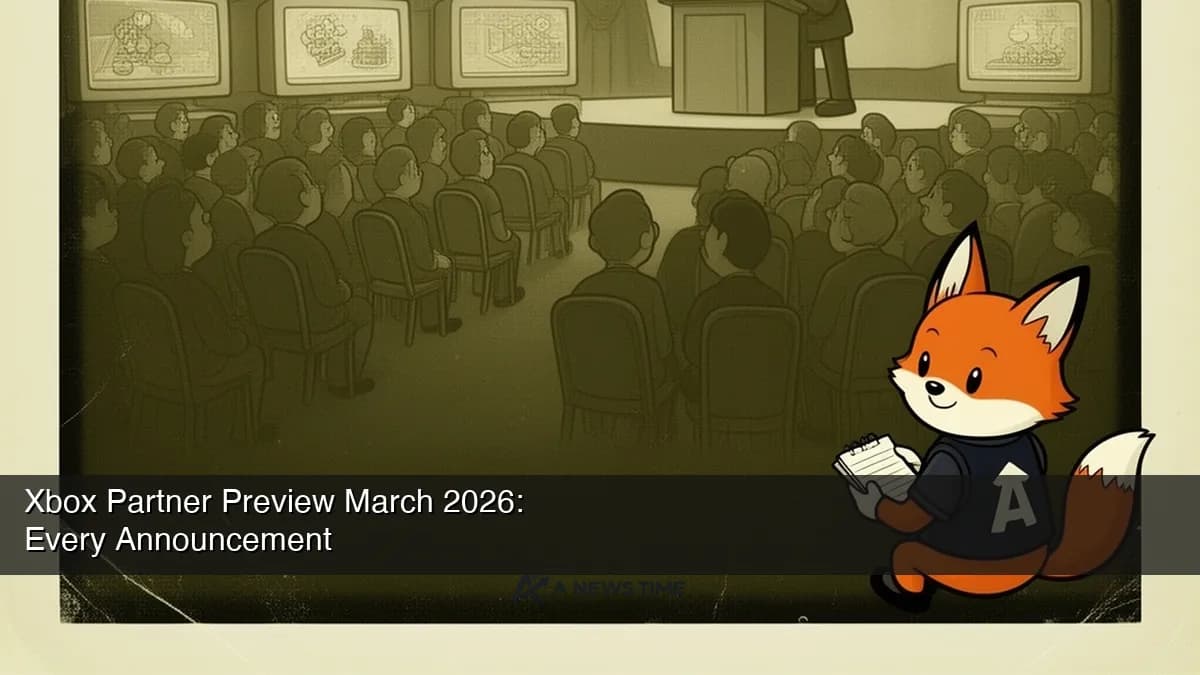
On , Microsoft hosted a 30-minute Xbox Partner Preview livestream that confirmed more than a dozen titles heading to Xbox consoles and Game Pass over the next two years. The showcase avoided first-party tentpoles in favor of third-party partnerships: a World of Darkness FPS, a major free-to-play import from Asia, a new game from the Yakuza developers, and long-awaited platform arrivals for two beloved indie franchises. When stacked together, the lineup paints a clearer picture of how Xbox is building its ecosystem through breadth rather than relying solely on blockbuster exclusives. That strategy comes with trade-offs, and this showcase exemplified both its appeal and its limitations.
Partner Previews have become a reliable fixture in Xbox's marketing calendar since the company began leaning into them as a supplement to the Xbox Games Showcase. The format is tight, producer-driven, and deliberately paced to show maximum titles in minimum time. At exactly 30 minutes, this edition delivered on volume. Whether it delivered on weight is a different question entirely.
Hunter: The Reckoning - Deathwish and the World of Darkness Gamble
The reveal that generated the most conversation was Hunter: The Reckoning - Deathwish, a first-person shooter set in the World of Darkness tabletop universe. The game is scheduled for Summer 2027 and immediately raises comparisons to the ill-fated Vampire: The Masquerade - Bloodlines 2, which spent years in development hell before releasing to decidedly mixed reception. The World of Darkness IP has enormous creative potential: a modern gothic universe filled with moral complexity, political intrigue, and supernatural horror. Translating it into an FPS, however, is an unusual choice.
Hunter has always been the most "human" of the World of Darkness games: mortals who know about the supernatural and fight back. That premise actually suits an FPS better than it might at first sound. The tension in Hunter comes from being outgunned and outmatched by creatures that can tear you apart, which is exactly the kind of pressure that made games like Alien: Isolation compelling. Whether the development team understands that distinction, or whether this becomes a straightforward vampire-shooting gallery, will define the game entirely. Summer 2027 is a long runway. That time could be a gift or a warning sign depending on how development progresses.
"The World of Darkness has been waiting for a proper video game treatment for years. Deathwish could be it, or it could be another case of a great IP being flattened into something generic. The FPS format alone tells us very little about the vision."
Darryn Bonthuys, GameSpot
Wuthering Waves, Hades II, and the Game Pass Value Equation
Two announcements stood out for their immediate commercial relevance to the Xbox platform. First, Wuthering Waves, Kuro Games' action RPG that already commands a massive player base on PC and mobile, will arrive on Xbox in July 2026. The title is free-to-play with a gacha monetization model, which means its contribution to Game Pass subscriber retention is indirect at best. What it does represent is Microsoft closing a notable gap: Wuthering Waves has been one of the more prominent omissions from console storefronts, and bringing it to Xbox gives the platform a title that a dedicated segment of players will specifically seek out.
More impactful for Day 1 Game Pass subscribers is Hades II, Supergiant Games' exceptional sequel, arriving on Xbox on via Game Pass. Hades II has maintained a 90+ critical score since its early access launch and represents exactly the kind of high-quality title that makes Game Pass feel like genuine value. Supergiant has a track record of meticulous craftsmanship, and bringing Hades II to Xbox will introduce the game to a significant new audience that missed it during the Steam early access period. For Game Pass subscribers already paying monthly, April 14 is a date worth circling.
The value proposition of Game Pass is something Microsoft references constantly, and with good reason. For a platform still working to close the first-party library gap with PlayStation, having beloved third-party titles land on the service on launch day (or near it) is the most effective argument for subscription retention. Hades II is a particularly strong card to play.
RGG Studio's Stranger Than Heaven and the May 6 Mystery
Stranger Than Heaven was one of the showcase's most intriguing reveals, and also its most deliberately opaque. Developed by RGG Studio, the team responsible for the Yakuza and Like a Dragon franchises, the game spans five time periods and five cities. That description alone sets expectations extremely high: RGG Studio has become one of the most consistently excellent studios in the industry, with a track record for combining sweeping melodrama with surprisingly sharp game design.
The reveal was intentionally light on specifics, with the studio announcing that full details would arrive on May 6. That date-gate approach is becoming a common tactic in showcase appearances, allowing developers to generate interest without committing to details that could disappoint before full context is established. It can work well when the studio has earned goodwill, and RGG Studio has earned considerable goodwill. The span of five time periods and five cities suggests an ambitious scope that could dwarf even the Like a Dragon series in scale. May 6 cannot arrive quickly enough for fans of the studio's work.
For context on how JRPG-adjacent studios are navigating the global market right now, it is worth noting that the lines between Japanese and Western game design continue to blur. RGG Studio's titles have found massive Western audiences precisely because they are unapologetically Japanese in sensibility while being accessible in structure. Stranger Than Heaven will likely follow that same logic, whatever its setting turns out to be.
The Expanse Returns, and Day-One Game Pass Continues to Deliver
The Expanse: Osiris Reborn was confirmed with a beta starting and a full Spring 2027 release window, arriving day one on Game Pass. The original Telltale-style The Expanse: A Telltale Series was a competent if somewhat small-scale entry in the franchise, and Osiris Reborn appears to take a more ambitious approach to the source material. The Expanse as a literary and television property has always had more lore than any single game adaptation could explore, so expanding the scope makes sense both creatively and commercially.
The beta date of April 22 is notable because it allows the development team to gather player feedback well ahead of the Spring 2027 window. That kind of extended beta period, when used seriously rather than as a marketing exercise, can meaningfully shape a game's final form. The Expanse universe has a dedicated and vocal community of fans who care deeply about narrative fidelity, and their feedback during beta will matter.
Day-one Game Pass inclusion for a title of this profile is increasingly the expectation rather than the exception for Xbox showcase appearances. Microsoft has confirmed day-one Game Pass for three separate titles in this single 30-minute showcase, which speaks to the scale of their third-party partnership investment. Whether that strategy is financially sustainable long-term remains an open question that analysts continue to debate.
Indie Highlights: Super Meat Boy 3D, Serious Sam, and Farming Sims
Super Meat Boy 3D arrives on March 31, making it the showcase's most immediate release. Team Meat's decision to bring their notoriously punishing precision platformer into three dimensions is either a stroke of creative ambition or a category error, and we will find out almost immediately. The original Super Meat Boy and its sequel Super Meat Boy Forever derived much of their difficulty from precise 2D physics that players could learn and internalize. 3D introduces spatial complexity that can obscure the readability of challenges, as countless 3D platformers have discovered to their cost. That said, Team Meat understands their game better than any outside observer, and curiosity runs high.
Serious Sam: Shatterverse builds on the franchise's tradition of overwhelming players with absurd numbers of enemies, this time featuring five different Sams in what appears to be a multiverse-framed entry. The Serious Sam franchise has always been more interested in spectacle than story, and Shatterverse looks to lean into that identity with maximum energy. It will satisfy series veterans while doing little to convert skeptics, which is probably exactly what Devolver Digital and Croteam are aiming for.
Grave Seasons rounds out the indie farming sim niche with an August 14 release date. The farming simulation genre has become genuinely competitive since Stardew Valley set a near-impossible standard, and every new entry faces the burden of that comparison. Grave Seasons differentiates itself with a darker aesthetic that suggests something more unsettling beneath the crop-tending surface. Whether that tonal distinction carries the game beyond its genre peers remains to be seen.
Stalker 2's DLC, Alien Deathstorm, and the Rebellion Connection
STALKER 2: Heart of Chornobyl - Cost of Hope was announced for Summer 2026, the first major expansion for GSC Game World's post-apocalyptic shooter. STALKER 2 had one of the more complicated launches in recent memory, releasing to genuine enthusiasm for its atmosphere and ambition while carrying technical performance issues that required months of patching. By most accounts, the post-launch support has been substantive, and Cost of Hope arrives at a point where the base game is in its best-ever state. The expansion's summer window gives players who stepped away after launch a clear reason to return.
Alien: Deathstorm, developed by Rebellion (the studio behind the Sniper Elite and Strange Brigade series), was confirmed as a day-one Game Pass title. Rebellion is a studio with a consistent mid-tier output: reliable craftsmanship, clear design philosophy, rarely spectacular but almost always solid. Their approach to Alien will almost certainly lean into the franchise's tension and horror roots rather than the action-focused approach of earlier games like Colonial Marines. Rebellion's Strange Brigade showed they understand how to structure cooperative encounters, and if Deathstorm follows a similar design logic it could be a strong co-op experience.
The Alien franchise has had a turbulent history in gaming, oscillating between excellent entries like Alien: Isolation and deeply troubled releases. Deathstorm's day-one Game Pass inclusion suggests confidence from both Rebellion and Microsoft, though it also removes the commercial pressure that sometimes forces quality gates. It is worth noting that day-one Game Pass does not historically correlate with lower quality, but the incentive structure is different.
The Full Slate: What Else Was Announced
Several additional titles filled out the showcase's remaining runtime. Artificial Detective positions itself as a robot detective mystery set in 2027, a premise with obvious appeal for players who enjoy narrative puzzle-solving and noir aesthetics. The robot investigator angle differentiates it enough from conventional detective game formats to generate genuine curiosity.
Dispatch takes a workplace comedy approach to superhero fiction, arriving Summer 2026. The premise, following the administrative and logistical staff behind a superhero team rather than the heroes themselves, is the kind of meta-commentary that either works brilliantly or collapses under the weight of its own concept. Summer 2026 is not far off, and hands-on impressions between now and launch will tell us a great deal.
Moosa: Dirty Fate arrives in 2027 with a feudal Korea setting, joining a growing wave of games drawing from East Asian historical periods that Western developers rarely explore. The setting alone earns interest. Ascend to Zero brings a roguelite structure to its July 13 release window. Bluey's Happy Snaps extends the beloved Australian animated children's brand into interactive form. The Eternal Life of Goldman, Forever Ago, Frog Sqwad, and Vaunted all appeared with minimal context, suggesting these are either very early in their announcement cycles or targeting niche audiences that require less explaining.
The breadth of this slate, from children's licensed games to gothic horror to farming sims to anime-adjacent RPGs, reflects Microsoft's deliberate strategy of using Game Pass as a platform that serves every gaming demographic simultaneously rather than competing for a single prestige audience.
What This Showcase Tells Us About Xbox's Direction
Taken as a whole, this Xbox Partner Preview communicates something important about the platform's current identity. Microsoft is not trying to win the console generation with a handful of tentpole first-party exclusives. They are trying to win it by making Xbox and Game Pass the most comprehensive subscription gaming option available, where subscribers can credibly expect that most things they want to play will eventually appear on the service.
That strategy has genuine merit, particularly for players with limited time who value breadth over exclusivity. It also comes with risks. Without marquee first-party titles that create water-cooler moments, Xbox can feel like a platform that is always receiving rather than creating cultural events. Hades II on Game Pass is exciting because Supergiant made a great game. Stranger Than Heaven is exciting because RGG Studio made great games before it. The showcase's most compelling moments were borrowed from third parties' reputations.
The showcase featured more than 20 announced titles in 30 minutes, which works out to roughly 90 seconds per game on average. That pace is effective for generating headlines but leaves little room for the kind of sustained reveal that creates genuine enthusiasm. Compare this to a first-party deep dive on a single game, where trailers, developer commentary, and release context can build genuine anticipation over ten or fifteen minutes. The Partner Preview format is efficient; it is rarely memorable.
None of this is a criticism of the individual games, many of which look genuinely interesting. It is an observation about how presentation shapes perception, and about the kind of platform identity Xbox is building. For more on how the subscription gaming market is evolving alongside broader technology trends, the ongoing shifts in big tech spending strategies provide useful context for understanding why Microsoft continues to invest so heavily in Game Pass infrastructure.
The next major Xbox content moment will likely be the full Xbox Games Showcase later in the year. Between now and then, titles like Hades II on April 14 and Super Meat Boy 3D on March 31 give subscribers immediate reasons to engage. The longer-term picture, anchored by games like Stranger Than Heaven and The Expanse: Osiris Reborn, will take shape over the next 12 to 18 months. Xbox has plenty of content in the pipeline. The question remains whether any of it will define the platform the way first-party exclusives defined console generations past.