Byline: Kieran Wolfe, Senior Gaming Reporter
When the Nintendo Switch 2 launched, the honest assessment from most critics was this: the hardware was exactly what it needed to be, the launch lineup was thinner than it should have been, and the real test would come in the months that followed. That test is now producing results. The March 2026 game lineup for Switch 2 represents the clearest evidence yet that Nintendo's release cadence is finding its footing, with a combination of new IP success stories, returning franchise entries, and a strengthening pipeline that points toward a genuinely strong second half of the year.
The conversation around Switch 2's library has shifted meaningfully in the past 90 days. What began as anxiety about whether the platform had enough "must-have" titles has given way to a more nuanced picture: the library is not dominant, but it is deepening at a rate that should satisfy most players by the time 2026 is over. March is a significant data point in that story.
Pokemon Pokopia Sets a New Sales Benchmark
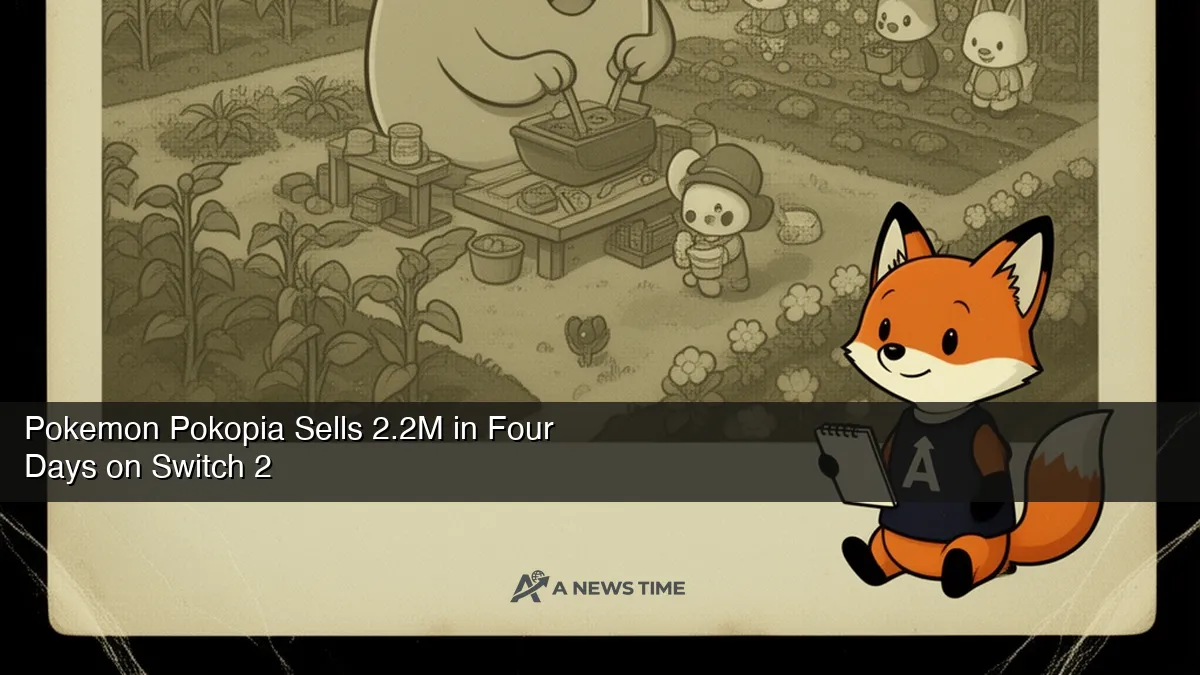
The most significant commercial story coming out of March is Pokemon Pokopia, which sold 2.2 million copies in its first four days of release. That figure, confirmed through Nintendo's own reporting, places Pokopia in rare company as one of the fastest-opening Pokemon titles in recent memory, a remarkable achievement given that the franchise's reputation for software quality has been under sustained scrutiny since the troubled launches of Scarlet and Violet.
Pokopia's early performance suggests that players were hungry for a Pokemon experience that delivered on the promise of the Switch 2's hardware capabilities. The game has been broadly praised for its technical execution: a level of visual fidelity and framerate stability that Pokemon games have struggled to achieve consistently in recent years. When a franchise has spent several releases being criticized for the same categories of issues, a single entry that fixes them can generate disproportionate enthusiasm.
It is worth being precise about what 2.2 million copies in four days means in context. The Switch 2 install base, while growing, is still establishing itself. Attach rates for a Pokemon title at this stage of a console lifecycle, when the most dedicated Nintendo fans own the hardware, tend to run higher than later in the cycle. The stronger test will be whether Pokopia sustains sales momentum into summer and whether it draws Switch 1 holdouts to upgrade. Early indicators are promising but not yet conclusive about the game's legs.
"Pokopia is the Pokemon game Switch 2 owners have been waiting for since launch. It is technically accomplished, genuinely inventive in its creature designs, and plays with the Switch 2's capabilities in ways that feel purposeful rather than gimmicky."
Paul Tassi, Forbes
Tales of the Shire and the Third-Party Picture
Tales of the Shire, which arrived on , represents something Nintendo urgently needs: a credible third-party release that gives non-Nintendo-franchise players a reason to stay engaged with the platform. The cozy farming and life simulation game set in Tolkien's Shire has been positioned as an answer to the Hobbit and Lord of the Rings fandom's desire for something gentler than the action-focused Middle-earth games that dominated the previous decade.
The cozy game genre has expanded enormously since Stardew Valley demonstrated its commercial ceiling, and Tales of the Shire is arriving into a crowded but hungry market. What distinguishes it is the Tolkien license, which carries built-in emotional resonance that pure IP-agnostic entries cannot manufacture. Players who have spent years rereading the books or rewatching the films have an existing relationship with the Shire as a place, and the game is built around exploiting that affection.
Third-party performance on Switch 2 remains a critical metric for Nintendo's platform health. The Switch 1 achieved a remarkable position as a platform where third-party ports could find substantial audiences despite hardware limitations, largely because its hybrid design made it the preferred way to play certain types of games. Switch 2 needs to establish a similar dynamic, and Tales of the Shire is exactly the kind of title that could seed that habit in the life-sim audience.
For context on broader trends in interactive entertainment and how platforms compete for player attention alongside streaming services, the patterns in consumer spending on entertainment subscriptions offer relevant background on how audiences allocate gaming budgets.
Monster Hunter and Scott Pilgrim EX Round Out the Month
Monster Hunter's presence on Switch 2 is almost a requirement rather than a bonus: the franchise has a deep history with Nintendo hardware dating back to the series' explosion in popularity on 3DS, and Monster Hunter World and Rise demonstrated that the series can command serious player investment across multiple platforms simultaneously. The March entry continues that relationship, giving Switch 2 owners access to one of the most reliably designed action RPGs in the medium.
Scott Pilgrim EX occupies a different role in the March lineup, arriving as a lovingly expanded version of the cult classic beat-em-up that originally launched in 2010 before being delisted and then restored. The original Scott Pilgrim vs. the World: The Game was developed by Ubisoft Montreal with visual design by Paul Robertson and music by Anamanaguchi, a combination so perfectly matched to the source material that its absence from storefronts for years felt like a minor tragedy. EX builds on that foundation with new content, refined mechanics, and the visual quality the Switch 2 can now deliver. For a certain demographic of player, this is the month's most anticipated release.
Scott Pilgrim as an IP has always punched above its commercial weight because its audience, people who came of age with the graphic novels or the Edgar Wright film, has extremely high affinity even if it is not enormous in absolute size. EX is aimed squarely at that audience and at the nostalgia economy that has proven remarkably durable in gaming.
Super Mario Bros. Wonder and First-Party Support
Super Mario Bros. Wonder received additional DLC and updates in March, extending one of the Switch 2's flagship launch-window titles with new content that rewards players who have stayed engaged. Wonder was widely considered the platform's strongest launch-period offering, praised for its inventive level design and the freshness it brought to 2D Mario platforming after years of New Super Mario Bros. repetition.
Nintendo's approach to extending the life of Wonder through post-launch content reflects a broader recognition that in the subscription and digital gaming era, a game's commercial and cultural relevance extends well beyond its initial release window. Players who completed Wonder at launch and moved on have a reason to return. Players who haven't started it yet have a more complete package to discover. This kind of sustained support has become table stakes in the industry, but Nintendo's execution of it for Wonder has been notably generous by their historical standards.
First-party Nintendo titles also benefit from a pricing dynamic that is unusual in the industry: they rarely go on sale, and they retain value far longer than comparable games from other publishers. Wonder DLC priced appropriately will likely find buyers at launch rather than requiring discounts to move units, a dynamic that gives Nintendo flexibility in how they plan their release calendar.
What's Coming: Yoshi, Fire Emblem, and the Remake Rumors
Nintendo's announced pipeline for the coming months adds substance to the March momentum. Yoshi and the Mysterious Book, scheduled for May, positions itself as the family-friendly platformer the platform needs to ensure parents buying Switch 2 for their children have compelling options. The Yoshi franchise has historically occupied a specific and somewhat underserved niche, beloved by a loyal audience but not quite the cultural event that Mario or Zelda titles represent. Mysterious Book will need to distinguish itself with design creativity rather than franchise recognition alone.
Fire Emblem: Fortune's Weave arrives later in the year, and its announcement generated significant enthusiasm from the SRPG community. Fire Emblem Three Houses remains one of the Switch 1's most discussed titles years after its release, praised for its character writing and the strategic depth of its combat system. Fortune's Weave follows a high bar and knows it. Pre-release coverage has emphasized meaningful changes to the support system that built Three Houses' emotional core, which suggests the development team is aware of what players valued and is iterating deliberately rather than simply repeating the formula.
The persistent rumors of an Ocarina of Time remake and a Star Fox project in development for Switch 2 deserve acknowledgment alongside appropriate skepticism. Both franchises have vocal, nostalgic fanbases, and both would represent commercial sure-things if announced and executed well. Ocarina of Time in particular, widely considered one of the most important games ever made, would be a genuine cultural moment on the scale of the Link's Awakening remake for Switch 1, but meaningfully larger in scope and expectation.
Nintendo has a long history of letting rumors circulate without confirming or denying them until a reveal is strategically timed for maximum impact. The presence of both properties in the rumor ecosystem simultaneously suggests either that Nintendo has a strong second half of 2026 planned, or that the gaming press is very effectively projecting what it wants to see. Experience suggests both are probably true to some degree.
Honest Assessment: Where the Library Still Needs Work
The March 2026 lineup is genuinely encouraging, but honesty requires acknowledging the gaps that remain. The Switch 2's library is still heavily weighted toward genres that resonate with Nintendo's established audience: platformers, RPGs, life simulations, family titles. The platform is underserved in the action-shooter and sports simulation spaces that define gaming for large segments of the console-buying public.
This is not a new problem. The Switch 1 navigated similar gaps by making its hybrid portability a distinct enough value proposition that some players were willing to accept a narrower genre selection. Switch 2 has better hardware but is still fundamentally a Nintendo-first platform, which means its commercial ceiling in certain demographics remains constrained.
Nintendo's first-party release schedule for 2026 is now confirmed to include at least six major titles, which is healthier than the launch period implied. The combination of Pokopia's sales performance, Tales of the Shire's third-party presence, and the pipeline of announced titles through the end of the year suggests the platform is finding the rhythm it needed. The question of whether Switch 2 will achieve the crossover success of its predecessor remains open, but the trajectory is positive in a way that was not entirely clear six months ago.
For players who were on the fence about upgrading from Switch 1, March 2026 is the first month where the "wait for a better lineup" concern feels genuinely addressed rather than deferred. That is meaningful. It does not mean the platform is firing on all cylinders, but it does mean the platform is no longer coasting on potential alone. The gap between potential and delivered is finally starting to close, and the next three months of confirmed releases suggest that gap will narrow further before it widens again.
Those interested in how hardware launches typically unfold in the broader consumer technology market will find useful context in how consumer electronics adoption cycles shape the timing of ecosystem development.