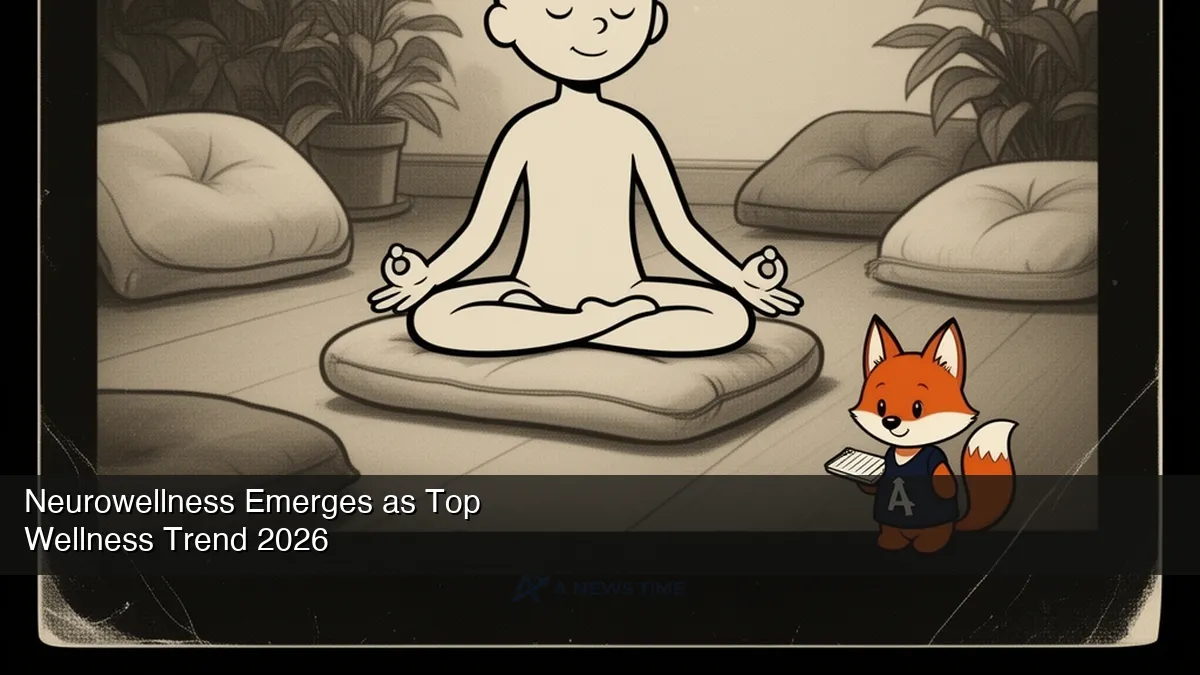
At the start of 2026, the Global Wellness Summit did something it rarely does: it named a single trend the undisputed number one on its annual list. That trend was neurowellness, defined by the Summit as the use of technology to manually regulate the nervous system. The designation reflects a broader cultural turn that researchers and clinicians have been watching for several years now: wellness spending is migrating from the body to the brain, from gym floors to the nervous system itself. In a $6.8 trillion global wellness economy, that migration represents a significant reordering of priorities.
What Neurowellness Actually Means
The term can sound like marketing language, but the underlying concept is grounded in neuroscience. Dr. Desiree Eakin, an integrative medicine physician who has been working in this space for over a decade, describes it as "precision nervous system optimization, the ability to objectively measure and retrain stress and resilience patterns in real time." That definition carries two important implications. First, measurement: neurowellness is not about how relaxed you feel but about biometric data that quantifies autonomic nervous system activity. Second, retraining: the goal is not passive relaxation but the active recalibration of stress response patterns over time.
The autonomic nervous system, which governs heart rate, digestion, respiratory rate, and stress response without conscious effort, has two primary modes: the sympathetic (fight-or-flight) and the parasympathetic (rest-and-digest). Most modern adults spend the majority of their waking hours in some degree of sympathetic activation, a state that evolved to handle immediate physical threats but which chronic stress, social media, sleep debt, and information overload have turned into a near-permanent baseline. Neurowellness tools aim to interrupt that pattern by giving people real-time feedback on their nervous system state and tools to shift it deliberately.
This framing represents a meaningful departure from earlier generations of wellness thinking. Meditation apps, for instance, gave users a practice without measurement. You meditated for twenty minutes and felt calmer, but you had no data on whether your heart rate variability improved, whether your cortisol patterns shifted, or whether your resilience to stress was actually building. Neurowellness closes that feedback loop.
The Tools Driving Adoption
Three categories of technology are converging to make neurowellness practically accessible in 2026. Portable electroencephalography (EEG) headbands, which once required clinical settings and specialist technicians, are now consumer-grade devices that retail for a few hundred dollars and connect to smartphone apps. These devices measure brainwave activity, typically focusing on alpha and theta wave patterns associated with calm alertness and deep relaxation, and provide real-time visual or auditory feedback that trains users to access those states more readily.
Vagus nerve stimulation (VNS) has made a particularly striking transition from clinical medicine to consumer wellness. The vagus nerve, the longest cranial nerve in the body, serves as the primary communication highway between the brain and the major organs. Stimulating it activates the parasympathetic nervous system, triggering a cascade of effects including reduced heart rate, lower cortisol, and decreased inflammatory signaling. Clinical VNS devices, which are surgically implanted and used to treat epilepsy and treatment-resistant depression, have been available for decades. What is new is the emergence of non-invasive devices, worn at the neck or ear, that deliver gentle electrical or vibrational stimulation to the same pathways without surgery. Several of these devices received regulatory clearance in 2024 and 2025, and they are now finding audiences well beyond the clinical populations they were originally designed for.
The third and perhaps most intriguing development is the personalization of neurostimulation. Some emerging devices now sync their stimulation protocols to the user's menstrual cycle, adjusting frequency and intensity based on hormonal phase. The underlying logic is that the nervous system is not a static system, that its baseline reactivity, resilience capacity, and recovery speed vary across the hormonal cycle in ways that are now measurable. A stimulation protocol optimized for the follicular phase may be counterproductive during the luteal phase. This kind of hormonal-phase-aware optimization represents a degree of personalization that was simply not possible five years ago.
The Research Landscape
The scientific evidence supporting these tools varies considerably by technology and application. Heart rate variability (HRV) biofeedback, one of the most established forms of autonomic nervous system training, has a substantial research base. Studies have demonstrated its effectiveness for reducing anxiety, improving athletic recovery, and building what researchers call stress resilience, the capacity to return to baseline quickly after a stressor. The evidence is strong enough that HRV biofeedback is used in high-performance training programs for military units, professional athletes, and first responders.
The evidence for consumer EEG devices and non-invasive VNS is more nascent. Several peer-reviewed studies support the mechanisms, and small-scale trials have shown promising results for anxiety reduction and sleep improvement, but the large, rigorous randomized controlled trials that would satisfy most clinical standards are still in progress. This is a common pattern with emerging wellness technologies: the commercial market outpaces the research, driven by compelling mechanisms and early user testimonials, while the scientific community catches up over the following years.
The picture is further complicated by individual variation. Two people using the same VNS device with the same protocol can have very different experiences, a reality that reflects genuine neurobiological differences in vagal tone, baseline autonomic function, and psychological responsiveness to biofeedback. This is one reason why the personalization trend is so significant: it acknowledges that a one-size-fits-all approach to nervous system optimization is unlikely to be maximally effective for anyone.
Researchers working at the intersection of chronobiology and neuroscience have also highlighted the importance of circadian rhythms in this equation. The nervous system does not just vary across the menstrual cycle; it varies across the day, the week, and the season. Stimulation protocols that account for these rhythms, rather than treating the nervous system as a static target, may prove considerably more effective than current approaches. This research direction connects to broader investigations into how biological systems respond to intervention at the cellular level, findings that are reshaping approaches across medicine.
The Shift from Reactive to Proactive Care
One of the defining characteristics of the neurowellness movement is its orientation toward prevention rather than treatment. Traditional mental health care, like traditional medicine broadly, is reactive: a person develops symptoms serious enough to seek professional help, receives a diagnosis, and begins treatment. This model has served many people well, but it leaves a large population in the space between clinical need and optimal functioning, people who are not sick enough to see a psychiatrist but who are chronically stressed, sleep-deprived, and operating well below their cognitive and emotional capacity.
Neurowellness positions itself as an intervention at that intermediate level, aimed at people who want to optimize a nervous system that is functional but not thriving. The analogy to physical fitness is instructive: most people who go to the gym are not doing so to treat a diagnosed condition but to maintain and improve a body that is already reasonably healthy. The neurowellness movement is making a similar argument about the brain and nervous system, that regular calibration and training can build resilience, improve cognitive performance, and reduce the risk of developing clinical-level stress disorders.
This framing has found particular resonance in corporate wellness programs, where the language of "performance optimization" carries more cultural weight than the language of mental health treatment. Organizations are investing in neurowellness tools and programs for their employees not primarily as a mental health intervention but as a productivity and resilience investment. Whether this framing is clinically appropriate or merely a palatability strategy is a question worth examining, but it is undeniably driving adoption.
Where the Controversy Lives
The American Psychological Association has raised concerns about the emerging category of self-service AI mental health tools, a concern that partially overlaps with the neurowellness space. The core issue is the question of who is using these tools and for what purpose. For people with diagnosed anxiety disorders, depression, PTSD, or other clinical conditions, consumer neurostimulation and biofeedback tools are not substitutes for evidence-based treatment. The worry is that aggressive marketing of these products may lead some people with genuine clinical needs to substitute a wellness device for therapy or medication, with potentially harmful consequences.
This is a legitimate concern, and reputable companies in the space have been careful to frame their products as wellness tools rather than medical devices, with appropriate disclaimers about clinical use. The regulatory landscape, however, remains in flux. The boundary between a wellness device and a medical device is not always clear, and the FDA's frameworks for evaluating neurostimulation products are still evolving.
The Global Wellness Summit's own list offers a telling counterpoint: trend number two for 2026 was the backlash against over-optimization. The wellness industry is generating a growing constituency of people who are exhausted by the relentless pressure to quantify, improve, and optimize every aspect of their biology. For this group, the proliferation of neurowellness devices represents not liberation but an extension of the productivity culture they are trying to escape. Both trends can be true simultaneously, and their coexistence suggests that the neurowellness category will need to develop a more nuanced cultural positioning if it wants to reach beyond the optimization-minded early adopters.
The intersection of neurowellness with AI is particularly worth watching. Several companies are now offering AI-driven personalization of neurostimulation protocols, using machine learning to adapt interventions based on continuous biometric data. The potential is significant: an AI system that can identify the specific autonomic patterns associated with your best performance, your worst anxiety spirals, and your fastest recovery, and then design a stimulation protocol tailored to your individual nervous system, is a genuinely novel tool. The risks, which include data privacy, algorithmic bias, and the opacity of AI-driven medical recommendations, are equally novel. The broader implications of AI-assisted health tools are also being examined in the context of clinical AI diagnostic systems, where similar questions of trust and oversight apply.
Expert Voices and the Road Ahead
Practitioners working at the intersection of integrative medicine and neuroscience are cautiously optimistic about the direction of the field. The core insight driving neurowellness, that the nervous system is trainable, that stress resilience can be built through deliberate practice and biofeedback, is supported by decades of research on neuroplasticity and autonomic regulation. The question is not whether the mechanisms are real but whether the consumer products currently on the market deliver on those mechanisms reliably and safely.
Dr. Eakin's framing of "precision nervous system optimization" points toward where the field is likely to go over the next few years: away from generic devices toward personalized protocols informed by individual biomarker profiles. The most sophisticated practitioners in this space are already working this way, combining HRV monitoring, EEG feedback, breath training, and targeted nutritional interventions in individualized programs. As the consumer devices become more sophisticated and the AI personalization algorithms more refined, versions of these protocols will become accessible to a much wider audience.
The global wellness economy, valued at $6.8 trillion and growing, has historically rewarded categories that combine scientific credibility with personal relevance. Neurowellness has both. Whether it can also develop the evidence base, the regulatory clarity, and the cultural humility to serve people across the full spectrum of need, from elite performance optimization to genuine mental health support, will determine whether it becomes a lasting pillar of modern health culture or another well-funded trend that peaked too fast.
What seems clear is that the direction of travel is unlikely to reverse. The combination of improving technology, growing consumer awareness of the nervous system's role in health, and the compelling logic of prevention over treatment creates durable tailwinds for this category. The industry is watching parallel shifts in metabolic health as evidence that wellness paradigms can shift quickly when the science and the technology align.
What to Watch
The next twelve months will likely see several developments worth tracking. Regulatory clarity from the FDA on non-invasive neurostimulation devices could either accelerate mainstream adoption or introduce friction that slows consumer market growth. Long-term clinical trials that are currently underway for VNS and EEG biofeedback will begin publishing results that either strengthen or complicate the current evidence base. And the backlash-against-optimization trend will continue to exert pressure on how neurowellness products are positioned and marketed.
For individuals curious about this space, the most grounded entry point remains the most established: HRV biofeedback, combined with consistent breath training and sleep optimization. These interventions have the strongest evidence base, the lowest cost of entry, and the clearest safety profile. The more novel technologies, portable EEG, non-invasive VNS, AI-personalized neurostimulation, are promising but still maturing. The wisest approach may be the same one that good clinicians have always recommended: stay curious, follow the evidence, and be skeptical of any tool that promises to optimize your nervous system without first understanding it.
Sources
- Coblentz, Emilee. "Neurowellness Is the Top Wellness Trend of 2026." Outside Online, January 2026. outsideonline.com
- Global Wellness Summit. "2026 Global Wellness Trends Report." Happi / Global Wellness Summit, January 27, 2026. happi.com
- Waga, Nelo Olivia. "Neurowellness: Inside the $6.8 Trillion Wellness Economy's Top Trend for 2026." Forbes, February 2026. forbes.com
- American Psychological Association. "AI and Mental Health: Opportunities and Concerns." APA, 2025. apa.org