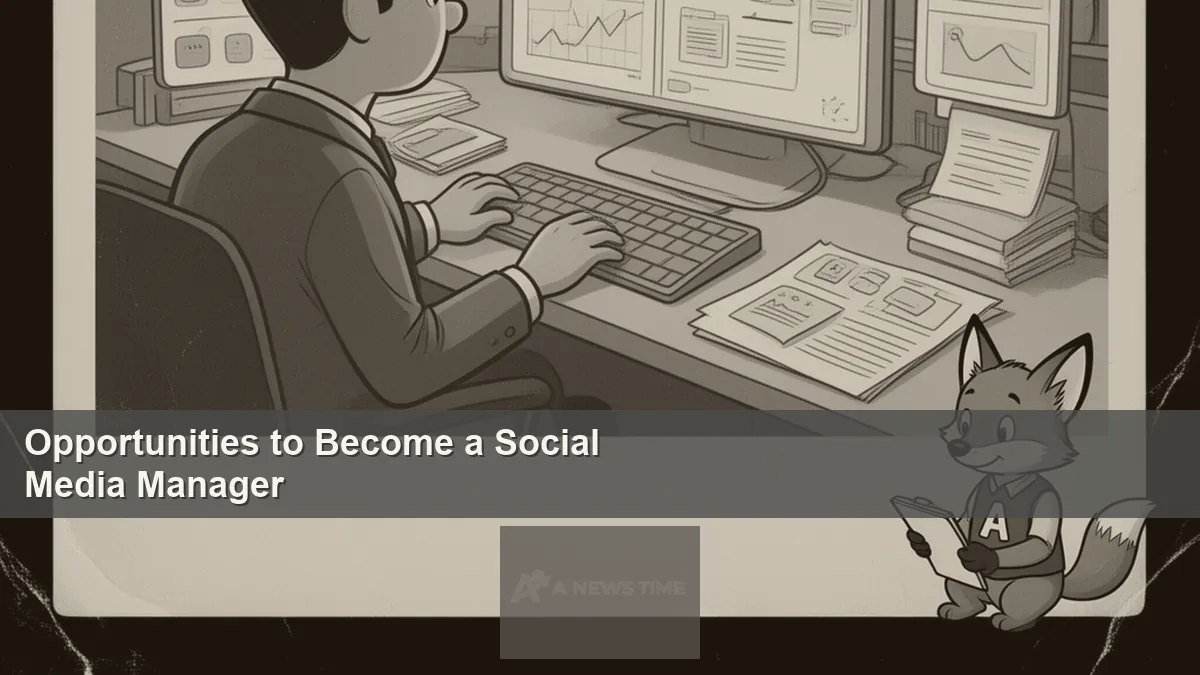
Five years ago, "social media manager" was still a title that made some hiring managers smirk. Today, it is a full-time profession commanding six-figure salaries at senior levels, with dedicated budgets, career ladders, and a skills taxonomy that would have been unrecognizable to the person who used to just "handle the company's Instagram."
The transformation is data-driven. According to figures from Glassdoor, social media managers in the United States earn between $54,000 and $96,000 per year at the base level, with lead and director-level roles extending well past $120,000. In high-cost markets like New York City, median salaries for the role sit around $85,730. The broader digital marketing workforce, of which social media management is a significant segment, continues to grow as companies shift spending away from traditional advertising and toward owned and paid digital channels.
For anyone considering this career, the key questions are practical ones: what skills actually matter, which education pathways have the best return on investment, and where does the role realistically go over the next five years?
What Has Changed About This Role
The social media manager of 2026 operates in a fundamentally different environment than the one that existed when platforms like Instagram and Twitter were new. The role has professionalized in several specific ways. First, the expectation of measurable outcomes has increased sharply. Where a social media hire was once judged on follower counts and engagement rates, today's practitioners are expected to tie their work to business metrics: lead generation, brand sentiment scores, customer acquisition costs through paid social, and pipeline influence.
Second, the technical complexity has increased. Managing a company's social presence now involves fluency with analytics platforms like Sprout Social, Hootsuite, or native platform dashboards, working knowledge of paid advertising on Meta, TikTok, and LinkedIn, basic video production and editing skills, and at larger organizations, collaboration with SEO teams and marketing analysts to ensure social content is part of a coherent digital strategy.
Third, the pace has accelerated. The algorithmic shifts that happen on major platforms are now tracked the way financial markets are tracked. A social media manager who does not stay current with platform changes, emerging formats like short-form video, and audience behavior data quickly falls behind.
The best social media managers I hire have a creator's instinct and an analyst's discipline. They can look at a piece of content and intuitively know why it will resonate, and then open the dashboard and prove it with numbers.
Jasmine Okafor, Head of Social Media, a mid-sized consumer technology brand
Salary and Skills Landscape in 2026
The compensation data for this role shows meaningful variation based on experience level, company size, and geography. The table below draws from Glassdoor and Coursera salary aggregation data current as of early 2026.
| Role / Level | Salary Range (US) | Primary Skills Required | Typical Experience |
|---|---|---|---|
| Social Media Coordinator | $40,000 - $55,000 | Content scheduling, copywriting, basic analytics | 0-2 years |
| Social Media Specialist | $51,000 - $70,000 | Platform strategy, paid basics, community management | 2-4 years |
| Social Media Manager | $54,000 - $96,000 | Full channel ownership, analytics, team coordination | 3-6 years |
| Lead Social Media Manager | $75,000 - $124,000 | Strategy, budget management, cross-functional leadership | 5-8 years |
| Director / Associate Director | $71,000 - $130,000+ | Brand strategy, team management, executive reporting | 7+ years |
These ranges reflect base salary only. Many social media managers at larger companies also receive performance bonuses, equity grants, and professional development budgets. Freelance social media managers working with multiple clients can structure their income quite differently, with some experienced practitioners charging $2,000 to $5,000 per month per client for full management services.
The Core Skills That Actually Get You Hired
Hiring managers in digital marketing have become considerably more specific about what they want. The broad category of "social media skills" has disaggregated into a set of distinct competencies that employers evaluate separately. Understanding which of these matter most for entry-level versus senior roles shapes how you should invest your time in building them.
Content creation and platform fluency remain baseline requirements. This means the ability to write copy that performs across different platform formats, produce or direct basic short-form video, understand the technical specifications and algorithmic preferences of each platform, and develop a content calendar that balances brand storytelling with audience value. A candidate who cannot demonstrate this fluency through a portfolio will not pass an initial screening at most companies.
Analytics is the differentiator at mid-level. Social media managers who can move from "here's what happened to our engagement this month" to "here's what the data says about our audience's behavior and what we should do differently" are substantially more valuable. Familiarity with Google Analytics 4, native platform insights, and tools like Sprout Social or Later is increasingly expected rather than optional.
Paid social advertising is the skill with the highest salary premium. Running effective campaigns on Meta Ads Manager, LinkedIn Campaign Manager, and TikTok Ads requires a combination of audience targeting knowledge, creative judgment, budget optimization, and analytical rigor. Many social media managers who specialize in paid social earn at the higher end of the ranges in the table above, because the skills are more technical and the business impact is more directly measurable.
Community management, which includes monitoring brand mentions, responding to customers, managing crises, and building relationships with influencers and brand advocates, rounds out the core skill set. This is often the dimension new professionals underestimate. Handling a public complaint or a viral moment poorly can cause significant brand damage, and companies take this risk seriously.
I can teach someone the tools in a few weeks. What I cannot teach is good judgment about what a brand should and should not say publicly, and the ability to write a response under pressure that defuses a situation rather than inflaming it. That is what separates average social media managers from excellent ones.
Marcus Webb, Director of Digital Marketing, regional retail chain
Education Pathways: Degrees, Certifications, and Portfolios
The path to becoming a social media manager does not require a specific degree, which distinguishes it from many professional roles and makes it more accessible. However, the education question matters because it affects both initial hiring eligibility and long-term advancement potential.
A four-year degree in marketing, communications, journalism, or a related field provides a foundation in strategic communication, consumer behavior, and media theory that remains relevant to senior-level work. Many large companies, advertising agencies, and Fortune 500 employers list a bachelor's degree as a requirement for social media manager positions. That said, portfolio strength and demonstrated results consistently outweigh degree credentials at the hiring level, particularly at startups and mid-market companies.
Platform-specific certifications have become a legitimate credential signal in this field. Meta Blueprint certification covers Facebook and Instagram advertising and is widely recognized by employers. HubSpot's free social media certification is another commonly cited credential, particularly for content-focused roles. Google's digital marketing certifications cover the analytics and search context that increasingly overlaps with social strategy. LinkedIn Learning and Coursera offer structured programs that combine multiple certifications into a portfolio-relevant package.
For career changers or recent graduates, building a portfolio is often more important than accumulating certificates. This can be done through managing social accounts for a nonprofit, a local business, or a personal project. Demonstrating growth metrics, even at small scale, shows employers what a candidate can actually do rather than just what they have studied.
| Education Path | Time to Complete | Approximate Cost | Best For |
|---|---|---|---|
| 4-Year Marketing / Comms Degree | 4 years | $40,000 - $200,000+ | Agency, enterprise, long-term advancement |
| Meta Blueprint Certification | Self-paced, weeks to months | $150 - $300 per exam | Paid social specialization |
| Google Digital Marketing Certificate | 3-6 months (Coursera) | $150-$300 | Analytics-focused roles |
| HubSpot Social Media Certification | 4-6 hours | Free | Content strategy, entry-level signal |
| Community College Digital Marketing Program | 1-2 years | $5,000 - $20,000 | Affordable pathway with some credential |
Career Progression and Where the Role Is Heading
For practitioners who build the full skill set, social media management is a career with multiple advancement trajectories. The most common progression moves from coordinator to specialist to manager to director of social media or digital marketing. At larger organizations, senior social media leaders eventually cross into broader digital marketing leadership, brand strategy, or communications roles.
A second trajectory is the freelance and consulting path. Experienced social media managers who develop strong client acquisition skills and a documented track record can build independent practices that offer both higher earning potential and greater flexibility. The shift to project-based marketing work has created real demand for fractional social media leadership, where companies hire experienced practitioners part-time rather than building full in-house teams.
The role is also being reshaped by AI tools. Platforms like Jasper, Copy.ai, and Canva's generative features are changing how content is drafted and produced. Social media managers who embrace these tools as productivity multipliers, rather than viewing them as threats, are reporting significant increases in output capacity without corresponding increases in team size. This productivity dynamic may actually increase demand for skilled practitioners who can use AI tools strategically while supplying the human judgment that the tools cannot replace.
The emerging specialty of "creator economy management," which involves representing individual content creators and managing their brand relationships, is also absorbing talent from the social media management world. For practitioners who understand both platform mechanics and personal brand building, this adjacent field offers a different career path with its own income structure.
Frequently Asked Questions
Do I need a college degree to become a social media manager?
Not necessarily. Many social media managers are hired based on portfolio strength, platform expertise, and demonstrated results rather than academic credentials. A degree in marketing or communications is helpful for landing roles at larger companies or agencies, but it is not a universal requirement. Certifications from Meta, Google, and HubSpot combined with a strong work portfolio can be equally compelling for many employers.
How long does it take to break into social media management from scratch?
Most career changers who are systematic about skill building report landing coordinator or entry-level specialist roles within six to twelve months. The fastest route involves taking two or three core certifications, managing social accounts for a nonprofit or small business to build portfolio content, and building a personal presence on LinkedIn that demonstrates expertise. Having documented results, even at modest scale, is more important than having a particular credential.
What is the difference between a social media coordinator and a social media manager?
The coordinator role is typically more execution-focused: scheduling posts, monitoring comments, pulling basic analytics reports, and assisting with content creation under the direction of a manager or director. The manager role involves more strategic ownership: building the content calendar, setting channel strategy, managing paid budgets, reporting to leadership, and often supervising a coordinator. The salary difference typically reflects this shift from execution to strategy and oversight.
Is social media management being replaced by AI?
Not replaced, but substantially changed. AI tools are automating certain repetitive tasks in content creation, scheduling, and reporting. What they cannot replicate is strategic judgment, audience intuition, real-time crisis management, and the human relationship-building that effective community management requires. Practitioners who learn to use AI tools as productivity multipliers while developing strong judgment skills are likely to see increased demand for their work rather than reduced demand.
Which industries pay social media managers the most?
Technology companies, financial services firms, and large consumer brands tend to pay at the higher end of the range, particularly for practitioners with paid social and analytics expertise. Agencies offer lower base salaries but can provide fast exposure to multiple industries and skill sets that accelerate career development. Nonprofit and government roles typically pay below market rate but may offer other benefits including student loan forgiveness programs for qualifying practitioners.