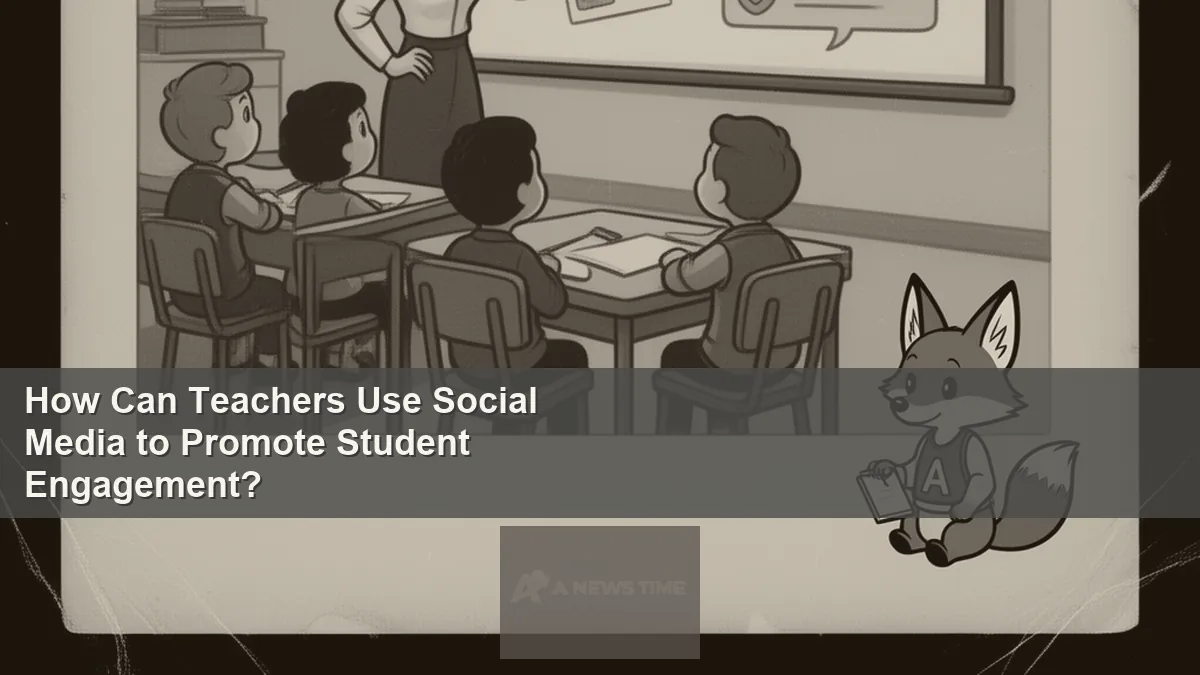
The framing of social media in education often swings between two extremes: techno-utopian enthusiasm about TikTok transforming learning, and techno-panic about screens destroying attention spans. The actual research occupies far more complicated territory, and that is where educators trying to make practical decisions need to look.
A report from eSchool News, drawing on data from a national survey of K-12 educators, found that 93 percent of educators agreed student engagement is a critical metric for understanding overall achievement, and 99 percent of superintendents ranked it as a top priority. What that same survey found, however, is that a significant perception gap exists: while 63 percent of students report being highly engaged at school, only 45 percent of teachers describe their students the same way. Social media sits at the center of that disconnect, though not always as a cause.
What the Research Actually Says
Peer-reviewed research on social media and student learning outcomes separates into two distinct bodies of evidence that often get conflated. One body examines teacher-directed, structured uses of social platforms for specific instructional goals. The other examines ambient social media use by students during or around school hours. These are not the same thing, and treating them as identical leads to bad policy.
Studies on structured teacher-directed uses, such as a teacher-managed class blog on Blogger, a curated YouTube playlist tied to curriculum objectives, or a closed educational social network like Schoology, consistently show positive effects on engagement, particularly for students who participate less actively in traditional classroom settings. A 2024 meta-analysis published in the Journal of Educational Technology Research and Practice found that structured social media integration, defined as teacher-controlled platforms with clear learning objectives, increased student participation rates by an average of 22 percent compared with non-digital equivalents.
The evidence for unstructured or commercial social media platforms used during instructional time is considerably more cautionary. Research on multitasking and cognitive load, well-established in cognitive psychology for more than two decades, consistently shows that switching between a social media notification and a learning task imposes significant working memory costs. Jonathan Haidt's research on social media and adolescent attention, contested in some methodological details, has nonetheless reinforced a broader scientific consensus that frequent social media interruptions during school hours impair sustained attention.
The key variable is teacher control over the purpose and platform. When social media is a tool the teacher deploys toward a specific goal, the research on engagement is genuinely positive. When it is simply permitted in the background, we see attention costs that outweigh any benefit. Technology Integration Researcher, quoted in eSchool News, September 2025
Platform-by-Platform: Educational Use Cases and Considerations
| Platform | Primary Educational Use Case | Age Minimum (Terms of Service) | Privacy/FERPA Suitability | Research Support for Engagement |
|---|---|---|---|---|
| YouTube | Video-based instruction, flipped classroom content | 13 (with parental consent: YouTube Kids for under 13) | Moderate (Google Workspace for Education adds controls) | Strong — video engagement well-documented |
| Visual portfolios, school showcase, community building | 13 | Low for direct student use; better for school accounts only | Mixed — effective for motivation, attention concerns | |
| TikTok | Short-form content creation, science/history explainers | 13 | Low — data concerns, banned on school devices in many districts | Limited peer-reviewed evidence; engagement anecdotally strong |
| X (formerly Twitter) | Current events discussion, expert Q&A, #EduTwitter communities | 13 | Low for student accounts; teachers using professionally | Moderate — stronger for higher ed than K-12 |
| Padlet | Collaborative boards, brainstorming, gallery walks | No age restriction (school-controlled) | High — designed for classroom use, FERPA/COPPA compliant | Strong — designed for educational engagement |
| Schoology / Canvas | Learning management with social features, discussions | No age restriction (school-controlled) | High — FERPA compliant, school-managed | Strong — purpose-built for instructional use |
The legal dimension matters more than it often appears in classroom discussions of social media. The COPPA prohibits commercial platforms from collecting data on children under 13 without verifiable parental consent. The FERPA restricts how student information can be shared with third parties, which includes many commercial social media platforms. Using a platform like TikTok or Instagram for an instructional activity involving identified students under 13 creates potential compliance exposure for schools, regardless of what the activity accomplishes pedagogically.
What Districts Are Doing in 2026
District-level policies in 2026 reflect the tension in the research. Several large districts, including Los Angeles Unified and Chicago Public Schools, have moved to restrict personal device social media access during instructional hours while actively supporting teacher-directed use of curated digital tools. This is a distinction many earlier phone-ban policies did not make: the issue is not technology per se but unstructured commercial social media during class time.
A survey by the CoSN found that 72 percent of U.S. K-12 districts had formalized guidelines for teacher social media use in the classroom, up from 51 percent in 2022. The most common provisions covered three areas: platform selection criteria (preferring tools with FERPA compliance and student data protections), documentation of instructional purpose before platform use is approved, and minimum age verification procedures for any platform requiring student accounts.
In higher education, faculty use of social media for professional networking, particularly LinkedIn and ResearchGate, is essentially universal. The research there shows that connecting coursework to professional community norms increases student motivation, particularly for career-oriented programs. The concerns are structurally different from K-12: most college students are over 18, privacy law implications are different, and the attention fragmentation concerns are less pronounced in seminar-style settings.
Teacher-Directed Approaches That Show Evidence
Several specific pedagogical approaches have accumulated research support. The flipped classroom model, where teachers record short-form video instruction and students watch before class, leverages YouTube's native engagement mechanics while keeping instructional time focused on discussion and application. Studies at multiple school districts show this model produces meaningful improvements in comprehension scores and student-reported engagement, particularly in secondary science and math.
Social annotation tools like Hypothesis and Perusall, which layer social commentary features onto academic readings, show consistent evidence of improved reading engagement and comprehension across multiple peer-reviewed studies. These tools replicate what makes social media engaging, the ability to react, comment, and see peers' responses, but within a structured educational context.
Student-produced content projects using platforms like YouTube or class-managed podcast feeds show strong evidence for what educators call "authentic audience motivation," the increase in effort students apply when they know their work will be seen beyond the teacher. A study by the ISTE found that students who produced content for real audiences scored significantly higher on measures of effort investment compared with equivalent projects for teacher-only submission.
The most consistent finding across studies is that the presence of a real audience changes student motivation in ways that simulated classroom activities do not. Social media, when structured by teachers, can provide that authentic audience. Dr. Kristine Blair, Digital Literacies Researcher, 2024 NCTE Annual Conference
The Safeguarding Questions That Cannot Be Skipped
Any discussion of teachers and social media in K-12 settings must address safeguarding. Schools that encourage students to create personal accounts on commercial platforms for instructional purposes, rather than using school-managed tools, face documented risks around cyberbullying, inappropriate contact, and data collection that parents have not consented to. The National Cybersecurity Alliance's school survey found that 38 percent of school incidents involving social media originated with teacher-assigned use of commercial platforms outside school-managed systems.
Best practice guidance from ISTE and the Consortium for School Networking converges on several principles: use school-managed accounts rather than personal student accounts wherever possible; prefer FERPA-compliant tools; obtain explicit parent notification before any student work appears on public-facing platforms; and separate teacher professional social media use from instructional use, as the standards for each are different.
Teachers who use social media professionally, building communities on EduTwitter or following curriculum leaders on LinkedIn, operate under different norms than when they are directing student use. Both are legitimate; they are not the same activity and should not be conflated in district policy or in teacher preparation programs.
The Mental Health Context
No discussion of social media in education in 2026 can responsibly omit the broader mental health evidence. The U.S. CDC's Youth Risk Behavior Survey data shows persistent increases in adolescent anxiety and depression correlated with social media use, with the effect size strongest for heavy personal use (more than three hours daily) rather than structured educational use. The American Psychological Association's advisory on social media and youth mental health specifically distinguished between passive consumption, which shows the strongest negative associations, and active creative production, which shows more neutral or mildly positive associations with well-being.
This distinction maps directly onto the pedagogical evidence: structured, production-focused uses of social media in education (creating content, annotating texts, collaborative discussion) align with the patterns that show fewer mental health concerns than passive scrolling. Teachers who design active rather than passive social media tasks are, whether intentionally or not, operating closer to the evidence-supported end of the spectrum.
Frequently Asked Questions
Can teachers legally require students to create accounts on platforms like Instagram or TikTok?
For students under 13, requiring accounts on commercial platforms that collect personal data likely creates COPPA compliance exposure for the school, even with parental consent forms. For students 13 and older, it is technically permissible but raises FERPA questions depending on how student information appears on the platform. Most school attorneys recommend teacher-directed use of school-managed or FERPA-compliant platforms over requiring personal commercial accounts.
What platforms are most appropriate for K-12 classroom social media use?
Platforms specifically designed for educational use, such as Padlet, Schoology, Canvas, and Google Classroom, carry the strongest compliance credentials and research support. YouTube with teacher-curated playlists works well for video-based instruction. Commercial platforms like TikTok and Instagram are more appropriate for teacher professional use and optional student projects than for required instructional activities, particularly in elementary and middle school.
Does using social media in class actually improve grades?
The research shows consistent positive effects on engagement and participation, with more mixed evidence on direct grade improvement. The strongest effects appear in studies of authentic audience motivation, where students produce content for real viewers, and in flipped classroom models where students engage with video instruction before in-class application activities.
How can teachers protect student privacy when using social media for instruction?
The core practices are: use school-managed accounts rather than personal student accounts, select FERPA-compliant platforms, notify parents in writing before any student-identifiable content appears on public-facing platforms, and document the instructional purpose of any platform use in lesson plans for compliance purposes.
What does the research say about TikTok specifically for education?
Peer-reviewed evidence on TikTok for K-12 instruction is limited relative to other platforms. Anecdotally, short-form video content shows high engagement, and some science educators have used the format effectively for explainer content. However, data privacy concerns, including bans on school devices in multiple large districts, and TikTok's age minimum of 13 make it a higher-risk choice compared with platforms designed for school use.
Sources
- Importance and Challenges of K-12 Student Engagement, eSchool News, September 2025
- ISTE Research Briefs on Technology and Learning Outcomes, International Society for Technology in Education
- APA Health Advisory on Social Media Use in Adolescence, American Psychological Association, 2023
- CoSN K-12 District Technology Policy Survey 2025, Consortium for School Networking