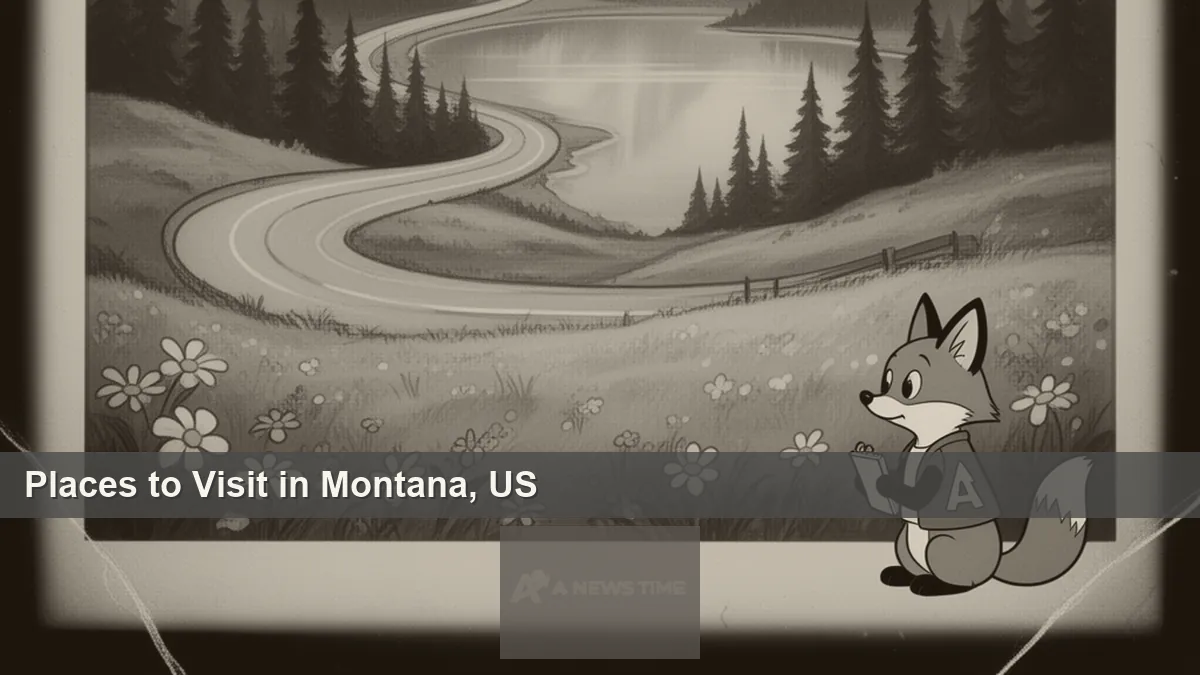
The first thing the Going-to-the-Sun Road does is make you reconsider everything you thought you knew about landscape. The pavement climbs more than 6,600 feet through Glacier National Park, threading between rock walls older than almost any on the continent, and the view from Logan Pass on a clear July morning is the kind of thing that stops conversation cold. Montana is full of moments like that. The state is the fourth-largest in the country by area, home to two national parks, three national forests, and a range of destinations that vary wildly in character. Planning a trip here means making choices, because the distance between Glacier and Yellowstone's north entrance is more than 300 miles, and the culture of Missoula bears little resemblance to the resort economy of Big Sky. What follows is a practical guide to seven destinations worth building an itinerary around in 2026.
Glacier National Park: Scale and Timing
Preliminary data from the National Park Service shows Glacier welcomed 3,136,931 visitors in 2025, a slight dip of roughly 2.3 percent from the prior year's 3.21 million, even as Yellowstone saw a corresponding increase. The drop almost certainly reflects ongoing access management: Glacier has operated a vehicle reservation system for its west entrance during peak season, and that friction filters out casual drive-through visitors while keeping crowds at popular trailheads to a level guides describe as manageable rather than overwhelming.
The park spans more than one million acres along the Continental Divide and the Canadian border. Its 700 miles of trails include everything from boardwalk loops accessible to wheelchairs to the demanding Highline Trail, which follows the Garden Wall above treeline for nearly 12 miles. Grinnell Glacier, one of the park's remaining active glaciers, requires an 11-mile round-trip hike but rewards visitors with a turquoise lake fed directly by glacial meltwater. Scientists at the USGS have documented significant glacial retreat at Glacier since systematic monitoring began in the 1960s, making this a landscape with an urgency attached to it that most national parks do not share.
The best window for most visitors is mid-July through mid-August, when Going-to-the-Sun Road is fully open and wildflowers are at peak bloom. But shoulder season in late September offers a completely different park, one with golden larches, near-empty trails, and a quality of light that photographers specifically plan around.
Jack Posewitz, Montana outdoors writer and conservation advocate
Entrance fees at Glacier range from $20 per person to $35 per vehicle depending on the season. Non-U.S. residents should note that as of , the America the Beautiful annual pass now costs $250 for international visitors, up from $80 previously. Lodging inside the park includes the historic Many Glacier Hotel on the eastern shore of Swiftcurrent Lake, with rooms typically ranging from $200 to $450 per night in summer. West Glacier, the gateway town, offers a range of motels and vacation rentals for visitors who prefer not to book park lodging months in advance.
Yellowstone's Montana Side: A Different Entry Point
Most visitors approach Yellowstone through Wyoming, but two of the park's five entrances sit in Montana, and both are worth knowing about. The North Entrance at Gardiner, Montana, is the only park entrance open year-round to wheeled vehicles. It feeds directly into the Mammoth Hot Springs area, where terraced travertine formations rise in pale yellows and whites from a hillside that smells faintly of sulfur. Preliminary NPS data puts Yellowstone's 2025 visitation at 6,074,531, an increase of about 1.4 percent year over year.
Gardiner is a working-class gateway town with a genuine character that the more polished West Yellowstone, just across the Wyoming border, lacks. The town has a handful of fly-fishing outfitters, a few solid restaurants, and access to the Yellowstone River corridor that draws anglers from across the country. The Northeast Entrance near Cooke City, Montana, opens the Lamar Valley, which park rangers and wildlife biologists consistently describe as one of the best wildlife viewing corridors in North America. Bison herds move through the valley in numbers that require drivers to wait, which is not a complaint most people make twice.
Big Sky: Beyond the Ski Season
Big Sky Resort sits about 45 miles south of Bozeman and built its reputation on winter skiing. With more than 5,800 acres of terrain and a vertical drop of 4,350 feet, it is one of the largest ski areas in the country by acreage, and its geographic isolation keeps it less crowded than comparable Colorado resorts even at peak winter. Lift tickets during ski season run from roughly $150 to $200 per day. Lodging at the mountain starts around $160 per night for basic hotel rooms and climbs well above $500 for slope-side condos and premium suites during peak winter weeks.
What fewer travelers know is that Big Sky has invested heavily in its summer programming since 2020. Mountain biking trails, guided fly-fishing on the Gallatin River, and high-altitude hiking are now marketed as aggressively as ski packages. The Gallatin, which flows directly alongside U.S. Route 191 on the drive from Bozeman to Big Sky, is a freestone river with strong populations of brown and rainbow trout. Guide companies in the area report strong demand for full-day float trips at around $400 to $500 per person.
Flathead Lake: The Country's Largest Natural Freshwater Lake West of the Mississippi
Flathead Lake covers about 191 square miles in the Mission Valley of northwestern Montana, making it the largest natural freshwater lake west of the Mississippi River. The distinction is one that regional tourism materials have leaned on for decades, and it is accurate, though what statistics cannot convey is the visual quality of the water on a calm morning, when the Mission Mountains reflect in a surface so still that the horizon line disappears. The lake sits between two significant cultural landscapes: the Flathead Indian Reservation to its west, home to the Confederated Salish and Kootenai Tribes, and the small resort towns of Bigfork and Polson on its shores.
Bigfork, on the northeastern shore, has a reputation for its summer theater season, a functioning performing arts center that produces regional premieres with professional casts each summer. Polson, on the southern end, is the commercial hub of the lake area and the starting point for boat tours. Wild Horse Island State Park, accessible only by private boat or organized tour, is a 2,163-acre island in the lake's northern basin with a small population of bighorn sheep and wild horses, populations that date to the 19th century. Cherry orchards line the lake's eastern shoreline and ripen in late July, drawing visitors who book picking sessions at local farms. Summer accommodation around Flathead Lake ranges from $100 per night for simple motel rooms to $400 and above for lakefront cabin rentals.
Missoula: A University City With Trails Out the Back Door
Missoula is a college town built around the University of Montana, and it carries the energy and contradiction that designation implies. The Clark Fork River runs through the center of the city, and a network of riverside trails connects downtown to residential neighborhoods. The downtown itself has a strong independent food and bar culture, with a notable craft brewery scene anchored by outlets like Bayern Brewing, one of the oldest craft breweries in the state. The Blackfoot River, about 45 minutes east, was the setting for Norman Maclean's A River Runs Through It and remains one of Montana's premier fly-fishing destinations.
For visitors interested in landscape, the Rattlesnake Wilderness runs directly north of the city, with trailheads accessible by bicycle from downtown. The M Trail climbs Mount Sentinel behind the university campus for a view of the valley and surrounding mountain ranges that costs nothing and takes roughly 45 minutes of moderate effort. Missoula has been consistent in attracting outdoor-focused visitors who are less interested in resort infrastructure and more interested in a base from which to explore. Hotel rates in the city center average $120 to $200 per night, making it one of the more affordable Montana destinations with genuine urban amenities.
Missoula punches above its weight for a city its size. The combination of trail access, a functioning arts scene, and a serious food culture makes it the most livable base for exploring western Montana that exists at any price point.
George Ochenski, Montana environmental journalist and Missoula-based writer
Bozeman: The State's Fastest-Growing City
Bozeman has grown fast enough in the past decade to generate genuine tension between longtime residents and newcomers, and that growth has not left the visitor experience untouched. The city's Main Street corridor has shifted from hardware stores and diners to wine bars and high-end outdoor gear retailers, and median home prices have climbed sharply. None of that makes Bozeman less useful as a travel destination. Bozeman Yellowstone International Airport now offers direct flights from more than a dozen major U.S. cities, making it the primary air gateway for Yellowstone visitors who prefer not to connect through Denver or Salt Lake City.
Downtown Bozeman is walkable by Montana standards and has a genuine concentration of restaurants and bars in a compact area. The Museum of the Rockies, affiliated with Montana State University, houses one of the world's most significant collections of dinosaur fossils, including multiple specimens of Tyrannosaurus rex excavated from eastern Montana. Admission runs $15.50 for adults. Bridger Bowl, a nonprofit ski area on the northeast edge of town, offers a more affordable and less crowded alternative to Big Sky during winter months, with full-day lift tickets typically under $70.
Whitefish: The Glacier Gateway With a Town to Match
Whitefish sits 25 miles west of Glacier's west entrance and has evolved from a railroad town into one of Montana's most visited resort communities. Whitefish Mountain Resort operates on the north side of the valley and draws significant skier traffic in winter, but the town itself works year-round in a way that some Montana gateway communities do not. The downtown is compact and walkable, with a main street of restaurants, independent shops, and a genuinely functional brewery culture. Whitefish Lake, immediately north of downtown, has a public beach and boat launch used heavily through summer.
The combination of Glacier access and a functioning resort town makes Whitefish the most natural base for a national park visit. Booking accommodations here during the summer peak (mid-June through mid-August) requires planning: popular hotels sell out months in advance and rates during peak season run from $180 to over $400 per night. The Amtrak Empire Builder stops in Whitefish on its route between Chicago and Seattle, a practical detail for travelers who prefer rail and one that adds a dimension to the Whitefish arrival that other Montana destinations cannot offer.
Montana Destinations Compared: Season, Cost, and Activity
| Destination | Best Season | Avg. Lodging/Night | Key Activity | Crowd Level (Peak) |
|---|---|---|---|---|
| Glacier National Park | July - mid-August; late September | $200–$450 (in-park) | Hiking, wildlife viewing, scenic drive | High (reservation required) |
| Yellowstone (Montana entrances) | May–Oct; Dec–Mar (winter wildlife) | $120–$300 (Gardiner) | Wildlife watching, geothermal features | High in summer |
| Big Sky | Dec–Mar (ski); June–Sept (hike) | $160–$500+ | Skiing, fly-fishing, mountain biking | Moderate (less crowded than CO) |
| Flathead Lake | June–September | $100–$400 | Boating, cherry picking, kayaking | Moderate |
| Missoula | May–October | $120–$200 | Trail running, fly-fishing, arts scene | Low–Moderate |
| Bozeman | Year-round | $150–$280 | Yellowstone access, museums, skiing | Moderate |
| Whitefish | Summer (Glacier); winter (skiing) | $180–$400+ | Glacier gateway, skiing, lake recreation | High in summer |
Practical Details: Getting There, Getting Around
Montana is a large state with limited public transportation between destinations. A car is essential for any itinerary that covers more than one area. Bozeman Yellowstone International Airport is the best-served commercial airport in the state, with direct service from major hubs operated by Delta, United, Southwest, Alaska, and others. Glacier Park International Airport near Kalispell serves the western part of the state with more limited routing. Driving from Bozeman to Whitefish, one of the state's most common multi-destination routes, takes approximately four hours on U.S. Route 89 through the Rockies.
Rental car availability tightens significantly during summer peak season. Booking several weeks in advance is standard practice; waiting until arrival frequently means paying premium rates for whatever remains. Gasoline prices in Montana have historically tracked below national averages due to the state's proximity to refining capacity in Wyoming and the Dakotas, but that gap has narrowed in recent years.
For visitors planning a Glacier trip, the park's vehicle reservation system for the Going-to-the-Sun Road corridor operates from mid-May through mid-September for vehicles entering between 6 a.m. and 3 p.m. Reservations open in advance on Recreation.gov and sell out quickly. Arriving before 6 a.m. or after 3 p.m. allows entry without a reservation, which is a practical workaround that many experienced visitors have adopted.
Frequently Asked Questions
When is the best time to visit Glacier National Park?
The Going-to-the-Sun Road is typically fully open from late June or early July through mid-October, depending on snowpack. Mid-July through mid-August offers the fullest access and wildflower season but also the highest crowds and reservation requirements. Late September through early October brings dramatic larch color, cooler temperatures, and significantly thinner crowds, with most facilities still operating.
Do I need a vehicle reservation to visit Glacier National Park?
Yes, for the Going-to-the-Sun Road corridor during peak season (approximately mid-May through mid-September), vehicles entering between 6 a.m. and 3 p.m. require a timed entry permit, available on Recreation.gov. Vehicles arriving before 6 a.m. or after 3 p.m. can enter without a reservation. The park's eastern entrances and areas outside the Going-to-the-Sun corridor have separate or no reservation requirements.
How far is Big Sky from Bozeman airport?
Big Sky is approximately 45 miles south of Bozeman, a drive that takes about one hour on U.S. Route 191 along the Gallatin River canyon. Shuttle services operate between the airport and Big Sky during winter ski season, which reduces the need for a rental car for ski-focused trips, though a car remains useful for exploring the broader region.
Is Flathead Lake suitable for swimming?
Flathead Lake is clear and cold, fed by glacial snowmelt and regional precipitation. Water temperatures peak in late July and August, typically reaching the low-to-mid 60s Fahrenheit near shore, which many visitors find suitable for swimming. The lake has multiple public beaches, with Wayfarers State Park on the eastern shore being one of the most accessible for day visitors.
What is the annual pass cost for U.S. national parks in Montana?
The America the Beautiful annual pass costs $80 for U.S. residents and covers entrance fees at all federal recreation sites, including Glacier and Yellowstone, for 12 months from the month of purchase. As of January 2026, the pass costs $250 for non-U.S. residents. Individual vehicle entry at Glacier and Yellowstone runs between $20 and $35 per vehicle depending on the season.