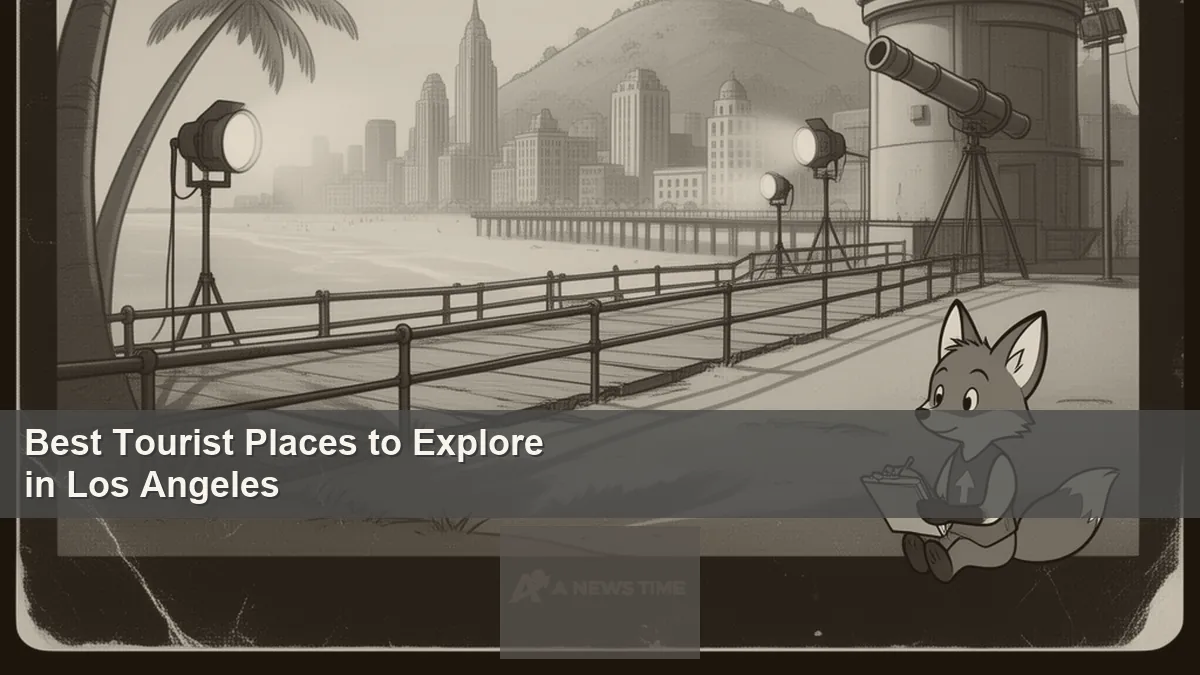
The standard criticism of Los Angeles is that it has no center. This is technically true and entirely beside the point. LA has dozens of centers, each with its own internal logic, and the travelers who work with that geography rather than against it tend to find something that no other American city offers: the experience of a city that is simultaneously the entertainment capital of the world, a major Mexican-American cultural center, a global hub for Pacific Rim cuisines, and one of the most varied outdoor recreation environments in the country, all within a 50-mile radius. The problem is not that LA has no center. The problem is that most visitors treat it like it does.
The Museums: Skip the Obvious, Find the Specific
The Getty Center is worth the trip: its hilltop location above Brentwood, accessible via a free tram from the parking structure, frames the city itself as part of the exhibition. The architecture by Richard Meier is intelligent about California light. The collection, strongest in European paintings and illuminated manuscripts, is genuinely world-class. Admission is free, though parking costs $20. Go on a clear day for the view; go on a cloudy day when the light in the galleries is extraordinary.
But the Getty Villa in Pacific Palisades, the lesser-visited sibling, may be the more transporting experience. Built as a replica of a Roman villa buried by Vesuvius, its gardens and galleries of Greek and Roman antiquities operate at a different emotional register entirely. Timed entry tickets are required and free (parking again $20). The separation between these two venues is 15 miles on the Pacific Coast Highway, which on a weekday afternoon is a reasonable drive, on a Friday evening, a mistake.
The Hammer Museum in Westwood, affiliated with UCLA, charges no admission and maintains a reputation for programming that tilts toward contemporary artists who haven't yet become canonical. The Museum of Contemporary Art has outposts in both Grand Avenue downtown and the Geffen Contemporary in the Arts District. The Broad, on Grand Avenue, houses the Broad collection of contemporary art (Basquiat, Koons, Cindy Sherman) in a building by Diller Scofidio + Renfro with free general admission on Sundays.
Neighborhoods: The Cultural Geography That Matters
Silver Lake is where the city's creative class currently lives and works, though that designation has been true long enough that Silver Lake has become expensive and slightly self-conscious. The reservoir walk is flat and offers the kind of low-stakes social observation that reveals what Angelenos actually do with a Tuesday afternoon. Sunset Junction, the neighborhood's commercial center, has restaurants ranging from genuinely excellent Thai to the kind of brunch spots that charge $22 for eggs. Stay for coffee at Intelligentsia, the original Silver Lake location that helped define the specialty coffee movement.
Los Feliz, immediately adjacent, has a slightly older, more established feel: the Griffith Observatory on the hill above, the independent movie theater on Vermont Avenue showing current art cinema, the Greek-owned diners and the Thai restaurants that have been there for decades alongside the newer natural wine bars. It is the neighborhood that most resembles what Los Angeles's older admirers remember from the 1990s.
Boyle Heights, east of downtown across the LA River, is predominantly Latino and has been for generations. Its Mariachi Plaza, where musicians still gather for hire, and the Mercado de la Paloma food hall are worth the 15-minute drive from downtown. Leimert Park in South LA anchors the city's African-American cultural life, with the World Stage performance gallery and a cluster of jazz venues that have maintained community-oriented programming through cycles of gentrification pressure.
Highland Park in Northeast LA has been the locus of a restaurant and bar scene that has developed over the past five years into one of the most interesting in the city. York Boulevard in particular: Cosa Buona for Italian-American, Ramona for a modernized Mexican-American menu, and several natural wine bars that attract the kind of regulars who treat them as living rooms. The Gold Line Metro rail (now the A Line) stops at Highland Park/Arts District station, making this accessible from downtown without a car.
Outdoor Los Angeles: The Actual Priority
Griffith Park is 4,310 acres of chaparral-covered hills in the middle of the city, larger than Central Park by a factor of six. The trail to the summit of Mount Hollywood (not the same as the Hollywood Sign) provides a 360-degree view of the basin that, on a clear winter morning after rain, reveals the mountains and the ocean simultaneously, the view that reminds you why anyone built a city in this particular valley. The Observatory is free to visit (parking is the challenge; take the DASH Observatory shuttle from Vermont/Sunset Metro station).
Runyon Canyon, the tourist default for hiking in Hollywood, is fine but crowded and off-leash dogs are everywhere. Fryman Canyon in Studio City offers a more pleasant experience on the same Santa Monica Mountain range with less weekend chaos. For serious hiking, the San Gabriel Mountains, accessible via the Gold Line to the Sierra Madre Villa station, offer 10,000-foot peaks within 45 minutes of downtown.
The beach geography matters. Santa Monica Pier and Venice Beach are the icons, and they deliver what they promise, crowds, vendors, performance, the Pacific. But Malibu's Point Dume State Beach, 40 minutes north on the PCH, is where the shoreline becomes genuinely wild, tidepools and sea caves and the occasional dolphin. El Matador State Beach, just past Malibu, has rock formations that frame the sunset in a way that will make you understand why Los Angeles has produced so many photographers.
Getting Around Without a Car (It's Possible, Just Honest)
Los Angeles Metro rail has improved significantly over the past decade and now operates seven lines covering roughly 100 miles of track. The A Line (formerly Gold Line) connects downtown to Pasadena and, via transfer, to Long Beach. The B/D Lines connect downtown to Hollywood, North Hollywood, and the San Fernando Valley. The E Line (formerly Expo) runs from downtown to Santa Monica, making car-free beach access viable. The K Line, completed in 2022, connects South LA to the Crenshaw corridor and the airport.
The Metro app enables contactless payment. A single fare is $1.75. A day pass is $7. The limitations are real: rail service doesn't cover the Westside neighborhoods (Beverly Hills, Brentwood, Malibu) or the beach communities north of Santa Monica. For those areas, Uber and Lyft remain the practical option, or a rental car for a day or two of coastal exploration. Bus service fills many gaps but requires patience with schedules.
Bike share (Metro Bike Share) works well in flat areas: the beach path from Santa Monica to Venice to Marina del Rey is one of the finest urban cycling routes in the country, 22 miles of separated path along the Pacific. Electric scooters (Bird, Lime) are ubiquitous in walkable neighborhoods.
Food: What the City Actually Does Well
The canonical LA food genres are Mexican-American (specifically tacos, from the simple carne asada street taco to the Tijuana-style birria of the food truck circuit), Korean (Koreatown's strip of barbecue restaurants operates 24 hours and is one of the great restaurant experiences in the country), Japanese (specifically sushi and ramen in the Sawtelle Japantown corridor and in Torrance to the south), and the contemporary Cal cuisine that Chez Panisse defined and that now shows up in restaurants across every neighborhood. These are not ethnic restaurants in any tourist-brochure sense. They are the actual cuisine of a city whose demographics have always been plural.
Grand Central Market on Broadway in downtown has operated since 1917 and in recent years has added food stalls by some of the city's most interesting operators alongside the old-school Mexican food counters that have been there for decades. It functions as a live argument that LA food culture includes both Eggslut (the breakfast sandwich counter that now has franchises globally) and the egg sandwiches served in Spanish at the counter next door that have been there for 40 years.
Los Angeles Neighborhood Comparison
| Neighborhood | Character | Metro Access | Best For | Avg. Hotel Rate |
|---|---|---|---|---|
| Silver Lake / Los Feliz | Creative class, walkable, eclectic | Moderate (DASH buses) | Restaurants, coffee, nightlife | $120-$200 |
| Downtown (DTLA) | Arts, architecture, Grand Central Market | Excellent (all Metro lines) | Museums, food halls, concerts | $130-$250 |
| Santa Monica | Beach, upscale, tourist-friendly | Good (E Line) | Beach access, Third Street Promenade | $200-$400 |
| Highland Park | Hip, Latino roots, emerging food scene | Good (A Line) | Restaurants, independent shops | $100-$160 |
| Koreatown | Dense, 24-hour, multicultural | Good (B Line) | Korean BBQ, nightlife, spas | $90-$150 |
| West Hollywood | LGBTQ+ scene, Sunset Strip, Melrose | Poor (car/rideshare) | Music venues, boutiques, nightlife | $180-$350 |
| Venice | Beach, boardwalk, Abbot Kinney boutiques | Moderate (bus connections) | Beach culture, design shopping | $160-$300 |
Practical Information for 2026
Los Angeles International Airport (LAX) has completed the first phase of its terminal modernization, and the long-anticipated Automated People Mover connecting the terminals to a consolidated rental car facility and the Metro K Line station opened in 2023. This makes car-free arrival viable for the first time. From the Metro K Line station at LAX, connections to downtown take approximately 50 minutes with one transfer. Uber/Lyft from LAX to most central neighborhoods runs $35-$65 depending on time and destination.
Weather in Los Angeles is the easiest variable to plan around: spring (March-May) and fall (September-November) are nearly perfect, sunny days in the mid-70s Fahrenheit with cool evenings. Summer (June-August) brings the marine layer, the famous June Gloom that keeps mornings overcast along the coast. Winter (December-February) is clear and mild, with occasional rain and, after storms, the best air quality and mountain visibility of the year. The wildfires that have periodically affected the region historically occur in the fall dry season, with wind events peaking in October-November. Check current conditions at calfire.ca.gov before visiting.
The safest destinations guide for the Americas provides broader regional context for West Coast travel planning.
Frequently Asked Questions
Can you visit Los Angeles without a car?
Yes, with a clear-eyed understanding of the trade-offs. The Metro rail system reaches downtown, Hollywood, the Westside (Santa Monica), and neighborhoods like Highland Park and Pasadena effectively. It does not reach Malibu, Beverly Hills, or many residential neighborhoods. A strategy of car-free Metro travel supplemented by occasional rideshare for specific excursions works well for most itineraries. Budget $15-25 per day for Uber/Lyft supplements if avoiding a rental car.
What is the best time to visit Los Angeles?
March through May or September through November. These shoulder seasons offer the best combination of clear weather, moderate temperatures (70-80 degrees Fahrenheit), and smaller tourist crowds at major attractions. Summer is the busiest and foggiest period along the coast. December through February brings the clearest views of the mountains and the lowest hotel rates of the year.
Which LA museum is most worth visiting?
For breadth of collection, the Los Angeles County Museum of Art (LACMA) on Wilshire Boulevard, following its campus reimagination, is the strongest single-institution visit. For a specific experience that LA uniquely offers, the Getty Villa's recreation of a Roman country house with its Mediterranean garden is unlike any other museum experience in North America. Both are free for general admission; LACMA charges $25 for adults, Getty Villa is free with a timed-entry reservation.
Is it worth visiting Hollywood as a tourist?
The Hollywood Walk of Fame and TCL Chinese Theatre are interesting as historical artifacts of a specific era of American cultural mythology, but the surrounding neighborhood is primarily tourist-oriented commerce. The Hollywood Bowl, when it has programming, is one of the best outdoor concert venues in the country. Griffith Observatory, technically in the Hollywood Hills, is genuinely worth a visit for the telescope access and the panoramic view of the basin.