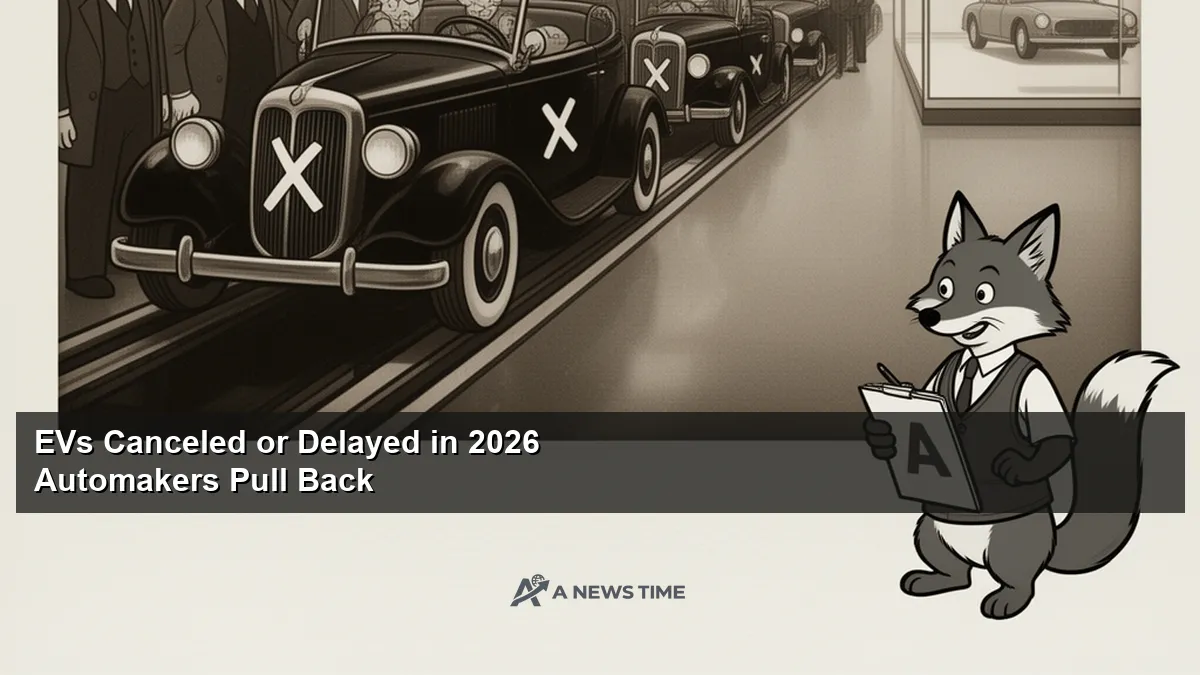
The electric vehicle transition that automakers spent billions promoting just two years ago is hitting a wall of financial reality, geopolitical friction, and consumer hesitation. Across 2025 and into 2026, a growing list of manufacturers have either canceled outright or significantly delayed planned EV programs, collectively representing nearly $70 billion in writedowns, restructuring charges, and abandoned capital expenditure. Honda, Hyundai, Kia, Lamborghini, and even Tesla have all scaled back EV commitments in ways that would have seemed unthinkable during the electrification euphoria of 2022 and 2023.
The reasons are varied but interconnected: new tariffs on imported batteries and components, persistent softness in consumer demand for higher-priced electric models, and a shifting political landscape in the United States that has cooled regulatory pressure on internal combustion timelines. What is emerging is not the death of the EV, but a painful recalibration of how fast the industry can actually move and at what cost.
The Scale of the Pullback: Who Cut What
The list of canceled and delayed programs reads like a roll call of the global auto industry. Understanding which vehicles were cut and why they were cut tells you more about the state of the market than any sales chart.
Honda delayed the launch of its jointly developed electric SUV with General Motors, originally planned for 2025, pushing the timeline into late 2026 at the earliest. The Honda Prologue, which was supposed to be Honda's first high-volume EV for the North American market, saw its production targets slashed by roughly 40 percent after initial demand tracking came in well below internal forecasts. Honda also quietly shelved plans for an affordable EV hatchback that had been shown as a concept at CES 2024.
Hyundai and Kia made some of the most visible cuts. Hyundai paused development of at least two planned EV models for the U.S. market and redirected engineering resources toward plug-in hybrids and range-extended EVs. Kia delayed the U.S. launch of the EV4, a compact electric sedan that had been positioned as a Tesla Model 3 competitor, pushing it from mid-2025 to an undefined 2027 window. Both brands cited the impact of rising raw material costs and tariff uncertainty on their battery supply chains.
Lamborghini walked back its full electrification timeline, announcing that its first fully electric production vehicle would not arrive before 2030, a two-year delay from its previous 2028 target. The company instead doubled down on the plug-in hybrid V8 powertrain used in the Revuelto, citing customer resistance to a fully electric Lamborghini and the engineering challenge of delivering Lamborghini-level performance from a battery-electric platform within their weight targets.
Tesla, the company that arguably created the modern EV market, made a different kind of cut. Rather than canceling specific models, Tesla reduced its global production targets for 2026 by an estimated 15 percent compared to its 2024 investor guidance. The company also paused construction work at its planned Mexico factory, which had been positioned as the production site for a next-generation affordable model. Elon Musk framed this publicly as a strategic decision to focus on autonomy and robotics, but the production cuts align directly with a period of weakening demand in Tesla's largest markets.
| Automaker | Vehicle/Program | Original Target | New Status | Cited Reason |
|---|---|---|---|---|
| Honda | Prologue volume ramp | 2025 | Late 2026, reduced 40% | Below-forecast demand |
| Honda | Affordable EV hatchback | 2026 | Shelved indefinitely | Cost-to-market gap |
| Hyundai | Two planned U.S. EVs | 2025-2026 | Paused | Tariffs, material costs |
| Kia | EV4 (U.S. launch) | Mid-2025 | 2027 (undefined) | Supply chain, demand |
| Lamborghini | First full BEV | 2028 | 2030+ | Customer resistance, weight |
| Tesla | Global production target | 2.5M (2026) | ~2.1M (est.) | Demand softness |
| Tesla | Mexico factory | 2025 groundbreaking | Paused | Strategic pivot |
The Tariff Factor: How Trade Policy Changed the Math
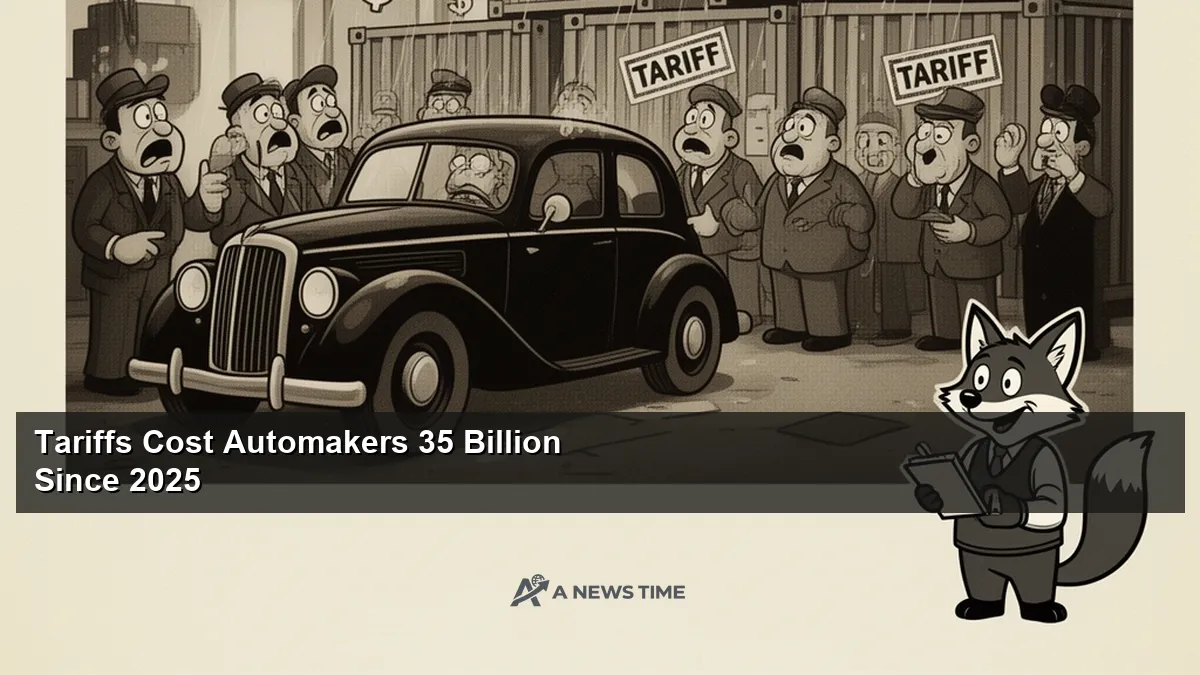
The single largest external force reshaping EV economics in the United States is tariff policy. The Biden administration imposed a 100 percent tariff on Chinese-made EVs in 2024, and the Trump administration expanded tariff structures in early 2025 to include battery components, processed lithium, and certain cathode materials sourced from China or Chinese-affiliated supply chains.
The practical effect has been severe. Lithium-ion battery pack costs, which had been declining steadily and reached an industry average of roughly $139 per kilowatt-hour in 2023, have rebounded. Industry analysts at Bloomberg New Energy Finance estimated the effective cost for packs assembled with tariff-affected components climbed back above $155 per kWh in early 2026, erasing nearly three years of cost reduction progress.
For context, the widely cited threshold at which EVs reach cost parity with comparable internal combustion vehicles is approximately $100 per kWh at the pack level. The tariff-driven cost reversal does not just delay parity; it makes the business case for affordable EVs priced under $35,000 essentially unworkable without either significant government subsidies or a complete rearchitecture of the battery supply chain away from Chinese materials.
Multiple automakers have cited this cost math explicitly in their decisions to delay or cancel programs. When Hyundai paused its two planned U.S. EVs, internal communications referenced a "tariff-adjusted cost model" that no longer met the company's return-on-investment thresholds. Honda's decision to shelve its affordable hatchback was reportedly driven by an internal analysis showing the vehicle could not be profitably sold below $38,000 with tariff-impacted battery costs, a price point that would have undercut the entire purpose of an "affordable" entry-level EV.
Consumer Demand: The Soft Middle of the Market
Tariffs explain part of the pullback, but consumer demand tells the other half of the story. Early EV adopters, the technology enthusiasts and environmental advocates who bought Teslas and Chevy Bolts starting in 2017 and 2018, have largely already made their purchases. The next wave of buyers, the mainstream consumers who make up the bulk of the auto market, have proven harder to convert than the industry expected.
The reasons are consistent across consumer surveys: purchase price remains too high relative to comparable gas vehicles, charging infrastructure outside major metro areas is still unreliable, and resale values on used EVs have dropped sharply, creating anxiety about long-term ownership costs. J.D. Power's 2026 Electric Vehicle Experience Study found that 62 percent of consumers who considered but ultimately did not purchase an EV cited "total cost of ownership uncertainty" as a primary factor, up from 48 percent in the same survey two years earlier.
Range anxiety, once the dominant concern, has actually declined as a worry. Most current EVs offer 250-350 miles of rated range, which is sufficient for the vast majority of daily driving. But the gap between rated range and real-world range, particularly in cold weather and at highway speeds, continues to frustrate owners and feeds negative word-of-mouth among potential buyers. The difference can be substantial: a vehicle rated at 310 miles of range by the EPA may deliver only 200-220 miles in winter highway driving conditions, a 29 to 35 percent shortfall that feels significant when you are planning a road trip.
This demand softness has created a particularly difficult dynamic for automakers who built expensive new EV-specific factories between 2021 and 2023. Ford's Rouge Electric Vehicle Center in Michigan, GM's Factory ZERO in Detroit, and Volkswagen's Emden conversion are all operating well below their designed capacity. The fixed costs of those facilities do not shrink when production volumes drop, which means per-unit costs rise, which makes it even harder to price vehicles competitively, which further dampens demand. It is a vicious cycle that several CFOs have described in earnings calls as the core challenge of the current moment.
The $70 Billion Number: What Writedowns Actually Mean
The cumulative $70 billion figure in writedowns, restructuring charges, and abandoned investments requires some context, because not all of that money evaporated in the same way.
Some of it represents genuine sunk costs: factories that were built or partially built for EV production that are now being repurposed or idled. Ford alone has taken approximately $5.1 billion in charges related to its Model e electric vehicle division since 2023, including a $1.9 billion writedown in Q3 2025 on its next-generation EV platform. GM took a $2.7 billion charge in 2025 related to its Ultium battery technology restructuring. Volkswagen's $5.6 billion in EV-related charges across 2024 and 2025 reflected both the underperformance of the ID series in Europe and the cost of retooling its software division, CARIAD.
Other portions of the $70 billion are not losses in the traditional accounting sense but rather capital expenditure that was planned and budgeted but never spent. When Tesla pauses its Mexico factory, the billions earmarked for construction do not appear as a loss on the income statement, but they do represent committed strategic capital that is now sitting idle. When Hyundai pauses planned models, the R&D spending already incurred on those programs gets written down, but the unspent portion simply vanishes from the forward budget.
The distinction matters for investors but less so for the industry narrative. Either way, the money is not flowing into EV development. And for the suppliers, battery manufacturers, and charging network companies that had built their own business plans around the original automaker timelines, the pullback creates a cascading effect of reduced orders, delayed contracts, and revised growth projections. The broader market turmoil has only intensified pressure on automotive balance sheets.
The Pivot to Hybrids: Strategic Retreat or Pragmatic Middle Ground
Nearly every automaker that has pulled back on pure EV programs has simultaneously accelerated investment in plug-in hybrids (PHEVs) and range-extended electric vehicles. Toyota, which was criticized for years for its skepticism of a rapid BEV transition, now looks prescient. Its hybrid-heavy strategy delivered record profits in fiscal year 2025, and the company's stock has outperformed every major competitor.
The hybrid argument is straightforward: PHEVs can deliver 30-50 miles of electric-only range, which covers the average American's daily commute, while retaining a gasoline engine for longer trips and cold-weather performance. They use smaller batteries, typically 12-18 kWh compared to 60-100 kWh for a full BEV, which means less exposure to tariff-affected battery material costs. And they can be manufactured on existing production lines with relatively minor modifications, avoiding the capital intensity of dedicated EV platforms.
The counterargument, made forcefully by EV advocates and some industry analysts, is that hybrids are a technological dead end. A PHEV still requires a combustion engine, a transmission, an exhaust system, and all the associated maintenance complexity. It offers only incremental emissions reductions compared to a modern hybrid, and it does nothing to advance the charging infrastructure buildout that full EVs need. Perhaps most importantly, PHEVs do not generate the regulatory credits that BEVs do under EPA and CARB standards, making them less strategically valuable for meeting fleet-average emissions targets.
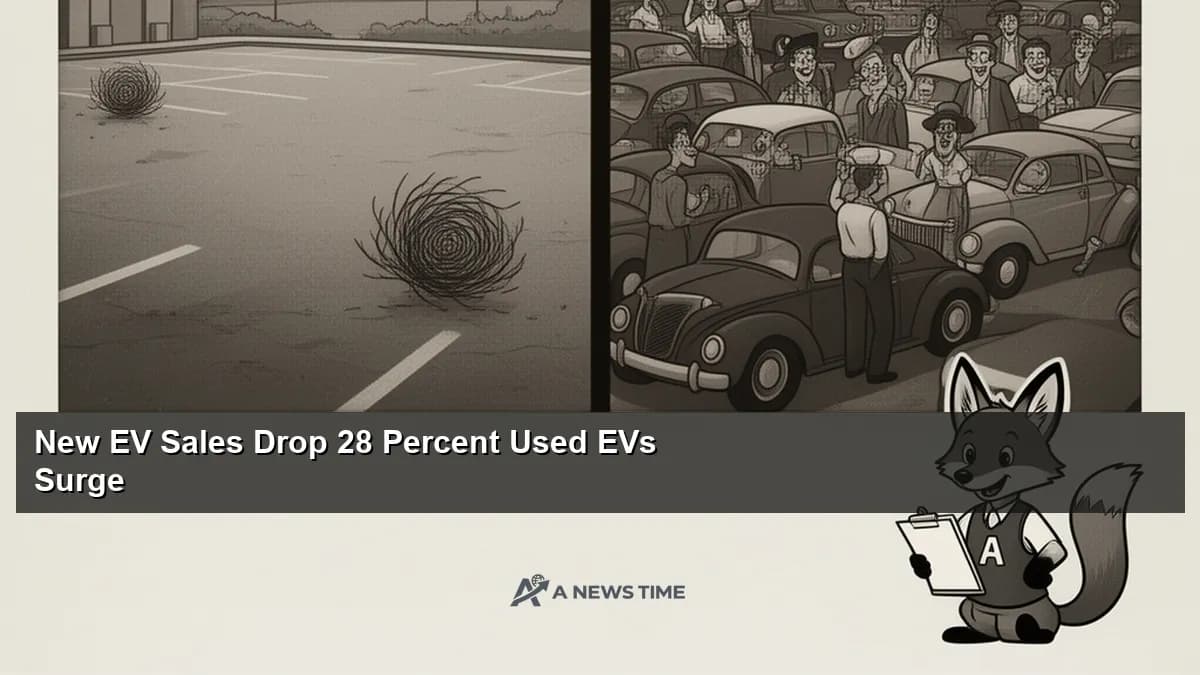
Both arguments have merit, and the market is essentially conducting a live experiment in which approach consumers actually prefer. Early 2026 data suggests the hybrid bet is paying off in the short term: PHEV sales in the U.S. grew 34 percent year-over-year in Q1 2026, even as new BEV sales dropped 28 percent.
What the Pullback Does Not Mean
It would be easy to read this wave of cancellations and conclude that the electric vehicle transition is failing. That reading would be wrong, but not for the reasons EV optimists typically cite.
The transition is not failing because the technology is immature. Current BEVs are, by most objective engineering metrics, excellent vehicles. Battery energy density continues to improve. Electric motors deliver performance characteristics that combustion engines physically cannot match. Manufacturing learning curves are genuine, and per-unit costs will continue to decline as production volumes eventually scale.
What is failing is the timeline. The industry collectively bet that mainstream consumer adoption would follow a steep S-curve, with mass-market BEV demand arriving by 2025 or 2026. That bet was wrong. Consumer adoption is following a slower, more gradual curve, one that looks more like the adoption pattern of hybrid vehicles in the 2000s and 2010s than the smartphone adoption curve that EV bulls liked to reference.
The critical question going forward is whether the delay is temporary or structural. If battery costs resume their decline once supply chains adjust to the tariff landscape, and if charging infrastructure continues to expand, the demand curve may steepen again. But if the current cost and infrastructure barriers persist, the industry may be looking at a transition that takes 20 to 25 years rather than the 10 to 15 years that was widely assumed.
Engineering Reality vs. Press Release Timelines
There is a broader lesson in this pullback that extends beyond EVs specifically. Automakers have a long history of announcing ambitious technology timelines at auto shows and investor days, only to quietly revise those timelines when engineering reality, consumer behavior, or economic conditions intervene. Fully autonomous vehicles were supposed to be commonplace by 2020. Hydrogen fuel cell cars were supposed to be viable by 2015. Diesel was supposed to be the clean fuel of the future in the early 2010s.
The EV pullback fits this pattern. The technology works. The engineering is sound. But the transition from "technically possible" to "economically and logistically viable at mass-market scale" is always longer and messier than the press releases suggest. The companies that will emerge strongest from this period are not necessarily the ones that committed the most capital to EVs the fastest, but the ones that maintained financial flexibility and hedged their technology bets.
For consumers, the practical takeaway is that the EV market is not going away, but the pace of new model introductions will be slower than what was promised between 2021 and 2023. Buyers shopping for EVs today will find competitive vehicles from most major manufacturers, with better real-world range and more reliable charging networks than even two years ago. But the flood of affordable $25,000-$30,000 EVs that multiple automakers promised? That is now a 2028 or 2029 story at the earliest.
Where Things Stand Heading Into Q2 2026
As of late March 2026, the EV landscape looks fundamentally different than it did at this time in 2024. The euphoria has been replaced by pragmatism, which is not necessarily a bad thing for the long-term health of the industry. Overcapitalized bets are being rationalized. Production plans are being aligned with actual demand rather than aspirational targets. And the vehicles that do make it to market are, on average, better engineered and better supported than the first-generation rush of EVs that hit showrooms in 2022 and 2023.
The writedowns are real and they are painful, particularly for the workers at factories that are being idled or repurposed. But the underlying technology trajectory has not changed. Batteries will get cheaper. Charging will get faster and more widespread. Electric powertrains will continue to offer advantages in performance, maintenance costs, and operational efficiency that combustion engines cannot match.
The mistake was not building EVs. The mistake was assuming the world would adopt them on an investor-presentation timeline rather than a consumer-reality timeline. The $70 billion in writedowns is, in many ways, the cost of that miscalculation.
Sources
- Automotive News - EV program cancellations and delay tracker
- Bloomberg New Energy Finance - Battery cost analysis and tariff impact
- J.D. Power - 2026 Electric Vehicle Experience Study
- Reuters - Automaker earnings and restructuring reports