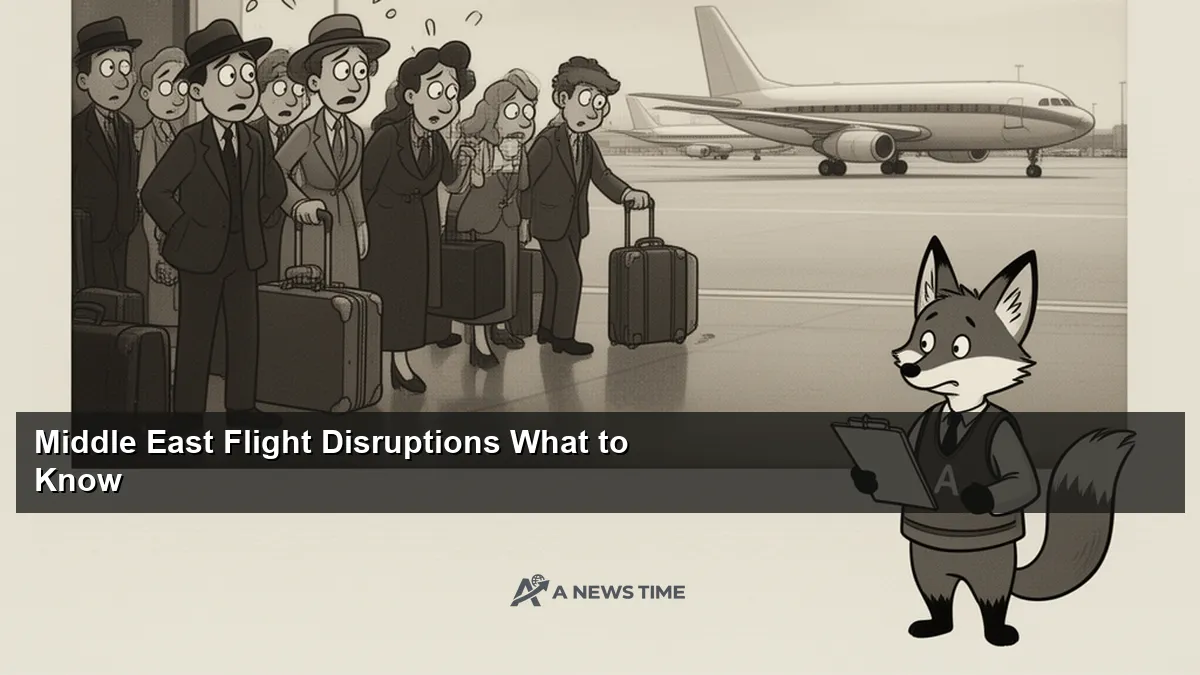
The departure board at London Heathrow's Terminal 5 tells the story in red and amber. Flight BA107 to Dubai: delayed. BA073 to Doha: cancelled. BA155 to Tel Aviv: cancelled. The pattern repeats across terminals, across airports, across continents. The military conflict between the United States, Israel, and Iran, now entering its fourth week, has created the most significant disruption to international aviation since the COVID-19 pandemic grounded fleets worldwide in 2020. But where the pandemic shut everything down uniformly, this crisis is surgical and sprawling at once: specific airspace closures ripple outward through the global network, affecting routes and passengers that have no direct connection to the conflict zone.
Condé Nast Traveler published a comprehensive guide for affected travelers in late March 2026, and the picture it paints is one of significant but navigable disruption. The key for travelers is understanding which routes are affected, what alternatives exist, and how to protect themselves financially. This is not a situation where the answer is simply "don't fly." The answer is fly differently, and know your rights when the difference costs you time and money.
The Airspace Closures: What Is Shut and Why
The foundation of the disruption is a series of airspace closures and restrictions issued by national aviation authorities and international bodies. The Federal Aviation Administration (FAA) has prohibited all U.S. carrier operations in Iranian airspace (FIR Tehran), Iraqi airspace (FIR Baghdad), and portions of Syrian, Yemeni, and Lebanese airspace. The European Union Aviation Safety Agency (EASA) has issued equivalent restrictions for European carriers. Individual airlines from Asia, the Middle East, and other regions have imposed their own restrictions that in many cases exceed the regulatory minimums.
The closures matter because of geography. Iranian airspace sits at the crossroads of some of the world's busiest long-haul routes. Flights between Europe and South/Southeast Asia, between Europe and East Asia via southern routing, and between the Middle East and virtually everywhere pass through or adjacent to Iranian airspace. When that airspace closes, these flights must reroute, typically adding 1.5 to 4 hours of additional flying time depending on the route and the alternative path chosen.
Iraqi airspace, also closed, compounds the problem. Routes between Europe and the Persian Gulf states (UAE, Qatar, Bahrain, Oman, Kuwait) that would normally track southeast through Iraqi airspace must now route through Turkey and then south along the eastern Mediterranean, or take longer paths through Egyptian and Saudi airspace. The result is that a London-to-Dubai flight that normally takes six hours and 45 minutes now takes eight to nine hours, assuming it operates at all.
Which Airlines Have Cancelled and Which Are Still Flying
The airline response has been tiered, and understanding the tiers helps travelers make informed booking decisions.
Full cancellations to conflict zone destinations: All major U.S. carriers (American, Delta, United) have suspended service to Tel Aviv. British Airways, Lufthansa, Air France-KLM, and Swiss have suspended flights to Tel Aviv, Beirut, Amman, and Baghdad. These cancellations are indefinite, with airlines reviewing on a weekly basis.
Partial cancellations to Gulf destinations: This is the category causing the most passenger disruption. Service to Dubai, Abu Dhabi, Doha, and other Gulf hubs has been reduced rather than eliminated. British Airways has cut Dubai frequencies from four daily to two. Lufthansa is operating Frankfurt-to-Dubai but has cancelled Munich-to-Dubai. Air France has suspended Paris-to-Doha but maintains Paris-to-Dubai. The inconsistency reflects individual airline risk assessments: Gulf airports remain operational and the countries are not in the conflict zone, but flight paths to reach them now cross congested rerouted airspace, and the proximity to active military operations creates operational risk that some airlines are unwilling to accept at full schedule.
Rerouted but operational: Emirates, Qatar Airways, and Etihad, the three major Gulf carriers, continue operating most routes but with significant rerouting. Emirates CEO Tim Clark described the situation as "operationally manageable but commercially painful," noting that the additional fuel costs from longer routes amount to approximately $1.8 million per day across the airline's network. Qatar Airways has rerouted European flights through Turkish airspace and southern European corridors, adding 45 minutes to two hours per flight. Etihad has cancelled some frequencies but maintains daily service on all core routes.
Asia-Europe routes: This is where the ripple effects hit hardest. Singapore Airlines, Cathay Pacific, Thai Airways, and other Asian carriers that route through Middle Eastern airspace to reach Europe have rerouted most services. Singapore Airlines' London route, which normally tracks through the Middle East, now routes through Central Asia, adding approximately 90 minutes. Several carriers have reduced frequencies on Europe-bound routes due to the higher fuel costs and crew hour implications of longer flights.
The Passenger Impact: Numbers and Stories
The human scale of the disruption is significant. IATA estimates that approximately 185,000 passengers per day are directly affected by cancellations or significant schedule changes. An additional 400,000 per day experience delays of one hour or more due to rerouting and secondary congestion effects. In the first three weeks of the conflict, cumulative passenger disruption has exceeded 12 million affected journeys.
The disruption is not distributed equally. Business travelers with flexible tickets and corporate travel departments have the resources to rebook and reroute efficiently. Leisure travelers on non-refundable economy tickets face the worst outcomes: cancelled flights with limited rebooking options, hold times exceeding four hours on airline customer service lines, and the financial squeeze of unexpected hotel stays at airport-adjacent properties with surge pricing. The broader economic pressure from the conflict makes these additional costs particularly painful for budget-conscious travelers.
Transit passengers connecting through Gulf hubs face a specific challenge. Dubai International, the world's busiest airport for international passengers, and Hamad International in Doha, the primary hub for Qatar Airways, serve as connection points for millions of travelers on routes between Europe and Asia/Australia, between Africa and Asia, and between the Middle East and everywhere else. When frequencies to these hubs drop, the connecting passengers lose their onward flights. Airlines are rebooking where possible, but the reduced capacity means some passengers are waiting two to three days for available seats on alternative routings.
Your Rights as a Passenger
Passenger rights in this situation vary significantly depending on where you are flying, which airline you are on, and what ticket you hold. The frameworks break down as follows:
EU Regulation 261/2004: If your flight departs from an EU airport (regardless of airline) or arrives at an EU airport on an EU-based carrier, you are entitled to care (meals, accommodation, communication) during delays and alternative routing or a full refund for cancellations. However, and this is the critical point, the regulation includes an "extraordinary circumstances" exemption for events outside the airline's control. Military conflicts and airspace closures qualify as extraordinary circumstances, which means airlines are not required to pay the standard compensation amounts (250 to 600 euros) for delays and cancellations caused by the conflict. They are still required to provide care and rebooking or refunds.
U.S. Department of Transportation rules: U.S. regulations are less prescriptive. Airlines must offer refunds for cancelled flights (including the new automatic refund rule that took effect in 2024). For delays, there is no federal requirement for meals or accommodation, though most major U.S. carriers offer these voluntarily for extended delays. The DOT has issued guidance encouraging airlines to "accommodate passengers affected by Middle East conflict disruptions with maximum flexibility," but this is guidance, not regulation.
Travel insurance: Standard travel insurance policies typically cover trip delays (meals and accommodation for delays exceeding 6 to 12 hours, depending on the policy) and trip cancellation if the airline cancels your flight. War exclusions in insurance policies have become a focus of attention. Most standard policies exclude war but cover "civil unrest and terrorism." The distinction matters: this conflict is a declared military action between nation-states, which falls under the war exclusion in many policies. Travelers who purchased "cancel for any reason" coverage have the broadest protection, as these policies pay regardless of the cancellation reason, typically at 50 to 75 percent of trip cost.
Alternative Routes: How to Get Where You Are Going
For travelers who need to reach destinations in or beyond the affected region, alternative routing exists but requires flexibility and advance planning.
To reach Dubai/UAE: The most reliable current routes from North America go through European hubs (London, Frankfurt, Paris, Istanbul) on Gulf carriers that are maintaining reduced but operational schedules. From Europe, direct flights continue on Emirates and several European carriers. Istanbul has become a particularly important alternative hub, with Turkish Airlines operating full schedules to all Gulf destinations via routing that avoids the closed airspace entirely.
To reach South/Southeast Asia from Europe: The northern route through Central Asia (over Kazakhstan and Uzbekistan) has absorbed most of the rerouted traffic. Direct flights from European cities to Bangkok, Singapore, and Kuala Lumpur continue but with extended flight times. For travelers with flexibility, booking through Istanbul or a Central Asian hub (Tashkent, Almaty) on separate tickets can provide more options than waiting for space on rerouted direct flights.
To reach India from Europe/North America: Air India and other carriers have rerouted through Central Asian airspace. Flight times from London to Delhi have increased from approximately 8 hours to 9.5 to 10.5 hours. Connections through Istanbul remain the most efficient alternative. From North America, routing through East Asian hubs (Tokyo, Seoul, Hong Kong) is an option for destinations in South India, though it adds significant travel time.
To reach Israel: As of this writing, no major international carrier is operating scheduled passenger service to Ben Gurion Airport. El Al, Israel's national carrier, continues limited operations on some routes. Travelers with essential reasons to reach Israel are typically routing through Cyprus (Larnaca) or Greece (Athens) and connecting on El Al or charter services, though availability is extremely limited and prices have surged.
What to Do Right Now If You Are Affected
Condé Nast Traveler's guide and airline industry sources recommend the following immediate actions for travelers with bookings affected by the disruption:
- Check your flight status daily: Airlines are adjusting schedules on a near-daily basis. A flight that shows as confirmed today may be cancelled or rerouted tomorrow. Use the airline's app rather than third-party booking platforms for the most current information.
- Contact your airline proactively: Do not wait for a cancellation notification to explore alternatives. Airlines are offering voluntary rebooking with waived change fees on most affected routes. Calling is faster than waiting for email, and social media direct messages (particularly on Twitter/X) often produce faster responses than phone queues.
- Document everything: Keep receipts for all expenses incurred due to disruptions. Screenshot cancellation notifications, delay announcements, and all communications with airlines. This documentation is essential for insurance claims and regulatory complaints.
- Know your refund rights: If your flight is cancelled, you are entitled to a full refund to your original payment method. Airlines may offer credit or vouchers as a first option. You are not obligated to accept these unless the terms are genuinely better than a cash refund.
- Consider rebooking to alternative destinations: If your trip is discretionary and your destination is in the affected zone, explore whether your airline will rebook you to an alternative destination without penalty. Several carriers are offering destination changes within the same region (e.g., swapping Dubai for Oman or Jordan for Morocco) with fare difference waivers.
Travelers currently in the affected region or transiting through it should maintain contact with their embassy, monitor local news, and ensure they have the latest safety guidance for their specific location.
The Airline Industry Impact
The financial toll on airlines is substantial and growing. IATA estimates that the airspace closures and route disruptions are costing the global airline industry approximately $180 million per week in additional fuel costs alone. Lost revenue from cancelled flights, reduced frequencies, and lower booking volumes adds to that figure. Gulf carriers are bearing the heaviest burden: Emirates, the world's largest international airline by passenger kilometers, has seen its network efficiency drop by an estimated 15 percent due to rerouting.
Airline stocks have declined significantly since the conflict began. The NYSE Arca Airline Index fell 14 percent in the first two weeks. Emirates, as a state-owned carrier, does not trade publicly, but Qatar Airways disclosed that its daily operating losses related to the conflict exceed $3 million. The financial pressure is creating a tension between the desire to maintain routes (and the associated revenue and market position) and the cost of operating those routes under current conditions.
Airport operators in the Gulf are also affected. Dubai Airports reported a 22 percent decline in passenger movements in the second week of March compared to the same period in 2025. Hamad International in Doha reported a similar decline. The reduction in transit traffic has a multiplier effect on airport revenue because transit passengers contribute disproportionately to duty-free spending and food-and-beverage sales. The broader market turbulence created by the conflict is compounding the industry's challenges.
How Long Will This Last?
The honest answer is that no one knows. Airspace closures during military conflicts typically persist for the duration of active hostilities and for a period afterward while unexploded ordnance and other hazards are assessed. The 2003 Iraq War saw Iraqi airspace closed for approximately five months. The 2014 shoot-down of Malaysia Airlines Flight MH17 over Ukraine led to eastern Ukrainian airspace closures that, in modified form, persisted until Russia's full-scale invasion in 2022 made them permanent.
The current conflict involves airspace on a larger scale (Iran's territory is roughly five times the size of Iraq's), and the potential for the conflict to expand geographically means the closures could widen before they narrow. Airlines are planning for at least three to six months of disruption, based on conversations with aviation executives and industry analysts. Travelers should plan accordingly, building flexibility into their itineraries and budgets for the remainder of 2026.
Insider Tip: The Booking Strategy That Works Right Now
From decades of navigating conflict-disrupted travel, the single most effective strategy in this environment is to book directly with airlines and to book refundable fares whenever the cost premium is less than 20 percent above the non-refundable price. Third-party booking platforms (OTAs) add an additional layer of complexity to rebooking and refunds that becomes a serious liability during disruption events. Airlines prioritize their direct customers for rebooking, and the refund process is faster and more reliable when the airline holds your payment directly.
For travelers whose plans are flexible, consider routing through hubs that are outside the disrupted zone entirely. Istanbul, Cairo, and Addis Ababa have emerged as alternative connecting points for traffic that previously flowed through Dubai and Doha. Turkish Airlines, in particular, has aggressively added capacity on routes that benefit from the Gulf hub disruption, and its Istanbul hub's geographic position north of the conflict zone gives it a structural advantage that will persist as long as the disruption continues.
Frequently Asked Questions
Are flights to Dubai still operating?
Yes, but at reduced frequencies. Emirates continues most routes with rerouting. European and U.S. carriers have reduced Dubai service. Flight times are longer due to airspace detours. Check your specific airline for current schedule status.
Can I get a refund if my flight is cancelled due to the conflict?
Yes. Airlines are required to offer full refunds for cancelled flights under both EU and U.S. regulations. You are not required to accept vouchers or credit. If the airline only offers non-cash alternatives, insist on a refund to your original payment method.
Is it safe to fly through the Middle East right now?
Commercial aviation authorities have closed the airspace over active conflict zones. Airlines operating routes to or through the region are using approved corridors that avoid the conflict areas. The remaining risk is lower than the headlines suggest, but it is not zero. Monitor your airline's routing decisions and government travel advisories for your specific itinerary.
Sources
- Condé Nast Traveler - What Travelers Need to Know About Middle East Flight Disruptions
- IATA - Airspace Closure Impact Assessment
- FAA - Notices to Air Missions (NOTAMs)
- EASA - Conflict Zone Information Bulletins