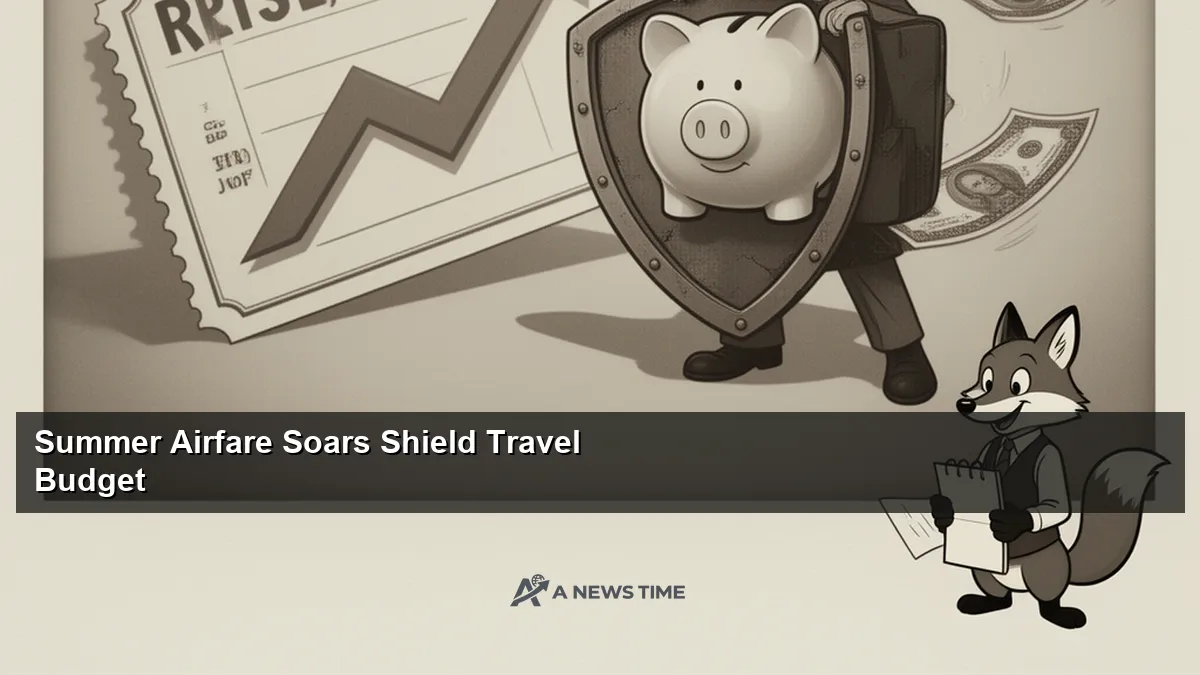
The numbers coming out of airline pricing dashboards this spring tell an uncomfortable story for anyone planning summer travel. Average round-trip fares from the United States to popular destinations in Africa, Europe, and Asia have climbed by double digits compared to the same booking window last year, driven by a collision of jet fuel costs, capacity constraints, and a demand curve that refuses to soften. According to data compiled by Travel and Tour World, the upward pressure is most acute on transatlantic and transpacific routes, where load factors are already running above 90 percent on marquee city pairs. If you have been watching fares tick higher with each weekly search, you are not imagining things. The question now is not whether summer airfare will cost more, but how deliberately you can engineer your booking strategy to absorb the blow.
Why Summer 2026 Fares Are Climbing This Aggressively
Understanding the mechanics behind the surge helps you anticipate where savings are still possible. Three forces are converging simultaneously. First, jet fuel prices remain elevated following geopolitical instability in oil-producing regions. Airlines hedge fuel costs months in advance, but the contracts locked in during late 2025 reflected Brent crude above $90 per barrel, and those costs are now flowing directly into published fares. Second, airline capacity on international routes has not fully recovered to pre-pandemic levels on certain corridors. While domestic seat counts in the US have exceeded 2019 benchmarks, long-haul widebody deployment to secondary African and Asian cities remains constrained by aircraft delivery backlogs at both Boeing and Airbus. Third, demand for international leisure travel continues to outpace the seats available. The post-pandemic travel boom has matured into a structural shift: consumers are prioritizing experiences over goods, and summer remains the single largest concentration of leisure demand on the calendar.
The result is a pricing environment where airlines have little incentive to discount. Economy class fares from New York to Nairobi, for example, have jumped roughly 18 percent year over year for July departures. London, Paris, and Rome are seeing increases in the 12 to 15 percent range. Tokyo and Bangkok, already expensive corridors due to limited nonstop competition, are up by similar margins. These are not flash-sale anomalies; they represent a repricing of summer air travel that budget-conscious travelers need to confront head-on. This kind of cost pressure is affecting household budgets broadly, much like the geopolitical disruptions that have reshaped global economic growth forecasts in recent months.
1. Book Tuesday Through Thursday Departures
This advice has circulated for years, but the data backing it has never been stronger. Airline revenue management systems price flights based on demand curves, and weekend departures consistently attract the highest willingness to pay. For summer 2026, the fare differential between a Saturday departure and a Tuesday departure on the same route can exceed $200 round trip in economy. The reason is straightforward: leisure travelers with fixed vacation windows cluster around Friday and Saturday departures, creating peak pricing. Shifting your outbound flight to Tuesday, Wednesday, or Thursday puts you into a lower demand bucket where algorithms price more competitively. On routes to Europe, the savings are especially pronounced because business travel demand, which normally props up midweek pricing, drops off sharply in summer.
2. Use Fare Alerts, But Set Them Strategically
Fare alert tools from Google Flights, Hopper, and Airfarewatchdog remain among the most effective weapons in a traveler's arsenal, but the way you configure them matters enormously. Rather than setting a single alert for your preferred dates, create multiple alerts across a two-week window. Summer fare pricing is highly date-sensitive, and a three-day shift in departure can produce savings of $150 or more. Set alerts for your top three destination airports and include nearby alternates. Flying into Milan Malpensa instead of Rome Fiumicino, then taking a three-hour train, can save $300 round trip on peak summer dates. The key is to let the alert tools do the scanning work across a wide search grid rather than anchoring to a single itinerary.
3. Consider Positioning Flights to Cheaper Departure Cities
Not every US gateway prices international routes the same way. Fares from New York JFK and Newark tend to be among the lowest to Europe thanks to intense competition from legacy carriers, low-cost long-haul operators like Norse Atlantic and PLAY, and joint-venture partners. Meanwhile, fares from cities like Charlotte, Denver, or Phoenix can run $400 to $600 higher for the same European destinations. If you live in a secondary market, it is worth pricing a separate positioning flight to a major gateway. A $120 one-way domestic ticket to JFK combined with a cheaper transatlantic fare can net you significant savings over booking the entire itinerary from your home airport. The math does not always work, but when it does, the savings compound across a family of four.
4. Explore Open-Jaw and Multi-City Itineraries
Round-trip pricing on popular routes reflects the full weight of summer demand compression. But airlines often price one-way segments independently, and the combination of flying into one city and out of another can unlock fare asymmetries that round-trip searches miss entirely. For a European trip, consider flying into a less expensive gateway like Dublin or Lisbon and departing from a different city like Amsterdam or Zurich. This approach has the added benefit of eliminating backtracking, letting you cover more ground without retracing your steps. Multi-city search tools on Google Flights, Kiwi.com, and ITA Matrix make this straightforward to price.
5. Leverage Credit Card Points Before Devaluations Hit
Award travel has become more complex as airlines have shifted to dynamic pricing for award seats, but points and miles remain a powerful hedge against cash fare inflation. The critical move for summer 2026 is to book award seats as early as possible. Airlines release their best award availability roughly 330 days before departure, and the premium cabin sweet spots disappear fastest. If you hold transferable points currencies like Chase Ultimate Rewards, Amex Membership Rewards, or Capital One miles, check partner airline availability across multiple programs before transferring. A business class seat to Tokyo that prices at 120,000 miles on one carrier might be available for 80,000 on a partner airline through a different transfer pathway. Award availability is a moving target, and the earlier you search, the more options remain on the table.
6. Fly Into Secondary Airports at Your Destination
Major tourist destinations often have multiple airports, and the pricing gaps between them can be substantial. London is the textbook example: Heathrow dominates premium traffic and prices accordingly, while Gatwick and Stansted serve low-cost carriers with meaningfully cheaper fares. Paris Beauvais, while inconvenient, offers budget carrier access that undercuts Charles de Gaulle by hundreds of dollars. In Asia, flying into Osaka Kansai instead of Tokyo Narita puts you in the same country at a lower fare, and the Shinkansen connection is part of the experience rather than a chore. In Africa, connecting through Addis Ababa on Ethiopian Airlines rather than flying nonstop to Nairobi or Cape Town frequently produces the lowest published fares on the continent, thanks to Ethiopian's aggressive hub strategy.
7. Book Accommodation and Flights Separately
Dynamic packaging tools from Expedia, Booking.com, and airline vacation portals can occasionally surface genuine deals by bundling air and hotel. But more often, especially in a high-fare summer environment, these bundles obscure the individual component pricing and steer you toward hotel inventory the platform is incentivized to sell. Booking flights and accommodation separately gives you full visibility into what you are paying for each, and it allows you to mix strategies. You might book the cheapest possible flight using the positioning strategy above, then find accommodation through a loyalty program, a vacation rental platform, or a last-minute hotel app like HotelTonight. The unbundled approach requires more research, but it consistently produces lower total trip costs for travelers willing to invest the time. Managing travel spending carefully mirrors the kind of disciplined financial planning that guides choosing the right high-yield savings account for your goals.
8. Travel During Shoulder Weeks Within Summer
Summer is not a monolith. Within the June-through-August window, pricing follows a distinct curve. The first two weeks of June and the last two weeks of August are consistently cheaper than the peak period from late June through mid-August. If your schedule allows any flexibility at all, targeting these shoulder weeks can shave 15 to 25 percent off peak summer fares. For families constrained by school calendars, the early June option is often viable because many US school districts end by the first week of the month. Traveling the first week of June instead of the first week of July can represent hundreds of dollars in savings per ticket, compounded across a family.
9. Monitor Error Fares and Flash Sales Aggressively
Error fares, where airline pricing systems accidentally publish dramatically below-market fares, still occur regularly and are honored more often than most travelers realize. Dedicated communities on platforms like Secret Flying, The Points Guy, and Scott's Cheap Flights track these in real time. The window to book is often just a few hours, which is why signing up for push notifications or SMS alerts is essential. Flash sales from airlines themselves are another opportunity: carriers like TAP Air Portugal, Icelandair, and Turkish Airlines regularly run 48-hour promotions on summer routes. The savings can exceed 40 percent off prevailing fares. The discipline required is a willingness to book immediately when the alert arrives, even if you had not been planning that particular trip. The travelers who save the most on summer airfare are often the ones who let the deal choose the destination.
10. Consider Alternative Destinations Where Fares Are Flat
Not every corridor is experiencing the same fare inflation. While the big three continents for US summer travel, Europe, Africa, and Asia, are seeing the sharpest increases, certain regions remain relatively stable. Central America, particularly Guatemala, Costa Rica, and Colombia, has seen minimal fare increases thanks to robust low-cost carrier competition from airlines like Volaris, Spirit, and Avianca. Eastern Europe, including Romania, Bulgaria, and the Baltic states, remains underpriced relative to Western European capitals because direct service from the US is limited and connecting itineraries keep fares competitive. Choosing a destination where supply and demand are better balanced is the most powerful budget shield available, even if it means rethinking your original plan.
The fare environment for summer 2026 is challenging, but it is not insurmountable. Travelers who approach booking as a research project rather than a single transaction, who remain flexible on dates, airports, and even destinations, will find that savings compound in ways that make the difference between a trip that strains the budget and one that fits comfortably within it.
Industry Context: What Airlines Are Signaling
Behind the fare data sits a broader strategic picture. Major US carriers, including Delta, United, and American, have all signaled during recent earnings calls that they intend to maintain pricing discipline through the summer peak. The era of aggressive fare wars to capture market share appears to be over, replaced by a focus on yield management and revenue per available seat mile. Delta CEO Ed Bastian noted in the airline's Q1 2026 earnings call that transatlantic demand "remains the strongest international segment" and that the carrier sees no reason to stimulate demand through discounting when load factors are already at record levels.
Low-cost long-haul carriers, which briefly promised to disrupt transatlantic pricing, have found the economics of widebody operations punishing. Several have scaled back summer schedules or exited routes entirely. Norse Atlantic, which launched with ambitious plans to connect secondary US cities to European capitals, has consolidated its network around a handful of high-demand routes. The competitive pressure that might have held legacy carrier fares in check has diminished.
For travelers, this means that the strategic approaches outlined above are not just nice-to-haves; they are the primary mechanism for controlling costs in an environment where airlines have both the pricing power and the willingness to exercise it. The fundamentals of supply, demand, and cost are all aligned against cheap summer flights, and only deliberate, informed booking behavior can tilt the equation back in your favor.
Insider Tip: The 24-Hour Rule Is Your Safety Net
Every strategy above carries an implicit risk: what if you book and then find something better? US Department of Transportation regulations require airlines to allow free cancellation within 24 hours of booking, provided the flight is at least seven days out. This rule applies to all airlines operating flights to, from, or within the United States, regardless of whether they are US or foreign carriers. Use this as your safety net. When you spot a strong fare, book it immediately, then continue searching for 24 hours. If something better appears, cancel the first booking at no cost and rebook. If nothing does, you have locked in the fare before it climbs further. The 24-hour rule transforms fare hunting from a high-stakes, one-shot decision into an iterative process where you can act fast and refine later. In a summer where every dollar counts, that flexibility is invaluable.
Looking Ahead: Will Fall Bring Relief?
For those who can push their international trips to September or October, the pricing outlook is more favorable. Shoulder season fares historically drop 20 to 35 percent below summer peaks, and appears to be following that pattern. Airlines are already publishing fall promotional fares to stimulate demand after the summer rush, and award seat availability opens up dramatically once school resumes. If your travel plans are flexible enough to shift outside the June-through-August corridor entirely, the savings are significant enough to fund an extra trip later in the year. The cheapest destinations for US travelers in 2026 offer even more options for stretching your budget across multiple trips.
Summer 2026 will be expensive in the air. That much is settled. What remains within your control is how you respond to that reality, and the travelers who respond with strategy rather than resignation will find that the sky, even at these prices, is still very much within reach.